In 1980, the United States Supreme Court upheld a ruling that the federal government had stolen the Black Hills of South Dakota from the Lakota Sioux, in violation of the Fort Laramie Treaty of 1868. The Court ordered compensation: fifteen million dollars. The Lakota refused to take the money. The settlement has since grown in a government trust to more than 1.
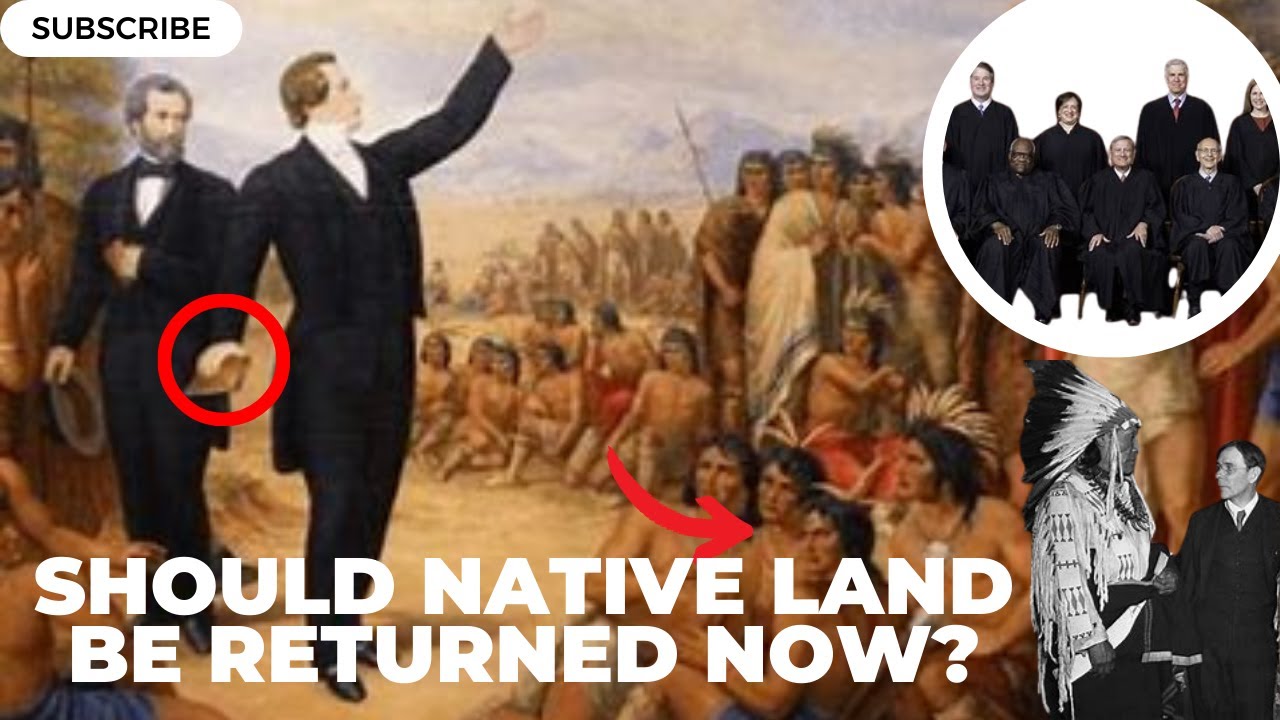
3 billion dollars, with interest accruing for over four decades. If divided among all Sioux people today, each individual would receive roughly eight thousand dollars. For the Lakota, the refusal has never been about the size of the check. It is about the land itself.
The Black Hills are sacred ground, the ancestral home of their people, and no sum of money can replace a homeland. They continue to demand the return of the land as guaranteed by the treaty. That treaty was broken when gold was discovered, and miners, led by figures such as George Armstrong Custer, poured into the region in search of wealth. The case of the Black Hills is only one chapter in a much larger story.
Across the United States, Native American tribes were forced onto reservations, small parcels of land compared to the vast territories they once called home. These were not voluntary agreements. Lands were not ceded; they were taken. Tribes faced coercion, families were broken apart, and cultures were nearly destroyed in the name of progress.
The pattern repeated itself throughout the nineteenth century. In the mid-1800s, the Paiute tribes of eastern Nevada were offered just five thousand dollars in trade goods for rights to vast stretches of their territory. What they lost was access to lands critical for their survival, territory they depended on for food, water, and shelter. Within years, their numbers were devastated and their way of life collapsed.
Again and again, Native peoples were offered small pieces of land, often the most barren and undesirable areas. Yet whenever something valuable was found on those lands, whether gold, oil, or timber, the treaties were violated. The destruction of the buffalo, the lifeblood of the Plains tribes, was part of that same strategy. The herds were hunted nearly to extinction to force Native peoples into dependence on government rations.
Native children were sent to boarding schools designed to assimilate them, where they were stripped of their languages and their cultures. One account describes a visit to an Indian college in Kansas, where a hidden cemetery lay behind a parking lot. The gravestones marked the burials of children who had died at the school. Their identities had been erased, and they were known only by their English names.
It was a grim sight, a painful reminder of the cost of what was called civilization. Years later, when the visitor returned, the original names had been restored, and offerings had been placed at the gate. It was a small but meaningful sign of progress, an acknowledgment of their sacrifice. The history of Native American peoples is full of broken promises, seized lands, and enormous loss.
But it is also a history of survival, resilience, and resistance. For the Lakota, the Paiute, and Indigenous peoples across the continent, the struggle has not ended. It goes beyond money. It is about justice, and it is about the land itself.
The arrival of Europeans set off a desperate struggle for survival among Native peoples. The Europeans brought guns, horses, and diseases like smallpox that devastated entire populations. Added to this was the ability of European nations to unite against external threats, something Native Americans could not easily achieve, making the odds against them overwhelming from the start. It was not only wars that took their toll.
Treaties were signed, but they were almost always broken. Colonists and settlers, often beyond the control of their own kings, seized land faster than authorities could regulate. Indigenous peoples suffered catastrophic losses from disease. Even after independence, nations like Mexico continued to suppress Indigenous peoples, as seen in conflicts such as the Caste War.
Why can Native Americans not simply reclaim their lands today? The answer lies in centuries of colonization, violated treaties, and the systematic disregard of Indigenous rights. The damage has been so profound that reversing it seems nearly impossible. What can be done is to honor Indigenous cultures and ensure their history is not forgotten.
The question of what compensation should look like for the Indigenous peoples of North America remains open. Should land be returned? Should there be more recognition, more reparations, more meaningful acknowledgment of what was taken? The Lakota have made their answer clear for over forty years.
They will not accept payment for what cannot be replaced. The trust fund grows, the interest compounds, and the refusal stands as a quiet, persistent demand. It is not a history of loss alone. It is a history of endurance, of survival, and of hope.
The battle for justice continues, and for the Lakota, that battle is measured not in dollars, but in the sacred ground they refuse to sell.
