On November 15, 1977, Princess Anne delivered a baby boy at St. Mary’s Hospital in Paddington, London. Peter Mark Andrew Phillips arrived as Queen Elizabeth II’s first grandchild — a landmark moment occurring more than ten years before Prince William’s birth. What stood out most about Peter’s arrival, however, was what he was never given.
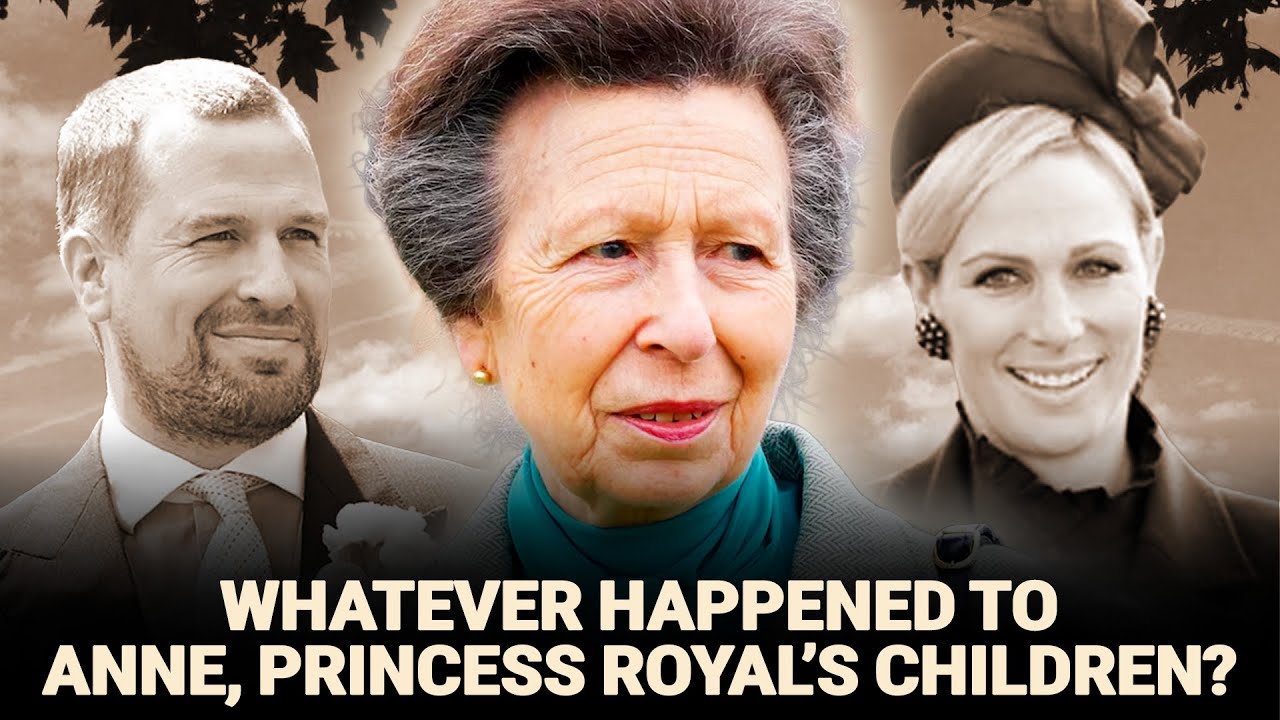
He was plain Master Peter Phillips. Nothing more. No title, no courtesy designation, no formal role anywhere in the royal apparatus.
The choice was intentional. Peter’s father, Captain Mark Phillips, had turned down an earldom the Queen offered him. Anne, for her part, decided against seeking titles for her children. She would later say the decision gave them more freedom and flexibility.
During the late 1970s, with the royal family still largely governed by Victorian and Edwardian ideas of rank, such a choice was extraordinary. Anne’s reasoning was straightforward: her children would be raised on royal estates and join family gatherings at Windsor and Balmoral, yet they would also go to local schools, forge their own careers, and live free of protocol’s restrictions. Peter’s early years played out at Gatcombe Park, the Gloucestershire property the Queen bought for Anne in 1976. Daily life there was intentionally down-to-earth.
Horses, dogs, and farmland shaped the surroundings. Anne kept a busy schedule of royal engagements but took an active part in her children’s everyday lives — a break from how earlier generations of royals had parented. Peter was riding almost from the moment he could walk, joining local pony club activities and entering small competitions. His schooling followed the family’s tradition of institutions built around character.
After prep school in Dorset, Peter went to Gordonstoun in Scotland, the school Kurt Hahn founded, which Prince Philip and Prince Charles had also attended. Charles had been famously miserable there; Peter flourished. He joined the school’s fire service, trained in mountain rescue, played rugby, and took to the school’s stress on self-reliance. He later studied sports science at the University of Exeter, graduating in 2000.
Peter’s move into working life put his mother’s philosophy to the test. With no title or official post, he had to build a career on his own abilities, even though his family connections would inevitably open some doors. His first significant job was with Jaguar Racing, the Formula 1 team, handling corporate hospitality and sponsor relations. He subsequently joined Williams F1 in a comparable capacity.
All the while, Peter knew full well that everything he did was judged through the prism of his royal ties. He could not be just another sports marketing professional. But lacking the formal framework of a working royal, he had to make a living in the private sector. In 2008 he drew criticism for arranging a corporate event at the British Grand Prix that featured a photo opportunity with the Queen.
Critics accused him of profiting from his royal access. The incident laid bare the persistent tension in Peter’s situation. He was not a working royal, so he had to earn money through private ventures — yet those ventures inevitably drew value from his royal connections. His personal life drew public attention when he started dating Autumn Kelly, a Canadian management consultant he had met in 2003 at the Canadian Grand Prix in Montreal.
Their engagement, announced in July 2007, brought an important detail to light: Kelly, who had been raised Roman Catholic, had converted to Anglicanism. The conversion was essential, since the Act of Settlement of 1701 would have struck Peter from the line of succession had he wed a Catholic. The law would eventually be amended in 2013, but at that time it was still in effect. Peter and Autumn were married on 17 May 2008 at St.
George’s Chapel, Windsor Castle. Unlike working royals, they covered much of the wedding cost themselves, though the Queen allowed them the use of the chapel. The couple went on to have two daughters, Savannah in 2010 and Isla in 2012, both delivered at Gloucester Royal Hospital. Savannah became the Queen’s first great-grandchild.
Just like their father, neither girl was granted a title. They grew up at the family home in Gloucestershire, near Gatcombe Park, attending local schools and only occasionally appearing at major royal events. In February 2020, Peter and Autumn announced they were separating after twelve years of marriage. Their statement stressed their dedication to co-parenting and called the decision mutual and amicable.
The divorce was completed in 2021. Autumn had at first intended to move back to Canada with the children, but in the end arrangements were made for everyone to stay in Britain while the girls were in school. Zara Anne Elizabeth Phillips was born on 15 May 1981 at the Lindo Wing of St. Mary’s Hospital, a sister for Peter.
Her name, Zara, Arabic in origin and meaning radiance or a blooming flower, was reportedly suggested by Prince Charles. It had no precedent in recent royal history. At birth she was sixth in line to the throne. Like her brother, she was given no title.
Zara’s upbringing at Gatcombe Park was marked by a remarkable natural gift for riding. She was on horseback almost as soon as she could sit upright, and by the age of four she was riding on her own around the estate. Princess Anne, who had competed in three-day eventing at the 1976 Montreal Olympics, saw her daughter’s ability but was careful never to push her. She gave her access to excellent horses and training while letting Zara develop her own enthusiasm.
The method paid off. Zara’s passion became self-sustaining. After Gordonstoun and a physiotherapy degree at the University of Exeter, Zara confronted a choice: build a career in physiotherapy or commit entirely to professional riding. She picked the second path, a decision that would shape the following fifteen years of her life.
Her breakthrough arrived with Toy Town, a chestnut gelding of outstanding talent and tricky temperament. In 2005 the pair claimed individual gold at the European Eventing Championships at Blenheim — the very venue where her mother had won the European Championship exactly thirty-four years before. The next year, at the 2006 FEI World Equestrian Games in Aachen, Germany, they became world champions. Zara was named BBC Sports Personality of the Year, the first royal to receive the honor, and was appointed MBE in 2007.
Her greatest goal was the Olympics. Before the 2008 Beijing Games, Toy Town sustained a tendon injury that destroyed any chance of competing. At twenty-seven, Zara had to accept that her horse might never again perform at the top level. She kept going, building partnerships with other horses.
With the 2012 London Olympics drawing near, Zara secured her spot on the British eventing team aboard High Kingdom. The team event was held at Greenwich Park before home crowds, with the Queen herself watching. Britain took silver behind Germany. The moment Princess Anne, serving as President of the British Olympic Association, placed the silver medal around her daughter’s neck became one of the most unforgettable images of the Games.
Both women kept their professional poise, yet the weight of the occasion was plain to everyone present. Alongside her sporting life, Zara built a second career as a brand ambassador. Being outside the ranks of working royals meant she could take on sponsorship deals freely. She represented Land Rover and collaborated with Rolex and other names that fit the way she lived.
Those partnerships were picked with care to reflect what she genuinely did and believed in. In 2003 she crossed paths with Mike Tindall, a professional rugby player who had just helped England lift the Rugby World Cup. Over the following years the relationship deepened while each of them chased demanding sporting careers. They announced their engagement in December 2010, only a month after Prince William and Catherine Middleton made their own announcement.
The couple wed on 30 July 2011 at Canongate Kirk in Edinburgh. Their wedding was markedly quieter than William and Catherine’s, without a televised ceremony or a public procession. The Queen and Prince Philip were there, yet the day kept a private, family-centred feel. Zara and Mike’s first child, Mia Grace Tindall, arrived in January 2014.
The happiness of her birth was followed by sorrow. In December 2016 Zara suffered a miscarriage and made the loss public. In 2017 she endured a second miscarriage, which she also discussed openly. Her readiness to speak about such painful experiences was viewed as shattering royal taboos surrounding private grief.
The couple’s second daughter, Lena Elizabeth Tindall, was born in June 2018. Their third child, Lucas Philip Tindall, came on 21 March 2021 in dramatic fashion. Zara’s labour progressed so fast that there was no chance of reaching the hospital. Lucas was delivered at Gatcombe Park by Mike, with help from a midwife who arrived only just in time.
His name paid tribute to his great-grandfather Prince Philip, who would pass away less than three weeks afterward. The Tindall family made their home at Aston Farm on the Gatcombe Park estate, placing them right next to Princess Anne. The Princess Royal became a constant figure in her grandchildren’s upbringing. Zara and Mike appear at royal family occasions, among them the Platinum Jubilee celebrations, the funeral of Queen Elizabeth II in September 2022, and the coronation of King Charles III in May 2023.
When Princess Anne chose in the late 1970s and early 1980s not to weigh her children down with royal titles, it amounted to a quiet revolution in how the British royal family handled its more distant members. Made at a time when the consequences were unclear and there was little precedent to follow, the decision has been justified by the lives Peter and Zara have constructed. Both children successfully met the unusual challenge of being royal and ordinary at once. They were present at family gatherings at Buckingham Palace and Windsor Castle, yet they forged careers in the private sector.
They held places in the line of succession but made their own livings. Peter’s route ran through business and sports management, setting a pattern for how a royal grandchild could function in the commercial world without a title or official role. Zara’s accomplishments were more publicly dazzling. Championship titles, Olympic medals, international recognition.
By letting her daughter compete without a title, Anne gave Zara the freedom to be judged on merit alone, to take commercial sponsorships, and to shape an identity as an athlete first and a royal second. The descendants of Peter and Zara, Savannah, Isla, Mia, Lena, and Lucas, form another generation further from the throne but still part of the Windsor family story. They are being brought up conscious of their heritage without being defined by it, appearing at major family events while living essentially private lives. As the British monarchy keeps shrinking its official working membership while enlarging its extended family, the Phillips and Tindall children offer a template.
They show that royal family members can contribute to the institution’s vitality and public appeal without taxpayer funding or official duties. Princess Anne, in her practical, unsentimental manner, handed her children an extraordinary gift: the freedom to define themselves. Peter and Zara have shown themselves worthy of that gift, building lives of real accomplishment while keeping a fitting connection to their royal heritage.
Their story is not about palace intrigue or ceremonial drama, but about two people who live alongside the throne, shaped by it yet not imprisoned by it, forging a model of modern royal life at its edges.
