In the autumn of 1888, the mountain hollows of Pocahontas County, West Virginia, fell strangely silent. Local weather records preserved in the National Archives documented an extended calm that residents described as unnaturally quiet, even for those isolated communities. Among the scattered homesteads stood the Veilthorne property, a substantial timber and stone dwelling roughly eighteen miles from the nearest settlement of Huntersville, reachable only by winding mountain trails. The Veilthorne family had settled there in 1871, when Zachariah Veilthorne, then forty-two, purchased nearly 1,500 acres of forested mountainside from the state.
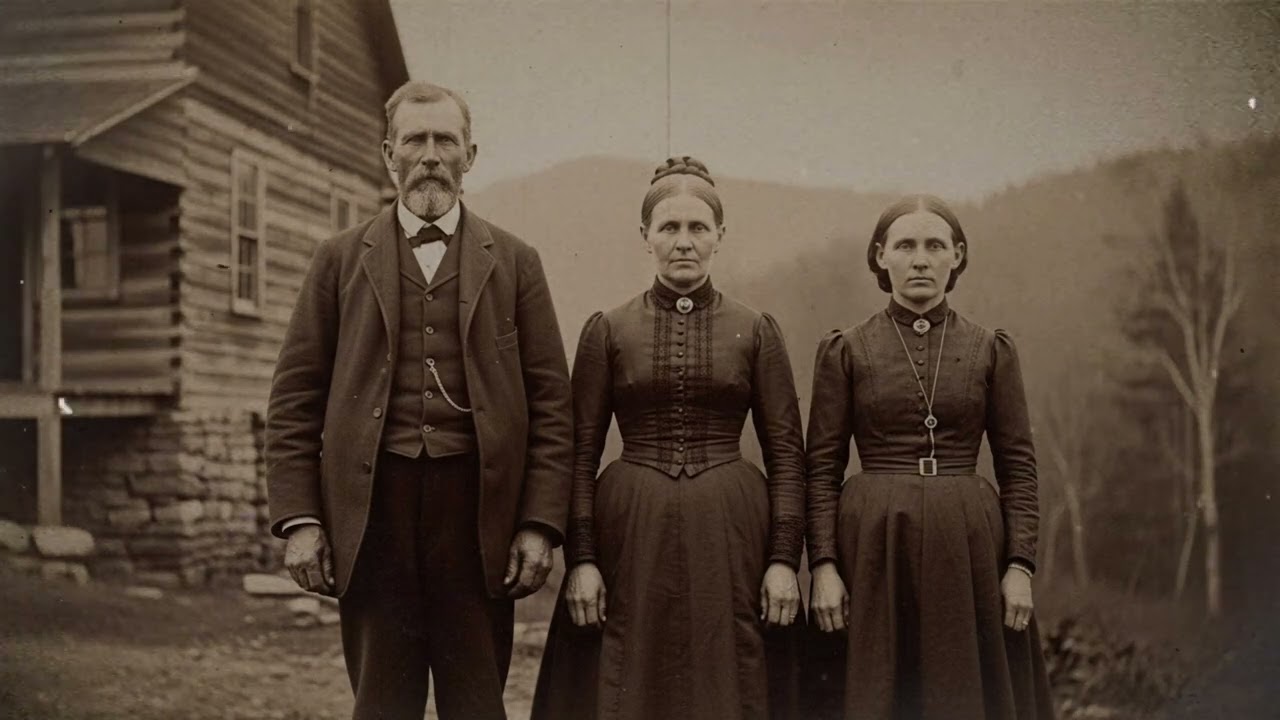
He had arrived from Pennsylvania with his wife, Isidora, thirty-six, and their adult daughter, Saraphina, nineteen, following what family correspondence suggested was a business reversal that forced their relocation. The house itself was remarkable. Built from locally quarried stone and carefully selected timber, it featured thick walls, unusually small windows, and a foundation that extended deep into the rocky mountainside. Contemporary accounts described it as one of the most substantial private residences constructed in the county during the 1870s.
The building required specialized craftsmen brought from outside the region, and workers were required to sign agreements pledging discretion about the details of their work. Different crews handled different phases of construction so that no single group understood the complete design. The project stretched over nearly two years, far longer than necessary for even a substantial home, and involved ventilation systems and an interior layout that residents found curious. By 1888, the household consisted of Zachariah, now fifty-nine, Isidora, fifty-three, and Saraphina, who had remained unmarried and lived with her parents throughout their seventeen years in the valley.
Unlike many mountain families who struggled to subsist, the Veilthornes prospered quietly, maintaining well-kept grounds, quality livestock, and a comfortable lifestyle whose source remained unclear to neighbors. They participated occasionally in community events but maintained a reserved demeanor. Zachariah was known as well educated and knowledgeable about business matters, often advising neighbors on market conditions, though he rarely discussed his own affairs. Isidora was remembered as an elegant woman skilled in needlework and medicinal plants, while Saraphina kept extensive correspondence with individuals in various cities, receiving and sending substantial amounts of mail through the irregular postal service.
The first signs that something was wrong emerged in mid-October. Benjamin Thornwick, a farmer whose property lay about two miles from the Veilthorne homestead, later told investigators that he had noticed lights moving about the property at unusual hours and heard sounds inconsistent with normal household activities. From a ridge overlooking the homestead, he observed what appeared to be multiple individuals moving about between midnight and dawn, far more activity than three family members would generate. He also witnessed what seemed to be systematic movement of materials to and from the outbuildings, occurring on carefully planned schedules.
Joshua Ravencrest, a trapper who maintained cabins throughout the region, reported avoiding the trail near the Veilthorne property by mid-October after noticing fewer birds and small animals in the area. The air seemed heavier, the forest grew unnaturally silent when he approached, and he experienced a persistent sensation of being observed, though he never saw anyone watching. On November 12, 1888, Cornelius Blackthorne, a merchant who had supplied goods to the family for more than a decade, arrived for a scheduled delivery and found the property deserted. He spent hours searching for any sign of the household.
The main house was securely locked and showed no signs of recent occupancy. The barn and outbuildings were secured, the horses and livestock gone, though no evidence suggested they had been moved by conventional means. Personal belongings, including valuable items that would certainly have been taken during a planned absence, remained undisturbed. Fresh wood lay stacked beside the house in preparation for winter, yet the fireplaces showed no evidence of recent use.
Food storage areas contained ample provisions, but no one had accessed them for days. The wagon was missing, yet the harnesses and equipment necessary for long travel were left behind. Tracks in the soft earth suggested the horses had been led away toward the forest rather than hitched to the wagon. Most unsettling was a partially prepared meal in the kitchen, with place settings arranged for three people.
The food had been recently prepared and then abandoned, as if the family had been interrupted during dinner and simply walked away. Sheriff Martin Ashcraft organized a search party that traveled to the property on November 15. The investigation confirmed Blackthorne’s observations. In Zachariah’s study, papers lay scattered across the desk, an inkwell open, a pen beside writing that ended mid-sentence.
In Isidora’s sewing room, needlework lay partially completed, the needle still threaded. In Saraphina’s bedroom, letters lay open on her writing desk, one response partially written. In the barn, tools appeared recently used, feed measured out but not distributed. Then the search party made a discovery that changed the nature of the investigation.
Behind what appeared to be ordinary interior walls, they found a network of concealed chambers and passages extending throughout the structure and into the mountainside beyond the foundation. These spaces were equipped with ventilation systems, lighting, and storage, some appearing recently used, others maintained in readiness for immediate occupancy. Sheriff Ashcraft requested assistance from state authorities, and in December 1888, a team led by Captain Alexander Morrison arrived in Pocahontas County. The investigators, including specialists in document analysis, architecture, and commercial fraud, spent weeks examining the property.
Deep within the foundation, they discovered a chamber containing an extensive collection of business records and correspondence, preserved in weather-resistant containers. The documents revealed that Zachariah Veilthorne had maintained regular correspondence with associates in Philadelphia, Baltimore, Richmond, and Charleston. Much of the correspondence was written in coded language, though specialists decoded significant portions, revealing evidence of a sophisticated commercial network extending far beyond West Virginia. Financial records indicated that the Veilthorne property served as a collection, processing, and distribution center for materials that commanded substantial prices in specialized markets throughout the eastern states.
Individual transactions often involved hundreds or even thousands of dollars, an enormous sum for that era. The family had accumulated assets worth more than $200,000 during their seventeen years in West Virginia, a fortune extraordinary for a family living in such an isolated location. The investigation also uncovered evidence that the family’s November departure had been carefully planned well in advance. Hidden documents referenced a transition to alternative arrangements, including complex financial maneuvers designed to transfer assets to new locations.
Throughout the summer and autumn of 1888, the family had been systematically liquidating certain assets and transferring others, moving substantial materials and resources to undisclosed destinations. The concealed chambers had been integrated into the house during the original construction, indicating the family had planned their specialized operations from the very beginning. The ventilation systems maintained precise temperature and humidity control, suggesting the materials being processed required specific conditions. Security arrangements included multiple locking mechanisms, alarm systems, and concealment features that would make detection extremely difficult even during detailed inspection.
Captain Morrison’s analysis revealed that the Veilthorne family was part of a larger commercial network involving dozens of families and individuals operating from remote locations throughout Pennsylvania, Virginia, West Virginia, and Maryland. The network specialized in different aspects of processing and distribution, with the Veilthorne property serving as a central coordination point. Combined revenues exceeded one million dollars annually, making it one of the largest commercial operations in the region during the 1880s. The network had developed contingency plans for various scenarios, including procedures for relocating activities, transferring assets, and establishing new operational arrangements.
The November 1888 disappearance appeared to be the implementation of one such plan, triggered by factors not fully apparent from the evidence. Similar contingency procedures were implemented by other network participants during the same period. Captain Morrison’s final report, filed in June 1889, concluded that the family had been operating a legitimate commercial enterprise that, while unusual in scope and methods, did not appear to involve clearly illegal activities. The departure, while mysterious, appeared voluntary and carefully planned rather than the result of criminal activity or outside coercion.
But the report acknowledged that significant questions remained unanswered, and it recommended that the case remain open. The property remained abandoned for years. In 1894, a lumber company purchased the land, limiting operations to forested areas and leaving the house undisturbed. Workers reported feeling uncomfortable near the abandoned structure, and they occasionally discovered processing equipment and storage facilities concealed throughout the forest, built into natural formations and camouflaged to avoid detection.
In 1902, a retired merchant purchased the house as a summer residence but left after only a few months, citing an oppressive atmosphere. He reported that the house amplified sounds unexpectedly, that temperatures fluctuated unpredictably, and that he had discovered concealed chambers overlooked during previous investigations. Subsequent owners occupied the house only briefly, consistently reporting a sense of unease that permeated the buildings. In 1923, nearly thirty-five years after the disappearance, authorities in Charleston, South Carolina, investigated a warehouse facility operated by a man identifying himself as Zachariah Veilthorne.
The facility incorporated the same sophisticated ventilation systems, environmental controls, and security arrangements that had distinguished the West Virginia property. The man refused to provide information about his background. Physical appearance and age were consistent with what Zachariah might have looked like after thirty-five years, but definitive identification proved impossible. The man voluntarily ceased operations and left before any formal charges could be filed, and whether he was actually Zachariah Veilthorne remains unknown.
During the 1930s, federal researchers studying historical commercial networks became interested in the case, revealing that similar networks operated in other regions of the country. In the 1950s, Dr. Robert Henley of West Virginia University conducted an extensive study, interviewing elderly residents who remembered the Veilthornes as quiet, prosperous people, courteous and helpful, generous in supporting church fundraising and community activities. His analysis suggested the family’s departure might have been motivated by changes in market conditions or regulatory environments that made their operations less profitable or more difficult to conduct from their West Virginia location.
The property was finally demolished in 1961 as part of a federal land acquisition program that incorporated the area into the Monongahela National Forest. Before demolition, federal archaeologists conducted a final examination and recovered a detailed journal maintained by Isidora Veilthorne, documenting daily activities over several years. The journal revealed careful schedules for receiving materials, conducting processing activities, and preparing shipments. The final entry, dated November 10, 1888, indicated that the family had received confirmation that their planned transition to new operations in a different location would proceed as scheduled.
The entry expressed sadness about leaving the mountain home that had served them well but also anticipation about the opportunities in their new location, concluding that all preparations had been completed and the family was ready to begin the next chapter of their lives. More than 130 years later, the location of the Veilthorne property is marked only by a small clearing in the national forest. The family’s ultimate fate remains unknown, though the evidence suggests they successfully established new operations elsewhere and continued their business under changed circumstances.
The thousands of pages of documents, records, and correspondence they left behind continue to provide researchers with insight into the diverse commercial activities that developed in isolated Appalachian communities during the late nineteenth century.
