On the morning of August 25th, 1942, a Royal Air Force Sunderland flying boat, registration W4026, lifted off from Invergordon on the northeast coast of Scotland and climbed into a thick blanket of low cloud. Just over an hour later, the aircraft slammed into a remote, peat-covered hillside near Eagle’s Rock in Caithness. The impact was catastrophic and immediate. Fifteen men died.
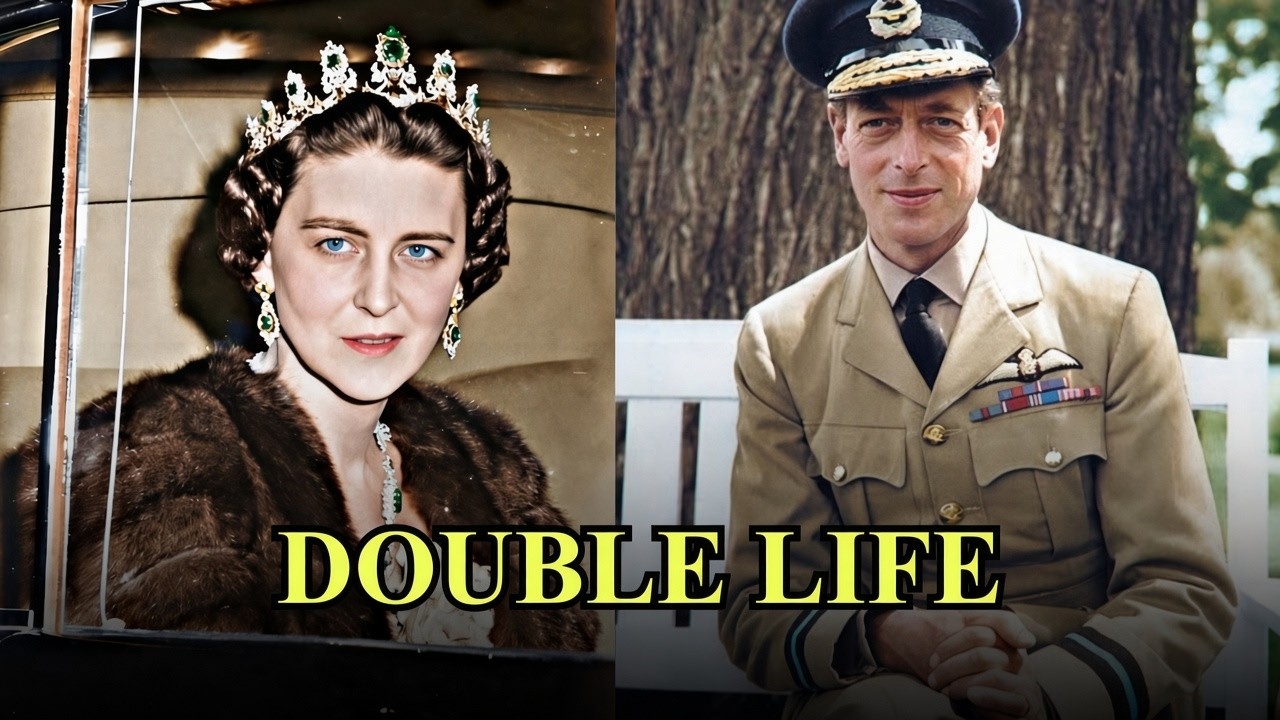
One of them was George, Duke of Kent, the younger brother of the king, a prince whose life the palace had spent a decade quietly containing. The official story was tidy, brief, and closed within days, and it has stayed closed ever since. The notices did not mention the life behind the uniform: the drugs, the lovers of both sexes, the blackmail, the reputation so carefully managed. He had been the most modern royal of his generation, and also the one they worked hardest to forget.
George was born to rule, not to revel. And yet, revel he did. While his elder brother, the future King George VI, adhered dutifully to a life of quiet service, George flung open the doors of his life to a world of scandalous speed and sound. He became a fixture of London’s most exclusive and notorious nightclubs, like the Embassy Club on Bond Street, where he would dance until the early hours, surrounded by a fast set of socialites, actors, and musicians.
His parties at his home, 3 Belgrave Square, were legendary for their extravagance and their guest lists, which famously included members of high society alongside figures from the bohemian arts. This was more than youthful indiscretion. It was a sustained, deliberate defiance of royal protocol at a time when the monarchy was meant to embody stability and tradition. He sped through London in his sports car, embracing the very modern cult of speed and glamour.
He was a regular at film premieres and fashion shows, cultivating an image less of a royal duke than of a continental playboy, traveling incessantly from the French Riviera to the Swiss Alps, chasing pleasure with a circle of international friends. Behind the dazzling travelogue and glittering parties lay a far darker reality. George had developed a serious addiction to drugs, primarily cocaine and morphine. This was a secret the palace was desperate to keep from the public.
In the 1930s, these substances were not only illegal but carried a devastating social stigma, especially for a royal prince. His usage was not casual. It was a dependency. He would often need a pick-me-up of cocaine to launch himself into the endless rounds of socializing, and then require morphine to come down from the frenetic highs and find sleep.
The cycle was brutal and isolating. While his international set might have dabbled recreationally, George’s relationship with these drugs was profoundly different, a form of self-medication for a deep-seated boredom and a profound sense of not belonging. The very duties and constraints of his royal life, which he found so stifling, were the things he was trying to escape. His hedonism was, in part, a symptom.
The drugs were a tool to numb a persistent inner disquiet, to artificially create the excitement and purpose his official life lacked. This hidden struggle made him vulnerable and unpredictable. It placed him in dangerous company with dealers and dubious characters, a world away from the safety of the palace walls. His brother, King Edward VIII, was reportedly aware of the problem and even facilitated some contacts, but no structured help was sought.
His addiction was a closely guarded secret within the monarchy. In 1934, Prince George finally seemed to settle down, marrying the elegant Princess Marina of Greece. The wedding at Westminster Abbey was a magnificent spectacle, a dazzling display of royal unity and a fresh start for the handsome, troubled duke. Marina, with her poise and beauty, was instantly beloved by the public, a perfect princess for a modern monarchy.
For a brief moment, the scandal of his addiction was overshadowed by the fairytale glow. But the stability was an illusion. The marriage, while producing three children, quickly became an arrangement of convenience. George’s affairs did not cease with his vows.
They continued unabated. He maintained a long-term relationship with the American singer and actress Florence “Flo” Desmond and was linked with numerous other socialites and entertainers. These were not discreet whispers but open secrets within the highest echelons of London society. At glamorous parties in Mayfair and country house weekends, everyone knew.
His friends, his social circle, even many within the family, simply looked the other way. Marina, bound by duty and public expectation, maintained a dignified silence. She played her part flawlessly, creating a beautiful home at Coppins and presenting the picture of a happy family. Yet, behind closed doors, she endured the humiliation, her own life constrained by the unspoken rules of the palace.
The Duke’s double life was an accepted fact, a necessary fiction to preserve the royal facade. Beyond the confines of his official marriage, the Duke of Kent had forged another life in Paris. There, far from the watchful eyes of the British court, his heart belonged to the city’s vibrant, dangerous nightlife, and more specifically, to a woman named Margaret “Margo” Alibert. She was a celebrated cabaret star, known for her smoldering performances and a past as tangled as his own.
Their affair was not a fleeting scandal. It was a long-term, deeply entangled relationship that began in the late 1920s and persisted in most cases even after his marriage. Margo was no ordinary mistress. She was sharp-witted, fiercely independent, and moved through a world of artists, gangsters, and spies.
Their connection was built on a shared taste for risk and a mutual understanding of living outside convention. He provided financial support and a touch of royal glamour to her world. She offered him an escape into a reality free from duty and pretense. They shared an apartment in Paris, a tangible home for a relationship the palace would later work so hard to erase from his story.
For roughly a decade, this parallel life in France was his true sanctuary. But that sanctuary was not his only secret. Another, far more perilous entanglement was forming. The Duke’s circle in the glamorous international set of the 1930s was a world of blurred lines where high society and high politics dangerously intertwined.
It was here he became intimately involved with the American heiress and socialite Kiki Whitney Preston, known as “the girl with the silver syringe” for her penchant for dispensing drugs at parties. Preston was a figure of immense allure and profound scandal. More alarmingly, she was a suspected Nazi sympathizer, moving in circles that openly admired Hitler’s regime. Their relationship was a dangerous liaison in every sense.
George was drawn to her wild charisma and continental lifestyle, a stark contrast to the stifling protocol of Buckingham Palace. Yet this was no discreet affair like his arrangement in France. It was a public and politically toxic connection. He was a senior royal, a brother to the king, and yet he was consorting with a woman whose loyalties were, at best, questionable and at worst, treasonous.
The idea that a prince of the United Kingdom could be under the influence, both romantic and potentially ideological, of a suspected Axis sympathizer on the eve of a world war was a security nightmare the palace could scarcely comprehend. For George, the danger wasn’t just ideological. It was chemical. Kiki Preston was the hand holding the needle.
She was known in exclusive circles by a very specific, chilling moniker, the girl with the silver syringe. Her role in the Duke’s life was that of primary supplier and companion in narcotic escape. She provided him with cocaine, a drug then seen as a glamorous, if illicit, indulgence among the wealthy elite. Their relationship was a shared dependency, a secret society of two within the whirl of high society.
The potential for blackmail was staggering. A compromised prince under the influence and in the thrall of a drug supplier represented a vulnerability of a different, more visceral kind. The silver syringe wasn’t merely a personal vice. It was a loaded weapon pointed at the heart of the monarchy’s reputation.
The king was done. The rumors, the nightclubs, the undeniable syringes, they could no longer be dismissed as youthful indiscretion. George V, the gruff patriarch who had steered the monarchy through one global war, now faced a domestic enemy he could not understand. His fury was a cold, disciplined thing.
He summoned his son. The audience was not a father speaking to a child, but a sovereign confronting a liability. The Duke of Kent was no longer just a wayward prince. He was a threat to the institution itself.
The king’s intervention was twofold: control and containment. First, he attempted to sever the connection to Kiki Whitney Preston. He demanded a clean break, a return to propriety. Second, he deployed the full quiet machinery of the palace.
Advisors were tasked with shadowing the Duke’s movements, social engagements were vetted, and the press, already heavily manipulated by the crown, was leaned upon with renewed force to kill any stories. The goal was to quarantine the scandal, to build a wall of silence around the prince’s private life. Yet the king’s authority, absolute in matters of state, met its limits within the human heart. He could command his son’s presence, but he could not command his obedience.
He could exile a mistress, but he could not extract the addiction. The pressure from the throne only forced the Duke’s struggles further underground. In the autumn of 1939, the solution, at least in the eyes of the palace, was a radical one. To remove the Duke from London’s temptations and the glare of the press, he was effectively exiled to the industrial Midlands.
The royal prince was to report for work at a factory. This was not a ceremonial visit. He was to live and labor there under an assumed name, as a form of both punishment and a desperate hope for rehabilitation. He arrived in Slough at the Prosperity Propeller factory, which produced parts for military aircraft.
Here, he was known simply as George Carter. His days began not in a palace but in a rented room. He clocked in and out alongside other workers, performing manual tasks on the factory floor. For roughly eight hours a day, the Duke of Kent was bending metal and handling machinery, a world of grease, noise, and sheer physical effort, a universe away from the cocktail parties and casinos of Mayfair.
The experiment was a profound shock to the system. There were moments of genuine connection with the men he worked beside, a glimpse of an ordinary life, but the loneliness was acute. The factory gates closed behind him each evening, leaving him alone with the very demons this exile was meant to cure. The work was real, but the escape was an illusion.
The Royal Navy offered something the factory floor never could: a structure built on centuries of discipline. For the first time in his life, Prince George was not merely a name on a payroll. He was a midshipman, His Royal Highness Prince George, a rank with tangible duties aboard a battleship. The endless rolling horizon of the North Atlantic replaced the grimy static walls of the factory.
His hands, which had turned wrenches, now learned the precise art of navigation and signaling. He reportedly took to it with a surprising, even zealous dedication. The same intensity that once fueled his chaotic private life was now channeled into mastering the complex routines of a warship. He served on HMS Iron Duke, the fleet flagship, and later on the cruiser HMS Nelson.
His commanders noted his professionalism and commitment. By roughly 1930, he had earned his lieutenant stripes, a promotion based on merit within a system that could not afford to coddle him. This was a reformation the palace could finally showcase. Yet the uniform could not hide everything.
Behind the disciplined public image, a different life pulsed. In the rarefied circles of London’s aristocracy, whispers followed the handsome Duke. His close, enduring friendships with men like playwright Noel Coward and socialite Jimmy Somerville were open secrets, fueling speculation. Persistent rumors of the era centered on the nature of his marriage to Princess Marina.
To the public, it was a glittering fairy tale. But in private, it was often described by contemporaries as a lavender marriage, a convenient union of mutual affection that provided a respectable cover for both parties’ outside attachments. The arrangement, it has been suggested, allowed George a certain discreet freedom. He was frequently seen in the company of a close-knit, sophisticated set where such matters were often understood but rarely spoken.
The palace machinery, ever vigilant, worked tirelessly to scrub any explicit evidence from the official record. Letters were destroyed, diaries edited, and potential scandals quietly neutralized. His naval service provided a perfect alibi for prolonged absences, a narrative of duty overshadowing personal life. His true sanctuary was the dazzling, decadent world of London’s artistic elite.
Among his closest confidants was the playwright, composer, and performer Noel Coward. Their bond was immediate and profound. Coward’s Mayfair flat became a haven for the prince, a place where the uniform could be shed for a silk dressing gown, and protocol was replaced by wit and piano tunes. This was the set, a tightly-knit bohemian circle of actors, artists, and writers, many of whom were homosexual.
Within these private salons and country house weekends, George was not His Royal Highness, but simply Georgie, valued for his charm, his taste, and his loyalty. He attended Coward’s first nights, championed his work, and reveled in the creative energy. Coward’s discretion was absolute. His letters to the prince, often written in a playful, coded language.
In this world, George reportedly found a sense of authenticity and acceptance that contrasted with his royal duties. Here, among the stage lights and the cigarette smoke, the Duke of Kent could truly breathe. But that freedom came at a cost. The very authenticity that defined his private life was a direct threat to the monarchy’s carefully crafted public image.
The duty of the courtiers, after all, was not to the man, but to the institution he represented. Their task was monumental: to shield the crown from scandal and preserve its dignity at all costs. This was the start of a quiet, relentless campaign of suppression. Editors of major newspapers were contacted discreetly, often over private lunches or at gentlemen’s clubs.
A polite, but firm understanding was reached. Certain stories were simply not to be printed. In many cases, a mere mention of the palace’s displeasure was reportedly enough to kill a piece. For more persistent journalists, the approach was different.
Favors were called in, or subtle reminders were given about the importance of national stability and the reputation of the empire. The unspoken threat was often the withdrawal of royal access, a potential death sentence for any society reporter. Beyond the press, the circle of trust tightened dramatically. Staff within the Duke’s own households were vetted with extreme care.
Those who might talk were quietly reassigned or offered generous settlements to leave service entirely. The goal was to create a hermetic seal around the Duke’s activities. His official schedule became a master class in misdirection, filled with impeccably dull public engagements that projected an image of dutiful conformity. As the 1930s ended, the performance had to change.
With the outbreak of the Second World War, the stage shifted from ballrooms and nightclubs to war rooms and airfields. In 1939, George was appointed to the intelligence division of the Royal Air Force, a position that leveraged his social connections and his fluency in several languages. His task was liaison, a delicate dance of information and diplomacy, primarily with the French and American air commands. This was not a frontline posting, but it was work of genuine, if clandestine, importance.
He shuttled between London and Paris, then later to Washington, using his charm and royal status to smooth alliances and gather insights. Yet, even here, the old George flickered through. His posting to Washington in 1941 followed rumors of personal conduct in Paris that had, once again, caused official concern. But the war would not confine him to a desk for long.
A deeper, more personal restlessness was pulling him toward a far more direct form of service. With the title of Duke of Kent officially conferred upon him, Prince George was now firmly embedded within the royal establishment. In 1940, he was appointed a staff captain in the Royal Air Force serving in the welfare section. His work involved frequent inspections of RAF bases across Britain, assessing airmen’s living conditions and morale.
He traveled extensively, his uniformed figure a reassuring presence. In early 1941, his responsibilities expanded when he was promoted to the rank of air commodore. He also undertook a significant diplomatic mission traveling to the United States to strengthen the vital Allied partnership. By August 1942, Prince George, Duke of Kent, held the rank of air commodore.
He was not merely a royal figurehead visiting troops. He was engaged in active service, involved in morale and inspection tours that took him into operational areas. His final assignment, however, remains shrouded in ambiguity. On the 25th of August, he boarded a Sunderland flying boat at Invergordon in Scotland.
The official record states the destination was Iceland. The purpose, officially, was a morale-boosting visit to Royal Air Force personnel stationed there. But the flight path, the specific nature of his duties on that journey, and the exact cargo of the aircraft have fueled decades of speculation. Some accounts suggest his mission involved more sensitive diplomatic elements related to the neutral, yet strategically vital, Iceland.
Others hint at clandestine objectives in the murky early years of the intelligence war. What is certain is that he was traveling in a war zone on a long and hazardous route over the North Atlantic. The Sunderland flying boat left Invergordon on the morning of August 25th, 1942, with 13 passengers and crew aboard, including the Duke. The weather that day was poor, with low cloud and mist clinging to the Scottish hills.
The aircraft climbed into that thick gray blanket. It was scheduled to refuel at an RAF base near Reykjavik, a flight of roughly five or six hours over open sea. Instead, just over an hour after takeoff, the aircraft slammed into a remote, peat-covered hillside near Eagle’s Rock in Caithness. The exact reason for the deviation from its course remains one of the crash’s enduring mysteries.
The crew were highly experienced. The aircraft was considered reliable. Some reports suggest a simple navigational error in the dense haze, a misreading of landmarks. Others whisper of possible instrument failure.
In most cases, such a crash in those conditions would leave few, if any, survivors. Here, there was a single, grim exception. Flight Sergeant Andrew Jack, the rear gunner, was thrown clear from his turret upon impact. He was found alive, though severely injured, amidst the wreckage and the bodies of his comrades.
The sole witness to the final moments could offer no definitive explanation for why their plane was so far off course over land when it should have been far out over the North Sea. He reported a sudden, violent lurch of the aircraft just before it struck the ground. There was no time for a warning, no shouted command. One moment they were in the thick Scottish mist, the next, the world erupted in noise and force.
Jack awoke to a scene of utter devastation, twisted metal, scattered luggage, and the terrible silence that follows catastrophe. He was found, badly injured but alive, by local shepherds and rescuers who had seen the fireball from the village below. The official inquiry concluded that the crash was an accident caused by a combination of poor weather and pilot error. The findings were stark and singular.
The report stated that Flight Lieutenant Frank Goyen, despite being a highly experienced pilot, had made a fatal navigational mistake. He had deviated from his planned flight path and flown directly into the cloud-covered hillside near Eagle’s Rock in poor visibility. The implication was clear. The tragedy was an accident, a terrible but straightforward case of a wrong turn in bad weather.
The inquiry’s speed is a primary point of contention. From the moment of the crash to the final verdict, the entire investigation took roughly just five weeks. For a disaster of this magnitude involving a senior royal, a military crew, and complex wartime conditions, many experts argue this was simply too fast to be thorough. Historians point to significant gaps in the evidence.
Most critically, the official report states that three engines were found to be functioning normally while one was feathered. Yet, several ground witnesses, including local shepherds and rescue workers, reported hearing the aircraft’s engines spluttering and cutting out entirely just before the impact. Their testimonies, which suggested a possible mechanical failure or even fuel starvation, were largely dismissed or minimized. The official meteorological report for the 25th of August, 1942 was unequivocal.
It stated the weather along the Sunderland’s route was “Good with a few patches of cloud. ” But a re-examination of the raw data told a subtly different story. That morning, a shallow but active weather front was pushing across northeastern Scotland. It brought with it bands of low cloud and intermittent, often heavy, rain showers.
These conditions were highly localized and could change rapidly over just a few miles. Witnesses on the ground that day recalled low, scudding clouds and poor visibility in the very corridor the Sunderland was to fly through. This mismatch meant the crew, while likely aware of some bad weather, were almost certainly operating with an incomplete and dangerously optimistic assessment of what they would actually encounter. The flight manifest itself was noted for being sparse, naming only a handful of individuals.
Yet, multiple ground crew who witnessed the departure that day would later state, under oath, that the aircraft was far more heavily loaded than that short list would suggest. They reported seeing several other high-ranking officers and civilian officials board the plane, men whose names were absent from the public record. Crucial pages from the logbook that covered the final hour of the flight were reported as missing from the official inquiry files. Even the aircraft’s designation was a point of confusion, with two different serial numbers being referenced in separate Royal Air Force communications about the very same crash.
The pilot entrusted with the Duke’s final journey was Flight Lieutenant Frank Goyen, a highly experienced officer of the Royal Air Force’s 228 Squadron. He was a veteran of wartime transport operations, accustomed to navigating the challenging and often treacherous weather conditions over the Scottish Highlands and the North Sea. His co-pilot was Flight Sergeant John Bull, another skilled airman. While experienced, Goyen had only recently returned to flying the Sunderland flying boat after a period on other duties.
His total hours on this specific type of aircraft were relatively low, roughly in the range of a few dozen. Furthermore, there was no dedicated flight engineer aboard, a role typically filled on such aircraft to manage the complex fuel systems and engine performance. With the crash site secured and the lone survivor’s account recorded, the nation was presented with a singular unifying story. Britain, already weary from years of war, plunged into official mourning.
Flags flew at half-mast. Newspapers were edged in black. The narrative for public consumption was clear: the tragic untimely loss of a beloved prince, a reformed prince, a prince who had left his playboy past firmly behind him to become a dedicated servant of his country. In this crafted atmosphere of national grief, any whisper of scandal or darker possibility seemed not just disloyal, but almost blasphemous.
The complex, flawed man was being gently, respectfully erased. In his place, the public was given a saintly figure to mourn. But the official story was a fragile thing built on omission. In the quiet, wood-paneled rooms of Whitehall, a decision was made to ensure just that.
The files pertaining to the Duke of Kent’s death, the crash investigation, and his personal life were immediately gathered and stamped with a classification that rendered them state secrets. The order came down. These documents were to be sealed for 100 years. This was not standard procedure.
It was an extraordinary act of concealment. The clock started ticking in 1942. The new due date was set for 2042. In the days following his death, another, quieter operation was set in motion.
A team of discreet palace aides was dispatched to his homes. They moved through the rooms of Coppins, the Kent family home, and his London residences with clinical efficiency. Personal letters, often written in a hurried, passionate hand, were gathered from desktops and bedside tables. Roughly a dozen bottles of various prescription medications, some half-empty, were cleared from bathroom cabinets and bedroom drawers.
They collected address books filled with private names. Photographs showing the prince in compromising situations were separated from the family albums. The physical evidence of a chaotic private life was systematically stripped away. Then, the target became George’s personal archive: his diaries, his letters, the candid correspondence with friends and lovers.
Palace aides, acting on direct orders from the highest levels, collected documents deemed compromising. In most cases, these papers were not preserved. They were simply destroyed, burned. The aides left no inventory, no record of what they had removed.
After the Duke’s death, a quiet but immense pressure descended upon his closest friends and associates. The message from the palace and from certain powerful family members was clear. To speak publicly of the Duke’s true life was a profound betrayal. Loyalty to the crown now meant loyalty to a carefully constructed fiction.
In many cases, this pressure was not a formal decree, but a subtle unspoken understanding. A raised eyebrow, a closed door, a chilling reminder of one’s place. To talk was to risk social ruin. Their silence was the price of their position, their wealth, their very safety.
They became custodians of secrets they could rarely share. In the vacuum left by the flames and the silence, a new portrait was painted. The palace, the government, and the press all collaborated on shaping a final, lasting image. The narrative shifted from the troubled prince to the gallant prince.
He was recast, posthumously, as a hero of the airwaves, a dedicated servant who died on duty. His artistic passions were reframed as the sophisticated hobbies of a Renaissance man. His complex personal life was smoothed into the story of a devoted family man. The process was so thorough that for a period of roughly two decades, the darker chapters seemed to have never existed at all.
But the life George left behind was not so easily contained. The woman who had been his most notorious companion, Kiki Preston, found herself cast adrift. In the months following the Duke’s death, Kiki was consumed by her addictions, her health deteriorating. By early 1946, roughly a year and a half after the plane crash, she was admitted to a private sanitarium in upstate New York.
Then, on a day in September of that same year, she was gone. Kiki Preston, born Alice Gorman, was found dead in her room. The official cause was listed as a cerebral hemorrhage, but the circumstances were, and remain, deeply mysterious. There were immediate whispers of a suicide, of a final, deliberate overdose.
No autopsy was performed at the family’s request, sealing the truth forever. The Duke of Kent’s life was a constellation of fleeting affairs, and each woman became a secret to be managed. Several of his former lovers were “looked after. ” This often meant a quiet financial settlement arranged through shadowy intermediaries.
The unspoken agreement was absolute silence. One known mistress was reportedly sent on a lengthy tour of Europe. Some of the most chilling cases involved women who posed a potential threat. We know of at least two instances where women were effectively institutionalized.
They were declared to be suffering from nervous conditions and committed to private sanatoriums. Their voices were medically and legally silenced. The burden of upholding his memory and the palace-approved version of it fell squarely on his young widow, Marina, Duchess of Kent, and their three small children. Marina performed this duty for over 50 years until her death in 1968.
Her public grace and stoicism, a perfect shield. She rarely, if ever, publicly wavered or hinted at the complexities or the scandals. The children, Prince Edward, Princess Alexandra, and Prince Michael, grew up in the shadow of a father they could not truly know. They were taught reverence for a simplified heroic figure.
This official silence wasn’t simply a passive void. It was an active, formidable barrier. The first wave of biographers approached the Duke of Kent’s life expecting the standard cooperation granted to historical figures. They were met with a polite, impenetrable wall.
Letters to former staff and friends went unanswered. Official requests to the royal archives were met with firm blanket denials. The result was a series of early biographies filled with elegant descriptions of uniforms, official tours, and architectural projects. They presented a polished, two-dimensional portrait.
Yet, the vaults were not entirely sealed. Persistent rumors swirled around the Duke’s possible involvement in espionage. Some whispered that his position and travels provided unique cover, making him a potentially valuable, if highly irregular, asset. Equally tenacious were the stories of his private life.
In many cases, these accounts spoke of a sustained use of narcotics, a habit cultivated within his fast set, and widely rumored to have been a significant factor in his erratic behavior and financial desperation. The Royal Household operates its archives under a guideline that typically closes personal papers for a century following the subject’s death. For George, Duke of Kent, who died in 1942, that theoretically meant his most private files would remain sealed until 2042. As the century wore on, the very system designed to control his legacy began to show its age.
In the 1970s and ’80s, a handful of historians, working with newly available government documents and cross-referencing obscure personal papers, began to quietly challenge the established narrative. They pointed out inconsistencies. They noted the curious gaps in his official military record during certain periods of the war. They highlighted the large number of his close acquaintances who were quietly edited out of the mainstream tellings of his life.
Researchers moving through the cold, quiet halls of the National Archives began to find them: the coded telegrams, the discreetly worded letters, the private memoranda. In one file, a government official noted the Duke’s need for special medical treatment during a sensitive overseas tour. In another, a police report from roughly 1939 referenced a certain habit requiring surveillance. A medical report from a London clinic, its patient’s name carefully omitted, detailed a course of treatment for a dependency on a powerful sedative.
Historians tracked down Kiki Preston’s own papers. In a collection of her personal letters held by a distant relative, they found a tangible link. One letter, written on elegant stationery from a Parisian hotel roughly in late 1934, was particularly revealing. In it, Kiki wrote to a close friend about a recent weekend party at a country house.
She described the Duke as a delightful companion, charming and witty. Then came the telling detail. She mentioned how he had shared her special medicine to soothe his nerves, a clear and knowing reference to the cocaine and heroin cocktails that were her trademark. This was a first-hand account in her own hand confirming the very drug use the royal household had tried so desperately to erase.
The Duke’s MI5 file is widely believed to exist, and its contents remain locked away, classified under the Official Secrets Act for well over a century. The greatest speculation swirls around a specific moment: his controversial visit to Nazi Germany in 1934. He met directly with Hitler and other high-ranking officials. British intelligence would have wanted a full debrief.
The file might reveal whether his views were seen as naive admiration or something more concerning. The Duke of Kent moved in a world where the lines between high society and high politics were dangerously blurred. He was a close friend of the Swedish multimillionaire Axel Wenner-Gren, a man whose vast business empire had direct ties to the Nazi regime and whom American intelligence would later label “Hitler’s banker. ” He maintained a long-standing friendship with the Duke and Duchess of Windsor, whose own documented Nazi sympathies and 1937 tour of Germany are a matter of historical record.
Perhaps most damning were his connections to members of the British aristocracy who formed the Cliveden Set, a group pushing for appeasement, and to Nazi diplomat Joachim von Ribbentrop. These were not casual acquaintances. They were deliberate, sustained relationships that placed a brother of the King at the very heart of a network that saw fascism as the inevitable and preferable future for Europe. His close friendship with the Baroness Agnes de Stoeckl provided another focal point for nervous officials.
The Baroness was a celebrated and controversial hostess, known for her dazzling parties at her Stockholm apartment. More critically, she was the sister of a Swedish aristocrat, Carl Bonde, who was widely believed to be a prominent Nazi sympathizer. The files noted the guest lists, the duration of his trips, and the sheer frequency of his contact with a woman linked to the Nazi cause through her family. Across the Atlantic, another agency was taking notes.
The American Federal Bureau of Investigation preferred documentation. Their files, opened decades later, offer a startlingly different perspective on the Duke of Kent’s private life, particularly concerning his relationship with Kiki Preston. The Bureau’s memos cataloged his movements and associations, noting meetings and parties, building a dossier where the palace had created a void. The files suggest US authorities viewed the Duke not just as a wayward prince, but as a person of interest whose vulnerabilities could be exploited.
The cover-up of the Duke of Kent’s death was not an isolated event. It fits a pattern, a long-standing institutional reflex within the palace walls. Consider Princess Margaret. Her passionate forbidden love for Group Captain Peter Townsend was a public sensation in the 1950s.
The palace machinery quietly pressured her to choose duty over love. Decades later, the case of Prince Andrew would demonstrate the same pattern. For years, his association with Jeffrey Epstein was downplayed. When that became impossible, the strategy shifted to a managed withdrawal.
From a crashed plane to a crashed reputation, the mechanism remains recognizable. An official version is constructed. Inconvenient witnesses are effectively sidelined. Within the borders of Britain itself, the most powerful silencing mechanism was an unspoken agreement.
The British press of the era operated under a culture of profound deference. Editors and reporters understood the invisible boundaries, the stories that were simply not to be pursued when they involved a senior member of the royal family. This was not the frantic omnipresent paparazzi culture of a later century. It was a gentleman’s club where discretion was valued above disclosure.
The intricate details of Prince George’s private life, his associations, and the circumstances of his death were not exposed to relentless scrutiny. The press, in many cases, voluntarily upheld the facade. His most significant and enduring relationship was with his family and church. The playwright Noel Coward was an intimate companion, a bond of shared wit and affection that spanned decades.
Another pivotal figure was American banking heir Jock Whitney, with whom George shared a passionate and very public companionship during the early 1930s. Their travels together from New York to Kenya fueled endless gossip columns. Then there was the Russian emigre and society photographer Serge Voronoff, a constant companion whose presence at George’s side was noted for years. Official biographies would either omit these relationships entirely or sanitize them into platonic anecdotes.
The arrival of the AIDS epidemic in the 1980s forced a profound historical re-examination. As obituaries mounted and a generation of gay men was lost, historians and journalists began digging deeper. They started asking urgent questions about pre-war lives, about networks and relationships that had often been whispered about but rarely fully documented. What had been dismissed as mere loose partying or bohemian eccentricity was now understood as a vital clandestine culture.
Figures like George could no longer be seen as isolated anomalies. He was now a part of a much broader tapestry of aristocratic and artistic gay life in interwar Britain. Within that carefully folded world, there existed a genuine passion. For George, art was not merely a royal duty but a personal sanctuary.
His taste was eclectic, sophisticated, and strikingly modern. While the public saw the uniform, those within his circle saw the connoisseur meticulously acquiring paintings, sculptures, and decorative objects. His collection was not assembled by committee. He frequented galleries and studios, engaging directly with artists and dealers.
He even tried his own hand at furniture design. This genuine artistic life provided a perfect and largely blameless cover. Newspaper columns could faithfully report on the Duke’s latest acquisition. In many ways, his role as an art collector became a highly sustainable public identity.
His commitment to charitable work provided a solid, respectable foundation for his public image. He was a passionate advocate for the arts, serving as president of the Royal Academy of Music. His support extended to the Royal Northern Hospital, where he served as president, and he was a dedicated patron of the Royal National Lifeboat Institution. He frequently lent his name and presence to fundraising events.
He often engaged deeply with the institutions he supported, visiting convalescent homes and meeting with nurses and patients. He was a deeply complex human. He was an accomplished musician, playing the piano with a skill that impressed professionals. His service as a naval officer, and later in the Royal Air Force, was marked by dedication.
Colleagues noted his diligence and a surprising humility when engaged in serious work. Yet, he was equally a man wrestling with profound inner conflicts. The pressures of his royal birth, the rigid expectations of his position, and his own complicated sexuality created a persistent state of unrest. He sought escape, sometimes in risky behavior, other times in artistic pursuit.
His legacy would subtly influence the royal family for generations. Most directly, it cast a long and instructive shadow over the upbringing of his great-nephew, Prince Charles. The establishment, having witnessed the dangers of a prince who strayed from a rigidly prescribed path, became more determined than ever to enforce conformity. Charles, born just over a decade after George’s death, was raised under a renewed and stricter emphasis on duty above all else.
The pressure to marry suitably and produce an heir was intensified, framed as the ultimate duty. The patterns of a restless royal spirit would surface again in the life of his great-nephew, Prince Harry. Harry’s rebellion, however, played out in a world of 24-hour news cycles and social media. His marriage to an American actress, Meghan Markle, echoed George’s own marriage to a commoner, which was itself a scandal for its time.
Both men were, in their own eras, seen as the spare to an heir. And both, ultimately, chose a form of exile. The historical record of George’s life remained frustratingly incomplete. Official royal papers started to become available to historians roughly 30 years after the events they documented.
Yet these released documents felt curated, scrubbed of anything that might fuel the more persistent rumors. Key letters were noted in catalogs as missing or restricted. Witness statements from the crash investigation remained sealed. The full truth, it appeared, was on a release schedule of its own.
The Duke of Kent’s legacy lived on in his children and now in his grandchildren and great-grandchildren. His son, the current Duke of Kent, has largely maintained the family’s tradition of discreet royal service. His grandson, the Earl of St. Andrews, forfeited his own succession rights by marrying a Catholic, an echo of the personal choices over protocol that marked his grandfather’s life.
Meanwhile, his granddaughter, Lady Amelia Windsor, has carved a modern, public-facing path as a model. Historians push against the polished marble of the establishment, seeking the cracks. They chase leads across continents, piecing together fragments from private letters sold at auction, from declassified intelligence reports, from the fading memories of the very few still alive who might have glimpsed the truth. Their fight is for full disclosure, not out of mere scandalmongering, but from a conviction that a nation’s history, in all its messy complexity, belongs to the public.
The royal family is entitled to its privacy, some argue. But history belongs to everyone. When a figure like the Duke of Kent lived a life funded by the public, when his actions, both heroic and reckless, played out on a world stage, does the public not have a claim to the full picture? The erasure of uncomfortable truths from the official record creates a hollow narrative.
Without transparency, myth replaces fact. The official story of the Duke of Kent’s death was a tragic accident in wartime service. Yet, the whispers have never fully faded. Was it pilot error, or was there something more?
The presence of a neutral Swedish diplomat on board fueled theories of espionage. We will likely never know for certain. Then there are the questions about the man, not the prince. The extent of his drug use, often hinted at, but never officially detailed.
His sexuality, an open secret among the elite of his time, remains formally unacknowledged by the historical record. So why, decades later, does the institution still seem to fear the full story? To acknowledge the full spectrum of his story is to admit the official portrait has always been incomplete. It risks revealing the machinery itself: the quiet negotiations with the press, the careful archival omissions, the strategic shaping of memory.
A complete account of George’s life would expose how the line between private and public is not a principle but a policy. A cover-up is never a true conclusion. It’s a buried seed. Decades later, when a document surfaces or a diary is found, that seed cracks open.
The public sees not just the original scandal but the deliberate act of concealment. A monarchy’s credibility isn’t built on perfection but on a perceived integrity. When it is shown to have actively manipulated history, that trust erodes. People begin to wonder not just about George, but about all the other files, all the other stories.
George, Duke of Kent, was a man of glittering promise and profound contradiction, whose story was systematically flattened into a footnote. The tragedy is twofold. It is the personal tragedy of a complex life with its passions and its pains being reduced to a sanitized official line. And it is the institutional tragedy of an ancient monarchy believing it could erase a human being from its own history to protect a brand.
A full, unvarnished truth may now be impossible to reconstruct. Key documents were destroyed, memories have faded, and the first-hand accounts are gone. We are left with fragments: a photograph, a whispered rumor, an official denial. We can document the erasure, but we can never fully recover what was erased.
The picture, once so carefully composed, is forever altered.
