The gambling inside Red Arrow’s lodge had carried on through the entire night, as it usually did when the men of the Hidatsa village crowded around the fire to play hide the bone. Otter Woman and I had drifted off to sleep to the sound of their singing, the steady slapping of hands, the rising and falling of wagers. When we woke the next morning, the players were still going, and there among them sat the white man, Toussaint Charbonneau, playing right against our captor. We sat up, still sleepy, paying them little attention at first.
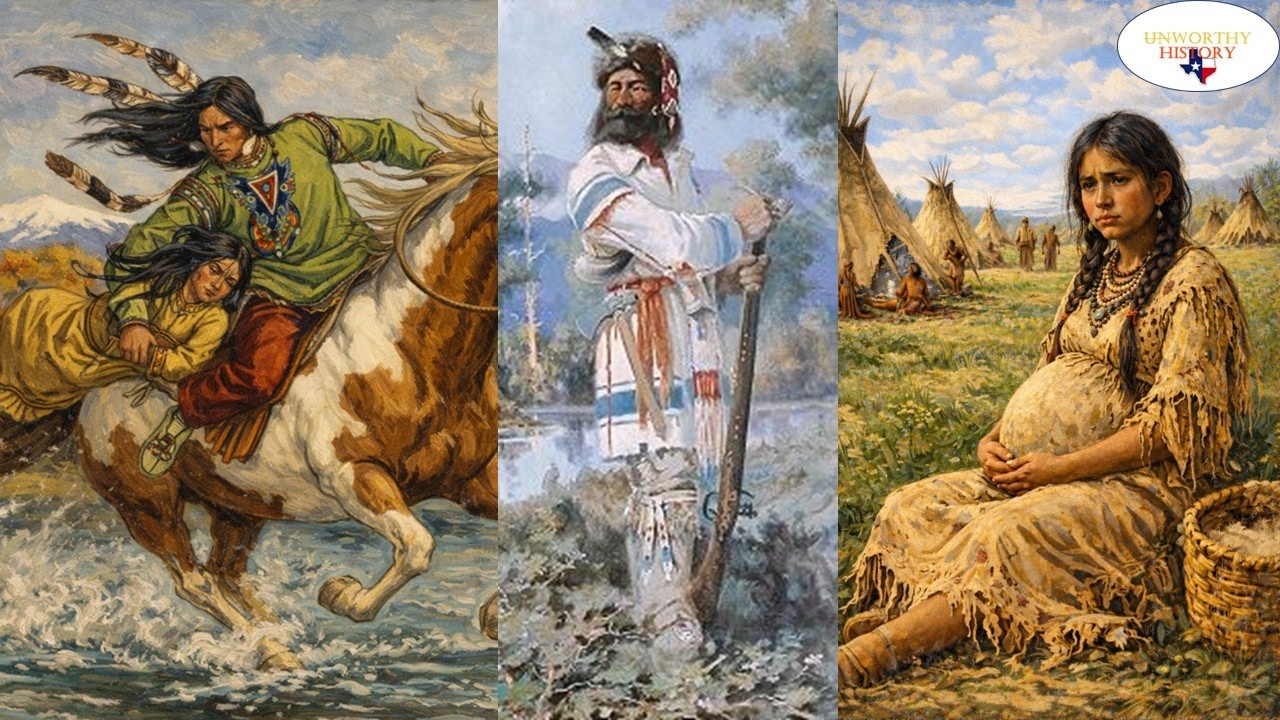
But then I watched the white man signal to Red Arrow: “You claim you have nothing left to bet. You have several things. Your spotted buffalo runner is a fine horse. My black runner is faster.
I will wager my black against your spotted horse. “
Red Arrow considered it for a long while. “No,” he replied. “That horse is what brings me meat.
If I lose him, my women and children will go hungry. “
“You have been losing all night,” the white man countered. “It is time you started winning. “
Red Arrow scowled at the fire, rubbing his palms together, his brow furrowed deep.
Then he drew himself up and signed, “No. I will not put my children’s food at risk in this game. “
The white man laughed. “I will bet my fast buffalo horse against your two Snake captives.
“
“Yes,” Red Arrow signed. “No, no! ” I shrieked, and Otter Woman shrieked too. “Oh, Red Arrow, great chief, good chief, do not gamble us away.
We will work for you so hard. “
But he would not even glance at us. He picked up the two bones, the white one and the black one, and started to juggle them while the gambling song swelled around him. He moved them from hand to hand, behind his back, nodding to the rhythm of the singing.
At last he held his two closed fists up before his shoulders, and the song ceased. The white man studied the two hands for a long time, stared into Red Arrow’s eyes, then pointed to his left hand. Red Arrow opened it and revealed the black bone. Otter Woman and I started to weep.
Red Arrow’s women cried out and berated him, for they had grown to love us. Red Arrow himself sat like a man who had lost his senses. Then he straightened and signed, “I will bet my spotted fast runner, and all fourteen of my horses, against the two girls. “
The white man shook his head.
“No. I have won them, and I intend to keep them. “
There was nothing we could do but obey. As we trailed Charbonneau out of the lodge, weeping harder than before, we left Red Arrow sitting bowed and hunched over, his women furiously scolding him.
That is how I came to belong to the white man. But to explain how I came to be a captive in that village at all, I must go back much further, to my people, the Snakes. It is not from cowardice that my people are poor, that they hide hungry in the mountain forests. It is because they cannot hold their ground against the plains tribes, above all the Blackfeet.
Whenever the Snakes ventured onto the plains after buffalo, they were pushed back by enemies who greatly outnumbered them. At last, in a summer of scant rain, when few salmon swam up the rivers and there were only a few roots, the chiefs of the Snakes, the Flatheads, and the Pend d’Oreilles held council together. The Snake chief said: “It seems to me we have lacked good sense. We have been going out onto the plains to hunt, each tribe in a separate place.
That is where we made our mistake. Let us band together. We will then number so many warriors that I doubt the Blackfeet or our other enemies will even try to drive us from the plains. Their plains, I say.
Why, they are our plains too. Come, let us make plenty of arrows and go out and kill all that we want. “
The other chiefs agreed. When they had made all the arrows they could need, the three tribes crossed the mountains and camped just above the Great Falls of the Missouri, amid countless herds of buffalo.
The people were joyful. They feasted, the women dried great quantities of meat and tanned hides for robes and lodge skins. Day after day, scouts watched in every direction for enemies. One morning, enemies were spotted coming from the north, about two hundred men on foot.
When the chiefs heard this, they laughed. “We are more than six hundred men. Today we shall teach the enemy a lesson they will never forget. We shall kill all of them except two or three, who shall go home and tell their people that we are now united and too powerful to be driven from the plains.
“
All the warriors mounted their best horses, slung their bull hide shields, and rode out gladly. The enemy, out on the open plain, did not halt when they saw them coming. They raised their war song and kept right on. Our chiefs said, “They are crazy, crazily brave.
“
As our warriors rode closer, the chiefs warned them not to shoot until they were near enough to see the enemy’s eyes. But before they could ride that near, the enemy halted. Some raised what looked like shining sticks and pointed them. Suddenly fire and smoke and booms of thunder burst from the ends of the sticks.
Riders and horses fell as though struck by lightning. Five riders and three horses went down. The rest of the more than six hundred riders turned and fled back to camp. They gathered their women and children and whatever property they could carry, and away they went up the trail to the mountains, to hide from their plains enemies and starve in the forests of the west slope.
Never again, they said, could they venture out after buffalo. Their enemies had been favored by the gods, given thunder and lightning. It was useless to fight men who carried the weapons of the sky gods. There followed winters and summers of hunger.
The three tribes hid deep in the forest, catching a few salmon, killing a little game, eating whatever roots they could find. Summer after summer, the plains war men sought them out, raiding their horse herds and killing many with the thunder and lightning weapons. At last, it was learned that these weapons were not god-made. A party of Snakes wandering far south met white men who carried the same weapons and said they were not medicine.
The white men fashioned the weapons themselves, along with the black powder and the round balls that fed them. They would neither give nor sell the Snakes even a single one, so the war party stole one and hastened north. Once the Snakes understood that the weapons were made by men, they grew less fearful and sometimes dared to go out onto the plains, usually in late fall, after the war parties of the plains tribes had stopped their roaming. That was the way of things when I was born and when I was growing up in the camp of my people.
Many, oh many times I fled from sudden attacks by the Blackfeet, the Minnetarees, and other plains enemies. From the melting of the snow until its return, the moons were moons of terror for us all. As I grew older, deer and elk grew scarcer in our mountain country. In the spring of my tenth summer, food became so scarce that we had to cross the mountains to hunt buffalo or starve.
We made our way down to the fork of our big river, which my white chiefs would later name the Snake River. We could not wait there for the summer run of salmon, so we broke camp and moved east to the west side of the pass at the head of the Missouri River. Some hunters went through the pass and down the east slope, returning with as much meat as they could pack. They reported that the buffalo were far below the forks, too far to hunt from where we were.
Our chiefs decided we should cross the pass and camp near the forks. Better, they said, to die with full bellies than to starve where we were. We crossed and camped on the west fork of the Big River, the Jefferson, not far above its meeting with the middle fork, the Gallatin. The hunters went down the valley every day and returned with buffalo meat and hides.
For the first time in many moons, we had enough to eat. The women dried meat from sunrise to sunset. Yet all of us ate and worked with fear in our hearts, always watching for a war party. We dared not sleep in our camp.
As soon as the sun set and we finished our evening meal, we scattered out, a family here, a family there, to sleep in the thick brush or up on the mountainside. One morning soon after the hunters had gone down the valley, one of them came back as fast as his horse could carry him, shouting that the enemy was coming. Right on his heels came other hunters to run in our horses, while others, among them my father, tried to hold the enemy back until we were on our way. The camp was thrown into confusion.
Women and children ran about crying, paying no attention to the old men begging them to wait for the horses. Some ran for the brush with their children. Only a few heeded the old men. I had been playing with three or four girls a little way above the camp when the trouble began.
I ran down as fast as I could, calling and calling for my mother, running first to our lodge, then to other places. I could not find her. I tried to stop people and ask, but they paid no attention. Hardly knowing what I was about, I turned and ran from camp into the timber, making my way up the valley.
Soon I heard the boom of guns and the shouts of the fighters. I ran faster, tearing through the brush, stumbling and falling. Now and then I saw women and children and hurried toward them, but my mother was not with them. I was a good runner, strong of body, but all too soon I began to tire.
To my right I heard my people calling to one another as they fled for the pass. I worked my way to the trail just as the last party was passing, and I cried out for help, for a horse, but they were so frightened they never looked toward me. I stumbled on after them a little way, then turned back into the brush. At last the timber gave out.
Ahead lay a long open bottom, but across the river the timber continued. I looked for a place to cross and waded in, but the water was deep and swift. I went far up the bottom before I found a shallow ford. As I started to cross, I saw four riders coming and thought they were my people.
I stopped on the shore, intending to ask them to let me ride behind one of them. Then, all too late, I saw they were enemies. I ran into the river, stooping low, hoping the bank would hide me. I did not look back.
I was no more than halfway across when I heard a horse splash into the water behind me, then others. A rider seized my arm and yanked me up onto his horse in front of him. I whirled and tried to bite and scratch his face, but he just laughed and clasped me with his left arm so I could not hurt him. He turned his horse, and down the trail we went, they talking and laughing in their language.
I was so frightened I could not cry, not even when we passed a boy and a girl, two of my playmates, lying dead beside the trail. On the way to their camp we were joined by others of the enemy, some with captured horses, two with girl captives of my own age. When we arrived, we found a gathering of more than a hundred. Some held a great band of Snake horses, others guarded boy and girl prisoners, and the rest went through our camp, taking what pleased them and setting fire to the lodges, hides, saddles, everything that would burn.
We were nine prisoners, four boys and five girls. One of the girls, named Otter Woman, was my close friend. She ran to me as soon as my captor let me down, and we cried together. She told me she had been captured by the same man who took me, and that he had left her with companions while he went on in pursuit of our people.
While the camp burned, our captor cut out horses for Otter Woman and me and saddled them. The other prisoners were given saddled horses too, and we were all ordered to mount and ride. Down the trail we went, passing here and there our people, dead and scalped. The boys and girls cried afresh at each one, all but Otter Woman and me.
We felt as badly as the others, worse perhaps, but we could not cry. We made camp at sunset beside the river. We prisoners were ordered to build a fire and were given fat buffalo meat to roast. We cooked it but could no more than taste it.
Everywhere around us the war party settled by small fires, talking and laughing and roasting meat. The moon was full and so bright that we could make out the great band of horses spread across the flats, with four or five men circling them to hold them together. After a while the man who had taken Otter Woman and me came over, sat down close by, and spoke to us in signs: “You two belong to me. I will bring you to my big lodge, where you will have food in plenty and good clothes, and you will help my women with their work.
You will be as my own children to me. Have no fear, but do not attempt to run off. If you do, I will have to kill you, for I cannot be troubled to chase you down and fetch you back.”
We gave him no answer.
He continued: “How is it? Do you understand?” We signed that we did. He was a man of about fifty, with a kind face and a soft, laughing voice.
But oh, how we dreaded him that first night. He signed to us to lie down and sleep, and we did, pressed close together side by side. We had no mind to sleep. We kept watching our captors, hoping to slip away once they lay down.
Yet they set three men on guard, who came and sat near us. At midnight three more took over the watch. At that, frightened as we were, we slept, too tired to stay awake. At daylight they roused us, took us to the river to wash, gave us meat, and told us to make haste.
We were hungry and far less afraid, so we did eat. Then the horses were brought, and we were on our way once more. We rode till noon, rested, and rode till night. Through that long day we grew somewhat accustomed to our captivity, less fearful that our captors intended worse than to keep us as slaves.
But we had no intention of being slaves. That evening we laid plans to escape, to get back to the mountains and find our people hiding in the forests on the west side. Yet as quickly as we made a plan, we saw that it was no good. How could we escape when a guard watched us all night?
We wept and fell asleep. On the fourth evening we reached a spot just above the falls of the river, the farthest we had ever come out onto the plains. The next day we crossed a high, waterless plain, then struck the river again and made camp. For two days we crossed a great plain, and on the evening of the second day we camped at the west end of some mountains, the Bear Paw Mountains of the Blackfeet country, as I learned afterward.
The plains filled us with terror. As far as we could see to the north and east they stretched to the edge of the world without a break. If we escaped without horses or water, we would die of thirst before we could ever cross them again. That night, for the first time, our captors left no guard over the camp, and the horse herd was out of sight behind a ridge.
As soon as we were certain, we whispered that we should crawl out one by one into the dark pine forest and run for our lives. But one of the boys asked: “Where would we run? We do not want to go east. We cannot go west across the waterless plain.
This is not the time. We must wait. Once they see that we are quiet, our captors will stop watching us, and when the right time comes, we will get away.”
We agreed and went to sleep.
The next morning we came to a small stream running through a wide, low valley. We felt sure it came from our great mountains. It was the stream my white chiefs would later name the Milk River. We said to one another that if we could escape, we could follow it up to our mountains, then turn south along them to the big river and through the pass to our people.
We agreed to try that night. That day the great herds amazed us. Buffalo and antelope covered the valley and plain. In every grove were elk, white-tail deer, and mule deer.
Late in the afternoon, as we passed a point of timber, we came upon a big bear going into the timber with an antelope fawn hanging from its mouth. It dropped the fawn, sat up, looked at us, and with loud roars came charging straight at us. A bear charging more than a hundred riders driving several hundred horses. It had no fear of the thunder of hooves.
It came in long, swift leaps, and we all scattered and rode for our lives. It nearly caught a girl on a small, slow horse. It followed us a long way before giving up. That evening, when we made camp by the river below a large grove, our captors for the first time ordered us to gather wood for the fires.
We were afraid to enter the timber, thinking another great bear might be in it. But one of the men turned on us so fiercely that we ran for the timber, more afraid of him than of bears. After all, we said, there may be no bear in that grove. We went in a step or two at a time, farther and farther, until we were out of sight of our captors.
“Come, let us run,” one of the boys proposed. “Let us hide in the thick willows, and when night falls, head up this valley for our mountains.”
“We should never reach them,” said a girl. “The big bears would kill us all.
” All the other girls agreed. Another boy said: “I have been thinking hard. Even if we escaped the enemies and the bears, without a bow and arrows to kill meat, we should starve to death on the long trail.” What he said was true enough.
There were no roots in this country. The berries were not ripe. We had seen only a few small fish in the river. Then the first boy, who was older and wiser, said: “Let us hurry and gather a lot of wood.
Though our hearts are low, let us talk and laugh around our fire. That way we shall make our captors think we no longer want to escape. They will stop watching us. There will come a time when we can steal bows and arrows, maybe even a gun.
”
As he proposed, we did. We surprised our captors with our talk and laughter that evening. We could see them watching us, agreeing that we were forgetting our people. Day after day we rode down that valley.
On the evening of the fifth day we made camp where it met a broad river of muddy water—the big river we had left not far from our mountains. Its valley stretched wide, and its groves of cottonwoods and willows ran long and broad. If we could slip into one of them, we felt sure our captors would never find us. That evening we did not wait to be told to gather firewood.
We started carrying it from a large pile of dry driftwood caught on a sandbar just below the mouth of the little river. Several logs lay in it that could easily be rolled into the stream. The boy who had become our leader, whose name was Elkhorn, studied them for a long while. He walked around them, stood first at one end and then the other, and pressed against them with the backs of his legs.
We were supplying wood for six fires every evening. That night he told us to build our fire at the edge of the circle closest to the river. We did, and no one ordered us to move it. None of our captors paid us any mind beyond laying beside us plenty of meat from a fat buffalo cow they had killed while we made camp.
After we had eaten, Elkhorn said: “Now I am going to tell you something. While I tell it little by little, do not look at me. Look at one another, say a few words, do some laughing. If I can steal a bow and arrows or a gun after our captors fall asleep, we shall try to escape.
”
He paused, and we talked and laughed about nothing, though it was hard because we were so anxious. “At the edge of the drift are two dry logs we can roll into the water. If I get a weapon without awakening anyone, we shall one by one crawl down the bank of the river to the drift. We shall roll the logs in so they float.
Half of us clinging to one, half to the other, we shall push out and swim to the other shore. We shall drift downstream a long way. But once we get into the timber on the other side, we shall be safe. Our captors will hunt a long time up this side and never think we crossed.
In the shelter of the timber we can travel in the daytime and kill what meat we need. So if the bears do not get any of us, we shall all be with our people by the end of another moon. ”
We all thought his plan good. One by one we told him we should do as he said.
Oh, how fast our hearts beat. Otter Woman, lying by my side, almost at once went to sleep. I nudged her, pinched her, whispered that she must keep awake. She promised she would and went right back to sleep.
I soon knew from their breathing that all the others except Elkhorn were asleep. He lay on the opposite side of the fire, on his stomach, his head toward the enemy. Two men remained up, talking and smoking long after the others slept. Their fire died to red coals, and they livened it with handfuls of dry twigs.
Watching them, I found myself getting sleepy. Two or three times I caught myself falling asleep. After the two men found no more twigs and lay down by their dying fire, it was still harder to keep awake. Toward the last I cast off my robe and even bit my wrists now and then.
I was the only one who saw Elkhorn when he began to wriggle like a snake toward the nearest sleeping group. In the bright moonlight I could see him plainly. He went so slowly he did not seem to move at all. As he neared the sleeping men, he often raised up and looked at them for a long time.
My whole body trembled with eagerness. Then I saw him, after crawling close to the nearest sleeper, begin to back away. I thought he was giving up. But no, he circled to the right of the sleepers and crawled straight to the outer one.
More slowly than ever, he paused by that one’s side, then backed away and turned toward us. I almost cried out when I saw he was shuffling along with something gripped in his right hand. As he neared, I made out it was a bow and arrow case. It was time for me to wake the others.
But right at the start I made a great mistake. I should have begun with my best friend Otter Woman at my side. Instead, I awakened the girl nearest me on my right, then one by one the girls beyond her, then the boys. I put my hand upon the mouth of each and whispered, “Awake.
It is time to go. ” They sat up, saw Elkhorn coming, and began crawling toward the riverbank. I went back to Otter Woman, put my hand over her mouth, and whispered to her to awake. She never moved.
I shook her gently, whispering again and again, but all she would do was breathe more heavily. I dared not pinch her or do anything that would make her wake suddenly and cry out. All that time our companions were going. I looked around and saw that all but one of them, the first girl I had awakened, had gone out of sight down the slope to the riverbank.
That girl had gone back to sleep. Oh, how angry I was at those two girls. I was minded to leave them. I did start to do so, but my love for Otter Woman drew me back.
Again and again I rolled her head and whispered, still without effect. Finally, after a look at the sleeping men, I stood up, took hold of her hands, and began to pull her to her feet. At that she suddenly awoke, shrieking as loudly as she could: “No, no, don’t kill me! ”
As one man, our captors awoke and sprang to their feet, calling to one another and rushing to us.
Some seized Otter Woman, me, and the other girl, Leaping Fish Woman, while others ran in all directions seeking the missing. Scared as I was, I noticed that those who ran to the bank looked down and out at the drift pile, then turned and ran into the timber. We were soon left with but one man guarding us: the man who had captured Otter Woman and me at the three forks of the Big River, the man who owned us. He was not angry at us for attempting to escape.
He simply laughed and motioned for us to accompany him into the timber to gather wood, so we could make a fire and roast meat. As we walked, I heard—truly heard—a splash in the water behind us. We all heard it and exchanged glances, then looked at our captor, but he paid it no mind. A longtime dweller on this great river, he was accustomed to its banks being carved away and swept off by the currents.
Only when I later returned to my people with my white chiefs did I learn that the splash came from a log in the drift pile. Those boys and girls had concealed themselves behind the pile, and when everything grew quiet, they pushed a log into the stream and drifted far down to the opposite shore. From there, after nearly two moons of travel, they reached our west-side country and found our people. Elkhorn had no trouble killing meat with the bow and arrows he had taken from the sleeping enemy, nor in making fire with a bow drill, and those boys and girls saw no enemies along that long trail.
They did, however, have two narrow escapes from the great bears of the Big River valley. We three were sad-hearted girls and sat by the fire we had built for our captor. He offered us meat, but we refused it. Even the sight of it made us sick.
As he ate, he frequently burst out laughing and finally signed: “My friends up there in the timber are like birds scattering in every direction in search of their little ones. As for me, I have my little ones. Here you are, right with me. I wish you could see your faces—so sad and old-looking, as if you were about to die.
No, my little ones, you are not about to die. Soon you will be living in a good lodge, eating plenty of food, wearing fine gowns. Come now, wipe away your tears.”
Otter Woman and I just sat and stared.
The other girl was different. Even then, young as she was, she grew quickly and fearlessly angry. She thrust her head forward like a snake and spat at him. The man laughed even harder and signed: “Now, that is what I like to see—a brave heart.
Women of the brave heart make good wives. When you grow up, you shall surely be my wife.” Leaping Fish Woman spat at him again and signed, “I hate you.”
After a long while the men came straggling back from their search.
A few caught horses and rode off to look again. The rest of us lay down to sleep. Our captor made Otter Woman and me lie down close to him, and Leaping Fish Woman’s captor signed for her to lie beside us. We could not sleep, so great was our sorrow that we had not escaped with our companions.
When morning came we were on the trail again, so tired we could barely sit our horses. Day after day we continued down the valley of the Big River, through great groves of cottonwoods and across wide, grassy bottoms covered with buffalo, antelope, deer, and elk, so tame they would only move out of the trail ahead of us. Each evening our captors killed a number of fat buffalo cows and took only the choice parts, leaving great quantities of meat to the wolves. We had never seen such waste, and we expected the gods to punish them for it.
At last we arrived at the village of our captors, this village in which I now stand. We stared at the great sloping, earth-roofed round lodges, all enclosed by a fence of cottonwood logs set upright in the ground. The people stared at us, especially the women and girls, some wearing gowns of a strange, soft red or blue material we would soon learn was trade cloth. Our captors entered the village singing their war song and waving the scalps they had taken, and were loudly greeted and praised.
The man who had captured Otter Woman and me led us into his lodge. We were surprised at its size and comfort. The coldest weather of winter could never be felt there. Soft beds of buffalo robes lined the walls, curtained with brightly painted leather.
Two women, the wives of our captor, and their children came in with us. He signed that we were to mind them and do all they told us. One woman, the head wife, gave us a couch and soon brought us large earthen dishes full of food from the pots around the fire. It was strange food, corn boiled with meat, but it tasted so good we ate it all.
So life began for us in this village of the Minnetarees, as you call these people, the neighbors of the Mandans. In their language they call themselves Hidatsa. That first evening we got our greatest surprise when three white men came into the lodge to visit our captor. They were traders from a post of the Northwest Company, somewhere north of the Assiniboine River.
Two were young men, smooth-faced and blue-eyed, with sun-colored hair. We thought them the most handsome men we had ever seen, and we were not afraid of them. The other man, much older, had dark hair growing long upon his cheeks and under his nose, and his appearance was so horrible, so sickening, that after one quick look we could not look again. They asked us many questions in sign language about our people and our country, and we answered as well as we could.
The next day our captor’s women, for his name was Red Arrow, set us to work tanning buffalo leather. Later we were taught many kinds of work. What we liked most was working in the field of corn and other plants. It was pleasant to watch the plants grow and flower, and the flowers turn into fruit good to eat.
We soon had a helper, for Red Arrow bought Leaping Fish Woman from her captor, paying four horses and a gun. It was his pleasure to tease her every evening, and sad-hearted as we were, Otter Woman and I could not help but laugh at the way she would suddenly anger at him, spit, and sign all the mean taunting things she could think of. At first we three were always talking of escaping. But as time passed, Otter Woman and I became less eager, thinking of the great dangers of the long trail.
Leaping Fish Woman was different, braver than we. She never ceased planning to escape and often told us that if we would not go with her, she would go alone. We did not believe she meant it. The summer passed and the long winter, and by spring we had all three learned to speak the language of our captors.
The moment the new grass started to sprout, Leaping Fish Woman spoke more and more often of returning to our people. At last, one evening, she announced that she would attempt her escape that very night, entirely on her own. The dread of the long trail, the fearsome bears, and the Blackfeet warriors was something we simply could not overcome, and we still clung to the belief that she would not leave without us. When we rose the following morning, she was gone.
Every man in the village joined Red Arrow in the search, yet not so much as a footprint was discovered. For a long while we grieved for her deeply. Then, twice that summer, war parties came back bearing Snake scalps and Snake horses seized in raids beyond the mountains. Their celebrating wounded us, and we were miserable enough.
When winter arrived, a white man who had a Minnetaree wife and dwelt in the village below moved up to ours and purchased a lodge. He had once been a Nor’wester but was by then a free man. Part of the time he trapped and hunted, and he traded with the Cheyennes and other tribes. This man, Toussaint Charbonneau, was a frequent guest in Red Arrow’s lodge, arriving to gamble at hide the bone for horses, guns, knives, and property of every kind.
Though he had kept a Minnetaree wife for a long while, he could not grasp the language of the tribe, so he conversed by signs. It was on one such morning, following a night of gambling, that the game was played which altered my life. When Charbonneau won Otter Woman and me, Red Arrow offered his spotted runner and all fourteen horses to buy us back, but the white man would not agree. We trailed him to his lodge, weeping harder than we ever had.
His Minnetaree wife had a gentle heart and treated us kindly, and before long we grew to love her. She was frail, so we took over her labors. It was not long before we were performing all of it: the lodge work, the garden work, the tanning of hides, the hauling of wood and water. We spoke of escape less and less.
After a winter or two we never brought it up at all, save when a war party came home with Snake scalps and Snake horses. At those times we were sorrowful, but apart from that we were settled, even quite happy. The white man, old enough to have been our father, was occasionally short-tempered yet generally kind to us. His anger flared and faded just as fast.
So, laboring hard and playing never, we grew into young women. There came a season when I felt so wretched I could not speak of it. I wept and wept and came close to throwing myself into the river to finish it all. A young Mandan called White Grass, who came often to the Minnetaree village, looked my way, and I looked his, for he was pleasing to behold, slender and tall, handsome of face and long of hair.
In time we got to exchanging a few words whenever we met and passed. One day, while Otter Woman and I were tending our patch of ripening corn, he came and declared that he loved me. I felt no shame. I told him I had been hoping for a long while that he would say those words.
We sat down at the border of the corn, and while Otter Woman kept working, he told me that we should have a lodge of our own among his people. They would raise it and furnish it. We should have our own garden and grow plenty of good food, and he would hunt and bring in abundant meat. To everything he said, I replied, “Yes, that is how it would be.
“
Then Otter Woman spoke up: “Don’t be foolish. Don’t go making plans until you hear what our white man owner has to say about this.”
“He will say yes, naturally,” my young sweetheart cried. “I will give him ten horses for you.
He cannot turn down ten good big horses.”
I laughed with joy and said the white man would never refuse that many for me, more than I was worth. But Otter Woman shook her head. “He will not sell you for twenty, no, not for every Mandan horse.
“
White Grass leaped to his feet and drew me up beside him. “I will show you that you are wrong. We will go to the white man right now, and I shall give him the horses.” Off we went across the flats and into the village.
We halted at the lodge entrance and glanced at each other, afraid for the first time that things might not turn out as we hoped. Then White Grass drew himself up and led the way. Oh, how handsome he was, how fearless, as he stopped before the fireplace and addressed the white man seated on his couch: “White man, great chief, this girl, your slave, I love and she loves me. Ten horses, ten good big horses, I give you for her.
“
Charbonneau was slow to grasp it, and the youth had to say it again in signs. Then he understood. He leapt to his feet in a fury and bellowed in French: “Dog Mandan! Get away from here.
Go, go, go. Never set foot in this lodge again. Out in the village, in the gardens, in the timber, wherever you see this Snake girl, go around and never speak to her. Hurry, get out of here.”
“
White Grass gave no reply. He stared at the shouting, arm-waving white man and slowly turned to leave. As he went past, he said to me: “Take courage, sweetheart. I go, but I shall return.
I go to make a name for myself, to take horses and yet more horses from the enemy, and scalps as well. When I come again, he will not dare refuse to give you to me.”
I turned back toward the corn, almost blinded by tears. The white man thundered at me to halt and ordered his Minnetaree woman to accompany me, to keep watch over me, and to make sure the young Mandan never came near.
The poor, ailing woman did as she was bid, and from then on, wherever Otter Woman and I went, she was forced to go along. But her heart did not belong to her white man. It belonged to us. The following day, while we were in the corn, she kept watch on the village as White Grass slipped in from the hills and had a final talk with me.
Otter Woman sat beside me while he told me over and over how much he loved me, and I promised him that however long I had to wait, I would be his woman. He would set out the next day, he said, with a party going to war against the Pawnees, and would surely take plenty of horses. That would be the start of his labor to gather so many horses that the white man could not refuse to trade me for them. Then he kissed me four times, the sacred number, mounted his horse, and rode off down the flats.
That was the final time I laid eyes on my Mandan sweetheart. Less than a moon had passed when word arrived that the war party, on its way to the Pawnee country, had been set upon by the Arikaras, and that every man but two had been slain. Those two survivors said my sweetheart had battled bravely to the very end and had felled a mighty Arikara warrior before he himself went down. The white man laughed when the tidings came, laughed long and loud, and turned his eyes upon me.
Though I felt my heart tearing loose within me, I would not let a single tear fall in his sight. I held my face still and asked my almost sister to talk with me, to say whatever she could so that we might keep talking. She understood, and asked whether I thought the buffalo would grow their thick coats early this winter. But oh, how I wept and grieved for my lost sweetheart when I was off in the corn or the timber, far from the white man.
Otter Woman and I worked hard, harvesting the corn and putting it away, then hauling in load after load of firewood against the winter. Day by day, moon by moon, the white man’s Minnetaree woman grew thinner and weaker. With the first snow of winter she took to her couch, and soon she died. The white man did not appear to care.
He bade us help her relatives raise a scaffold out on the flats and bind her body upon it. When we came back to the lodge, he said to me: “Now that the old woman is gone, you two shall be my wives. You shall be my head wife. Your place is here beside me on this couch.
Your friend there shall have that couch. As head wife, I look to you to keep this lodge in good order. The blame will be yours if there is not always garden food in the pots and plenty of wood at hand. Whatever time you are not otherwise busy, you will tan the hides I bring in.
Now, do you understand all that I have said? “
For many moons I had seen this coming and dreaded it. Now that it had come, I was so frightened of him that I could not answer, not even nod my head. I was more frightened than when the Minnetaree warrior had seized me in the river.
I felt I had not the power to move even a finger. Otter Woman was weeping. The white man went silent, and I could hear him breathing hard the way he did when angry. Soon I heard him spring up from his couch.
He seized me and lifted me and flung me upon his couch, crying out: “I’ll teach you to mind me. Now stay there, right there where you belong. “
So it was that I became the head wife of Charbonneau. The story does not go into detail about what happened after that.
But we know that when Lewis and Clark met a pregnant teenage girl in a Mandan village in November of 1804, she was no more than sixteen years old, and the child she carried was Charbonneau’s. On February 11, 1805, she gave birth to a son. That young Shoshone woman, who had been torn from her people as a child, gambled away by one master to another, and made a wife against her will, was Sacagawea.
She would go on to carry that infant across the continent with the Corps of Discovery, and history would remember her as the expedition’s guide.
