In the spring of 1960, on a film set in New York, a married woman was falling for a man who was not her husband. Natalie Wood, the most famous young actress in America, was playing a scene of desperate longing opposite Warren Beatty, a 22-year-old unknown whose Broadway run had closed within weeks. The cameras were rolling, but what was passing between them was not entirely acting. By the time the film reached theaters, her marriage to Robert Wagner would be over, and the affair would make Beatty the most talked-about young man in Hollywood.
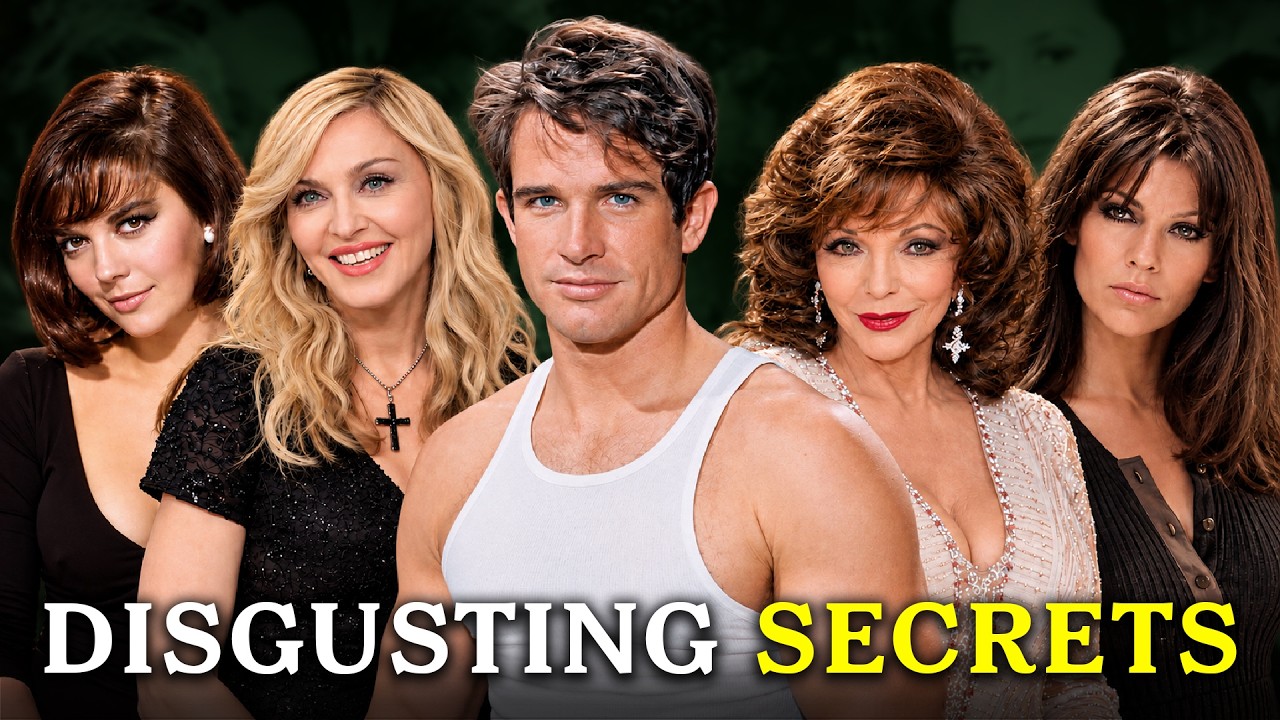
The piano in the bar was a memory by then. A few years earlier, he had sat at cocktail lounge keyboards in Manhattan while customers talked over the music, a handsome young man that almost nobody in the room bothered to look at twice. It was the last time in his life that would be true. He was born Henry Warren Beatty on March 30th, 1937 in Richmond, Virginia, the younger child of a quiet, bookish household.
His father, Ira Owens Beatty, was a teacher and school administrator who later went into real estate. His mother, Kathlyn MacLean, had grown up in Nova Scotia, Canada, and taught drama. His older sister, born three years before him, was named Shirley, the girl the world would come to know as Shirley MacLaine, one of the great movie stars of the 1950s and 1960s. Long before either of them became famous, the two siblings grew up putting on little performances at home, absorbing their mother’s love of theater and their father’s quieter, more reserved way of looking at the world.
The family settled in Arlington, Virginia, just across the river from Washington, D. C. At Washington Lee High School, Warren was the kind of teenager other students remembered: tall, broad-shouldered, strikingly handsome, a star of the football team and popular in a way that seemed effortless. Several colleges offered him football scholarships.
He turned them all down. In 1955, he enrolled at Northwestern University near Chicago to study drama. He lasted about a year. College felt too slow, too far from the real thing, and by the following year he had moved to New York City, determined to become an actor.
Those early New York years were lean ones. He took almost any job that would pay the rent. He worked construction, including a stretch on a crew digging a new tunnel under the Hudson River, and played cocktail piano in bars around Manhattan. Night after night, he sat at the keyboard working through standards and show tunes while customers talked over the music.
In between, he studied acting with Stella Adler, one of the most respected acting teachers in the country, whose students had included Marlon Brando. Somewhere along the way, he added a second T to his last name, becoming Warren Beatty. By then, his sister was already a movie star in Hollywood. Some people assumed her fame would open doors for him.
If it did, he rarely admitted it. He seemed determined to make his own way. By the late 1950s, the doors began to open on their own. He appeared on television, including a recurring role as a smug rich kid on the sitcom The Many Loves of Dobie Gillis.
Then the playwright William Inge cast him in a Broadway play called A Loss of Roses, which opened in November 1959. The play itself closed quickly, but Beatty’s performance earned him a Tony Award nomination. People in the theater world noticed him. So did women.
And one of the first women to fall for him was already a movie star herself. Joan Collins was 26 years old when she met Warren Beatty in 1959. He was 22. She had already been under contract with 20th Century Fox for several years, appearing in glossy studio pictures, and had recently gone through a difficult divorce from the British actor Maxwell Reed.
She was not looking for something serious, but Beatty was persistent, charming, and, by her account, completely absorbed in her. Within a short time, the two were living together, and before long, they were engaged. They were photographed together at parties and premieres, and for a while it looked as if Joan Collins might become the first Mrs. Warren Beatty.
Years later, in her 1978 memoir Past Imperfect, she painted a far more complicated picture. She described a man whose appetite for romance seemed to have no limit, who wanted to be with her at almost every hour of the day and night. She also described someone who was always on the phone, constantly checking in with agents, producers, and friends, never quite fully present even when they were together. There was something else in her memoir that was far more painful.
During their relationship, Collins discovered she was pregnant. She was at a point in her career where a baby would have changed everything, and the relationship itself felt uncertain. She made the difficult decision not to continue the pregnancy, and she later wrote about it with regret and with the sense that it had changed something between them. Meanwhile, Beatty’s career was beginning to take off.
In 1960, he was cast in his first major film, a romantic drama directed by Elia Kazan. While Joan Collins was away working on her own pictures, he spent his days on a set in New York, falling into the arms of his co-star. By 1961, the engagement was over. Collins moved on with her life and her career, eventually becoming world famous decades later as Alexis Carrington on Dynasty.
She never seemed to hold a deep grudge against Beatty. If anything, she spoke about him over the years with a kind of wry amusement, as if she had survived something that many other women would also have to survive. The co-star who replaced her, however, was not single. Natalie Wood had been a movie star since she was a little girl, appearing in Miracle on 34th Street at the age of eight and earning an Academy Award nomination for Rebel Without a Cause when she was still a teenager.
By 1960, she was 22, one of the most famous young actresses in the country, and married to Robert Wagner. The two were Hollywood’s golden couple, married in December 1957 when she was just 19. They were young, beautiful, and constantly photographed, and the public adored them. In 1960, Wood was cast opposite Beatty in Splendor in the Grass, written by William Inge and directed by Kazan, about two high school sweethearts in 1920s Kansas whose love is torn apart by family pressure and the rigid expectations of a small town.
Kazan was known for pushing his actors to bring their real feelings into their performances. By most accounts, Wood and Beatty did not get along at first, but as filming went on, something between them changed. Kazan himself later suggested in his memoir that he sensed the growing attraction between his two young stars and did nothing to discourage it because it was bringing something real to the screen. Filming took place largely in New York in the spring and summer of 1960 on sound stages and in the countryside outside the city, standing in for 1920s Kansas.
The most famous scenes in the film are full of longing: two young people desperately in love, held apart by the adults around them. Watching it today, more than 60 years later, there is a rawness in those scenes that still feels startling. Many viewers at the time sensed that what they were seeing was not entirely acting. Robert Wagner, for his part, rarely spoke publicly about that period for decades.
When he finally did, in his own memoir, he described the end of his first marriage to Natalie as one of the most painful chapters of his life, a time when he felt that everything he had built with her was slipping away and he could not stop it. Splendor in the Grass was released in October 1961. It was a major success. Wood earned her second Academy Award nomination, this time for Best Actress, and Beatty won a Golden Globe as one of the most promising new stars of the year.
Almost overnight, he went from a stage actor with a few TV roles to one of the most talked-about young men in Hollywood. By then, Natalie Wood’s marriage was already over. In June 1961, she and Robert Wagner announced their separation. The press was stunned.
Rumors spread quickly that Warren Beatty was the reason, and the two were soon seen together openly. The divorce was finalized in 1962. For years, a story circulated around Hollywood about how the relationship ended. According to the tale, Beatty took Natalie Wood to dinner at a well-known restaurant, stepped away from the table, and never came back, leaving instead with another woman.
Nobody has ever been able to fully confirm it, and it may be one of many legends that grew around him. But the fact that so many people were willing to believe it says a great deal about the reputation he was already building. Whatever the details, the relationship ended in 1962. Natalie Wood later remarried Robert Wagner in 1972, and the two stayed together until her death in 1981.
Beatty, meanwhile, had become something new in Hollywood: the young man that married women were warned about. Just a year later, that reputation would follow him into a courtroom in London. Leslie Caron was one of the most elegant actresses of her generation. Born in France, she had trained as a ballet dancer before Gene Kelly discovered her and cast her in An American in Paris in 1951.
She went on to star in Lili and Gigi, and in 1963 she earned an Academy Award nomination for her performance in a British drama called The L-Shaped Room. She was also married to Peter Hall, a brilliant young British theater director who had founded the Royal Shakespeare Company and who would later run the National Theatre in London. They had two young children together. Caron met Warren Beatty in the early 1960s, and the attraction between them was immediate.
By most accounts, she fell for him very deeply. Their relationship became an open secret, and then it became much more than that. In 1965, Peter Hall filed for divorce in a London court. In those days, British divorce law required a reason, and one of the most common was adultery.
Hall’s case named Warren Beatty directly as the other man in the marriage. The court granted the divorce and ordered Beatty to pay the legal costs. The headlines were enormous. This was the London of the mid-1960s, the city of the Beatles, Carnaby Street, and miniskirts, a place that liked to present itself as modern and free.
And yet, even there, being named in a divorce case like that was a public scandal. For Peter Hall, a serious man of the theater, the humiliation was deeply personal. For Leslie Caron, it meant seeing her private life picked apart in newspapers around the world. The image of Warren Beatty as a charming home wrecker became fixed in the public mind.
Caron and Beatty remained together for a while after the divorce. They even made a film together, a romantic comedy called Promise Her Anything, released in 1966. But the relationship did not last. Years later, in her memoir, Caron wrote about Beatty with a mix of affection and clear-eyed honesty.
She described him as intelligent, funny, and endlessly curious, but also as someone who was always searching for something just over the horizon. She did not seem bitter. She simply seemed to understand that loving him had come at a very high price. By the mid-1960s, Beatty was famous mostly for his romances.
His film career, after the early promise of Splendor in the Grass, had stalled with a string of pictures that did not quite work. He played a young Italian gigolo opposite Vivien Leigh in The Roman Spring of Mrs. Stone in 1961, a drifting young man in All Fall Down in 1962, and a troubled therapist in Lilith in 1964. None of them became the hit Hollywood expected.
He also turned down roles that might have changed everything. In the early 1960s, the Kennedy White House reportedly hoped he would play the young John F. Kennedy in PT 109, a film about the president’s wartime heroics. Beatty, unimpressed with the script, said no.
Many in Hollywood assumed he would become just another handsome face whose personal life was more interesting than his movies. He was about to prove all of them wrong by doing something almost no young actor had ever dared to do. In the mid-1960s, Beatty became interested in a script about Bonnie Parker and Clyde Barrow, the real-life bank robbers who had roamed the American Southwest during the Great Depression before being killed in a police ambush in Louisiana in 1934. The script had been written by two young magazine writers, David Newman and Robert Benton, and it was violent, funny, sad, and unlike anything Hollywood studios were making at the time.
Beatty bought the rights and decided to produce the film himself. For a young actor in 1966, it was an extraordinary move. Stars were supposed to act, not run the business. But Beatty had always been more than a pretty face.
He was obsessive, detail-minded, and a relentless negotiator. He took the project to Jack Warner, the head of Warner Brothers. Warner disliked it. He thought it was strange and messy and could not understand why anyone would want to make a film about two criminals.
According to a story Beatty and others told for years, Beatty got down on his knees in Warner’s office and begged him to make the picture. Warner eventually agreed, giving Beatty a small budget and a deal that included a share of the film’s earnings. Beatty cast Faye Dunaway, then mostly unknown, as Bonnie, and hired Arthur Penn to direct. When the film was released in August 1967, it was initially greeted with confusion.
Some critics hated it, especially the influential New York Times critic Bosley Crowther, who attacked it for its violence. But audiences, especially young audiences, loved it. The film became a sensation. It was re-released, earned enormous sums of money, and received 10 Academy Award nominations, including Best Picture and Best Actor for Beatty himself.
It won two Oscars, for Estelle Parsons as Best Supporting Actress and for its cinematography. Bonnie and Clyde changed Hollywood. Film historians often point to it as the beginning of a new era, sometimes called the New Hollywood, in which younger filmmakers took more control and made darker, more personal pictures. Warren Beatty, at just 30 years old, had helped start it.
By the end of 1967, Time magazine had put the film on its cover as the symbol of a new kind of American movie. Bosley Crowther, the critic who had attacked it so fiercely, left his post at The New York Times not long afterward, and many in the industry saw his departure as a sign of how completely the old tastes had been overtaken. Because of his share of the profits, Beatty had become a very wealthy man. Now he was not just a heartthrob.
He was a powerful producer, a star, and a man with the money and freedom to live exactly as he pleased. For the next several years, the woman he lived with would be one of the most beautiful and independent actresses of the entire decade. Julie Christie had won the Academy Award for Best Actress in 1966 for Darling, and had followed it with Doctor Zhivago, one of the biggest hits of the decade. With her blonde hair, wide eyes, and natural, unpolished style, she seemed to capture the spirit of the time.
She and Beatty became a couple around 1967. For many people, they were the most beautiful pair in the world. Unlike most of his earlier relationships, this one lasted for years. They split their time between Los Angeles and London, and worked together on some of the most memorable films of the 1970s.
In 1971, they starred together in McCabe and Mrs. Miller, a moody, rain-soaked Western directed by Robert Altman, for which Christie earned an Oscar nomination. Later, they would appear together again in Shampoo and in Heaven Can Wait. During those years, Beatty famously lived in a penthouse suite at the Beverly Wilshire Hotel in Beverly Hills.
It was a strange, unsettled kind of home for a man of his wealth, but it suited him: room service, a constant stream of visitors, phones ringing at all hours, and the freedom to come and go without anyone knowing quite where he was. Friends joked that the hotel switchboard knew more about his private life than anyone else alive. Julie Christie was not the type to be dazzled by any of this. She disliked Hollywood and much of what came with it.
She was politically engaged, fiercely private, and not particularly interested in fame. By most accounts, Beatty wanted to marry her, and she did not want to marry anyone. She valued her independence too much. There were also, by most accounts, other women during those years.
The relationship was not exclusive in the way a traditional marriage might have been, and the tension of that eventually took its toll. Around 1974, the two drifted apart. They remained close friends for the rest of their lives, and Christie continued to work with him on screen even after the romance had ended. Years later, people who knew them described Julie Christie as perhaps the great love of his early life, the one woman who never fully belonged to him.
But while that relationship was quietly ending, a song began playing on radios all over the world. In late 1972, a singer-songwriter named Carly Simon released a song called “You’re So Vain. ” It was clever, catchy, and a little bit cruel: a portrait of a self-absorbed lover who walks into a party as if he owns the place and spends more time admiring himself than paying attention to anyone else. It went to number one in the United States in early 1973 and became one of the defining songs of the decade.
The question everyone asked was simple. Who was it about? Carly Simon refused to say. For more than 40 years, she kept the answer secret, dropping hints, teasing interviewers, and once even auctioning off the secret to a single winning bidder who promised not to tell.
Names were floated constantly, including Mick Jagger, who sang backing vocals on the record, and Simon’s then husband, James Taylor. But one name came up more than any other: Warren Beatty. Simon and Beatty had been involved briefly in the early 1970s. Finally, in 2015, Simon confirmed that the second verse of the song was about him.
She added, with obvious amusement, that Beatty seemed to believe the entire song was about him. There was something perfectly fitting about that. Even when a song accused him of vanity, he seemed to take it as a compliment. By then, his reputation had become a kind of national joke.
Comedians referenced it. Talk show hosts teased him about it. One famous line, often attributed to Woody Allen, suggested that in his next life, he would like to come back as Warren Beatty’s fingertips. People laughed, and Beatty, by most accounts, laughed along.
He rarely denied anything. He also rarely confirmed anything. Then, in 1975, he did something that seemed almost like a confession. He co-wrote and produced a film called Shampoo, directed by Hal Ashby.
In it, he played George, a hairdresser in Beverly Hills who sleeps with many of his wealthy clients and cannot commit to any of the women in his life. The story was set over a single day in 1968, on the night Richard Nixon was elected president. Julie Christie played one of his former girlfriends. Goldie Hawn played his current one.
A teenager named Carrie Fisher made her film debut in a small role. Audiences could not help but wonder how much of the character was really Warren Beatty. He always said George was based on other men and that the film was a satire about a whole generation. Many people did not believe him.
Shampoo was a big hit, and Lee Grant won an Oscar for her supporting role. During those same years, Beatty was involved with Michelle Phillips, the singer from the Mamas and the Papas. Her own romantic history was already the stuff of legend. Her marriage to John Phillips, the group’s leader, had been famously stormy, and in 1970 she had married the actor Dennis Hopper, a marriage that lasted only about a week.
She and Beatty lived together for a time in the mid-1970s in the hills above Los Angeles. Like so many before her, she eventually moved on. And like most of them, she later spoke about him without bitterness. By the end of the decade, Warren Beatty was in his early 40s, still unmarried, still the most famous bachelor in Hollywood.
And he was about to fall for a woman who would go on to make one of the most ambitious films of his life alongside him, and who would pay a heavy price for it. Diane Keaton had won the Academy Award for Best Actress in 1978 for Annie Hall. She had been involved with Woody Allen and later with Al Pacino. Around 1978, she began a relationship with Warren Beatty.
That same year, Beatty had another major hit with Heaven Can Wait, a gentle fantasy comedy about a football player who dies too soon and returns to life in someone else’s body. He co-directed it, co-wrote it, produced it, and starred in it, and was nominated for Academy Awards in all four categories. Julie Christie co-starred, a sign of how warmly the two still felt toward each other. But Beatty had a much bigger dream.
For more than a decade, he had wanted to make a film about John Reed, an American journalist who had witnessed the Russian Revolution in 1917 and written a famous account of it, and about Louise Bryant, the writer and activist he loved. It was a sweeping, complicated story about politics, idealism, and a turbulent romance. And very few people in Hollywood believed it could work. Beatty cast himself as Reed and Diane Keaton as Bryant.
Filming began in 1979 and stretched on for about a year across England, Spain, Finland, and the United States. Beatty directed it himself, and he was famous on set for his perfectionism, asking actors to repeat scenes dozens of times, sometimes many dozens, searching for something he could not always describe. For Keaton, the experience was exhausting. She was not only his leading lady but also his partner off-screen, and the pressure of both roles began to wear on her.
People on the set later described tense moments between them and long days in which the line between the romance in the film and the relationship in real life seemed to blur. Reds was released in December 1981. It was long, serious, and beautiful, and it earned 12 Academy Award nominations. In March 1982, Warren Beatty won the Oscar for Best Director.
Maureen Stapleton won for Best Supporting Actress, and the film also won for its cinematography. Keaton was nominated for Best Actress. By then, their relationship was effectively over. They had been through too much together.
Keaton later wrote about him with real warmth, describing his intelligence, his charm, and his ability to make her feel extraordinary. She never spoke of him with bitterness, and in later years, she was among those who seemed genuinely fond of him. Diane Keaton died in October 2025 at the age of 79. After Reds, Beatty’s life quieted for a while.
He made fewer films. He spent more time working on political campaigns, as he had for years, supporting Democratic candidates including George McGovern and Gary Hart. When he did return to the screen, it was with one of the most famous flops of the decade. In 1987, he starred alongside Dustin Hoffman in Ishtar, a comedy directed by his old friend Elaine May, about two hopelessly untalented songwriters who stumble into a political conflict in the Middle East.
The production went badly over budget, and the press mocked the film before many people had even seen it. Its co-star was the French actress Isabelle Adjani, and during those years she and Beatty were romantically involved. Like so many of his relationships, it was intense, private, and over within a few years. Ishtar became shorthand in Hollywood for an expensive disaster, and for a time it seemed as if Warren Beatty’s best days might be behind him.
But at the end of the 1980s, his name returned to the headlines in a way nobody expected. The next woman in his life was not a quiet movie star. She was the biggest pop star on the planet, and she brought a camera with her. In 1989, Warren Beatty was preparing to direct and star in Dick Tracy, a colorful comic book style film based on the famous detective comic strip.
For the role of Breathless Mahoney, a glamorous nightclub singer, he cast Madonna. She was 30 years old. He was 51. Madonna was at the height of her fame, the most famous woman in pop music, known for pushing boundaries and controlling every part of her public image.
Their romance began during the making of the film, and almost immediately the press went wild. On the surface, it seemed like a perfect match of two experts in fame. But the relationship was strained from the start. Beatty was famously private, and he preferred to keep his personal life away from cameras.
Madonna lived her life in front of them. That difference was captured in a documentary called Madonna: Truth or Dare, released in 1991, which followed her during her Blond Ambition world tour in 1990, the tour of the famous cone-shaped corset designed by Jean Paul Gaultier. The documentary cameras followed her almost everywhere, backstage, in hotel rooms, and in the quiet moments in between. For a man who had spent decades protecting his privacy, being caught in that kind of spotlight was something entirely new.
Beatty appears in several scenes. In one of the most famous moments, as Madonna is being examined by a doctor with cameras rolling, Beatty jokes that she does not want to live off camera and wonders out loud what the point of saying anything is if it is not being filmed. Audiences laughed, but many people saw it as a sharp, sad observation about the relationship itself. He was a man who had spent his whole life guarding his private moments.
She was a woman who seemed to have very few private moments at all. Dick Tracy was released in June 1990 and did well at the box office. Madonna’s song from the film, “Sooner or Later,” won the Oscar for Best Original Song. But by the end of 1990, the romance had ended.
Warren Beatty was now in his 50s, and in the minds of many people, he had become a kind of permanent Hollywood bachelor. Few believed he would ever marry. Fewer still believed he would ever slow down. But before his story took its most surprising turn, a writer would try to put an actual number on his legend.
In 2010, the film critic and author Peter Biskind published a biography called Star: How Warren Beatty Seduced America. It was a detailed account of his life and career based on interviews with many people who had known him. But it was one figure in the book that caught the world’s attention. Biskind estimated, through a rough calculation based on stories of Beatty’s younger years, that he might have been with nearly 13,000 women.
The exact figure he arrived at was 12,775. Newspapers around the world ran the number in their headlines. Talk shows joked about it. For a few weeks, it seemed as if every conversation about Warren Beatty began and ended with that one statistic.
Beatty was not amused. He made it clear that he found the number ridiculous, and anyone who did the math could see it would have required an almost impossible pace over an entire lifetime. But the damage, or the legend, depending on how you looked at it, was done. What is beyond question is that his romantic history includes some of the most famous women of the 20th century.
Joan Collins, Natalie Wood, Leslie Caron, Julie Christie, Carly Simon, Michelle Phillips, Diane Keaton, Isabelle Adjani, and Madonna are only the best-known names. Over the decades, he has also been linked by biographers and journalists to many others, from Brigitte Bardot to Britt Ekland and Jane Fonda. For years, the stories surrounding him were treated mostly as charming Hollywood folklore. But in November 2022, a much darker accusation appeared.
A woman named Christina Hirsch filed a lawsuit in Los Angeles. She claimed that she had met Beatty on a film set in 1973, when she was only 14 or 15 years old, and that he had pursued an inappropriate relationship with her while she was still a young teenager. The case was filed under a California law that had temporarily opened the door for older claims of this kind. Beatty did not comment publicly.
In December 2023, a judge dismissed the case permanently, noting that she had been representing herself after her lawyer withdrew. The allegations were never tested at trial. For many people, it was a jarring moment. It forced a second look at a reputation that had once been laughed about on late-night television.
But long before that lawsuit and long before the biography, Warren Beatty’s life had already taken a turn that almost nobody had predicted. In 1991, Beatty began work on Bugsy, a stylish crime drama about the gangster Benjamin Siegel, who helped build the early Las Vegas. He played Siegel. For the role of Virginia Hill, the glamorous woman Siegel loved, he cast a 32-year-old actress named Annette Bening.
Bening had just earned an Oscar nomination for The Grifters. She was intelligent, confident, and completely unimpressed by Hollywood gossip. By many accounts, she was also not especially interested in becoming the latest name on a famous man’s list. Friends said she made it clear from the beginning that she would not play by his old rules.
Somewhere during the making of Bugsy, the two fell in love. The film was released in December 1991 and received 10 Academy Award nominations. By then, Annette Bening was expecting their first child. In January 1992, their first child was born.
Two months later, in March 1992, Warren Beatty and Annette Bening were married. He was 54 years old. It was his first and only marriage. People who had followed his life for decades could hardly believe it.
The man who had seemed allergic to commitment for 30 years settled into family life with surprising ease. He and Bening had four children together: Kathleen, now known as Stephen, Benjamin, Isabel, and Ella. He spoke often about how fatherhood had changed him. Friends who had known him in the Beverly Wilshire years were astonished to see him driving children to school and turning down projects so he could stay close to home.
When he made Bulworth in 1998, a sharp political satire, and later Rules Don’t Apply in 2016, a long-delayed film about the eccentric billionaire Howard Hughes, Annette Bening was very much part of his world, and the marriage had become the longest relationship of his life. He made fewer films. He became, by every public account, a devoted husband and father. In 2017, Beatty returned to the Oscar stage alongside Faye Dunaway to mark the 50th anniversary of Bonnie and Clyde.
They were there to present Best Picture. In one of the strangest moments in Academy Awards history, they were handed the wrong envelope. Beatty paused, puzzled, and Dunaway read out La La Land as the winner before the mistake was discovered and the award went to Moonlight. For a few seconds, the whole world watched a 79-year-old Warren Beatty hesitating on stage, holding a card he could tell was wrong.
Today, more than 65 years after he played piano for tips in a New York cocktail bar, Warren Beatty’s legend seems almost too large for one life. The rumors, the numbers, the songs, and the scandals have taken on a life of their own, repeated so often that it can be hard to tell where the man ends and the myth begins. The women who knew him best have rarely spoken about him with anger. Joan Collins wrote about him with humor.
Leslie Caron wrote about him with honesty. Julie Christie remained his friend. Diane Keaton remembered him with warmth until the end of her life. And yet, each of them, in her own way, described loving a man who always seemed to be looking toward the next door, the next room, the next story.
For most of his life, that story never seemed to end. Then, in his 50s, he finally walked into a room and stayed.
