On the evening of December 7th, 1987, Carolyn Rome stood beneath the Temple of Dendur at the Metropolitan Museum of Art, as America’s most powerful figures sipped champagne under the silk she had draped across the ancient sandstone. She was wearing a gown of her own design, and the crowd seemed to orbit around her as though she had permanently defied gravity. Henry Kissinger was present. So were the Rockefellers, the Beises, the Trumps.
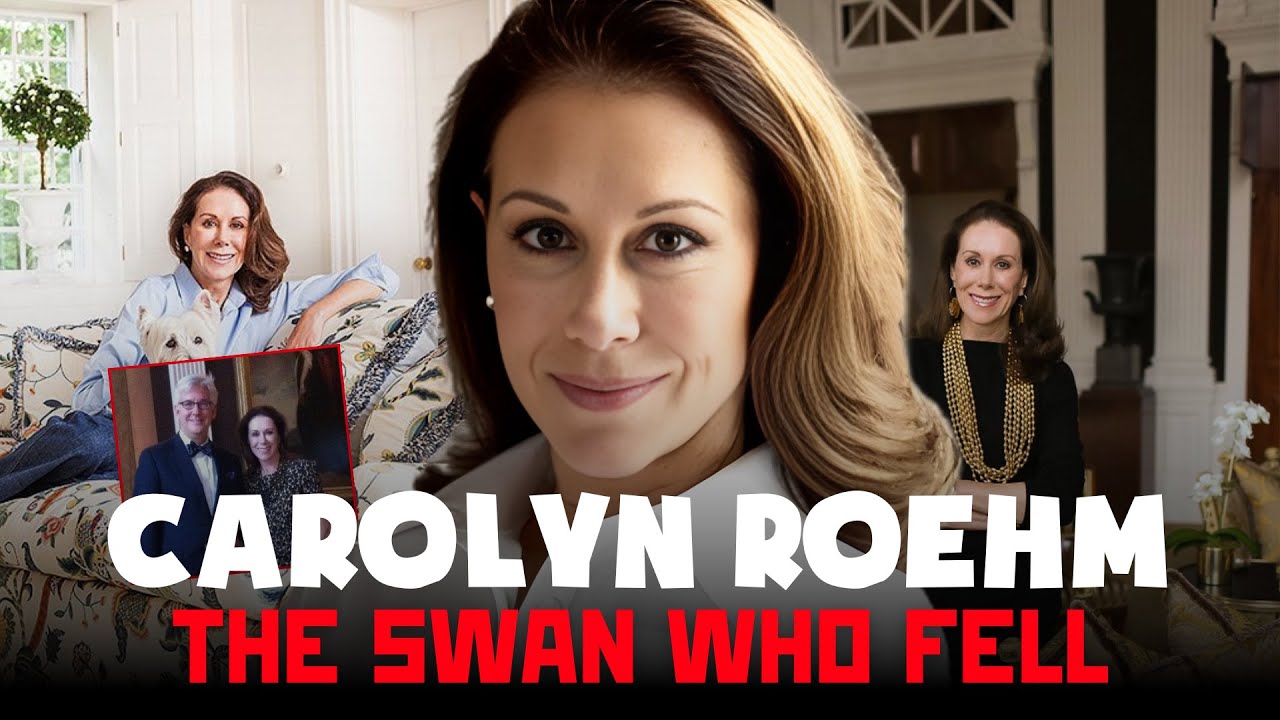
The party had cost millions and was staged to mark the opening of a new museum wing, but no one was confused about its true purpose: it was the victory lap of her husband, Henry Kravis, who had just pulled off the biggest leveraged buyout in Wall Street history, the $25 billion takeover of RJR Nabisco. The press described it as Gatsby resurrected in the junk bond era. It was the instant when new money finally outshone the quiet restraint of the old guard. Carolyn Rome was, at that point, the woman who possessed everything: private jets, Renoirs, the envy of the world.
Four years later, she was standing in a grocery store checkout line, shaking, unable to pay for milk because her credit cards had been cancelled with no warning. She had to abandon the cart and walk past staring strangers with nothing. The queen of New York society had not merely fallen from grace. She had been executed by the very hierarchy she had conquered.
She was born Carolyn Jane Smith in 1951 in Kirksville, Missouri, deep in the American heartland. Her father served as a school principal. Her mother taught. Hers was a childhood of safety and routine, shaped by school terms and Sunday church services.
Yet Carolyn felt out of place from the beginning. Fitting in was not her goal; standing out was. While other girls dreamed of cheerleading, she pored over Vogue and Harper’s Bazaar as though they were maps, not entertainment. She studied how models held themselves, how fabric fell, how light played on material.
She was teaching herself a language — the language of elegance — and she grasped early that clothing was armor. With the right dress, a girl from Missouri could turn into a princess. She wanted more than to wear the clothes. She wanted to make them.
After high school she enrolled at Washington University in St. Louis, one of the few Midwestern schools offering a serious fashion design program, and there she learned the mechanics of construction and the history of style. But St. Louis was too small.
In 1973, armed with a portfolio and a frightening amount of resolve, she purchased a one-way ticket to Manhattan. The New York she arrived in was not today’s sanitized playground. It was the New York of Taxi Driver: gritty, dangerous, on the verge of bankruptcy. Subway cars were coated in graffiti, streets heaped with garbage during strikes, and crime was rising.
For a girl from Kirksville, it should have been frightening. For Carolyn, it was Oz, because behind the limestone facades of Fifth Avenue the glamour was still there. She secured a position that would shape her life: assistant to Oscar de la Renta. It was more than a job; it was an adoption.
De la Renta was the grand seigneur of American fashion, a man of charm and deep ties to old-money aristocracy on both sides of the Atlantic. He dressed the ladies who lunched at La Côte Basque, the wives of ambassadors and presidents. In Carolyn he recognized something rare — a rawness paired with an almost cellular grasp of style. He took her under his wing like a surrogate father, teaching her not only how to sketch a gown but how to inhabit the lives of the women who wore them.
He schooled her in French furniture, floral arrangements, the subtle codes of high society. He brought her among the swans, legendary socialites such as CZ Guest and Babe Paley, and Carolyn observed them, absorbing their restraint and effortless grace. She was shedding Carolyn Jane Smith of Missouri and becoming someone else. Her first brush with great wealth came through marriage to Axel Roe, a German chemical heir.
That marriage gave her a new surname with a European aristocratic ring, along with a taste of the international jet set. It ended in divorce, but it served as a stepping stone. She emerged as Carolyn Roe. The Smith was gone forever, replaced by a name that sounded as though it belonged on a label.
By the early 1980s she was a rising star in fashion — beautiful, talented, single, moving in the right circles. But she was still an employee. Then, at a dinner party, the final piece fell into place. She met Henry Kravis.
Kravis was no designer or artist. He was a shark. As a founder of KKR, he had pioneered the leveraged buyout, reshaping the American economy by acquiring companies with debt, stripping them down, and selling them off for parts or profit. He was the face of the new Wall Street — aggressive, unsentimental, unimaginably rich — the man who would inspire Barbarians at the Gate.
Physically they were mismatched: Carolyn tall and statuesque, Henry shorter and intense, his eyes forever scanning for the next opportunity. But functionally they were perfect together. Henry needed a queen. His billions lacked social cachet; he was new money in a town that worshipped the old.
He needed a wife who could host the perfect dinner party, decorate the perfect house, and look perfect on his arm at the Metropolitan Opera. Carolyn saw in Henry the ultimate patron, the engine that could power her dreams. With his resources she could have her own label, the houses she had dreamed of since Missouri, the security that guaranteed she would never be ordinary again. Their courtship was a merger of ambitions, the quintessential 80s romance fueled by acquisition.
They married in 1985. It was a coronation. Carolyn Roe became Mrs. Henry Kravis and overnight ascended to the peak of the social mountain.
The transformation was complete. The couple became the center of a new solar system, the era of the nouveau society, flashy newcomers pushing aside the staid, quiet money of the past. They did not conceal their wealth; they celebrated it, consumed it in public. Henry and Carolyn were its king and queen.
Carolyn threw herself into the role with the obsessive focus she had once applied to design. She hired the best decorators but micromanaged every detail. She bought 18th century French furniture that belonged in museums, filled the Park Avenue apartment with Renoirs and Monets, added estates in Connecticut, Colorado, and the Dominican Republic, and turned each into a masterpiece. The jewel in her crown was her own label.
With Henry’s backing she launched Carolyn Roe in 1985 — high-end, unapologetically luxurious, aimed squarely at the women she lunched with. Nancy Reagan became a client. The Duchess of York wore her designs. Carolyn was no longer just a billionaire’s wife; she was a CEO, a designer, a woman of substance.
Vogue, Town & Country, and W reported on the Kravis way of life with gushing reverence. There was Carolyn arranging fabric in her workroom, Carolyn snipping roses in her greenhouse, Carolyn and Henry at black-tie galas looking like masters of all they surveyed. Yet high society follows a physical law: the stronger the light, the deeper the shadow. The effort of being Carolyn Roe was draining.
She was running a fashion business that was struggling, overseeing five homes and a staff of dozens, keeping a social calendar that would exhaust a diplomat. She played a part around the clock. And Henry was a man of the deal, transactional in all things. He had put his money into Carolyn and anticipated a payoff: the flawless hostess, the flawless wife, the flawless image.
So long as the market surged, the bargain held. But the winds on Wall Street were turning. The excess of the 80s was about to crash into the early-90s recession, and in the harsh glare of a market correction, the trophy wife and her vanity business were about to be revalued, not as assets but as liabilities. Carolyn stood at the summit, not knowing that her footing rested on the shifting sands of her husband’s whims.
She felt secure. She did not hear the ice splitting under her feet. The party at the Temple of Dendur was the peak. It blinded the world to how fragile the empire was, but in hindsight it seems less like a coronation than the final feast before the fall.
Even while the champagne poured, the tectonic plates were moving. The stock market had crashed in October 1987 on Black Monday, sending a shock through the financial class. The age of easy money was ending. The “greed is good” creed was beginning to sound less like philosophy and more like an accusation.
Within the Kravis marriage, the mood chilled just as fast. The union that had looked like the ideal merger of capital and culture showed its structural cracks. Kravis lived by numbers, weighing risk and return with machine-like detachment. As the 90s drew near, he ran the numbers on his wife’s fashion business.
The Carolyn Roe label was a critics’ favorite with exquisite clothes, but financially it was a catastrophe. High fashion is a furnace that consumes cash. Carolyn would not compromise on quality, choosing the costliest fabrics and the finest factories. The business lost millions every year, losses Henry quietly absorbed as the cost of a contented, high-profile wife.
But Henry Kravis did not become a billionaire by propping up failing assets forever. As pressure on his own business grew, his patience ran out. The fashion house turned into a source of conflict. The trophy was growing costly to polish.
The life Carolyn had curated started to feel like a trap. She was no longer merely a wife; she was the chief operating officer of Kravis, Incorporated, overseeing five houses, the maids, butlers, and pilots, the dinner parties, the charity galas. She ran a small corporation devoted to the comfort and image of one man. Spontaneity was choked off by the schedule.
Romance gave way to the itinerary. Then came a personal tragedy. In 1991, Carolyn’s beloved stepson, Henry’s son from a previous marriage, died in a car accident. The grief was devastating, but rather than drawing them closer it pushed them apart.
Henry dealt with pain by working harder, pressing on. Carolyn, the artist, needed to pause, to feel, to grieve. They were on different emotional frequencies. The end came in 1991, and it was brutal.
Henry asked for a divorce. For Carolyn the shock was complete. She had believed she was a partner; she found she was an employee who could be dismissed. Because she had signed a prenuptial agreement, standard for a man of Henry’s wealth, she did not leave with half the empire.
She left with a settlement that was sizable to an ordinary person but a pittance beside the life she had lived. The financial hit mattered less than the professional execution. Henry cut off funding for the label; he pulled the plug. Overnight, Carolyn Roe went from top American designer to unemployed.
The business she had poured her soul into was liquidated. The showroom closed. The staff was let go. The dream was foreclosed.
The fall was dizzying. In the stratified world of New York society, status attaches to the husband, not the wife. When Carolyn was Mrs. Henry Kravis, she was the sun around which planets revolved.
When she became simply Carolyn Roe, divorcee, the planets moved on. The swans of the Upper East Side, the women she had emulated, the friends who had drunk her wine and worn her clothes, began to pull away. Invitations stopped. Phone calls went unreturned.
It was a cold, silent exile. She was a reminder of failure, a memento mori for the trophy wife. Then came the moment that perfectly captured her descent. Shortly after the separation, Carolyn, who for five years had flown only on private Gulfstreams, found herself alone in a grocery store.
She filled her cart. At the register she handed over her credit card. It was declined. Henry, or his accountants, had cancelled the cards.
The woman who had draped the Temple of Dendur in silk stood in a checkout line, unable to pay for milk and bread. She left the cart. She walked out into the street with nothing. That was rock bottom, the death of the illusion.
The glass slipper hadn’t merely slipped off; it had shattered, and she was walking on the shards barefoot. She retreated to the one piece of property she kept in the divorce: Weatherstone, a historic house in Connecticut. It was beautiful, but empty. The Renoirs were gone.
The servants were gone. Carolyn Roe was forty years old, with no husband, no children, no business, and her social standing in ruins. She sat in the silent house in the winter of 1992 and faced a terrifying question: who am I when the lights go out? She could have crumbled.
Many women in her position did, retreating into bitterness and lawsuits. She could have moved back to Missouri and disappeared. But Carolyn possessed something Henry Kravis could not repossess, something Oscar de la Renta had seen all those years ago: taste. She had an eye.
She could look at a blank canvas or a barren garden and see the beauty that could be there. In the silence of Connecticut she began to plant a garden. It started as therapy. She got down on her knees in muddy boots, dug, pruned, planted, and as she worked the soil, the slow honest rhythm of the seasons began to heal the frantic superficial wounds.
Beauty, she realized, did not need billions. Only seeds, sunlight, and patience. She arranged the flowers she grew, not like a florist but like a fashion designer, playing with color, texture, and scale, treating a peony with the reverence she had once given a bolt of silk taffeta. A friend suggested she write a book.
She held back at first. Books put out by society women were typically ghostwritten filler. Carolyn was determined to write a declaration about beauty. She emptied into those pages everything she had absorbed from Missouri, from Oscar, from the museums of Europe, from the grand tables of New York.
She arranged the photographs on her own. She composed the words on her own. In 1997 she released A Passion for Flowers. The trade braced for a failure.
Who would care about a gardening book from a disgraced former wife? Readers felt otherwise. The book became a phenomenon. It was lovely, but it was also genuine.
It answered a craving for a different sort of luxury, not the gaudy costly variety of the 80s but a hushed, homely, reachable one. It turned into a bestseller and set off a second career. Carolyn Roe was no longer merely Henry Kravis’s former wife. She was a lifestyle icon, the American reply to the aristocratic gardener.
She had remade herself, not by marrying upward but by digging downward. Just as she gained her balance, the universe handed her one last brutal trial. Weatherstone, raised in 1765, had grown into her stronghold. Since the divorce she had channeled every scrap of imagination and every cent of book royalties into bringing it back.
It was more than a house; it was a looking glass, each fabric sample and garden plot a witness to endurance. On a bitter night in January 1999, fire broke out in the small hours, probably from an electrical fault in the aged wiring. By the moment the alarm rang, flames were eating the timber frame of the building. Carolyn, by herself in the house, fled with her dogs, dashing into the snow in her nightclothes.
She stood on the frozen grass in the sharp Connecticut air and watched her life go up in flames. The fire claimed the roof and the walls, and it claimed the history: the records of her fashion career, the drawings from the Oscar de la Renta years, the patterns from her own label, family photographs, love letters, irreplaceable antiques she had gathered since she was a girl in Missouri. It was the museum of her existence. The firemen came, but the old timber frame was dry and cured by two centuries of living.
It burned like a matchstick. By daylight, Weatherstone, the emblem of her independence, was a smoldering, blackened pit. To lose everything once in divorce was tragedy. To lose everything twice in a fire felt like a deliberate strike by fate.
In the days that followed, Carolyn relocated to a guest cottage on the grounds that had endured. She walked the wreckage collecting fragments of warped metal and scorched porcelain. The press gathered, expecting a collapse. The fire did something unforeseen.
It sealed the wound. Standing amid the ruins, she had an insight almost holy in its clarity: she had endured. Her body, her dogs, her gift were whole. The fire could ruin her belongings but not the hand that made beauty or the eye that saw it.
Losing Henry had torn away her social identity. Losing Weatherstone tore away her material identity. Underneath both she discovered something unbreakable, a steel core tempered in Missouri. She resolved to rebuild.
Not as it had been, an effort to recover the past, but as something finer, a monument to endurance. She turned general contractor, architect, and historian, plunging into the records of American colonial architecture, examining moldings and floorboards with the rigor of a forensic scientist. The project transformed her public image. In the 80s she had been the trophy wife who spent money.
Now she was the builder, photographed in hard hats clutching blueprints, quarreling with contractors. She revealed the labor behind the perfection. Beauty was not sorcery; it was work. As the new Weatherstone took shape, so did her new life.
She grew her publishing career with books on wrapping gifts, summer parties, winter comfort, each a bestseller. She started a home accessories line, not bankrolled by a billionaire husband but paid for by her own earnings, a business that was scalable and sustainable. And she found love again. This time it was not a transaction.
She was confident enough in her own skin and bank account to seek a partner, not a patron. She entered a long-term relationship with Simon Pinager, a man who was handsome, kind, and plainly not a master of the universe. He was a partner, not a financier. The relationship was private, quiet, free of the staged press releases that had defined her marriage.
As the new millennium arrived, the scaffolding came down around the revived Weatherstone. The house that stood revealed was not a copy but a refinement, a vessel for light made with a survivor’s eye, favoring structural soundness over ornament. It was a physical expression of her inner rebuilding. The house’s completion was the setting for the restoration of her name.
In New York society there is typically no way back from exile. Once banished, you are meant to fade into a courteous, unremarkable twilight. Carolyn would not be a ghost. She was set on being a protagonist, and her weapon was the printing press.
After A Passion for Flowers, she set off on a publishing run that reshaped the lifestyle book. While Martha Stewart taught women to run a home with military precision, Carolyn supplied romance. She did not teach women to scrub floors; she taught them to dream. Books like At Home with Carolyn Roe, Presentations, and A Passion for Blue and White were tactile objects, bound in silk, packed with photographs like Renaissance paintings.
She brought the aesthetic of the Upper East Side to the masses. You did not need a staff of ten to fold a napkin beautifully; you simply needed to care. You did not need a Renoir; you needed to grasp color and scale. By selling the secrets of high society to the public, she made herself independent of high society.
She did not require the approval of the swans, because she had the love of the public. Gradually, the ice on the Upper East Side melted. The social ecosystem is practical; it honors success. As her books climbed the charts and she appeared on Oprah and the Today Show, invitations drifted back.
The women who crossed the street to avoid her in 1992 greeted her with air kisses in 2002. But the woman who came back was not the same. The Mrs. Henry Kravis of the Met party was eager to please, frightened of missteps.
The Carolyn Roe who entered a gala in 2005 was cooler, calmer, armed with steely self-assurance. She knew who she was without the diamonds. She walked in not as a consort but as a peer. The culture of the elite had changed too.
The decorative socialite was a fading species. The new power players were women who worked: Tory Burch, Aerin Lauder, Diane von Furstenberg. Carolyn had crossed the generational gap, moving from relic of the 80s to pioneer of the influencer economy, the bridge between Babe Paley and Gwyneth Paltrow. Yet she never forgot the lesson of the fall.
She stayed at arm’s length, devoting more hours to her garden than to charity galas, keeping her circle small and deliberate, preferring the people who had reached out when she had nothing over those who appeared only once she was thriving. By 2010 the new-money society of the 80s had become a closed chapter, remembered as an age of odd excess much like the roaring 20s. The shoulder pads had vanished. The junk bonds had turned into algorithms.
The Temple of Dendur gatherings were relics of a cruder era. But Carolyn endured. She had survived the very craze she had helped set in motion. She was no longer trendy; she was timeless.
Like the blue and white porcelain she gathered, she had come through the kiln and come out with a glaze that time could not touch. As she passed into her 60s and 70s, the question of what she amounted to took shape. Was she a mere footnote to Wall Street history, the lovely wife of a titan, or a cultural figure of real consequence in her own right? The answer can be found in the gardens of America.
Before Carolyn Roe, entertaining was a rigid, formal obligation. She carried an artist’s eye into the domestic realm. She showed a generation that arranging flowers could be a form of meditation, that laying a table was an act of love. She gave the domestic arts standing as genuine creative expression.
When the digital era came, it did not make her irrelevant. It canonized her. As a generation raised on IKEA curated their lives online, they came upon the images of Weatherstone, the blue and white palette, the symmetrical boxwood gardens, the tablescapes that resembled Dutch still lifes. She became the grandmother of the aesthetic internet, the original influencer who needed no ring light.
She signed up for Instagram but treated it as a digital gallery, sharing watercolors, her dogs, her peonies, with captions full of thoughtful reflections on light and season. She showed that dignity could carry over into the pixel. Her life offered a deep commentary on American ambition. She began as the ultimate climber, craving the highest peak, the billionaire husband, the largest apartment.
She obtained them and discovered in the harshest possible manner that the view from the summit is cold and solitary. Her fall was a necessary destruction. It peeled away the pretense and made her face the difference between status and worth. Status is what Henry Kravis gave her.
Worth is what she built in Connecticut. Her path from the Temple of Dendur to the compost heap at Weatherstone is a moral tale. The true American dream is not about accumulating but cultivating, not having the most but making the most of what you have. She showed that a woman could lose the prince and still keep the kingdom, as long as she was ready to raise the castle walls herself, stone by stone.
Babe Paley faded under her husband’s infidelities. Slim Keith slipped into a solitary old age. They were splendid orchids that could not endure without the hothouse of a wealthy marriage. Carolyn shattered that pattern.
She was the swan that learned to fly. In her later years she painted watercolors that sold to collectors, kept refining her house, guided younger women. She reached a calm impossible in her youth. But the scars stayed.
There was a certain sadness in her eyes, a shadow lingering behind the smile, the memory of the grocery store, the fire, the friends who turned away. Carolyn Roe knows better than anyone that the ice is thin, that the world can turn against you in an instant. Maybe that is where her beauty comes from now, no longer the brittle porcelain perfection of the 80s trophy wife but the weathered, resilient beauty of the garden she tends. A garden is beautiful not because it is perfect but because it survives the winter, withstands the frost and the storms, and blooms once more.
Picture her there at Weatherstone on a still evening in late summer. The sun goes down, throwing long golden shadows over the lawn. The air carries the scent of cut grass and old roses. Carolyn moves through the garden, her dogs following at her heels.
She pauses to check a hydrangea bush, snips a dead leaf, straightens a heavy bloom. She is alone but not lonely, encircled by the life she made. She glances back at the house that burned and rose again, glowing warm and solid in the twilight. It is a monument to the one thing that truly matters: the refusal to give up.
The world labeled her a socialite, a gold digger, a victim, a swan. Standing there with soil on her hands and the sky deepening to purple overhead, she is none of those things. She is simply the gardener, and she knows that as long as she tends the soil, the beauty will return.
Far from dying when the lake froze, the last swan had learned to fly.
