The meeting was set for a warehouse on the South Side, and Tony Accardo arrived with nothing but a baseball bat. It was 1926, and the men waiting inside had made the mistake of showing disrespect to Al Capone’s organization. Accardo was there to correct that mistake. He beat them one after another, a brutal display that reportedly covered the full cycle of swings, and when it was over, word of what he had done reached Capone himself.
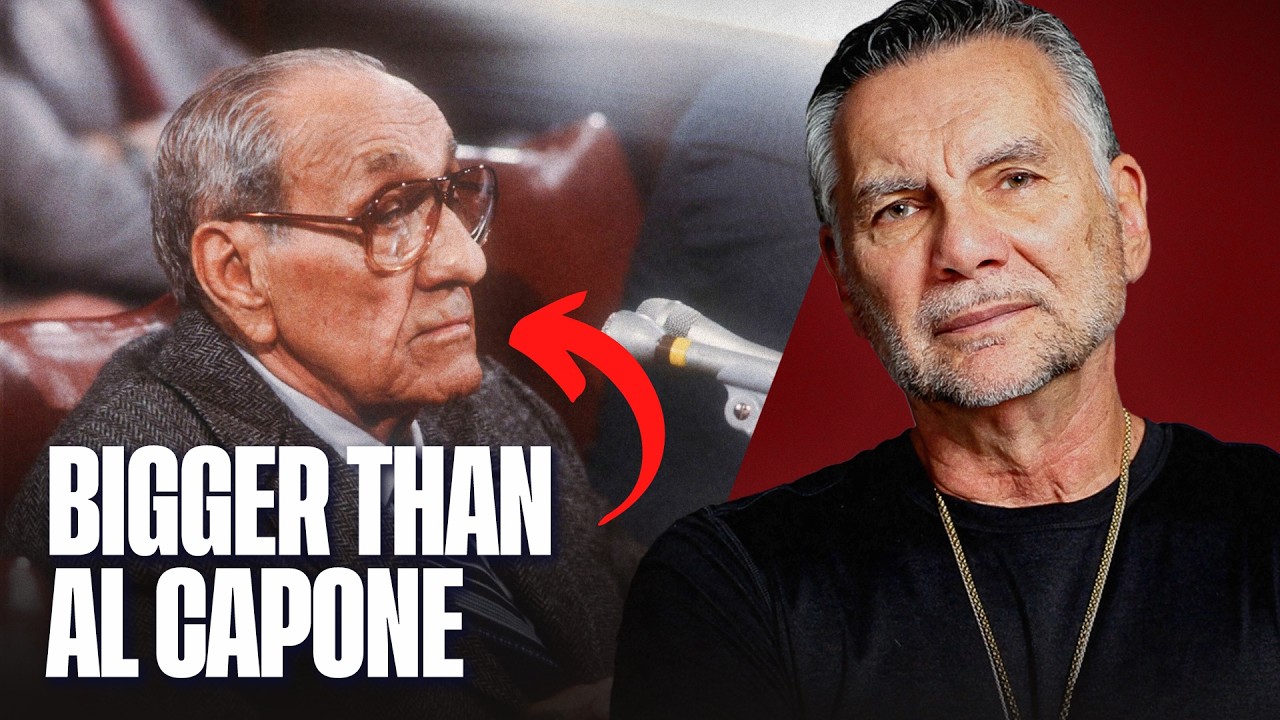
Capone, a man who had ordered more killings than anyone could count, was impressed enough to give Accardo a nickname on the spot. From that day forward, Antonio Leonardo Accardo was known as Joe Batters. The nickname was about more than violence, though violence was certainly part of it. In Capone’s world, a name carried weight.
It was a brand, a statement of reliability and effectiveness. Joe Batters meant a man who got things done, no matter what it took. And Accardo lived up to that reputation for the next six decades, even as he built something far more enduring than the violent empire that had given him his start. Accardo was born on April 28, 1906, in Chicago’s Near West Side, the son of Sicilian immigrants Francesco and Maria Accardo.
The family lived in a cramped apartment above a storefront on Vernon Park Place. His father worked as a shoe shiner, saving every penny he could, but the legitimate path was too slow and too uncertain for an ambitious kid like Tony. The neighborhood was a melting pot of Italian, Irish, and Jewish immigrants, all of them fighting for their piece of the American dream in a city that smelled of stockyards and steel mills. Prohibition was on the horizon, and with it came opportunities that would reshape not just Chicago but the entire country.
As one former mob figure put it, the government made the mafia strong in America when Prohibition came in. Accardo was perfectly positioned to ride that wave. By age fourteen, he had dropped out of school and was running with the Circus Gang, a group of neighborhood toughs who provided muscle for larger operations. These were the farm team for what would later become the Chicago Outfit, though at the time there was no outfit, just street guys doing their best to make a living.
What set Accardo apart early on was not just his toughness, though he had plenty of that. It was his ability to think ahead, to see the bigger picture. He understood that violence was a tool, not an end in itself. The guys who always went to violence first never lasted.
The ones who succeeded, the ones who survived, treated it as a last resort. Accardo understood this at an age when most of his peers understood only the immediate satisfaction of a beating or a shooting. By the late 1920s, he had become one of Capone’s most trusted enforcers. Unlike the other muscle, he was always thinking beyond the immediate problem.
He didn’t just handle problems; he prevented them. Capone recognized something special in him, a combination of brains and brutality that set him apart from every other soldier in the organization. During the beer wars of the late 1920s, Accardo proved himself not just as an enforcer but as a strategic thinker. While others focused on the immediate fight, he was building relationships with politicians, police, and legitimate businessmen.
He understood something fundamental: violence might win battles, but relationships won wars. One incident from 1930 illustrates this perfectly. The North Side Gang was pushing into Capone territory, and Accardo didn’t respond with simple force. He orchestrated a complex operation that involved compromising key officials, turning enemy soldiers, and securing the territory without the kind of bloodshed that brought heat from the papers and the police.
It was a coup in every sense, engineered quietly and effectively. He just knew how to do it. When Capone went down for tax evasion in 1931, the Outfit faced its first real leadership crisis. Frank Nitti took over as the front boss, but the real power was shifting to Paul Ricca, known as the Waiter.
Accardo became his most trusted adviser, right by his side. This was a masterclass in behind-the-scenes power. While other criminal organizations tore themselves apart in public power struggles, the Chicago Outfit quietly restructured into a modern criminal enterprise. Accardo understood that the future wasn’t in bootlegging.
Prohibition would end eventually, and the smart operators were already positioning themselves for what came next. The future was in legitimate business, in unions, in gambling, in entertainment. He started pushing the organization toward these new ventures, always staying one step ahead of law enforcement. He anticipated what the authorities were going to do and beat them at their own game before they even made their move.
In 1943, Accardo became the Outfit’s enforcement boss. By 1947, he was running the entire operation. This wasn’t just a change in leadership; it was a complete modernization of how organized crime operated in Chicago. Under his direction, the Outfit expanded into Las Vegas.
They didn’t just control the casinos; they built them. The Stardust, the Desert Inn—these weren’t just gambling joints. They were legitimate businesses with legitimate owners, all of them backed by Outfit money and Outfit influence. Accardo understood that the real money wasn’t in running the games.
It was in owning the house. He also revolutionized how the Outfit handled internal disputes. He established what came to be known as the Office, a formal system for resolving conflicts without violence. This wasn’t just about keeping the peace.
It was about running crime like a business. Every operation had its budget, its projected returns, its risk assessment. Accardo ran the Outfit the way a CEO runs a company. He had no interest in glory or headlines.
He was interested in profits and sustainability. The 1950s and early 1960s marked the golden age of the Chicago Outfit under his leadership. Everything came together: the legitimate businesses, the casino operations, the union control, the political connections. What made Accardo different was his corporate approach.
Unlike some bosses who flaunted their wealth, he maintained a low profile. He lived in a massive house in River Forest. He filed legitimate tax returns. He belonged to country clubs.
But he never advertised any of it. He understood that real power doesn’t need to announce itself. During this period, his home life was private and orderly. He died peacefully in his bed at eighty-six, a feat almost unheard of in his world.
But that was still decades away. In the intervening years, he would face the same pressures that destroyed so many of his contemporaries, and he would survive them all by staying in the shadows. By the late 1960s and into the 1970s, Accardo had effectively retired from day-to-day operations, but he remained the ultimate authority, what insiders called the chairman of the board. This period showed another side of his genius: succession planning.
He knew who he was going to put in place after he was gone. Unlike many crime families that fell apart during leadership transitions, Accardo created a system that could outlast any individual. He understood that the key to longevity wasn’t just making money; it was creating systems that could continue making money across generations. He also focused on modernizing the Outfit’s operations: computer technology, offshore banking, international connections.
He made sure the organization stayed ahead of the curve. He wasn’t just adapting to change; he was anticipating it. One of his most significant achievements was the development of political connections. Unlike some bosses who bought politicians wholesale, Accardo created mutually beneficial relationships that stood the test of time.
He understood that political power wasn’t just about having friends in high places. It was about becoming part of the system itself. Under his leadership, the Outfit didn’t just influence politics in Chicago; it became an unofficial branch of government. Capone had tried to buy political help and police protection.
Accardo made himself part of the system, so indispensable that they had to rely on him. Everything looked clean on paper: campaign contributions, legitimate business partnerships, union support. But the influence was deep and lasting, and even today, echoes of the systems he put in place can still be seen in Chicago politics. In his final years, Accardo remained sharp.
He advised on major decisions and maintained the relationships he had built over decades. He lived to see his eighty-sixth birthday and died in 1992, dying peacefully in his bed. What’s most interesting about his final period is what didn’t happen: no major prosecutions, no internal power struggles, no dramatic fall from grace. He died as he lived, managing everything from behind the scenes.
His legacy is complex. On one hand, he built one of the most effective criminal organizations in American history. On the other, he corrupted systems that still affect the country to this day. He showed both the heights of organizational genius and the depths of moral compromise.
The same skills that built a criminal empire could have built a legitimate one. The choice of how to use those skills is what defines a legacy. Accardo was probably one of the best in the history of organized crime. He was smart, strategic, and disciplined.
He avoided the mistakes that destroyed Capone, Gotti, and countless others who craved the spotlight. He understood that the only way to survive in that life was to stay hidden. He stayed relevant and alive through multiple generations of change, outlasting the feds, his enemies, and even the golden era of the American mob itself. He was, by any measure, one of the kings at what he did.
And he did it for more than forty years, never once letting the world see how he worked.
