On the evening of 5 July 1919, a young woman named Annie Bella Wright left her uncle’s cottage in the Leicestershire village of Gaulby and pedaled off into the gathering dusk. She was twenty-one, engaged to a stoker in the Royal Navy, and anxious to reach her home in Stoughton before dark. Riding alongside her was a man in his late thirties on a green bicycle. Her uncle, George Measures, had not liked the look of him, but Bella had shrugged it off.
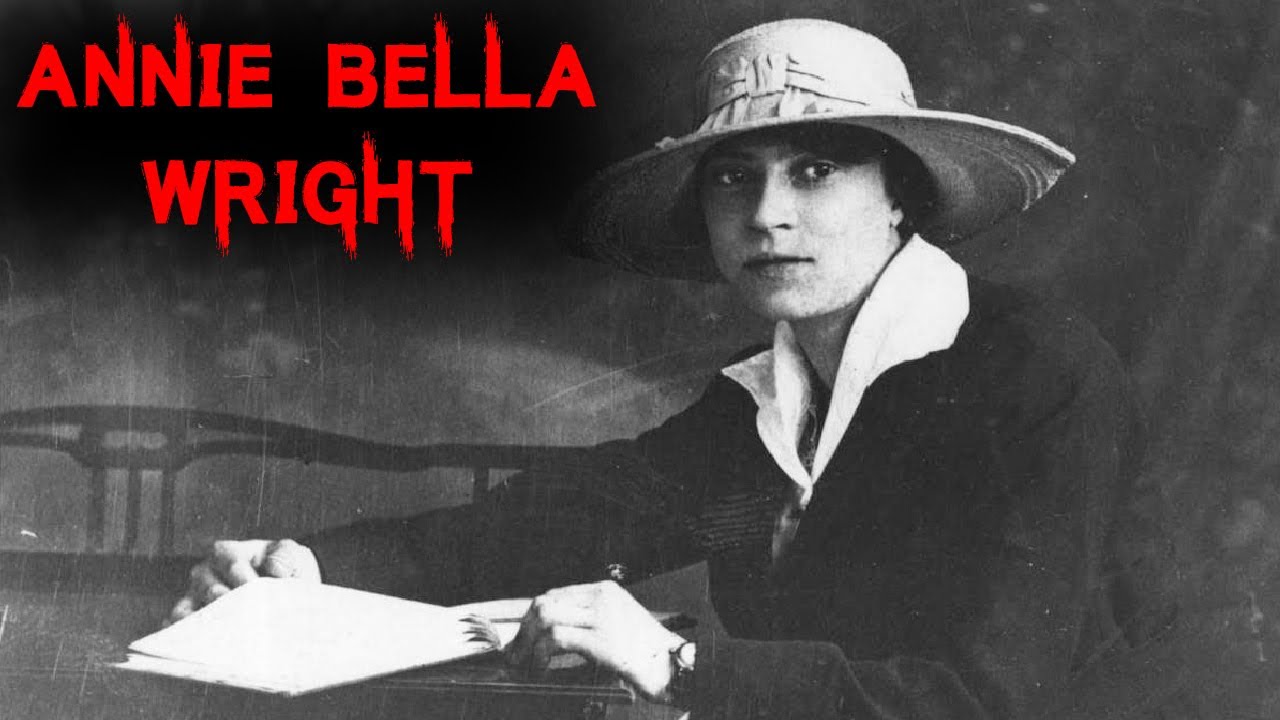
The man had simply offered help when the front wheel of her bicycle came loose, and he had ridden beside her for a few miles, chatting about the weather. She called him a perfect stranger. About thirty minutes later, a farmer named Joseph Cowell was herding cows along the Gartree Road when he found a young woman lying beside her bicycle. Her face was covered in blood, and deep marks were visible on her cheeks and jaw.
She was dead. Assuming she had fallen from her bicycle, Cowell fetched the local constable, Alfred Hall. A doctor soon confirmed the death, and the body was taken to a nearby unused chapel. In the darkness, a full examination was impossible, and the doctor’s initial belief was that the young woman had died from a fall.
At first light, Constable Hall returned to the scene. He found a spent . 455 caliber bullet about seventeen feet from where the body had lain, along with a dead crow and bird footprints in the dried blood. A more thorough examination of the body revealed a single gunshot wound beneath her left eye, with an exit wound in the back of her skull.
An autopsy confirmed she had been shot from a distance of roughly six or seven feet. An inquest returned a verdict of murder by person or persons unknown. The police had little to work with. The only solid lead was the description of the man with the green bicycle, which had an unusual brake on the back wheel.
Posters offering a reward were placed around Leicestershire, and the chief constable appealed publicly for the man to come forward. Local constables began contacting owners of green bicycles across the county, eliminating one after another. A bicycle repairman named Harry Cox told police that on the day of the murder he had repaired a green bicycle matching the description. The man had mentioned he was going for a ride in the country, but Cox had no record of his name.
Meanwhile, Chief Inspector Albert Hawkins was sent from Scotland Yard to assist. Despite all efforts, the identity of the mysterious gentleman remained unknown. Seven months later, on 23 February 1920, a man guiding a horse-drawn barge along a canal near the River Soar found his tow rope snagged on something. When he pulled it up, he found a green bicycle.
Remembering the Bella Wright case, he contacted the police, who ordered the canal dredged. More bicycle parts came up, along with an army-issue holster and a box of bullets matching the caliber that had killed Bella Wright. The bicycle frame had its serial number and BSA brand name filed off, but a faint number remained visible on the front fork. Detectives traced it to a shop in Leicester, where records showed the bicycle had been purchased in 1910.
The buyer was a man named Ronald Light. Ronald Light was thirty-four years old. Born in 1885, he was the only living child of his parents. As a teenager, he had been expelled from Oakham School for lifting a girl’s dress over her head.
He nonetheless went on to graduate from the University of Birmingham as a civil engineer, but was dismissed from a draftsman position for lighting a fire in a cupboard and drawing indecent graffiti in a lavatory. He worked on a farm until he was dismissed again, this time for setting fire to a haystack. When the First World War broke out, he was commissioned as a second lieutenant in the Royal Engineers and sent to the Western Front. He later relinquished his commission under unexplained circumstances and returned to the ranks as a gunner in the Honourable Artillery Company.
Rumors suggested he had made unwanted advances toward a French postmistress. When his new regiment received orders to go to France, Light forged papers instructing them not to go and served four months in prison. In 1917, he was sent back to France but returned to England within months suffering from severe shell shock. By the time of Bella Wright’s death, he was living with his mother in Leicester.
Light matched the description given by George Measures. When police asked how his bicycle came to be in the canal, he denied ever owning such a bicycle. Confronted with the purchase records, he changed his story and said he had sold it years earlier, but could not remember the buyer’s name. A witness claimed to have seen a man throwing a bicycle into the canal.
The bicycle repairman Harry Cox and Bella’s uncle George Measures both picked Light out of an identity parade. The family’s maid, Mary Elizabeth Webb, told detectives that on the evening of the murder Light had not returned home until around ten o’clock. He said his bicycle had developed a mechanical problem and he had to push it home. She noted that he had not used the bicycle since and that the clothing he had worn that day had disappeared.
Eventually, Light admitted he had met Bella and accompanied her, but insisted he had parted ways with her at a crossroads near Gaulby, turning right while she turned left. When he read of her death, he said, he feared he would become a suspect, but decided not to come forward because he had nothing to tell police and did not want to upset his mother. He was charged with murder. The trial began on 8 June 1920.
Light pleaded not guilty and was defended by Sir Edward Marshall Hall, a barrister known as the Great Defender for his success in murder cases. George Measures, his daughter, and son-in-law all confirmed Light was the man seen with Bella that evening. Two teenage girls told the court that earlier that same day, a man on a green bicycle had paid them unwanted attention while they were riding near the area where Bella’s body was later found. They identified Light as that man.
Light testified in his own defense and performed well. He admitted he had lied when first arrested, but reiterated that he and Bella had parted shortly after leaving her uncle’s cottage. He acknowledged the bicycle, holster, and bullets taken from the canal were his, saying he had panicked after reading of Bella’s death and disposed of them. He claimed he had been issued a Webley revolver during the war but had left it at a casualty clearing station in France in 1918.
He explained that after waiting for Bella by the cottage, his tire had suffered a puncture, and by the time he repaired it, she had appeared. He hoped they could ride back together. For five hours, the prosecution cross-examined him. He never contradicted himself.
Marshall Hall argued his client had no motive. Light had not known Bella before that day, and she had not been robbed or assaulted. He also suggested the fatal shot might have been fired by a farmer shooting birds or rabbits, claiming a point-blank shot would have caused far more damage. The trial ended on 11 June.
The jury deliberated for three hours before returning a verdict of not guilty. Light walked free. He lived quietly with his mother, later moved to the Isle of Sheppey in Kent, and in 1934 married a widow named Lillian Lester. He died on 15 May 1975 at the age of eighty-nine.
For years, the green bicycle hung on the wall of a cycle shop in Evington. It is no longer there, and its whereabouts are unknown. Three days after his acquittal, however, Light reportedly returned to the police station and gave a statement to a Leicestershire officer named Levi Bowley. The typed statement was locked in a safe and largely forgotten for decades.
In it, Light allegedly said he did shoot the girl, but that it was an accident. They had dismounted, and she reached out to look at his revolver, which he had not known was loaded, when it went off. She fell and never moved, and he rode away.
The authenticity of that statement has been questioned, as has the question of what really happened on the Gartree Road that summer evening.
