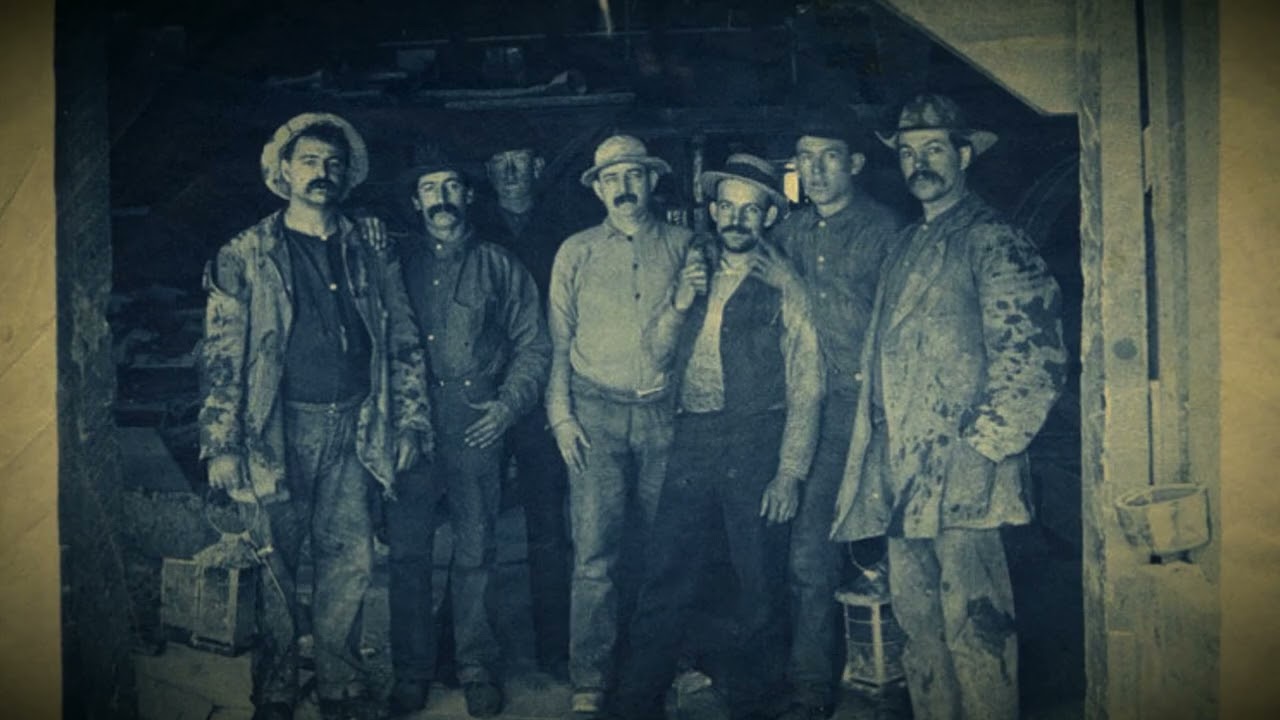
On a winter night in the late 1870s, somewhere in Nevada’s silver country, a man emerged from a mine unable to feel his hands. He had spent sixteen hours in the dark, his back knotted with pain from his shoulders to the base of his spine, and he still had to walk home, with another day waiting after that. So he did what thousands of laborers did in those years. He reached inside his coat, pulled out a small brown bottle, and drank.
For an hour, maybe two, he felt twenty years old again. He had no idea what that bottle was already doing to him, or to the entire country. The source of that bottle lay far from Nevada, high in the thin air of the Andes Mountains along the spine of South America, where coca leaves had been grown since before anyone could count. The people of Peru and Bolivia had chewed those leaves for nearly two thousand years before any American ever tasted them.
At those altitudes, where the air was so thin it could drop an adult to the ground, the leaf did something remarkable. It steadied the heart. It suppressed hunger. When the body had nothing left to give, it gave the strength to keep climbing.
For those who used it, it was not a vice. It was survival, woven into work, worship, and daily life, governed by a web of custom that told a person how to use it and, just as importantly, how not to. That web of knowledge is what kept it in its place for two thousand years. And that is precisely what was thrown away the moment the leaf was carried to a laboratory on the other side of the earth, sold to strangers who had no idea what they were holding.
What arrived in America was the power of the plant without the wisdom that had always accompanied it. Just the fire, handed to people who had never been told it could burn. The leaf itself was mild. You could chew it your whole life and stay healthy.
It was the chemistry that changed everything. In 1859, a young German chemist named Albert Niemann, working in a laboratory in Germany, extracted the active ingredient from the leaf and isolated it in pure form for the first time. He called it cocaine. Chewing the leaf and consuming the pure extract were two completely different things, the difference between a candle and a house fire.
But the people of that century did not see a warning. They saw a marvel, a chemical that could banish pain, drive away fatigue, and lift a gloomy mind all at once. And in a country like America, at exactly that moment in history, there could not have been a market more ready for it. The frontier was open and merciless.
Men broke their bodies in silver and copper mines, drove cattle a thousand miles across shadowless plains, and laid railroad tracks through desert and lethal heat. The work was brutal, and the country was vast. A doctor might be a hundred miles away. When a tooth went bad, no dentist was coming.
When your back gave out, there was no one to tell you to rest, because rest meant not eating. So when something appeared that promised to kill the pain and put strength back in your hands, people did not ask hard questions. They reached for it. Cocaine was not hidden.
It was not illegal. It sat openly on grocery store shelves, sold as a remedy for toothache, colds, and what people called melancholy. It came as powder, as lozenges, mixed into cough syrup, even rolled into cigarettes. By the mid-1880s, you could buy and consume it in almost every way imaginable.
And if you lived so far out that no store was within reach, if your nearest neighbor was half a day away and the town was only a rumor on the horizon, there was still a solution. It came by mail. The great mail-order catalogs reached every corner of the country, and in the 1890s, in the pages of the Sears and Roebuck catalog, among the boots and tools and yard goods, you could order a small kit for $1. 50.
They would deliver a hypodermic syringe and a supply of cocaine straight to your door. No prescription, no questions, no warning label, because no law required one. It arrived wrapped in brown paper like a pair of gloves. The list of ailments it was sold for went on and on.
It was sold for toothache, drops to apply directly to the aching tooth. It was sold for hay fever, colds, and stuffy noses. It was sold for upset stomach, low energy, nervous tension, and low spirits. Doctors prescribed it.
Druggists recommended it. Advertisements insisted it would fix almost anything. And there was something in that. When a thing is sold to you as the answer to every small sorrow of ordinary life, you stop thinking of it as a drug.
You think of it the way you think of a spoonful of honey for a cough. Harmless, friendly, something you keep in the cupboard. It was not only the hard men of the frontier reaching for that cupboard. All across the country, in towns and farmhouses, women were carrying heavy burdens, and the medicine of the day had an answer waiting for them too.
A kind of low, exhausted melancholy they called neurasthenia. A restless, weary, nervous exhaustion they called the vapors. The tonics and nerve medicines on the shelf promised relief from all of it, and many of those tonics carried the same silent cargo. A person could become dependent in their own parlor, one careful dose at a time, without ever setting foot in a saloon, following nothing but the advice printed on the label and given by their trusted doctor.
The most famous of the traveling medicine showmen was a man named Clark Stanley. Before he ever sold a bottle, Stanley was a real cowboy in Abilene, Texas. He wrote a memoir of his life and called it The Life and Adventurers of the American Cowboy. He declared himself the Rattlesnake King, and he sold what he called Snake Oil Liniment, promising it would cure nearly every ailment a person could have.
He sold it for twenty-four years. Then in 1916, federal chemists finally got hold of a shipment and tested what was inside. There was no snake oil in it. Not a drop.
It was mostly mineral oil, some beef fat, a little red pepper, and turpentine. It did virtually nothing. Stanley paid a $20 fine, closed up shop, and disappeared. And in that moment, the word snake oil changed meaning, from a product to a lie.
The deeper lie of that era was the thing that actually worked, at least at first, because it did what it promised. And the people using it in those remote regions were not villains and not fools. Picture the cowboy who had been on horseback for eighteen hours, chewing a little coca just to stay straight and alert so he would not fall and be dragged. Picture the miner we started with, reaching for the bottle at the end of a shift no human body was built to endure.
They were railroad workers, farmhands, soldiers at lonely posts, trying to get through a hard day in a hard country, using the very thing their doctors, their newspapers, and their general stores had told them was safe. The tragedy is not that they were weak. The tragedy is that they believed, and their belief was misplaced.
While ordinary people were dosing themselves at the edge of the map, other men
