In 2026, investigators finally identified the man linked to a double murder that had gone unsolved for 53 years in the Florida Keys. By the time they found him, it was too late to ask him a single question. Two teenage sisters had disappeared while hitchhiking home in 1973. The evidence that would eventually reveal the identity of the man connected to their deaths was collected that same year and sat unexamined for nearly five decades.
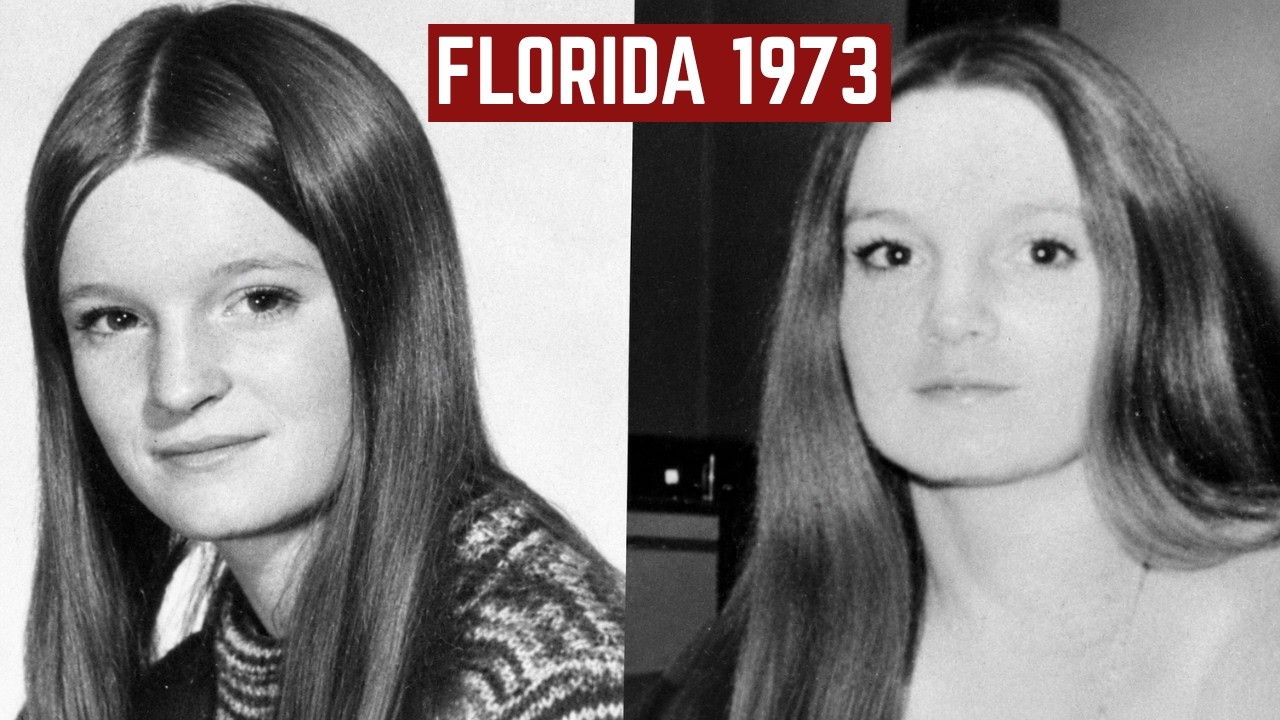
This is the story of how that evidence finally spoke, what it answered, and what it could not clarify for those who were still waiting. The sisters were Margaret Jenkins, known as Maggie, aged 18, and her younger sister Mary, aged 16. They grew up together in New Jersey, close in the way sisters raised a few years apart often are. Mary, two years younger, tended to follow in her older sister’s footsteps.
Their older sister Sarah, 19 that spring, had already left home to build her own life, but she remained close enough to know how much this trip meant to them. Their brother-in-law, Duayne Barlow, knew Maggie and Mary as well as anyone outside their immediate family. Years later, describing what they were like at that age, he said simply: “Their interests were boys, making money, and they wanted to travel. ”
In April 1973, Maggie and Mary left New Jersey for the Florida Keys.
It was supposed to be a short trip south, a chance to spend time in Key West before returning home. Once there, they reconnected with friends from home who had made the same journey south that spring. Their father gave them money to buy bus tickets back home. They never used them.
Hitchhiking was not unusual for teenage girls in 1973. It was so common that neither sister thought twice about choosing the road instead of the bus station. So when it was time to head north again, Maggie and Mary made the same decision thousands of young travelers made that year. They stuck out their thumbs and began to walk.
On May 2, they were seen on Stock Island, just outside Key West, standing at the edge of US Highway 1. That sighting became the last confirmed record of Maggie and Mary Jenkins. No one knew it yet, not the sisters, not their family in New Jersey, not even a single person who drove past them that evening. The road they took that day would take 53 years to fully explain.
On May 3, 1973, the morning after that sighting, nearly 100 miles north in Key Largo, a local man was walking near US Highway 1. It was early, the kind of quiet morning that gives no hint of what is about to happen. About 100 yards from the highway, near mile marker 99. 5, he found them.
Maggie and Mary Jenkins, the sisters last seen hitchhiking outside Key West less than 24 hours earlier. He called the police. News reached the Monroe County Sheriff’s Office and the Florida Department of Law Enforcement within hours. When investigators arrived, they confirmed what the man already feared.
The sisters were dead. The cause of death was blunt force injuries and gunshot wounds. The crime scene gave investigators little beyond confirming what everyone already feared. This one fact reframed everything.
It was no longer a missing persons case. It was a murder investigation, and it was already facing a problem most departments in 1973 were not equipped to solve. The distance from Stock Island to Key Largo was roughly 100 miles of highway. Investigators now had a starting point and an ending point.
What happened between the two locations, somewhere along that stretch of road, remained completely unknown. No one had reported seeing the sisters again after that first sighting. No one came forward with a description of a car, a driver, or a destination. Two teenagers vanished from one end of the Keys and turned up dead on the other.
Investigators in Key West began working the case immediately. They canvassed Stock Island and the surrounding area, spoke to anyone who might have seen Maggie and Mary before they disappeared. They collected hair, fibers, and anything found at the crime scene from the sisters’ clothing that might indicate who had been near them. They talked to the friends the sisters had connected with in Key West, tracing their final days there before the journey north began.
Over the following weeks, that work grew into a massive case file containing statements, notes, and physical evidence records, the kind of records that usually lead investigators toward a suspect. But this case did not. Decades later, Monroe County cold case detective Mark Coleman described that initial approach simply: trace evidence, hair, fibers, anything from their clothing. Those were the tools investigators had in 1973.
DNA testing was not available to law enforcement at the time. This was two decades before DNA evidence first entered an American courtroom. Investigators were working with the tools of 1973 on a case that would ultimately require 21st-century science. They could collect evidence.
But they could not yet use it to identify anyone. Coleman was blunt about what that meant for the man they were looking for. He described him as patient and disturbed and said his identity had to be established whether he was alive or dead. Coleman kept the case open in a way most cold cases are not, resubmitting the physical evidence for examination whenever forensic science advanced enough to justify trying again.
Sarah Jenkins-Barlow and Duayne Barlow sought their own answers alongside the official investigation, refusing to let the case fade into obscurity as so many others of that era had. Neither had access to a crime lab. What they had was persistence and a refusal to accept silence as an answer. For more than four decades, that persistence and Coleman’s persistence were the only things keeping this case alive.
By 2018, forensic science had advanced decades beyond what was available to investigators in 1973. Scientists at the Florida Department of Law Enforcement returned to the biological evidence preserved from the case. Using DNA technology that did not exist when Maggie and Mary died, they developed a partial male genetic profile, an STR profile, the standard method for confirming the identity of a specific individual from material investigators had carefully preserved for 45 years. That profile was entered into CODIS, the FBI’s national forensic DNA database.
If the person responsible had ever been arrested for a qualifying crime anywhere in the country, his profile would already be there, waiting for a match. Investigators ran the search. It did not matter. No match appeared.
The man whose DNA had existed as evidence for nearly half a century simply was not in the system. Five years passed before the first real lead emerged. In 2023, the Florida Department of Law Enforcement accepted the case into its genetic genealogy program. This method was different from everything tried before.
It did not require the perpetrator to be previously recorded in police databases. Instead, it relied on tracing genetic relationships through distant kinship links to eventually arrive at a specific person. In 2024, the case was sent to Othram, a private forensic laboratory in The Woodlands, Texas, built specifically for genetic genealogy work. Othram scientists built an SNP profile, mapping thousands of points across the DNA rather than the handful a standard CODIS profile uses.
That additional detail is what makes distant relatives visible, people who have never come near police databases in their lives. Once that profile was matched against genetic genealogy databases, the kind people use for ordinary ancestry research, the investigative team took over. The work relied on the same records genealogists always use, birth certificates, marriage licenses, census data, and obituaries, but now cross-referenced with a genetic map to build family trees and determine who could realistically have been in the Florida Keys in the early 1970s. The process was not fast.
It advanced generation by generation, eliminating people until one branch of the tree stood out from the rest. One branch of that family tree led to a single name: David Allen Snyder. Genetic genealogy had done its job. It had narrowed decades of possibilities down to one man.
But a name in a family tree is not evidence in itself. Investigators began digging into his past. Records placed Snyder at several addresses in Key West between 1972 and 1974, putting him in the right place during the period Maggie and Mary passed through the Florida Keys. But documented records about Snyder were scarce.
There was no confirmed occupation attached to his name from that period, no prior criminal record in the file, no detailed family background beyond the one relative investigators would eventually need to reach. In 2026, investigators contacted that relative directly to request a voluntary sample rather than compelling one, a common step once genetic genealogy has narrowed a case to a single family. The relative agreed, and the sample went directly to the Florida Department of Law Enforcement crime lab, where analysts conducted a direct comparison with the male genetic profile preserved from the case since 1973. The result was conclusive.
The profile that had gone unnamed for 53 years finally had a name. David Allen Snyder. Identifying David Allen Snyder closed one question and opened a harder one. In the eyes of the law, there is a significant difference between identifying someone and convicting them.
Identification was made in 2026. Nothing could happen after that. There was no arrest, no formal charge, no chance to prove probable cause before a judge, because that process requires a living defendant. There was no trial, no plea, no verdict, because none of those stages can occur without one.
David Allen Snyder died on October 28, 2008, in Mountain View, Idaho, 18 years before his name was linked to this case. The science worked. The investigation worked. But it arrived at an answer the legal system had no means of handling.
When the Florida Department of Law Enforcement and the Monroe County Sheriff’s Office announced the identification, both agencies addressed that gap directly. Sheriff Rick Ramsay described it as proof of the partnership between his office and the department, and their commitment to solving cases regardless of how long it takes. Commissioner Mark Glass put it more directly. The agency would use every resource and technology available to identify those responsible for violent crimes, whether the case was two days old or decades old.
Fifty-three years is a number easy to say and hard to absorb. Institutions moved on. Investigators retired. The world outside the case file changed so much it was barely recognizable.
What it looked like from inside the Jenkins family was a group of people who never stopped working on a case everyone else had long since archived. In the weeks following the murders, Sarah Jenkins-Barlow and her mother traveled to Florida themselves. They stayed for about a month trying to gather answers no one in law enforcement could yet provide. That trip yielded nothing definitive, but it set a pattern the family would repeat in different forms over the next five decades.
Sarah continued to carry the story even as her own life went on around her. Duayne Barlow maintained the same persistence long after Sarah and her mother returned home. For years, he contacted investigators regularly, following up at a pace of about once a week. He carried an extra burden during those years too.
His own stories of hitchhiking through the Keys had helped shape the sisters’ plans to return home, and he never entirely stopped wondering whether things would have been different if he had not told them. Then in 2025, the case resurfaced publicly. The Florida Sheriffs Association featured Maggie and Mary’s story in its “Florida Mysteries” series before an audience that may never have heard of it. In 2026, three investigators arrived at Sarah Jenkins-Barlow’s home.
She had no reason to expect what they were about to tell her. Less than a year had passed since the episode aired, and the timing seemed more than coincidence. She assumed the visit was connected somehow, a follow-up or a courtesy call. It was not.
Three investigators are not a small delegation for a visit to one family, and Sarah realized, watching them sit around her kitchen table, that what they had come to say would be significant. The investigators did not rush. They sat with her, explained what the DNA comparison had confirmed, and left her with papers documenting exactly how the case had finally been solved. Fifty-three years of unanswered questions were settled in a single conversation at her kitchen table.
Sarah later spoke to Local 10 News about that moment. She said it was shocking because she never expected the case to be solved, not after so long, not after so many years of silence from every direction. In the days that followed, Sarah spoke publicly again about what the resolution meant to her. She said she had spent years hoping the man responsible carried his own version of that fear, the kind no parent ever wants to feel, just as her family had carried the loss of Maggie and Mary for more than five decades.
For her, this was not the kind of ending people usually imagine. It was simply an answer finally placed where the question had hung for 53 years. The evidence in this case never disappeared. It remained in storage for more than five decades, waiting for science to reach the point where it could actually be used.
That is the contradiction at the heart of this entire story. The answer was always there. What was missing for most of that time was the ability to read it. Even with Snyder identified, important parts of what happened remain unknown.
Investigators still do not know who gave Maggie and Mary a ride that day from Stock Island. They still do not know how the sisters’ paths crossed with David Allen Snyder or where their journey ended along that 100-mile highway. Those details may never emerge. Some questions outlive the people who could have answered them.
What remains is the way Sarah Jenkins-Barlow chooses to remember her sisters, not through the case file, not through the DNA report that finally closed it. She remembers Maggie as the one who loved horses and talked about running her own farm someday. She remembers Mary for her voice and the way she loved to sing. Fifty-three years after they disappeared, that is the version she has chosen to keep.
In the end, this case was not only about the evidence that finally worked. It was also about how patient the people closest to the case were, and how willing they were to wait.
