On a September day in 1506, in the city of Burgos, Joanna of Castile sat beside the body of her husband, Philip the Handsome, who had died unexpectedly at the age of twenty-eight. She did not weep. She did not speak. She simply remained there, hour after hour, giving him food and drink as if he were still alive, as she had done through the days of his final illness.
The black spots on his skin and the infection on his tongue had taken him quickly, and now Joanna was frozen in a silence that unsettled everyone around her. She ordered that his body be taken to Granada for burial. Then she prepared to accompany the funeral procession herself, traveling only at night, in an advanced stage of pregnancy. She was twenty-six years old, and she would spend the rest of her life trying to prove she was not mad.
The question of whether she was would never be answered, only exploited. Joanna of Aragon and Castile was born on November 6, 1479, in Toledo, the third of five children born to Ferdinand II of Aragon and Isabella I of Castile, the Catholic Monarchs. Her childhood was largely happy, spent alongside her siblings and accompanying her parents on military campaigns. Her mother was an authoritarian woman who loved her children deeply, even if she rarely showed it, and she was always attentive to their education.
Joanna was raised to be the wife of a European king, never to rule a country herself. Her older brother Juan and her older sister Isabel stood ahead of her in the line of succession, so no one expected Joanna ever to inherit the Spanish kingdoms. Her parents made certain she was thoroughly educated: she learned Latin and French, played the harpsichord, and studied religion, humanism, dance, music, horsemanship, protocol, embroidery, and sewing. She was trained to obey a husband and to manage a household.
What she was not trained to do was govern. In matters of religion, the Infanta showed a certain indifference that led to arguments with her mother. She had a mystical side that did not fit the strict orthodoxy of her time, and during her adolescence she asked her parents to let her become a nun. They refused.
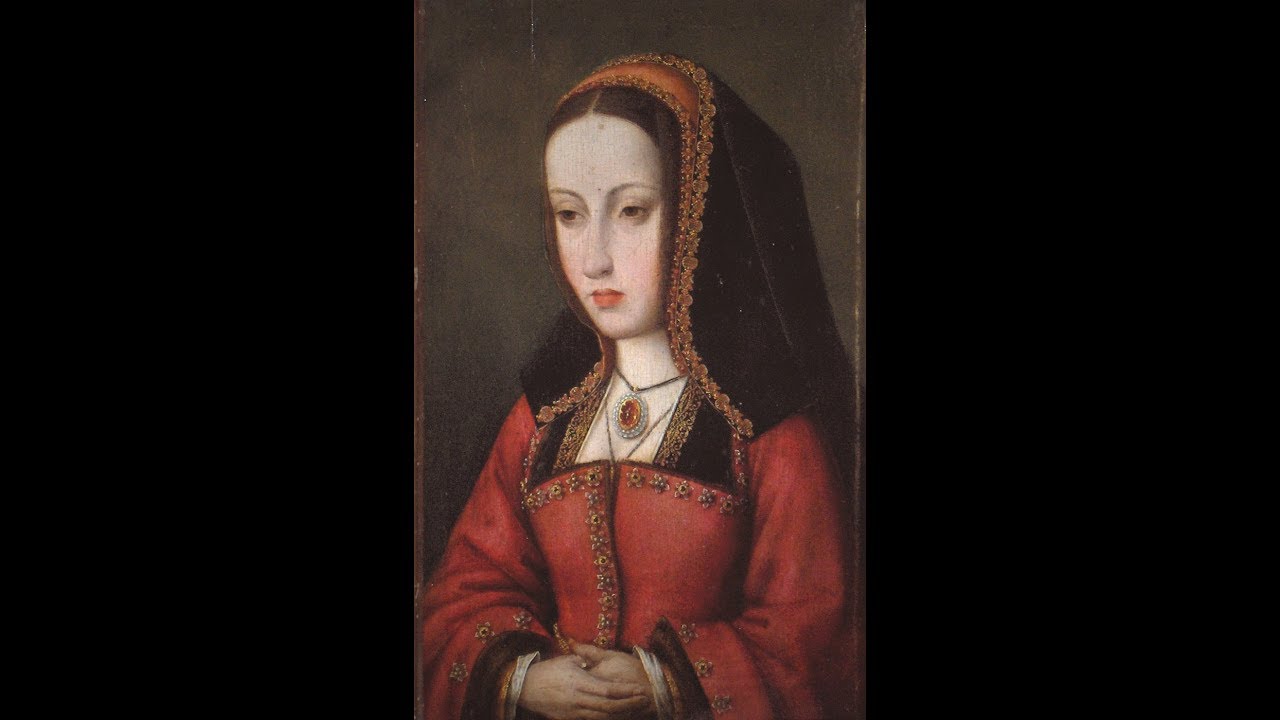
Her future had already been decided. Joanna grew into a young woman with brown hair and eyes, an oval face, pale complexion, and delicate skin, with an attractive figure. She was said to be the most beautiful of all the Catholic Monarchs’ children, and she bore a striking resemblance to her paternal grandmother, Juana Enríquez, so much so that her mother affectionately called her “mother-in-law. ” She also inherited her mother’s strong character, which led to frequent arguments between them, though Joanna remained deeply devoted to her.
She grew up under the control of her parents and the court, with little autonomy. The Catholic Monarchs had grand plans for their children. They negotiated strategic marriages with various royal houses, hoping to strengthen ties with the House of Habsburg. Maximilian I of Habsburg agreed to a double marriage: Joanna’s brother John, heir to the thrones of Castile and Aragon, would marry Margaret of Austria, and Joanna would marry Margaret’s brother Philip, nicknamed “the Handsome.
” Joanna’s hand had also been sought by the Dauphin Charles of France and James IV of Scotland, but the Habsburg match prevailed. In the summer of 1496, Joanna bid farewell to her family at the port of Laredo in Cantabria. The goodbye was deeply emotional. Joanna believed she would never again set foot on Spanish soil or see her family.
She was right about some of them, though fate would allow her to see her parents and her younger sister once more. She set sail for Flanders, but the voyage went wrong from the start. A series of setbacks forced the fleet to dock in Portland, England. Days later, as they approached the coast of the Netherlands, one of the ships ran aground on the rocks.
On board were seven hundred men and much of the Infanta’s personal wardrobe. The ship had to be abandoned. When Joanna finally arrived in Flanders, her betrothed was not there to meet her. She and her entourage waited thirty-four days.
During this time, the advisors of the Catholic Monarchs, aware of the situation, tried to dissuade them from the marriage, arguing that it would be better to unite Joanna with the French crown instead. Finally, Philip deigned to appear. The first meeting was a complete success. Philip was a young man of medium height, well built, with blond hair and blue eyes.
The couple fell in love instantly. Philip was so overcome with passion that he immediately asked for a priest to marry them on the spot; he could not wait the two days that had been scheduled. On October 20, 1496, that impromptu wedding took place. Joanna was sixteen, Philip eighteen.
Joanna was living a dream. The court of Flanders was nothing like the strict, somber court of Spain. In her new home, women could eat and drink alongside men while laughing. There was constant music and dancing.
And she had a husband who adored her with an unbridled passion. Joanna soon became pregnant. But the happiness began to fade when Philip started to lose interest in her. Joanna was a woman deeply in love, and she tried to spend as much time as possible with her husband, while he fled from her to be with his mistresses.
One day, in front of everyone, she asked him for fidelity, and he refused. Joanna felt an intense jealousy that bordered on anguish. On November 15, 1498, their first daughter, Eleanor, was born. Amidst arguments, recriminations, and passionate reconciliations, Joanna became pregnant again.
She watched her husband’s every move and was plagued by depression over his disrespect and his distance from her family. Her obsession grew so consuming that she attended a party while heavily pregnant. There she began to feel pains she dismissed as cramps. She went to the latrines and gave birth there, alone, at three in the morning on February 24, 1500.
It was a boy: Charles, the future Charles I of Spain. In 1501, Joanna gave birth in Brussels to another daughter, Isabella, named after her mother. That same year, they had to travel to Spain. Joanna’s older brothers and her nephew had died.
She was now the heir. The journey took six months, and on May 22, 1502, she and Philip were sworn in as heirs in Toledo Cathedral. In 1503, Joanna fell into a depression. Her husband left for Flanders, and she remained in Spain because she was pregnant again.
On March 10, she gave birth to her son Fernando in Alcalá de Henares. Joanna wanted to return to her husband, but her mother opposed it and ordered her imprisoned in the Castle of La Mota in Medina del Campo. Faced with Joanna’s insistence and melancholy, Isabella eventually allowed her to leave. Joanna returned to Flanders, leaving Fernando behind in Spain.
She hoped to find a loving husband, but Philip avoided her again. They clashed seriously over his affairs with her ladies-in-waiting, who began to treat her with contempt. Philip confined Joanna to her chambers, forbidding her from leaving. On November 26, 1504, Queen Isabella I of Castile died.
Her will stated that Joanna would be the heir to Castile, but if she could not or would not rule, her father Ferdinand would, never Philip, who was not popular in Castile. Joanna remained isolated, unaware that her mother had died. Finally, Ferdinand sent emissaries to Brussels and convinced his daughter to sign a document handing power to her father. Philip, meanwhile, was eager to take the throne himself.
While preparing the fleet for the voyage to Spain, Joanna gave birth to her fifth child, Maria, in 1505. At the end of the year, they set sail despite being advised against winter travel. Bad weather forced them to spend three months in England. There Joanna visited her sister Catherine and met Henry VII, who was reportedly captivated by her beauty.
In April 1506, they arrived in A Coruña. Philip tried to have Joanna declared incompetent before the nobility, but many refused, seeing no signs of madness in her. Yet Philip gathered enough support, and Ferdinand the Catholic was forced to sign the Concord of Villafáfila, which declared Joanna insane. Philip was recognized as King of Castile.
Although her marriage was a disaster, Joanna became pregnant again. Then, on September 25, 1506, Philip the Handsome died unexpectedly in Burgos. Some believed he was poisoned; others said he died of a fever. He had black spots on his skin and an infection on his tongue.
Joanna stayed by his side day and night as he lay dying, feeding him and giving him drink. When he died, she was petrified and shed not a single tear. She accompanied the funeral procession toward Granada, traveling only at night. On January 14, 1507, in Torquemada, Palencia, she gave birth to her last daughter, Catherine.
The regency remained in the hands of Cisneros until Ferdinand returned from Naples. Joanna’s father convinced her to settle in Tordesillas, telling her it would be temporary, so she could be near Philip’s body. She did not know she would remain there for the rest of her days. Henry VII of England wanted to marry her, but Joanna refused, using the excuse that her husband’s body was still present; he had not yet been buried.
She remained locked in a tower with her daughter Catherine. During her confinement, she received no news from the outside world. She did not even learn of her father’s death in 1516. In 1517, her son Charles arrived in Spain and visited her, accompanied by Eleanor.
They were horrified to see how poorly little Catherine lived and took her away. But faced with Joanna’s hunger strike and cries, Charles decided the girl should return to her mother. The Marquesses of Denia, placed in charge of Joanna’s custody, mistreated her. She was locked in dark, unventilated rooms.
She accused the servants of stealing her jewels, but the jewels disappeared during visits from her relatives. They were her only memento of Philip. In 1520, the Revolt of the Comuneros broke out. The rebels traveled to Tordesillas, believing Joanna to be the only true queen.
They told her everything that had happened, including the death of her father. When they spoke with her, they saw no signs of madness and suspected a conspiracy. Joanna spoke at length with them but refused to sign anything: she did not want to rule against her son. Joanna’s health declined after Catherine left in 1525 to marry the King of Portugal.
Joanna fell into a deep depression and loneliness. She remained indifferent to religion. Her grandson, Philip II, sent the Jesuit Francisco de Borja to speak with her. Borja was fascinated by her lucidity and declared that she was not mad, but rather mistreated.
No one believed him. After a fall, Joanna lost her mobility and suffered from painful ulcers. On April 12, 1555, at the age of seventy-five, she died alone. There was a discreet funeral.
Philip II ordered that her remains and those of Philip the Handsome be taken to Granada. Joanna had remained imprisoned for over fifty years. Her life was shrouded in conspiracies. She was a woman who craved her husband’s attention and was misunderstood by everyone around her.
Her father and her husband both took advantage of her, playing on her supposed madness. She was a pawn in the hands of others. She only wanted to love and be loved. Perhaps she was never mad at all; perhaps everyone around her tried to drive her mad.
She was simply a woman deeply in love, a love that became an obsession, and that obsession became her prison.
