In 1935, one of the biggest actresses in America vanished from Hollywood for months without giving anyone an explanation or a forwarding address. When she finally returned, she told the press she had adopted a baby girl from an orphanage. Somehow, nobody thought to ask why the child had the same ears as Clark Gable. That actress was Loretta Young, and her disappearance was one of the most elaborate cover-ups in Hollywood history.
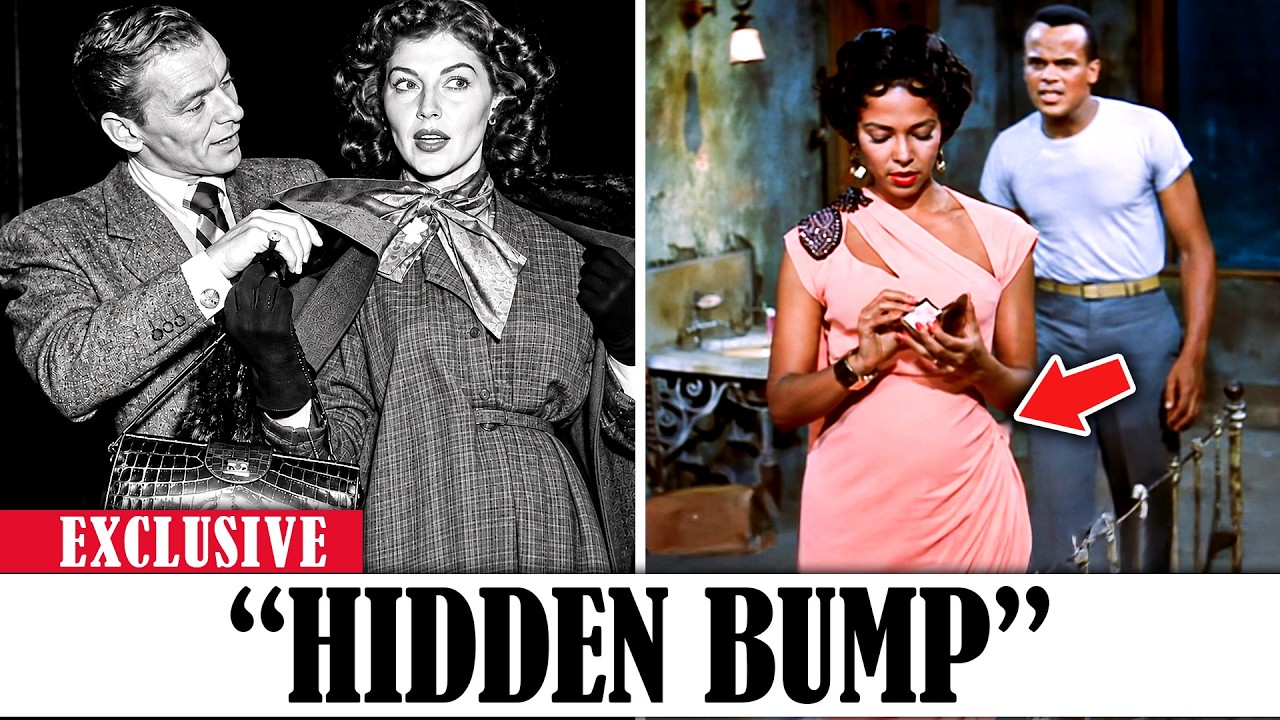
But she was far from alone. During the Golden Age, the major studios controlled almost every part of their stars’ lives, from their names to their hairlines, to who they were allowed to date. And nothing terrified the men running those studios more than an actress getting pregnant. Morality clauses, written into contracts as early as 1922, gave studios the legal right to suspend, fine, or fire any actress whose personal life threatened the carefully manufactured image that sold tickets.
An unmarried actress who got pregnant was considered fallen. A married actress who got pregnant was considered a financial liability, because pregnancy meant months away from the set, and months away from the set meant lost revenue. These are the stories of thirteen actresses whose pregnancies were concealed, covered up, or erased entirely by the system that made them famous. By the mid-1930s, singer and actress Jeanette MacDonald was one of the most bankable stars at MGM.
She had appeared in over two dozen feature films, and her on-screen partnership with Nelson Eddy made them one of the most popular duos in the country. Then MacDonald got pregnant. The identity of the father was never publicly confirmed, but according to E. J.
Fleming’s book *The Fixers*, MGM studio boss Louis B. Mayer told his head of publicity to get rid of the problem. MacDonald checked into a hospital shortly after. The official reason given to the press was an ear infection.
She was back on set within weeks. The man Mayer called was named Howard Strickling. Remember that name. Before there was a Golden Age, there was Gloria Swanson.
In the 1920s, she was the biggest star in the world, four feet eleven inches tall, ninety pounds, with a wardrobe budget that rivaled small countries. Paramount built an empire around her image, and her contract contained a morality clause that could end all of it. In 1925, Swanson married the Marquis Henri de la Falaise in France and returned to America as Hollywood royalty, literally. But Swanson had a problem.
She was pregnant, and the math was devastating. Her due date fell just seven months after the wedding, which meant the baby had been conceived before the marriage. Giving birth on that timeline would tell the public exactly what the studio could not afford for them to know. Swanson ended the pregnancy.
According to her own autobiography, *Swanson on Swanson*, the procedure went badly wrong. She developed blood poisoning and nearly died. Fans waited anxiously for updates on her mysterious illness, and she was given a hero’s welcome when she recovered. None of them knew why she had actually been sick.
In her memoir, published decades later, Swanson wrote that she regretted the decision for the rest of her life. In the early 1930s, Constance Bennett was the highest-paid actress in Hollywood. Warner Brothers was paying her $30,000 a week, an almost unimaginable sum during the Great Depression. She was beautiful, sophisticated, and box office gold.
She was also hiding a child. Bennett had been married to millionaire socialite Philip Plant from 1925 to 1929. Their divorce was supposedly childless. But in 1932, Bennett returned from a trip to Europe with a three-year-old boy she introduced to the press as Peter Bennett Plant, a child she claimed to have adopted.
He was not adopted. Ten years later, during a legal battle over a trust fund established for descendants of her former husband, Bennett revealed the truth. Peter was her biological son by Plant, born after their divorce. She had hidden his true parentage for a decade to make sure Plant could not claim custody.
When the family tried to contest her claim, Bennett told Plant’s mother and widow that if the case continued, she would reveal every detail of her marriage to Plant in open court. They backed down. Bennett had played the same game as the studios, but this time it was for her own reasons. Before Marilyn Monroe, there was Jean Harlow.
Hollywood’s original platinum blonde bombshell was born Harlean Carpenter in Kansas City, and by 1930 had landed a lead role in Howard Hughes’ *Hell’s Angels*. MGM signed her shortly after, and within a few years she was one of the biggest box office draws of the decade, starring opposite Clark Gable in six films. Around the mid-1930s, Harlow was having an affair with boxer and actor Max Baer, while still married to cameraman Hal Rosson. Baer’s wife was threatening to publicly name Harlow for destroying her marriage.
Then Harlow discovered she was pregnant. The studio handled it the way they handled everything. Harlow checked into a hospital for what the press was told was an appendectomy. A year later, she got pregnant again, this time from an affair with William Powell.
According to Fleming’s account, Howard Strickling arranged for a Mrs. Jean Carpenter to be admitted to Good Shepherd Hospital while putting out the word that she was there to get some rest. Harlow’s own mother justified the decision with five words: “A child could wait. Her career could not.
” There is Strickling’s name again. Joan Crawford was married to Douglas Fairbanks Jr. in 1931 when she became pregnant. The couple was already separated, and Crawford believed the father was Clark Gable, with whom she was having a very public affair.
MGM production chief Irving Thalberg demanded that Crawford and Gable end their relationship immediately. Gable complied. He later admitted the studio would have destroyed his career in fifteen minutes if he had refused. Crawford’s pregnancy was handled by the same man who had handled MacDonald’s and Harlow’s.
Howard Strickling arranged everything. The cover story was that Crawford had slipped on the deck of a ship during filming and lost the baby. Crawford told her estranged husband the same thing, and he never questioned it. The real story stayed buried for decades, surfacing only in Fleming’s book about MGM’s fixers.
Crawford, who never had biological children, would later adopt four, including Christina Crawford, whose own memoir would expose an entirely different kind of Hollywood cover-up. If Strickling’s name is starting to sound familiar, that is the point. Rita Hayworth, born Margarita Carmen Cansino in Brooklyn, had been performing since she was eight years old. By her twenties, Columbia Pictures had reshaped everything about her, from her name to her hairline, which was altered through painful electrolysis.
Her hair was dyed from black to auburn. Her heritage was buried. By the mid-1940s, the reinvented Rita Hayworth was the top pin-up girl for American soldiers during World War II. The press called her the love goddess, and the studio needed her to stay exactly that.
During the production of 1948’s *The Loves of Carmen*, Hayworth was starring opposite Glenn Ford, with whom she was having a long-running affair. According to Ford’s biography, Hayworth became pregnant during the shoot and traveled to France, where the pregnancy was ended. The relationship with Ford spanned decades and five films together, but the pregnancy was never publicly discussed during either star’s lifetime. Within a year, Hayworth had married Prince Ali Khan and left Hollywood altogether.
She was visibly pregnant with their daughter Yasmin when they wed in the south of France in May 1949. By then, Hayworth was no longer under any studio’s control, and she did not hide a thing. Ingrid Bergman was one of the most respected actresses in the world when she wrote a fan letter to Italian director Roberto Rossellini in 1949 and asked to work with him. He invited her to Italy to star in *Stromboli*.
Both of them were married to other people. During the production, Bergman and Rossellini began an affair. Bergman became pregnant. Unlike every other entry on this list, this was a pregnancy that could not be hidden, and the consequences showed exactly why every other actress on this list had tried so hard.
On March 14th, 1950, United States Senator Edwin Johnson of Colorado stood on the Senate floor and called Bergman a powerful influence for evil. He grouped her with Rita Hayworth, calling both women apostles of degradation. He proposed a bill that would have required actors to be licensed so that their licenses could be revoked for immoral behavior. Bergman gave birth to a son, Robertino, days before her divorce from her first husband was finalized.
She and Rossellini married and later had twin daughters, including future actress and model Isabella Rossellini. Bergman did not return to American films for seven years. When she did, she won a second Academy Award for *Anastasia* in 1956. She would win a third Oscar before her career ended.
Congress issued a formal apology in 1972, twenty-two years after Senator Johnson’s attack. Bergman’s story was the proof of what every other actress in this story already knew. If the public found out, the consequences were not theoretical. They were career-ending, reputation-destroying, and in Bergman’s case, backed by the full weight of the United States government.
Gene Tierney was one of the most beautiful actresses of the 1940s and a top box office draw for 20th Century Fox. In the spring of 1943, she finished filming *Heaven Can Wait* and was expecting her first child. She had kept the pregnancy a secret from the studio for fear of being replaced in the film. Before leaving Los Angeles for maternity leave, Tierney made one last appearance at the Hollywood Canteen, signing autographs and shaking hands with servicemen.
A few days later, she woke up covered in red spots. She had contracted rubella. In 1943, there was no vaccine. That October, Tierney gave birth prematurely to a daughter, Daria, who weighed just over three pounds.
The rubella had caused severe congenital damage. Daria was partially blind, fully deaf, and severely intellectually disabled. Years later, a woman approached Tierney at a party and told her she had been a Marine stationed nearby and that she had broken her quarantine for rubella specifically to meet her favorite actress at the Canteen that night. Tierney said nothing.
She turned and walked away. She later wrote in her autobiography that after hearing those words, she did not care whether she was ever again anyone’s favorite actress. Agatha Christie later used the story as the basis for her novel *The Mirror Crack’d from Side to Side*. The pregnancy Tierney had hidden to protect her career became the source of a grief she carried for the rest of her life.
Then, in 1952, one actress finally refused. Lucille Ball was starring in the most popular show on television, *I Love Lucy*, alongside her real-life husband Desi Arnaz, when she became pregnant with their second child. CBS panicked. The network’s broadcast code prohibited anything sexually suggestive on the air, and that included the mere acknowledgement of pregnancy, because it implied that a married couple had done what married couples do.
CBS told Arnaz that a pregnant woman could not be shown on television. The show’s writers were forbidden from using the word pregnant. They used the French word “enceinte” for the episode title and euphemisms like “expecting” in the script. CBS brought in a priest, a rabbi, and a minister to review each pregnancy episode for appropriateness.
Ball pushed through anyway. On January 19th, 1953, forty-four million viewers, roughly 72% of American households with televisions, watched Lucy Ricardo give birth to little Ricky. More people watched that episode than watched President Eisenhower’s inauguration the very next day. Ball proved that audiences were not scandalized by a pregnant woman on their screen.
They were fascinated by her. But even after Ball broke through, the old system did not die overnight. In 1954, Dorothy Dandridge became the first black woman ever nominated for the Academy Award for Best Actress for her performance in *Carmen Jones*. The film was directed by Otto Preminger, and during production, Dandridge and Preminger began an affair.
He was married. She was the most prominent black actress in America. In 1950s Hollywood, an interracial relationship was not just career-threatening. Anti-miscegenation laws were still on the books across much of the country.
For Dandridge, the stakes were higher than for almost any other woman on this list, because she was navigating two systems of control at once: the studio system that governed all actresses and the racial hierarchy that limited her roles, her public image, and her romantic life. In 1955, Dandridge learned she was carrying Preminger’s child. Both Preminger and the studio were horrified. They insisted that she end the pregnancy.
She did. The decision also forced her to confront the fact that Preminger had no intention of leaving his wife. Just as in every other case, the studio’s calculation was simple: the career was the asset, the pregnancy was the threat. Dandridge’s career never recovered to its *Carmen Jones* peak.
The roles available to a black leading woman in 1950s Hollywood were already vanishingly few, and the combination of the affair, the concealed pregnancy, and the industry’s structural racism pushed her to the margins. Her financial situation collapsed. She was forced to place her daughter from her first marriage, who had been born with severe developmental disabilities, in an institution because she could no longer afford care. Dandridge died in 1965 at forty-two from an accidental overdose.
Three years after Lucille Ball showed the world that pregnancy did not have to be hidden, the old machinery was still running. Ava Gardner’s MGM contract included a penalty clause specifically addressing pregnancy. If she had a child, her salary would be cut off. Gardner explained the math clearly years later.
“Frank was broke,” she said, referring to her husband Frank Sinatra. Her future films were going to take her all over the world. She could not have a baby with that sort of thing going on. During her marriage to Sinatra, Gardner became pregnant twice.
The first time, she did not tell him. MGM made all the arrangements, including flying her to London with a studio handler at her side the entire time. She described the process as discreet and hush-hush. The second pregnancy was also terminated.
When Sinatra eventually found out, he was reportedly devastated. Gardner said years later that they could not even take care of themselves, so how were they going to take care of a baby? Some biographers point to that discovery as the moment their famously volatile marriage began its final unraveling. They divorced in 1957 but remained close friends for the rest of Gardner’s life.
She never had children. Judy Garland was put on pills by MGM before she was old enough to drive. Uppers to keep her performing, downers to make her sleep. Her diet was controlled, her social life was managed.
When she married songwriter David Rose in 1941 without the studio’s permission, MGM was furious. When Garland became pregnant at twenty years old, she wanted to keep the baby. She said as much. MGM disagreed.
A pregnant Judy Garland would cost them millions. The studio convinced both her husband and her own mother, Ethel, that the pregnancy could not happen. Garland later described what followed in the third person, as if she could not bring herself to claim the memory directly. She wrote that her mother took her by the hand and led her inside a shabby little office outside of town.
And in a few minutes, David, her mother, and MGM were satisfied. Two years later, Garland became pregnant again after an affair with actor Tyrone Power. And once again, Howard Strickling arranged everything. The same fixer who had handled Lana Turner’s procedure handled Garland’s, for the same studio, involving the same man.
After marrying her third husband, Sid Luft, Garland found herself pregnant again. Luft’s reaction, by his own admission in his memoir, was indifferent. He later wrote that because of his negative response, Garland did not even confide in him about where or when she went. The cycle of pills, control, and loss would follow Garland for the rest of her life.
She died in 1969 at forty-seven. Lana Turner was nineteen years old when she eloped with bandleader Artie Shaw in February 1940. The marriage lasted only a few months before they divorced, but shortly afterward Turner found out she was pregnant. MGM needed her on set, and the man who made the arrangements was the same man who had handled Jeanette MacDonald’s, Jean Harlow’s, Joan Crawford’s, and Judy Garland’s.
Howard Strickling sent Turner to Hawaii on what was presented to the press as a promotional tour. Her mother and her agent accompanied her. According to Fleming’s account, the procedure took place at the hotel. Turner’s mother was at her side.
The studio-hired doctor was paid $500. That fee was deducted from Turner’s next paycheck. She was back filming *Ziegfeld Girl* within a week. The pattern was impossible to ignore: the same office making the same phone calls, arranging the same outcome for actress after actress after actress.
Turner later became pregnant a second time, reportedly by actor Tyrone Power, the same man involved with Judy Garland. Strickling made all the arrangements again. Turner would later say that the experience took something from her she never got back, something she described as a living symbol of the happiest time of her life. She and Power ended their relationship shortly after.
Turner, who would eventually marry eight times, had only one child in her entire life: a daughter named Cheryl Crane, born from her second marriage. And finally, the story that opened this account. Loretta Young was twenty-two years old and deeply Catholic when she was cast opposite Clark Gable in the 1935 film *The Call of the Wild*. Gable was thirty-four and married to his second wife.
During a remote location shoot in Washington state, the two began an affair. On the long overnight train ride back to Hollywood, according to multiple accounts, Judy Lewis was conceived. Young refused to end the pregnancy. Her faith would not permit it.
But an unmarried actress pregnant with a married man’s child in the middle of the Great Depression was a career-ending scandal. So Young and her family constructed a cover-up that operated, as one biographer put it, with almost intelligence agency precision. Young took a hiatus at the height of her career. She traveled to Europe.
She returned to California and stayed out of sight until the baby was born in a house in Venice owned by her mother. The infant was then placed in an orphanage. Nineteen months later, Young told gossip columnist Louella Parsons that she had adopted a little girl she loved like her own. The child was Judy Lewis, and she grew up believing she had been adopted.
Young reportedly dressed her in bonnets to hide her ears, which resembled Gable’s. Hollywood insiders knew the truth, but Lewis’s classmates and friends were instructed not to tell her. Lewis did not learn that Clark Gable was her biological father until she was thirty-one, two weeks before her wedding, when her fiancé casually told her he already knew. “Everyone knew,” he said.
Her classmates had been told. Her friends had been instructed to keep quiet. The whole of Hollywood had treated her parentage as an open secret for three decades, while the one person it mattered to most was kept in the dark. Gable himself had died six years earlier, in 1960, without ever publicly acknowledging his daughter.
He had met Lewis once when she was fifteen but said nothing about their connection. When Lewis finally confronted her mother, Young confirmed the truth but begged her not to tell anyone. Lewis eventually wrote the full story in her 1994 memoir, *Uncommon Knowledge*. Young never acknowledged the truth publicly in her own lifetime.
Her official biography, *Forever Young*, which confirmed the story, was released only after her death in 2000, sixty-five years after Judy Lewis was born. Every story on this list leads back to the same place: the same studio system, the same morality clauses, and in many cases, the same man. Howard Strickling ran publicity at MGM from the late 1920s into the 1960s. Alongside studio vice president Eddie Mannix, he arranged cover stories, paid off journalists, and handled pregnancies with the same efficiency he brought to every other kind of scandal.
MacDonald, Harlow, Crawford, Turner, Garland: the same office, the same phone calls, the same results. Marlene Dietrich, who lived through the same era, summed up the entire culture in a single sentence that appeared in Cari Beauchamp’s book about the women of early Hollywood. “For the women of her generation,” she said, “this was their birth control. ”
Morality clauses gave the studios legal cover, the Hays Code gave them cultural justification, and the fixers gave them operational capability.
It took Lucille Ball refusing to cooperate in 1952, Ingrid Bergman surviving seven years of exile, and Loretta Young’s daughter writing a book fifty-nine years after her own birth for these stories to enter the public record. And for every name in this account, there are others whose stories never made it out at all.
