From the workhouses of the Isle of Wight to the gilded salons of Paris, few lives in the eighteenth and nineteenth centuries traced a more improbable arc than that of Sophia Dawes. Born on September 29, 1790, in St Helens on the Isle of Wight, she entered a world of poverty and instability. Her father, Richard Dawes, was a fisherman and smuggler with a drinking problem. Her mother, Jane Callaway, was recorded as unmarried on her death certificate, suggesting that the couple never legally wed.
Sophia, one of ten children, spent much of her early childhood scrounging for snails on the island’s beaches to help feed her family. She and her siblings also endured time in a Newport workhouse, where the poor were housed and fed in exchange for grueling labor. Six of her brothers and sisters did not survive to adulthood. As a teenager, Sophia worked as a farm servant on the Isle of Wight before moving to the mainland to work as a chambermaid at the George Hotel in Portsmouth.
Such child labor was common in industrial Britain. Eventually, like many young English people, she was drawn to London, where she became an assistant to a milliner. She lost that job after entering a relationship with a married waterman. For a time, she sold oranges on the streets.
Yet Sophia possessed a sharp survival instinct and a cunning that would carry her far beyond these humble beginnings. Her ascent began when she became the mistress of an army officer. When the affair ended, he paid her fifty pounds a year to remain silent, money she used to fund an education at a school in Chelsea. By 1810, however, that allowance had ended, and Sophia found herself working at a high-class brothel in Piccadilly.
There she met Louis Henri, the Duke of Bourbon and future Prince of Condé. A member of the French royal family and one of the wealthiest men in Europe, Louis Henri had fled revolutionary France and settled in London. One evening, a servant pointed out the girl from the Isle of Wight to the duke. Other aristocrats had taken an interest in her as well, and the matter was settled by a strange card game among the noblemen.
The duke won. By 1811, Sophia was installed in a house on Gloucester Street in Queen’s Square, provided by Louis Henri for herself and her mother. She began studying classical and modern languages, philosophy, and court etiquette under the tutelage of a Monsieur Briant. The duke, who was thirty-four years her senior, paid her a generous allowance of eight thousand pounds a year.
But he eventually grew bored and left for Spain, where he took up with another woman. In 1814, after Napoleon’s disastrous invasion of Russia and his subsequent defeat, French nobles began returning to Paris. Sophia followed and successfully regained the duke’s favor. To legitimize her presence at court and prevent scandal, Louis Henri arranged a marriage between Sophia and Adrien Victor de Faucheux, an officer in the French Royal Guard.
The marriage took place in London on August 6, 1818. The duke granted the new husband the title of baron and Sophia the title of baroness. The baron, apparently unaware of the true relationship, was led to believe Sophia was the duke’s illegitimate daughter and the widow of a man named Richard Clarke. The duke appointed the husband as his military aide and gave Sophia a dowry of roughly two hundred thousand francs.
Sophia entered French society and was well received at court. But the deception could not hold. In 1822, her husband learned the true nature of her relationship with the prince. He separated from her, returned the dowry, and petitioned the courts for a judicial separation, which was granted in 1827.
When word of the fraud reached King Louis XVIII, he barred Sophia from the French court, dismissing her as nothing more than common street trash. The king hoped this would end the affair, but it did not. Sophia and the prince continued their relationship for years, driven largely by her insistence. With no legitimate heir after his only son was executed in 1804, the aging prince became the focus of Sophia’s ambitions.
By 1829, she pressured him into signing a will that granted her two million francs, several properties, and a large portion of the estate to Henri d’Orléans, the Duke of Aumale, the young son of the Duke of Orléans. In the spring of 1830, the Duke of Orléans ascended the French throne as King Louis-Philippe I after the July Revolution, and he allowed Sophia to return to court. Now recognized as the prince’s mistress of nearly twenty years, she lived at the Château de Chantilly, where she became known as the Queen of Chantilly and installed several of her relatives as staff. That summer, however, the prince, displeased with Louis-Philippe’s accession, decided to leave France for Switzerland and considered changing the will he had signed the previous August.
On the morning of August 27, 1830, the seventy-four-year-old prince was found dead in his room at Saint-Leu. Rumors spread wildly. Many suspected Sophia had murdered him, possibly with the collusion of the king, whose son stood to inherit a vast fortune if the will remained unchanged. The case was closed without a genuine investigation, and the authorities ruled it a suicide.
The will was challenged by relatives but upheld, making Sophia and the Duke of Aumale the primary beneficiaries. Sophia returned to England to escape the lingering scandal, selling her French properties and purchasing a mansion in Hampshire and a home in Hyde Park Square, London. She used her wealth to support her impoverished family and placed her elderly mother in a convent. Stricken with dropsy, Sophia Dawes died in London on December 15, 1840.
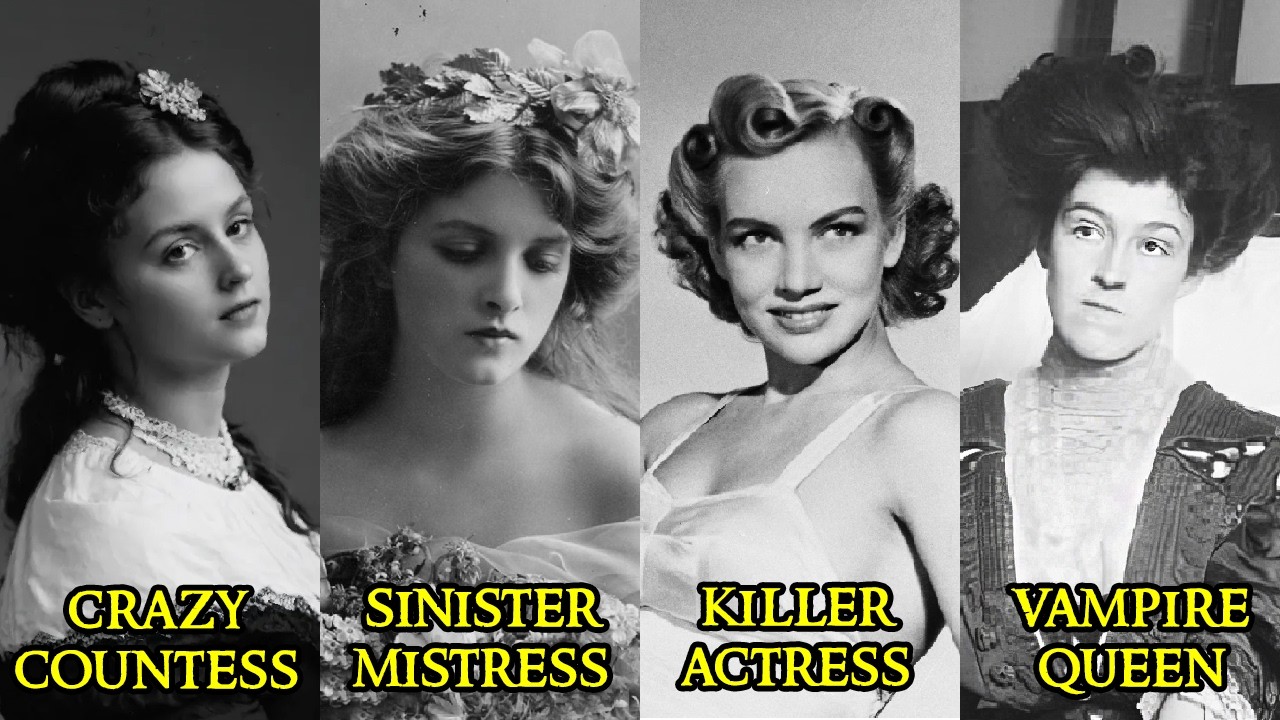
At her death, she was worth an estimated five hundred thousand pounds, equivalent to tens of millions today. Her will was contested, with many relatives receiving portions. Her story of poverty, scandal, and rise to fortune remained a subject of fascination in France for decades. Another woman whose beauty would entangle her with emperors was born into the minor Tuscan nobility on March 23, 1837.
Virginia Oldoini Rapallini, known affectionately as Niegia, grew up in Florence, educated in English and French, trained in dance and music. Her striking features earned her the nickname the Pearl of Italy. By her teenage years, she was the object of countless admirers, a fact her parents encouraged, hoping for a wealthy marriage. In 1854, just before her seventeenth birthday, she married Francesco Verasis, Count of Castiglione, a Lombard aristocrat twelve years her senior.
The marriage was not a love match, and rumors of a brief affair with a naval officer preceded her to the altar. Yet the union brought her a noble title, wealth, and access to high society. Her cousin, Camillo Benso, Count of Cavour, served as prime minister of the Kingdom of Sardinia. By late 1855, Cavour devised a bold plan.
He sent the eighteen-year-old countess to the French court on a secret mission: to captivate Emperor Napoleon III and secure his support for the cause of Italian unification. She accepted, and in early 1856 she arrived in Paris with her husband and son. She quickly caught the attention of the forty-seven-year-old emperor, who was notorious for his infidelities. She became his mistress and sent secret reports back to Turin, keeping the Piedmontese government informed of developments in the French capital.
Her beauty and dramatic elegance were legendary. She dazzled the court with elaborate costumes, including her famous Queen of Hearts outfit. But her vanity was a fatal flaw. As one contemporary observed, after a few moments, she began to get on your nerves.
In 1857, her husband left her after she openly admitted her affair with Napoleon III and drained his finances. That April, Napoleon III narrowly survived an assassination attempt while visiting her, and rumors spread that the empress herself had orchestrated it to trap the countess. Scandal erupted, and she was forced to leave Paris. Her mission, however, had been accomplished.
When war broke out between Austria and Piedmont-Sardinia in April 1859, the French sided with Piedmont, and Italy was unified under Piedmontese leadership by 1861. After the fall of the Second French Empire in 1870, the countess found herself living in reduced circumstances. The millions of francs she had accumulated were gone. She had sent a photograph of herself to her estranged husband, clad in a magnificent gown and holding a hidden knife, captioned Vengeance, to retain custody of their son.
In 1879, her only son died at twenty-four, shattering her. She retreated into isolation, destroying all her mirrors and living in a darkened apartment. She died in Paris on November 28, 1899, at sixty-two, and was buried in Père Lachaise. A century later, the Metropolitan Museum of Art in New York acquired 275 of her photographs, the legacy of the woman often called the first fashion model.
A very different notoriety attached to Evelyn Cain, a teacher from Oshkosh, Wisconsin, who married a wealthy bag manufacturer named Charles Ramadka. After a severe illness and surgery, her personality seemed to change. In 1907, she abandoned her husband and young daughter, fleeing to Chicago. There she posed as a servant, working in the homes of wealthy families, learning their routines and the locations of their valuables, and then stealing their jewelry, which she handed over to her lover, a hotel janitor named William Jones who sold the goods on the black market.
After a burglary at the Beck residence on South Park Avenue, Detective Lieutenant James F. Larkin spotted a woman at a café with an alligator handbag matching the description of the stolen one. Following her, he discovered she was the well-known and wealthy Mrs. Evelyn Ramadka.
She was arrested on October 16, 1907, and confessed. Her husband, devastated, divorced her and gained custody of their daughter. His family forced him out of the business he had built, which went bankrupt by 1912. Jones was captured after police tapped his phone line.
The couple had stolen goods worth roughly twenty-five thousand dollars. In November 1907, both were convicted, Evelyn of burglary and Jones of receiving stolen goods, each sentenced to one to twenty years in prison. After her release in 1910, Evelyn was suspected of leading a gang of female thieves known as the Vampire Women, who drugged wealthy men in Chicago nightclubs and robbed them. Though identified by one victim, she evaded arrest and vanished from the historical record after 1911.
The final story belongs to Ann Woodward, born Angeline Lucille Crow on December 12, 1915, in Pittsburg, Kansas. The daughter of a trolley conductor and a schoolteacher, who held a master’s degree from the University of Kansas, she moved to New York in 1937, renamed herself Ann Eden, and became a showgirl at a fashionable club. There she met William Woodward Jr. , heir to a powerful American business empire.
They married in March 1943, after a courtship complicated by his naval service in World War II. He survived torpedoing on the USS Liscom Bay, and they had two sons. But their marriage was troubled by infidelity, heavy drinking, and her mother-in-law’s conviction that Ann had married for money. On the night of October 30, 1955, after attending a party hosted by a banking heiress, the couple returned to their home on Long Island, reportedly on alert for prowlers.
Ann later claimed she woke to noises on the roof. She grabbed a loaded shotgun kept in her room for protection and went into the hallway, where she saw a figure entering her husband’s bedroom. She fired. The ricochet killed William.
The grand jury cleared her of any crime in less than thirty minutes. But high society turned against her. A prowler confessed to being on the roof that night, yet rumors insisted she had murdered her husband for his inheritance. Twenty years later, Truman Capote published chapters of his unfinished novel Answered Prayers in Esquire.
One chapter, La Côte Basque, 1965, included a thinly disguised character based on Ann, portrayed as a murderer who got away with it. The scandal reopened. Ann, long depressed, took cyanide in her Manhattan apartment in October 1975. Her mother-in-law remarked that Truman had killed her.
Capote, ostracized by his social circle, descended into addiction and died in 1984. Ann’s sons both took their own lives years later. The available evidence suggests the shooting was as accidental as Ann always claimed.






