The winter of 1901 in Cumberland County, Tennessee, was brutally cold. Since early December, snow had fallen on and off, covering the rolling hills and deep hollows of the Cumberland Plateau in a harsh white blanket. The isolated farms were cut off from each other by miles of mountain roads that became nearly impossible to travel when the weather turned. It was in this frozen landscape that Lydia Crane disappeared without a trace from her husband’s property on January 15th, 1901, leaving behind a mystery that would haunt the mountain communities for decades.
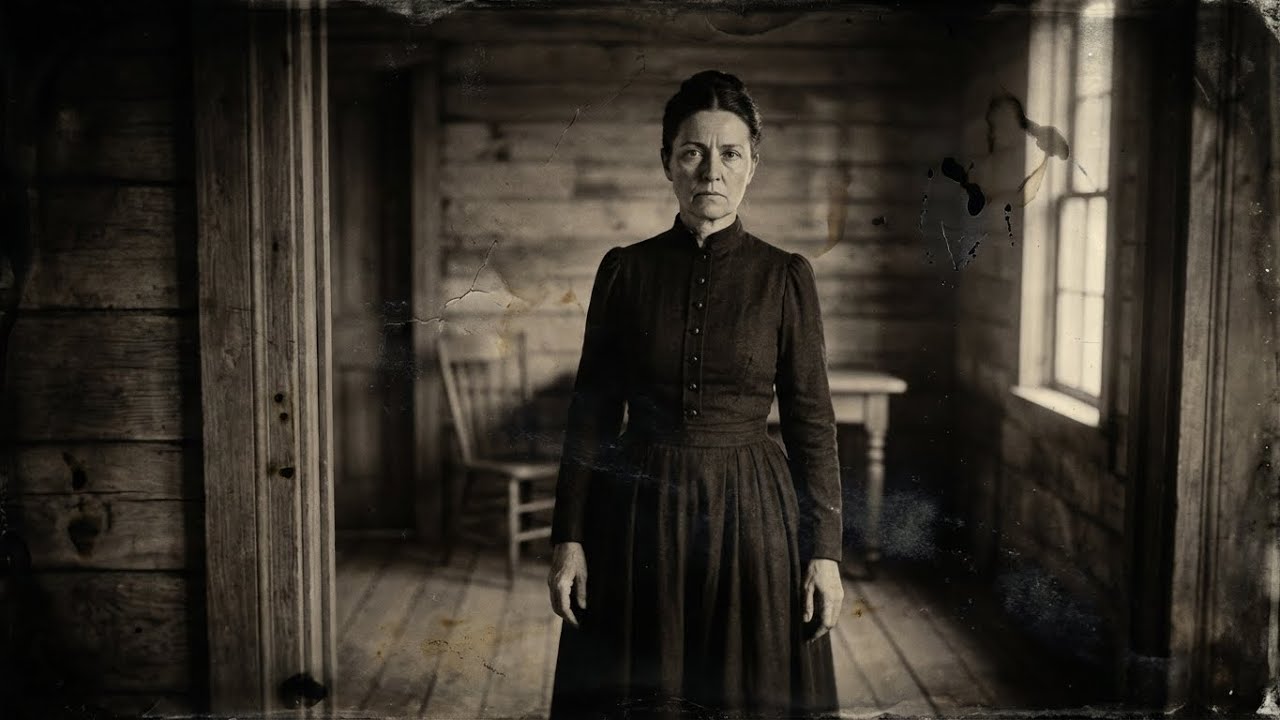
Lydia was twenty-eight years old. She had been married to Cornelius Crane for almost six years, and local records suggest the marriage was more about business than love. Cornelius owned a large piece of land in the remote Siquatchi Valley, where he ran a small timber business and kept a small herd of cows. The Crane home sat at the end of a narrow dirt road that wound through thick oak and hickory trees—in winter, it could only be reached by horseback or on foot.
Lydia came from a family in nearby Crossville that wasn’t wealthy. Her father, Jedadiah Witmore, was a blacksmith who had trouble making ends meet after a mining accident left him partially disabled. Lydia’s marriage to Cornelius gave her and her family a sense of security. But people who knew her said she always seemed sad, as if she were carrying an invisible weight.
The Crane property included a two-story log cabin with a stone chimney that Cornelius built himself, along with a barn, a smokehouse, and a few smaller buildings. The Pendleton family lived about three miles away through thick woods—they were the closest neighbors, connected only by a poorly kept trail that became dangerous in winter. This separation would prove central to the mystery that was about to unfold. A few months before Lydia went missing, some neighbors had started to notice changes in the Cranes’ daily life.
Martha Pendleton, the wife of their closest neighbor, would later tell police she was worried because the Crane chimney didn’t let out any smoke during the day. In mountain towns where warmth was necessary for survival, a cold hearth in winter was strange—it made people think something was wrong. The sounds that began coming from the Crane property during the long winter nights were even more worrying. Jeremiah Pendleton said that while out hunting, he heard what he called unnatural conversations coming from the Crane house.
The voices carried clearly through the cold night air, and they sounded like they came from more than one person. But the Pendletons knew that only Lydia and Cornelius lived on the property. Pendleton said the talks had a rhythmic, almost ritualistic quality, unlike the way people usually speak in their homes. The voices would sometimes go on for hours, rising and falling, with long stretches of complete silence in between.
Pendleton thought about investigating the sounds a few times, but they were too far away, the terrain too rough, and he didn’t want to bother his neighbors. Reports from travelers who occasionally passed the Crane property on their way to more distant settlements were even more troubling. Ezra Kingsley, a traveling merchant who sold goods to families in remote areas, told local authorities he had seen strange lights moving through the woods around the Crane house at night. It looked like a number of people carrying lanterns, moving through parts of the forest where there were no paths, with no clear pattern to their movement.
Kingsley’s story was especially disturbing because he had been making these trips for more than ten years and knew the area’s normal patterns of activity well. The lights he saw were not like anything connected to farming, hunting, or logging, and their strange movement made him think of things he couldn’t easily explain or understand. At first glance, the Cranes seemed to live a normal rural life. But some in the community would later remember small signs that things weren’t right in their home.
People knew Cornelius as a hard worker, but over time he became more and more withdrawn and distrustful of strangers. Reverend Matias Blackwood, a traveling minister who sometimes held services in the area, wrote in his journal that Cornelius had become strange in his habits since getting married. The Reverend’s notes from the summer of 1900 describe a man who always seemed under great stress and who was deeply concerned about privacy and secrecy. Cornelius would often show up at the places where services were being held while the minister was in town, but he would stay at a distance, watching without speaking to anyone or taking part.
His behavior when spoken to directly was stranger still. He would often give answers that seemed vague or unrelated to the question. When people asked about his wife’s health or well-being, he would grow angry, quickly change the subject, or make excuses to end the conversation. Lydia, meanwhile, had been missing more and more community events.
This wasn’t entirely unusual for women in remote rural areas even then, but her complete withdrawal from social contact was. The few documented interactions with neighbors show that she had become more fragile and withdrawn in the months before she disappeared. Martha Pendleton wrote in her diary that she saw Lydia at the local trading post in December 1900 by chance. Lydia looked unnaturally pale and spoke so softly that Martha had to strain to hear her.
More worrisome was Lydia’s apparent confusion about the basic facts of her daily life. When people asked her about everyday things—the weather, what she did around the house—she would often take a long time to answer, as if she was having trouble remembering or understanding what they were asking. Zebulon McCreary ran the trading post, the unofficial center of community life for families in the area. His business sat at the crossroads of two mountain roads, making it easy for people from different valleys and hollows to reach.
Neighbors who might not see each other for months at a time came here for news, gossip, and important supplies. McCreary told investigators several weeks after the disappearance that Cornelius had been coming to the trading post more often than usual in the fall of 1900. Before, he rarely came in, and when he did, he only bought what he needed and did his business quickly and quietly. Starting in October, he began coming regularly—sometimes more than once a week—to buy things McCreary thought strange for someone in his situation.
Mostly basic supplies, but in very large amounts. He asked for a lot of lanterns, a lot of rope and canvas, and a great deal of preserved food—too much for a family of two. When asked about these large purchases, Cornelius would give vague answers about getting ready for bad weather or growing his timber business. Even more confusing were his requests for certain books and magazines about topics that had nothing to do with farming or timber work.
Rural trading posts didn’t usually carry such specialized items, but McCreary was able to get Cornelius a few publications from his suppliers in Nashville—books on astronomy, geology, and what looked like philosophical works about solitude and isolation. McCreary also said that Cornelius’s behavior had changed a great deal during these visits. He had been quiet but pleasant before, sometimes making small talk about the weather and local events. During the fall visits, he became increasingly agitated and suspicious.
He often looked over his shoulder and asked whether anyone else had been asking about his purchases or activities. As winter approached, these changes became more pronounced. The last time McCreary talked to Cornelius was January 3rd, 1901—just twelve days before Lydia disappeared. Cornelius looked very upset that day and wanted to know whether anyone had been asking questions about him or his wife.
When McCreary told him no such questions had been asked, Cornelius became even more suspicious, believing McCreary might be hiding something from him. His talk about what he called the true nature of solitude and its effect on the mind made the conversation even stranger. Cornelius spoke of the importance of knowing what happens to people when they are completely alone—how most people don’t really understand how complete solitude affects their minds. McCreary, a practical man with little formal schooling, found these comments confusing and a little frightening.
There are still many unanswered questions and conflicting reports about what happened on January 15th, 1901. Cornelius told police he had spent the day cutting wood on a far part of his property. Snow made the work difficult, and he got home well after dark, tired, and looking forward to the warmth of his fireplace. He said that as soon as he stepped inside, he knew something was wrong.
In his first statement to Marshall Ezekiel Thornton, the law enforcement officer in charge of the area, Cornelius described the scene as disturbed but peaceful. Lydia’s things were still where they always were. Her winter coat still hung on the peg by the door. A dinner that had been made but not eaten sat on the kitchen table.
The strangest thing, Cornelius said, was the deep silence that filled the house. The normal sounds of settling wood, wind in the chimney, and other household noises seemed muffled, or absent entirely. The fire in the main hearth had gone out, leaving cold ashes—it hadn’t been tended in a while. Most confusing of all, every door inside the house was wide open, even though Lydia usually kept them closed to hold the warmth in winter.
Marshall Ezekiel Thornton was well suited for the tough job of keeping the peace in Tennessee’s remote mountain communities. He grew up in the area and knew it well—the families, the terrain, the problems that could arise in such a remote place. He had been chosen as Marshall because of his reputation for fairness and his ability to handle the complicated family ties common in many mountain communities. Thornton reached the Crane property on January 17th, after Cornelius made the difficult trip through the snow to report his wife missing.
The first look at the property turned up few solid clues. There were no footprints in the snow around the house except Cornelius’s own—both from when he returned from work and from when he left to get help. The absence of tracks leading away from the house was especially strange; it meant Lydia hadn’t left on foot. Inside, Thornton noticed several things he considered important.
Lydia’s belongings were untouched, but the arrangement of furniture and other objects didn’t seem like what you’d expect in a normal home. Chairs had been moved from their usual spots, and furniture had been shifted to make it easier to see between rooms. The setup made the inside look strangely open, almost like a ceremony. Then he found what looked like the start of a letter in Lydia’s handwriting on the writing desk in the main room.
It was addressed to her sister in Crossville and had only a few lines: “My dearest Clarissa, I fear I must tell someone of the strange occurrences that have been troubling our household. Each night I hear sounds that seem to come from within the very walls themselves, and I sometimes feel as though I am being watched by eyes I cannot see. Cornelius has grown distant and speaks often to himself, but when I ask what troubles him, he only says that we are being prepared for something. ”
The letter ended abruptly with a large ink blot where she had apparently stopped writing suddenly.
Thornton said the ink was still slightly wet when he found it—it had been written not long before. A search of the house turned up no other letters or diaries that might have shed light on Lydia’s mental state or the events she had written about. But the investigation did find other details that seemed important. In several rooms, there were signs that furniture had been moved and rearranged many times, making patterns that served no useful purpose.
Chairs were set in a perfect circle around a cleared space in the middle of the main living area, as if for a gathering or ceremony. Even stranger were markings on walls and floors of some rooms—symbols or letters carved into the wood, though it was hard to tell what they meant. Some looked like letters or numbers; others looked more like random shapes. Cornelius said the marks were just scratches from moving furniture or doing normal chores, but their arrangement suggested a more specific purpose.
The investigation expanded to include interviews with the few neighbors and friends who had known the couple. These conversations revealed that things had been growing stranger in the Crane home in ways not immediately clear to those outside. Several people said Cornelius and Lydia had been acting more anxious and less social in recent months. Jeremiah Pendleton told Thornton about the strange nighttime occurrences he had witnessed on the Crane property, along with the odd voices he had heard before.
He said he saw lights moving through the woods around the house in patterns that seemed deliberate but impossible to understand. Sometimes these lights would go out for hours at a time, only to reappear in completely different places, as if the people carrying them were following an elaborate path through the woods. Pendleton also said he had smelled strange odors coming from the property at times, especially on calm nights when the cold air carried scents for long distances. He described smells like burning herbs, but stronger and more bitter—unlike anything connected to normal cooking, heating, or farming.
The smells would sometimes last for hours, meaning whatever produced them was active for extended periods. Martha Pendleton told of her interactions with Lydia in the months before her disappearance. Lydia seemed increasingly lost and confused during their brief meetings. She often had trouble remembering recent conversations or recognizing people she knew.
Sometimes her answers to simple questions came late or missed the point, as if she was struggling to understand what was being asked. More troubling were things Lydia said about feeling like she was losing track of time and having periods when she couldn’t remember what had happened. She told Martha she would wake up in strange places in her own house and not remember how she got there. There were times she would find herself in rooms she had no reason to be in, or hours would pass without her knowing what she had been doing.
Lydia also said she was afraid of things happening at night that she could hear but not see—lying awake for hours, hearing sounds that seemed to come from all over the house, but when she tried to find their source, she never found anything strange. After these episodes, she felt she couldn’t trust her own senses or her ability to understand what was happening in her own home. Other neighbors told similar stories, and looking back, it was clear something was very wrong. Ezra Kingsley, the traveling merchant who had seen the strange lights, said Cornelius had become obsessed with theories about isolation and its effect on human behavior.
At first these talks seemed like the harmless musings of an educated man in a remote area, but they had grown more intense and disturbing over time. Kingsley said Cornelius had begun saying things that showed he believed extended solitude could change how a person perceives reality. He talked about how people who live alone might be able to do or see things that people in normal social settings cannot. Kingsley was unsettled by the force and passion with which Cornelius spoke of these ideas.
He also said Cornelius had asked about materials unrelated to his usual work—a great many mirrors, candles, and various herbs and plants that grew naturally in the area. When asked why he needed them, he gave vague answers that seemed to change depending on who asked and when. As the investigation continued, it became clear the couple had slowly cut themselves off from the normal patterns of community life, both physically and mentally. Cornelius’s increasingly strange behavior and Lydia’s seeming disorientation suggested something was systematically breaking their connection to each other and to reality.
When Lydia’s sister, Clarissa Whitmore, finally arrived in Crossville in early February, her testimony was perhaps the most disturbing. She said Lydia had sent her a number of letters over the past few months showing her growing fear and confusion. Lydia wrote that their daily routines had become strange and unpredictable because Cornelius kept insisting on changes that served no apparent purpose. He had started making them sit in complete darkness and silence for long periods every night, saying it was necessary for them to become more aware of small sounds and movements.
Lydia found these sessions deeply disturbing. During the forced silence, she would hear noises that seemed to come from inside the walls of the house itself, as if something was moving through hidden spaces or passages. Her descriptions of her husband’s behavior during these evening sessions were even more alarming. Cornelius often looked like he was responding to sounds or voices she couldn’t hear, turning his head to follow noises she couldn’t perceive.
He would sometimes whisper answers to questions that seemed unheard, talking to people who weren’t there while she sat in confused silence. Clarissa also said that Lydia’s last letter—written only three days before she disappeared—said she was no longer sure of the layout of her own house. She found doors she didn’t remember seeing before, and rooms she knew well seemed to have changed in small ways she couldn’t quite identify. Most troubling of all, she sometimes found evidence of things that had happened in her home but couldn’t remember seeing or taking part in.
The letters also mentioned things that suggested reality was becoming less reliable for her. She wrote about forgetting whole days, finding things in places where she knew she hadn’t put them, and waking to find furniture moved while she slept. When she asked Cornelius about these changes, he would either say he hadn’t noticed them or give explanations that seemed to change each time she asked. She wrote about feeling like she was being watched all the time, even when alone, that something was watching her every move.
These feelings were strongest at night, when the darkness seemed to hold beings that became more active as the night went on. While examining the Crane property, Thornton found proof that some of Lydia’s claims were true. In several rooms, he found signs that furniture had been rearranged many times—scratches and scuff marks on the floor showed heavy items had been moved around, creating different shapes that served no practical purpose. Even stranger, he found what looked like hidden spaces inside the house itself.
Behind one of the main rooms, between the inside and outside walls, there was a narrow gap that had been widened enough for a person to fit through. This secret passage linked a number of rooms and allowed movement around the house without using the usual doors and hallways. The existence of this hidden route raised troubling questions about what had been going on there—it seemed someone had been moving secretly through the house, watching the people who lived there without their knowledge. Thornton also discovered that some interior walls had been modified to create small holes, nearly impossible to see from inside the rooms, but which would allow someone in the hidden passages to observe what was going on.
These spy holes were carefully placed to cover the main living areas where Lydia spent most of her time. The planned nature of these alterations made it clear they were part of a deliberate scheme to monitor the family’s activities. Cornelius’s explanations became increasingly vague and contradictory when confronted with the hidden passages and observation points. At first, he said previous owners of the property had made these changes and he had never noticed them.
Shown proof the work was recent, he changed his story, claiming he had been experimenting with different methods of building and insulation. The investigation took another disturbing turn when searchers found evidence of activities in the woods around the Crane property. About half a mile from the main house, they discovered a clearing that had been used regularly for a long time. The area had been carefully arranged with fallen logs as seats around a central fire pit, but the setup resembled nothing like a normal camping or hunting site.
There were patterns on the ground that appeared deliberately made, though their purpose was unclear. A great deal of candle wax had been melted and spread around the area, and the wax contained bits of various plants and herbs—many not native to the region, which would have had to be brought in from far away. More disturbing still, searchers found several items that appeared to belong to Lydia. Pieces of women’s clothing, including a dress that Clarissa Whitmore identified as her sister’s, were hidden under a pile of stones at one end of the clearing.
The clothes had stains and damage suggesting they had been outside for a long time, though their exact nature was impossible to determine. There were also several notebooks containing writing in different styles of handwriting. Some entries appeared to be by Cornelius, concerning the weather, natural events, and the behavior of local animals. Other entries were written in a way that could have been Lydia’s, but the writing was so messy and hard to read that it was impossible to tell for sure.
These secondary writings described experiences that seemed to inhabit the space between reality and imagination. They spoke of meeting people who could have been real or could have been hallucinations, of things that could have happened or could have been dreams or visions. It was impossible to tell what, if anything, described real events, because the boundaries between different levels of reality were so completely blurred. One entry that could be read with some confidence described a gathering in the forest clearing: “The lights moved in patterns that seemed to have meaning, though I could not understand what they were trying to say.
The voices spoke words in languages that I did not recognize, but somehow I felt that I should be able to understand them. When I tried to respond, I found that my own voice had become strange to me, as if it belonged to someone else. ”
Another entry, only partially readable, spoke of movement and travel: “We walked for hours through paths that I had never seen before, though they seemed familiar somehow. The landscape around us shifted and changed as we moved, as if we were not traveling through normal space, but through some other kind of territory altogether.
When we finally stopped, I could not remember where we had started or how we had gotten to our destination. ”
Cornelius’s behavior became more erratic and hostile when the forest clearing and the evidence there were discovered. At first, he claimed he knew nothing about the items or the site, saying he didn’t go far from his property in winter. But confronted with his own handwriting in the notebooks, he had to admit at least some connection to the place.
He said he had been conducting what he called naturalistic observations of local wildlife and environment, which was why he had the notebooks. The clearing, he said, was made so he could watch animals without the distractions of his usual home life. But his explanations didn’t account for Lydia’s clothes being there, or the disturbing notebook entries that appeared to be in her hand. When pressed on these points, Cornelius became very agitated and began saying things that made no sense about what he was doing in the forest and why.
As February wore on and Lydia still hadn’t appeared, the investigation focused increasingly on the strange events at the Crane house and the nearby forest. The evidence pointed to a pattern of behavior that was both systematic and deeply disturbing, though its purpose remained unclear. Dr. Amos Kentfield, a traveling doctor who had helped families in the area from time to time, was asked to examine the evidence and offer his opinion.
Kentfield had received his medical training in Nashville and had chosen to work in rural areas where his services were most needed. His experience in frontier medicine and his knowledge of how isolated families cope with psychological stress made him especially qualified to assess the case. Kentfield’s report concluded that the evidence was consistent with what he called extreme psychological isolation and possible shared delusional experiences. He noted that extended solitude could sometimes cause severe changes in how people think and perceive things, especially when combined with the stresses of frontier life and the lack of normal social contact and support.
He believed Cornelius might have been suffering from what would now be called a psychotic episode—having false beliefs and seeing things differently than they actually are—because he lived alone. These distorted thoughts could have grown and worsened without the corrective influence of normal social interaction or professional help. More alarming was Kentfield’s assessment that Lydia seemed to have been ensnared in her husband’s delusional framework, potentially through a combination of psychological coercion and her own vulnerability to the effects of isolation. The evidence indicated she had progressively lost the ability to distinguish between reality and the distorted perceptions imposed by her environment.
The doctor also noted that the systematic nature of the activities described in the notebooks and reflected in the changes to the house showed this was not random or impulsive behavior. Rather, it appeared to be the implementation of some organized plan or system, even if the system’s goals and purposes remained unclear. Despite extensive searches of the area around the house and the forest clearing, no sign of Lydia herself was ever found. The harsh winter weather and rough terrain made it easy for someone to disappear for good, whether by accident, bad luck, or design.
But before any official charges could be brought against Cornelius, events took an unexpected turn. Cornelius Crane himself disappeared from his property on March 20th, 1901—almost two months after Lydia vanished. Unlike his wife’s mysterious disappearance, Cornelius’s departure seemed planned and deliberate. He had taken most of his belongings and left a note saying he was going to look for solitude elsewhere.
The note, addressed to Marshall Thornton, read: “We have achieved the isolation we sought, though not in the way we originally intended. Lydia has found the complete solitude she needed to understand her true nature, and I must now find my own path to the same understanding. Do not waste resources searching for either of us, as we have moved beyond the reach of normal human contact. ”
The note provided some closure to the mystery of Lydia’s fate but raised new questions about the activities that had led to her disappearance.
The phrase “the isolation we sought” suggested both Lydia and Cornelius had been willing participants in whatever had been going on—but Lydia’s fear and confusion made it seem her participation wasn’t entirely voluntary. After Cornelius left, a final search of the property uncovered more evidence supporting the theory of systematic psychological manipulation and control. Searchers found journals and notebooks hidden in different parts of the house, showing that the process of deliberately isolating and distorting reality had been ongoing for months. The writings revealed that Cornelius had become obsessed with what he called the study of pure solitude and its effects on human consciousness.
He believed that being completely cut off from normal social interaction could help him and his wife understand reality more deeply. He had been using both of them as subjects in this study. The journals described a methodical process of cutting ties with the outside world, ending normal social interactions, and creating a place where the only reality was what happened inside their isolated home. This process involved establishing new routines, altering living spaces, and creating experiences designed to change how people normally perceive things.
The later entries were the most frightening, suggesting the experiment had worked—at least from Cornelius’s point of view. He wrote about how both he and Lydia had reached states of consciousness beyond what most people experience, levels of solitude few have ever known. The final entries implied this success had come at the cost of their ability to live in the real world. Dr.
Kentfield’s examination of these journals clarified the psychological mechanisms underlying the tragedy. He concluded that Cornelius appeared to be suffering from what would now be called a severe delusional disorder—holding false beliefs despite clear evidence of their harmfulness. The couple’s isolated living situation had allowed these delusions to grow without any external reality check. The doctor also noted that Cornelius’s education and access to philosophical and scientific literature had given him a framework to justify behavior that would otherwise have been seen as obviously harmful.
He was able to maintain the appearance of rationality while pursuing goals that were increasingly destructive because he could frame his actions as legitimate scientific or philosophical investigation. After Cornelius Crane left the property in March 1901, no one ever saw him again. Over the next few years, there were reports of a man resembling him in various remote parts of Tennessee and neighboring states, but none of these sightings were ever confirmed. The harsh wilderness offered many opportunities for someone who wanted to disappear for good.
The Crane property remained empty for years afterward. People in the area avoided it, driven by superstition and the disturbing associations of the case. The buildings slowly decayed—storms broke windows, plants reclaimed the cleared areas around the homestead. In 1905, a timber company bought the land, tore down the existing structures, and cut the valuable hardwood trees that covered much of the property.
Workers demolishing the buildings found a number of disturbing things that added to the mystery. Hidden spaces in the walls showed more evidence of the deliberate modifications made to the structure. Most significant was the discovery of several rooms or chambers hidden within the house’s design. The secret passages Thornton had found led to these spaces, which appeared to have been used for purposes that remained unclear.
The chambers contained various items—candles, mirrors arranged in complicated patterns, and notebooks with writing in different styles. The notebooks from these hidden rooms provided the most complete account of what had happened in the months before the disappearances. They recorded a methodical process of psychological experimentation that had slowly progressed from simple isolation to complete separation from normal reality. The final entries indicated that both participants believed they had successfully transcended normal human limitations—but what this transcendence actually meant was never clear.
As the writings progressed, they became increasingly abstract and disconnected from observable reality, making it difficult to determine what events they described. The last entries were so far removed from normal language and logic that they offered no help in determining what had happened to Lydia or Cornelius. The Crane case’s lasting impact extended well beyond the mystery of the missing people. The discovery that systematic psychological manipulation could take place in a secluded rural community led local authorities to change how they approached cases involving domestic relationships and mental illness.
The case also demonstrated the dangers of complete isolation and the importance of maintaining connections to the larger community. For Lydia’s surviving family, the case was both a source of closure and of pain. For years, Clarissa Whitmore searched for any sign of her sister or information about what had happened to her. She eventually moved to another state, unable to bear the constant reminders of the tragedy.
In a letter to Marshall Thornton in 1906, she thanked him for his investigation but expressed her distress that full answers had never been found. The broader community struggled to understand how such things could happen without anyone noticing or intervening. The case revealed how easily isolated people could be harmed and how psychological abuse could go undetected when victims were cut off from family and friends. Several families in the area began making greater efforts to stay in touch with neighbors who lived alone, especially during the difficult winter months.
Dr. Kentfield continued studying the psychological aspects of the case for years, using what he learned to teach other doctors how to identify and treat mental disorders caused by severe isolation. His research contributed to understanding how extreme loneliness affects the mind and helped establish guidelines for determining when isolation had become a mental health concern. Marshall Thornton later called the case the hardest and most disturbing investigation of his career.
He wrote in his official report that the combination of systematic psychological manipulation and complete social isolation posed problems beyond what rural law enforcement usually handles. He recommended that medical and psychological experts be brought in early for any similar future cases. The physical evidence from the Crane case was eventually moved to the state capital for safekeeping. Much of it was destroyed or lost in a fire in 1923 that damaged part of the records building.
The few surviving documents were given to the Tennessee State Archives, where they remain available for historical research. Criminologists and historians interested in early American crime patterns and the effects of isolation on human behavior have studied the case file. The Crane case has been raised in discussions of historical domestic violence and the challenges faced by rural law enforcement in the early 1900s. Some researchers have suggested that the case’s depiction of systematic psychological manipulation was an early example of what would later be described as organized psychological abuse.
The remote location where these events occurred has been reclaimed by nature. Both the original homestead site and the forest clearing have been overtaken by forest again, leaving little trace of the tragedy that happened there more than a century ago. People who hike or hunt in the area sometimes do so unaware of its dark past. Modern historians and investigators who have examined the case describe it as a unique combination of factors that made it nearly impossible to fully solve.
The mystery has persisted because of the remote location, limited communication, rudimentary investigation methods, and a perpetrator who was intelligent and methodical. The general outline of what happened is clear from surviving evidence, but many specific details—especially from the final weeks—remain unknown. Cornelius Crane’s psychological profile, drawn from available evidence, shows a man who developed a dangerously obsessive interest in philosophical ideas about solitude and consciousness. His apparent ability to justify increasingly extreme actions as components of legitimate scientific inquiry illustrates the dangerous potential of unrestrained intellectual arrogance combined with social isolation.
For contemporary readers, the Crane case illuminates the vulnerabilities faced by women in isolated rural communities in the early twentieth century, as well as the difficulties confronting rudimentary law enforcement systems investigating complex psychological offenses. The systematic nature of the psychological manipulation and the perpetrator’s ability to maintain his victim’s compliance by distorting reality bear striking similarities to forms of psychological manipulation and control that still occur today. The case continues to interest people drawn to unsolved historical crimes. No one knows what happened to Lydia Crane in her final days, or what ultimately happened to her and her husband.
The basic facts are well documented in surviving evidence, but the human story—what Lydia experienced and how she met her end—remains largely unknown. The Cumberland Plateau is quiet in winter, holding many secrets. The ones from that remote homestead in late 1900 and early 1901 are among the darkest. Both the perpetrator and the victim disappeared into the vastness of the American frontier, leaving behind fragments of evidence and troubling questions about solitude, the fragility of human consciousness, and the dangers of isolation without social connection or reality check.
The story of Lydia Crane stands as a warning about the importance of human connection—and the terrible things that can happen when those connections are deliberately broken.
