Five armed men entered the Ohoopee River bottomlands of Wilkinson County, Georgia, on October 14, 1839. Only one came back, and he was half delirious, unable to form a coherent thought for nearly a month. County officials wrote the other four off as victims of swamp hazards, but the eyewitnesses who saw the survivor refused to accept that explanation. The man’s arms were carved with scratches arranged in patterns that looked deliberate, almost like writing.
He spent days kneeling outside the county jail, dragging his fingers through the dirt to reproduce the same cryptic symbol again and again. Local Creek elders whispered that the marking meant a reversal of fate, a sign that the hunted had become the hunter. For more than a century afterward, the descendants of those overseers would not speak of that day, or of the forest, or of the girl who led their ancestors into terrain they never returned from. Eight years after the disaster, the original incident report vanished from the county archives, as if someone wanted the truth erased before anyone could ask the wrong questions.
But fragments of testimony scattered through forgotten estate ledgers and misfiled depositions tell a far more chilling story than simple misfortune. In 1839, Wilkinson County was a strange pocket of Georgia, perched between plantations clawing for profit and Creek territory scarred by forced removal. Too remote to attract wealthy planters, too close to indigenous land for cautious investors, it had become a refuge for second-chance farmers, men who had failed elsewhere and hoped the wilderness might forgive their debts. The Ohoopee bottomlands along the county’s eastern border were notorious long before the Creek were driven west.
Floodwaters shifted the river constantly, drowning once-solid paths and creating new channels overnight. Cypress stood so densely that midday light barely touched the ground, and the smell of moss and wet decay clung to everything. Travelers said the swamp swallowed voices, muffled gunfire, and distorted direction, a maze where people vanished without a scream. The Gresham plantation sat directly beside that wilderness, 400 acres of failing cotton worked by 37 enslaved people.
Thomas Gresham had dragged himself into Georgia after losing everything in South Carolina, taking out desperate loans to purchase land no experienced planter wanted. By 1839 he hovered on the edge of financial collapse, his soil exhausted, his cotton yields miserable, and his enslaved labor force openly resistant. He compensated by hiring five overseers, an absurd number for a plantation so small, but Gresham was a man who believed violence could solve what intelligence could not. These overseers were outcasts, discarded from harsher plantations for brutality severe enough to unsettle even men accustomed to cruelty.
At their head stood Jacob Yarrow, a man who documented punishment the way accountants recorded ledgers, calculating exactly how much suffering a person could endure before breaking. His younger brother, Samuel, followed his lead with equal malice. The other three, Nathaniel Cruise, William Tyson, and Henry Burke, were drawn to a job where their darkest impulses faced no consequence. Among the enslaved people trapped on Gresham’s land was a girl named Celia, fifteen years old, quiet, observant, and far more dangerous than anyone realized.
Her mother had been Creek, captured during the violent years leading up to removal, and her father African, brought illegally through the underground trade. Celia had inherited her mother’s understanding of the forest, how to move without sound, how to find dry ground in flooded terrain, how to read wind, birds, moss, and mud the way educated men read books. She also inherited her father’s aptitude for crafting tools from scraps others overlooked. Celia worked in the garden, close enough to the main house to avoid the field overseers most days, but not close enough to avoid the attention of men who saw vulnerability as invitation.
She learned to walk like smoke, to hide in plain sight, to plan routes and caches of supplies in the bottomlands where she alone could navigate. When the morning came that Samuel Yarrow summoned her to the overseer’s cabin, Celia understood something crucial. She would not be returning. She did not run at first.
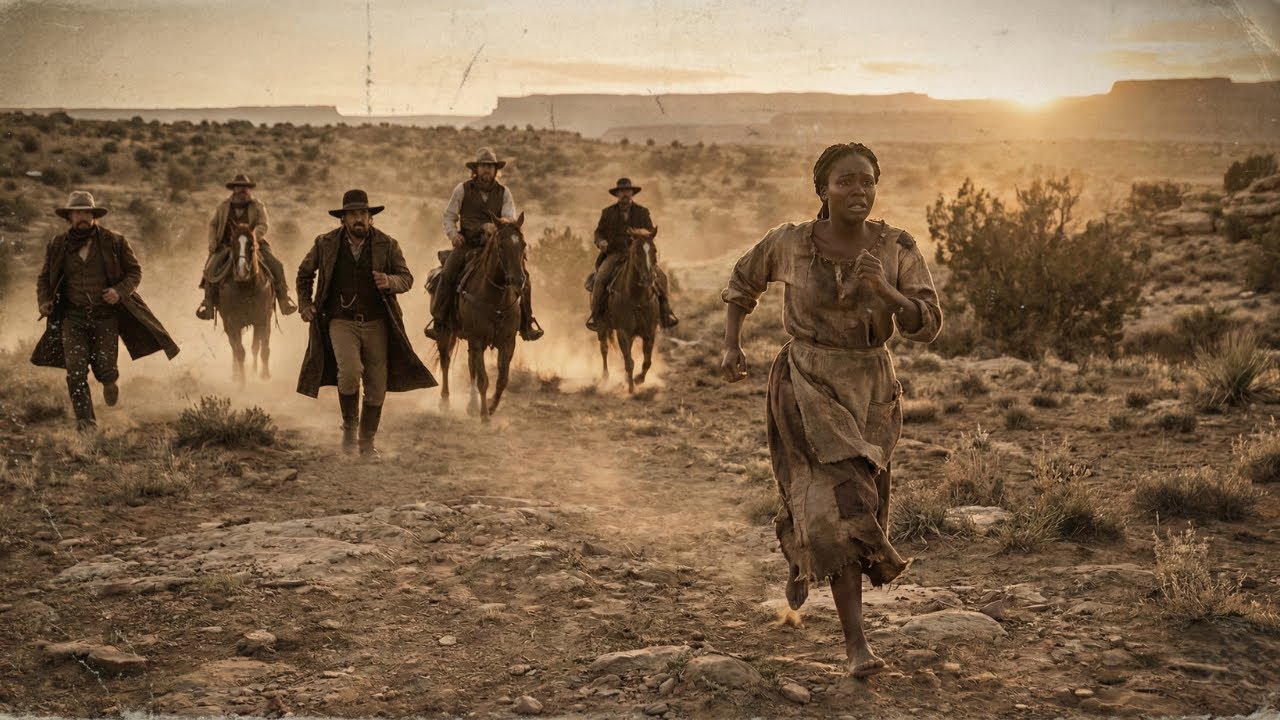
Running too soon announced fear, and fear gave men like the Yarrows the excuse they craved. So when Samuel barked at her to report to the cabin, she walked, steady, quiet, deliberate, as if obeying. But when she reached the cabin door, she kept going, her stride unchanged, her eyes fixed on the eastern property line where the forest waited like an old friend. Samuel’s shout cracked the morning stillness behind her, followed by the hurried thud of boots and the rising pitch of voices belonging to men tasting the thrill of pursuit.
Celia did not look back. She quickened only once she reached the tree line, slipping into the dense green like a shadow welcomed home. Behind her, the overseers scattered in agitation, grabbing rifles and rope. Each man was too eager to prove his authority, too blind to see that by stepping into the bottomlands, they had already forfeited control.
Testimony later recorded by a field hand claimed that Thomas Gresham told the overseers to retrieve Celia undamaged, since a girl with her skills and lineage held value he could not afford to lose. Jacob Yarrow’s reply, whispered in a cold, humorless tone, showed he cared nothing for value, only for domination. The five men set off fifteen minutes behind her, fully confident the chase would be short. They had caught runaways before, hardened men twice Celia’s age.
How difficult could a teenage girl be? Armed with rifles, knives, brutal tempers, and certainty born from years of unchallenged power, they believed the forest would bow to them the way people had. What they could not know was that Celia had been preparing for this day since her mother died. She had mapped routes, hidden supplies, memorized water trails, and turned the bottomlands into a living extension of herself.
She was not running. She was leading them. At first, the overseers felt victorious. They found broken twigs, disturbed brush, footprints in mud, the kind of trail that suggested panic.
Jacob pointed out each sign with smug satisfaction, convinced Celia was tiring herself out. But as the hours dragged on, the trail began to change. Prints overlapped in impossible patterns. Broken branches appeared in clusters that suggested intentional misdirection, as if she were painting false pathways with the land itself.
Samuel claimed she was running in circles, but Jacob saw something else, the beginnings of structure, patterns designed to lure rather than escape. Still, he ignored the discomfort twisting in his gut. They made camp at dusk on a dry mound, lighting a fire that pushed back the darkness only a few yards. Frogs croaked, insects hummed, unseen things sloshed through water, but nothing approached.
They took shifts, confident the girl was exhausted somewhere deeper in the swamp. When morning came, their confidence fractured. Their food bags had been opened during the night, not torn, not rummaged, but inspected with precision. Only select portions were missing, the pieces that offered the most calories and the least weight.
Tyson, who had claimed to be awake the entire time, swore he had not heard a sound, yet the fire remained undisturbed, the moss curtains hung still, and the footprints around their camp belonged only to the five of them. Samuel cursed the others for incompetence, but the truth was far worse. Someone had moved among armed men while they slept with weapons across their laps, someone who knew exactly where each man kept his supplies and how to reach them unnoticed. Jacob forced them forward, refusing to acknowledge the cold rising through his spine.
By midday, the trail Celia left was unmistakably intentional. Fresh symbols carved into tree bark appeared at measured intervals, Creek markings Jacob could not read but instinctively understood. She was not the one being tracked. She was tracking them.
Near dusk on the second day, they discovered the first cache. Inside a hollow cypress they found items that should not have been missing: rope cut into balanced lengths, spent rifle casings none of them remembered firing, and a strip of cloth from Burke’s shirt, though his clothing appeared whole. These objects were not random. They were arranged carefully, like offerings or warnings.
Above them, etched into wood so recently that sap still bled from the grooves, was another symbol, not Creek this time, something older, harsher, carrying a weight they did not understand. Tyson whispered that they should turn back. Henry agreed. Even Samuel’s bravado faltered.
But Jacob, driven by pride sharpened into desperation, refused. They would not return empty-handed. They would not be mocked by a girl. They would not give up the illusion of power they had spent their lives guarding.
With the forest darkening around them and cohesion already unraveling, the five men continued deeper. By the third night, whatever remained of their confidence cracked like rotten wood. They built a massive fire, higher than any they had dared before, desperate to carve out a bubble of light against the suffocating dark. None of them slept, not truly.
They sat with rifles balanced on trembling knees, eyes fixed on the moss curtains swaying gently around the clearing. Nothing approached. Nothing attacked. Yet the swamp felt alive, watching, weighing them the way predators size up wounded prey.
Then, without warning, Samuel bolted to his feet and fired into the darkness, his bullet vanishing into shadow. Silence followed, thick and unnatural, as if the entire swamp had inhaled and held its breath. When daylight returned, the truth emerged. Embedded into a tree just beside Samuel’s bullet hole was one of their knives, lodged deep, thrown from above with inhuman precision.
She had been overhead, perched in the canopy, watching them unravel. She could have killed him. She chose not to. Jacob examined the scene, and something fundamental inside him buckled.
The knife had not been tossed blindly. It had been placed, positioned with surgical accuracy, a message sharper than the blade itself. She was showing them that she allowed their survival, not their weapons, not their vigilance. The overseers whispered among themselves, fear chipping away at bravado.
Henry Burke, the youngest, began muttering that the girl was not alone, that the forest itself obeyed her, shifting under her feet while trapping theirs. None corrected him. None laughed. Instead, they clung to their rifles with childlike desperation, as if wood and metal could shield them from something older than bullets.
Still, Jacob pushed them forward. Pride had fused with madness now, a stubborn refusal to admit defeat even as the swamp twisted around them like a living labyrinth. Celia’s signs grew more frequent, symbols carved fresh, trails marked intentionally, as if she were documenting their every failure. The forest grew increasingly treacherous.
What looked like dry earth turned into sucking pits of mud. Pathways folded back on themselves in ways that defied logic, as though the swamp rearranged itself each time they blinked. William Tyson plunged waist-deep into muck that nearly swallowed him whole, screaming as the others pulled him free. His leg twisted badly, swelling almost immediately.
The swamp water they were forced to drink only worsened his condition, fever making his thoughts scatter like startled insects. When they tried to rest, their supplies shifted subtly. A pack moved. A rifle leaned against a different tree.
Signs that someone had wandered through their campsite during the few moments their eyelids drooped. They blamed exhaustion. They blamed each other. But deep down, they knew the truth.
She was moving among them as easily as mist, slipping through their defenses, touching their belongings, rearranging their world while they clung desperately to the illusion of control. That night, the swamp changed again. The animal calls faded. The wind stilled.
And from somewhere in the endless canopy came a sound that froze every drop of blood in their veins. Singing. A woman’s voice, haunting, melodic, drifting through the darkness with no discernible direction. The language was not English.
It was not fully Creek, either. It was something older, a blend of grief, memory, and warning woven into a melody that curled through the moss like smoke. The overseers huddled closer, forming a tight circle, each man imagining the singer’s face, imagining her eyes watching from just beyond the firelight. When Samuel snapped again, screaming threats into the trees, the singing paused, then resumed from directly behind him, then from the left, then from the right, then above.
The girl’s laughter followed, soft, mocking, multiplied as if echoed by the forest itself. They fired blindly, wasting precious ammunition, lighting the clearing with muzzle flashes that revealed nothing except their fear. By dawn, the men were half-mad, and the discovery awaiting them pushed them further over the edge. Each pack had been opened, again.
This time, the contents were arranged with unsettling intimacy. Flowers native to the bottomlands sat atop each man’s belongings, carefully selected and placed. Swamp hibiscus. Pickerel weed.
Spider lilies. But beneath them lay something far more personal. Locks of their hair, cleanly cut, not torn, taken without their notice while they sat awake, rifles in hand. Clothing pieces were missing, a strip from Henry’s shirt hem, the inner panel of Samuel’s trousers, buttons from Nathaniel’s coat.
And in Jacob’s pack lay a piece of paper bearing five stick figures, unmistakably representing them. Four marked with crosses over their chests, one left unmarked, standing apart. A question. A choice.
Celia was telling them she knew who would die and who, perhaps, she would allow to leave. At that moment, even Jacob felt terror eclipse pride. They were not hunters anymore. They were specimens, observed, measured, and dismantled one by one.
Nathaniel Cruise never saw the fourth dawn. Sometime in the gray emptiness before sunrise, his fever burned straight through the last of his strength. When the others noticed, he was already still, his chest quiet, his eyes half-open, as if staring at something just beyond their sight. They checked for a pulse they knew they would not find, then sat in a heavy circle around his body, too drained to speak the words.
He had not been struck, stabbed, or shot. No heroic last stand. No final struggle. Just a man slowly cooked by infection, exhaustion, and terror in a swamp that recognized his ignorance and crushed him with indifference.
Jacob weighed their options and found none that did not cost them something vital. The ground was too wet to dig. They had no shovel. Staying meant more time for the girl to break them further.
So he chose the only thing his shrinking imagination could accept. They left Nathaniel where he fell, with a canteen and meaningless muttered words, then turned away, each step feeling like a betrayal they could not afford not to commit. The forest punished them for that decision almost immediately. The paths narrowed, the air thickened, and the smell of rot grew heavier, as if the swamp itself disapproved of abandoning the dead.
William Tyson’s injured leg swelled until the fabric of his pants stretched drum-tight, every movement sending a shock of pain up his spine. When he collapsed into waist-deep water, they tried to drag him forward, but each attempt pulled them all deeper into sucking mud. The more they fought, the more the swamp clung to them, greedy and patient. At last, it was not Jacob’s orders that decided William’s fate.
It was William himself. He met each of their eyes, saw the terror they tried to hide, and understood the arithmetic they were too cowardly to voice. “Go,” he whispered, his voice fraying at the edges. “She’s watching anyway.
If you stay, she gets all of us. ” They hesitated just long enough to pretend they had tried. Then they let go. His cries faded into choking, then gurgling, then silence, swallowed by mud and brown water, as if he had never existed at all.
Now there were three. Jacob, Samuel, and Henry staggering through a world that felt increasingly hostile to their very presence. Their bullets were nearly gone, spent in panic rather than purpose. Their food was finished.
Their throats burned from drinking water that tasted like decay and sickness. Everywhere they turned, the trees bore fresh markings, lines, arrows, symbols, tracing their stumbling route through the bottomlands. What had begun as a hunt now looked like a ledger, a record carved into bark of every mistake they had made. Jacob realized that she was not just avoiding them.
She was studying them, cataloging their choices, testing how far ignorance could be pushed before it destroyed itself. The ground rose and fell in strange patterns. Familiar landmarks appeared where they should not. They would swear they were walking in a straight line, only to emerge at a creek they had already crossed.
The forest was not spinning them in circles. She was. Late that afternoon, after what felt like days of walking inside a nightmare, they stumbled into a clearing that seemed almost unreal in its simplicity. A small pond glimmered in the filtered light, ringed by roots and moss.
On the far side of the water stood Celia. She did not run. She did not hide. She just watched them with an expression that held no fear at all.
Her clothes were smeared with mud, but fitted for movement, not for display. Her face bore streaks of dark clay and ash, drawn in careful patterns that could have been camouflage, ceremony, or both. Her bare feet looked uninjured, despite the brutal terrain that had shredded their boots. In her hands she held a bow shaped from forest wood, strung with fiber that looked impossibly strong.
An arrow rested against the string, not quite drawn, but ready. Behind her, laid out like a lesson, were their missing items. Rope twisted into snares. Unloaded ammunition.
Disassembled rifle parts. Knives arranged in quiet, deliberate patterns. Everything they thought gave them power now sat at her back like trophies. For a long, brittle moment, no one spoke.
Then Jacob forced his shoulders straighter, raised his ruined rifle, and tried to resurrect the authority that had already died somewhere in the swamp. “This ends now,” he rasped. “You’re coming back. You’ll answer for what you’ve done.
”
Celia tilted her head, studying him like one more failing experiment. When she replied, her voice was clear, steady, and utterly unshaken. “Answer for what? For running from men who meant harm, for surviving land my mother taught me to know, for understanding this place better than you understand your own cruelty.
”
Samuel stepped forward, rage covering fear like a thin coat of paint. “You killed Nathaniel and William. That’s murder. They’ll hang you for that.
”
Celia shook her head once. “They died of sickness and water and their own foolish steps,” she said. “I never touched them. The swamp did what it always does to people who walk into it believing they’re in charge.
”
Jacob pulled the trigger anyway. The gun misfired with a flat, humiliating click. Celia’s bow drew, loosed, and the arrow struck the ground inches from his boot, embedded with the certainty of someone who had chosen mercy over a precision kill. “Four men entered these bottomlands,” she continued calmly.
“Some are dead already. One can walk out alive and tell what happened here, or all of you can stay and the forest will finish what you started. ”
Henry Burke ran first. His mind had been cracking for days, and Celia’s calm ultimatum shattered what little remained.
He dropped his rifle as if it had turned to flame and bolted into the brush, stumbling toward whatever direction felt like escape. Branches tore at his skin, water swallowed his knees, and roots clawed his shins, yet he never stopped, driven by pure animal terror. Samuel hesitated only a moment, torn between loyalty to his brother and the overwhelming instinct to survive. Jacob, hollow-eyed and shaking, made no move to stop him, and that silence told Samuel everything he needed to know.
So he followed Henry, vanishing into the swamp with frantic steps, leaving Jacob alone at the clearing’s edge, facing a girl who had dismantled five grown men without ever needing to touch them. Celia lowered her bow slightly, not in fear, but in acknowledgement. “Go,” she said quietly. “Tell them what you saw.
Let them know the bottomlands won’t tolerate your kind again. ”
Jacob staggered after the others, his pride long since stripped away, replaced with something raw, humiliation so deep it tasted like blood. He walked with the gait of a man who no longer believed his own steps belonged to him. The forest pressed close on every side, no longer hiding its contempt.
The moss seemed to sag lower, the roots seemed to writhe higher, the air itself felt heavier, as if the land wanted him to feel every ounce of what he had done. Behind him, Celia’s final words rose like smoke through the trees. “The bottomlands remember, and I remember. ”
He did not dare turn back.
He did not dare look anywhere but at the ground, following whatever direction his trembling legs chose until the swamp swallowed the sound of her voice completely. He did not know if he was walking toward safety or deeper into ruin. He only knew he had been spared, and the weight of that mercy crushed him harder than any punishment. Henry Burke stumbled out first, thirty-six hours after the group had split.
He crawled from the tree line on his hands and knees, his face gray, his eyes swollen with terror, his body carved with scratches that spiraled across his skin like some fevered script. Plantation workers found him babbling, his words tangled, his breath ragged, pointing at shadows no one else could see. They carried him to the overseer’s quarters, trying to coax meaning from his shattered voice. He mumbled of trees that moved, water that waited, and a girl whose footsteps made no sound at all.
The doctor summoned from the county seat declared him physically salvageable, but mentally ruined. For three days he drifted between consciousness and panic, waking only to scream and scratch symbols into the dirt with trembling hands. He survived, but the part of him that believed in authority, in order, in the supremacy of men like himself, that part never returned. Gresham gathered a search party, ten armed men from neighboring plantations, men who still believed guns meant something in a place like the bottomlands.
They entered with enough supplies for a week, confident they would return with bodies or answers. Instead, they returned with fear. Three days in, they found Samuel Yarrow lying face down in a creek barely deep enough to wet his shirt. No wounds, no bruising, no signs of struggle, just exhaustion, despair, and the cold grip of terrain he never understood.
Beyond that point, the searchers refused to press deeper. They claimed the air felt wrong, that the forest rearranged itself when they blinked, that symbols carved into bark seemed to watch them rather than simply mark trees. After five days, they insisted on turning back. No reward, no order, no threat could force them deeper.
Jacob Yarrow’s body was left to the swamp for two more weeks before distant hunters found what was left. A decomposed shape wrapped in clothing that still clutched his ruined pocket watch. William Tyson and Nathaniel Cruise were never found. Their bodies dissolved into the swamp’s endless hunger, becoming part of the ecosystem that devoured everything too slow or too foolish to respect its rules.
Henry Burke lingered on Gresham’s plantation for several weeks, recovering physically while his mind slipped further from stability. He refused to look toward the eastern tree line, flinching whenever birds cried or wind rattled the moss. He scratched symbols into dirt when he thought no one watched, symbols Creek elders recognized and whispered about, fragments of stories older than the county itself. Eventually, he fled Georgia altogether, settling in Alabama, where he spent the next three decades warning anyone who would listen never to follow a runaway into unfamiliar woods.
He told them the forest listens. He told them the land chooses. And he told them the most terrifying truth of all. Celia never needed to spill blood to win.
She only needed to understand the land better than the men who believed they owned it. Celia never walked Gresham’s fields again. Officially, she became just another runaway girl in county records, described by height, complexion, and age, as if ink on paper could contain what she had done. Gresham filed his report, but when he asked the sheriff to send deputies into the bottomlands, the man laughed without humor.
“Five overseers went after her, and four didn’t come back,” he reminded Gresham. “You think my men are braver than yours? ” There was no answer he could give that did not sound pathetic. The truth was simple and devastating.
Hunting Celia now meant volunteering to walk into a landscape that no longer respected white authority. The enslaved community noticed her absence, and in quiet corners, away from listening ears, they traded whispers of what she had done. With each retelling, the girl in the story grew taller, stronger, more myth than flesh. But one detail remained constant.
Five men went in after her, and only one truly came back alive. Gresham’s plantation began to rot from the inside after that. Not with flames or open rebellion, but with a thousand small refusals that ate away at productivity like termites through old wood. Tools disappeared, then reappeared broken.
Cotton bales weighed less than they should, fibers subtly thinned long before reaching the scales. Fences seemed to require endless repair. Tasks took longer, always just long enough to matter. Without overseers willing to replace the dead, Gresham tried to enforce discipline himself, but thirty-seven enslaved people who had learned that the system could be humiliated did not fear him the way they once might have.
They worked, but on their terms. They obeyed, but just slowly enough to hurt his bottom line. Within three years, Gresham was bankrupt. He sold the land to a speculator who knew nothing of the bottomlands beyond rumors, and rode west, trying to outrun a failure that followed him like a shadow he could not shake.
The new owners thought harsher rules would fix everything. They hired fresh overseers, men with reputations even darker than Yarrow’s, but word travels fast through networks no planter ever fully understood. Overseers heard the stories of five men undone by a teenage girl, of bottomlands that swallowed bullies whole, and some refused the position outright. Those who accepted found something different in the enslaved people on that land, a quiet stubbornness, a refusal to respond to threats the way others did.
Resistance lived there now, woven into daily routines, passed from mouth to ear like a prayer for survival. Over the next decade, the plantation changed hands several more times. No one could make it truly profitable. Nearby properties reported normal escape numbers, but along the edge of the Ohoopee bottomlands, runaways vanished more often.
Pursuit parties sent into the swamp came back empty-handed, when they came back at all. It was as if the land itself had chosen a side. Stories spread beyond Wilkinson County. Some said Celia had died in the swamp, her spirit fused with the trees and water, guiding others who fled.
Others insisted she lived there for years, one of several people who built a hidden refuge deep in the bottomlands, a place where escaped men, women, and children survived using knowledge older than the plantation system itself. Travelers occasionally spoke of a woman of mixed Creek and African heritage appearing when they became lost, offering guidance without explanation, leading them to firm ground, then vanishing before they could ask her name. Historians later dismissed these accounts as folklore, the swamp’s version of a ghost story. Yet the statistics remained awkwardly real.
Escapes near the bottomlands succeeded at unusually high rates. Official records never proved a settlement, never confirmed Celia’s fate, never mapped the path she carved. But absence of proof is not proof of absence, especially in a place designed by nature to erase tracks and swallow evidence whole. What is known for certain is this.
Five overseers stepped into the Ohoopee bottomlands in October 1839. Four died by fever, drowning, exhaustion, and ignorance. One crawled out alive carrying scratches that looked like writing and memories that never stopped hunting him. The girl they chased was never recaptured.
Court summaries, what little survived, quietly acknowledged that the men perished because they entered hostile terrain chasing someone who understood it better than they did. That knowledge, not bullets, decided who lived and who did not. The story of Celia became more than an incident.
It became a lesson passed through generations, that sometimes the hunted is not helpless, that sometimes the land refuses to cooperate with cruelty, and that sometimes real power belongs to the one who understands, not the one who owns.
