On the morning of January 12, 2003, Maurice Gibb was recovering from surgery for an intestinal blockage when his heart suddenly failed. The 53-year-old musician, one-third of the Bee Gees, died before the day was out. His brothers Barry and Robin had been with him at the hospital in Miami, and the loss effectively ended one of the most successful acts in popular music. The Bee Gees had sold hundreds of millions of records over four decades, and now the band that had defined an era of disco was left with only two of its founding members.
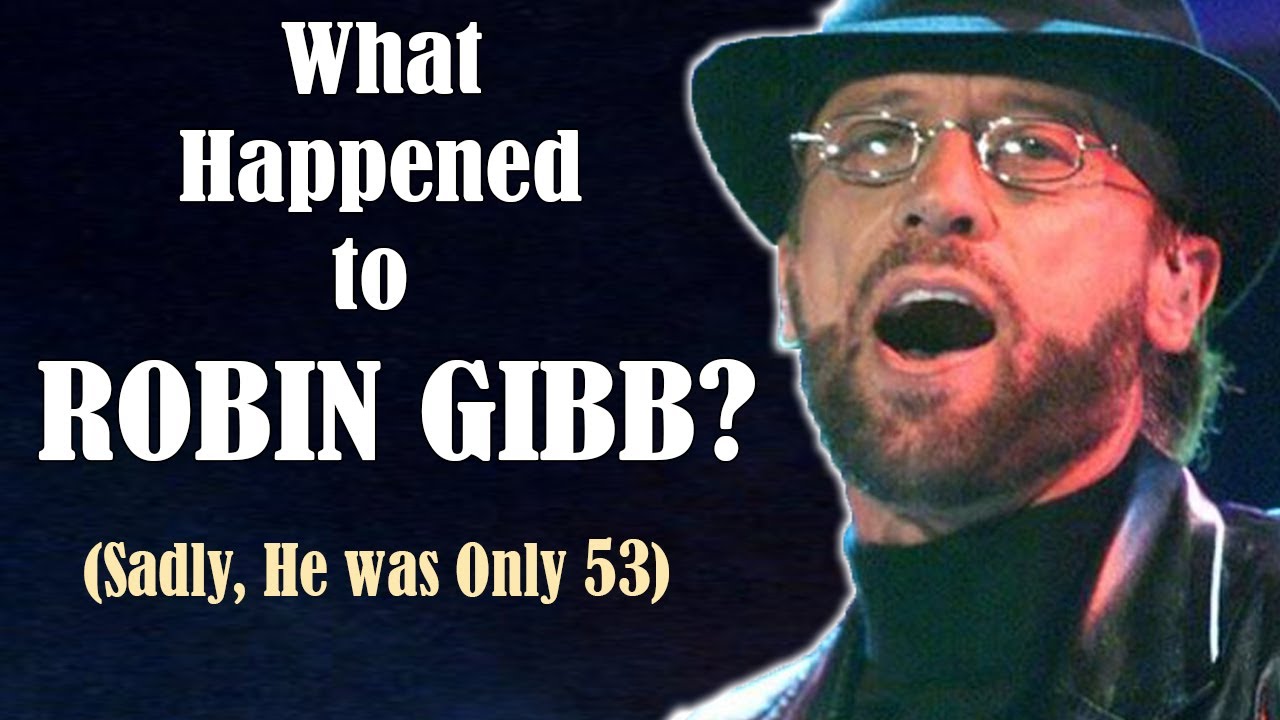
Maurice Ernest Gibb was born on December 22, 1949, in Douglas, on the Isle of Man, to Hugh Gibb, a drummer, and his wife Barbara. He arrived roughly half an hour after his twin brother Robin, joining an older brother Barry and sister Lesley. The household was steeped in music, and the children absorbed it naturally, sitting in on their father’s jam sessions. When the family moved to Manchester, Hugh and Barbara overheard their sons trying to harmonize and realized the boys had something special.
Maurice was only five years old. The brothers soon gathered neighborhood children into a group they called the Rattlesnakes, and in December 1957 they made their first public appearance at a local cinema, performing the Everly Brothers’ “Wake Up Little Susie. ” The audience response was strong enough to convince the young musicians they were on the right path. When Maurice was eight, the family relocated to Australia, and it was there that the Bee Gees truly took shape with Barry, Robin, and Maurice at the core.
They landed a television show and released their first single, “The Battle of the Blue and the Grey,” marking their arrival on the scene. The early years were a period of steady development. In the early 1960s, the band worked with a range of established musicians and produced songs like “Claustrophobia. ” By 1966, they had written their first original song, “Storm,” and Maurice had taken on the role of lead guitarist and bassist.
He also wrote and performed a solo track called “All by Myself. ” That same year the band released the album Spicks and Specks, which included “Where Are You,” a song that carried Maurice’s writing credit. Collaborators at the time included Sandy Summers, Anne Shelton, and Ray Brown, and soon Colin Peterson and Vince Melouney joined the lineup. In mid-1967, after the band had moved to London, they released their first studio album, Bee Gees’ 1st.
Critics were quick to compare the group to the Beatles, and the album climbed the charts in both the United Kingdom and the United States. The single “Massachusetts” stayed at number one in Britain for weeks. Maurice added vocals to tracks like “Suddenly” and “Laugh in Your Face,” and the band looked unstoppable. Then, in the late 1960s, Robin decided to strike out on his own, prompting Maurice and Barry to record an album together titled Cucumber Castle.
It achieved respectable success, but the chemistry of the three brothers was not easily replaced. In 1969, the Bee Gees announced they were going their separate ways. The split took a heavy toll on Maurice. Over the next couple of years, he wrestled with alcoholism while continuing to work.
He released a solo single, “Railroad,” from a planned debut album called The Loner, but the project never saw the light of day. The brothers, however, could not stay apart for long. They reunited in August 1970 and came back with a string of singles including “Lay It on Me,” “Country Women,” and “On Time. ” Then came “How Can You Mend a Broken Heart” in the early 1970s, a soft romantic ballad that connected deeply with listeners and restored the band’s position.
Just as the Bee Gees were settling back into their rhythm, disco began to emerge, and the brothers rode the wave with remarkable success. “Jive Talkin’” became a sensation when it was released in 1975, and the momentum carried them into the Saturday Night Fever soundtrack, which brought them multiple Grammy Awards and cemented their place in music history. In 1979, they continued with the album Spirits Having Flown, sustaining their extraordinary run. The early 1980s saw Maurice turn once more to solo projects, including an instrumental album titled Strings and Things, which he dedicated to his daughter Samantha.
But the band’s popularity began to fade by the middle of the decade, and Maurice’s drinking made matters worse. Still, he kept working. In 1984, he composed the soundtrack for the film A Breed Apart, and a year later he recorded an instrumental for The Supernaturals. Around that same time, the Bee Gees released the album E.
S. P. , which met with moderate commercial and critical success. The late 1990s brought renewed recognition when the Bee Gees were inducted into the Rock and Roll Hall of Fame in 1997.
In 2001, the band released their twenty-third and final studio album, This Is Where I Came In. By then, Maurice’s health was already beginning to fail, and he was finding it harder to continue with his musical work. His personal life had been turbulent as well. An early relationship with the pop singer Lulu drew heavy attention in the late 1960s, but it ended when she became involved with Davy Jones.
She and Maurice eventually married in 1969, only to divorce a few years later. In October 1975, Maurice married Yvonne, and the couple had two children, Samantha and Adam. His alcoholism remained a persistent problem, and he became known for erratic behavior. In the early 1990s, he reportedly threatened his wife and children with a revolver, and a frightened Yvonne turned to his brother Barry for help.
Barry intervened, and Maurice eventually checked into rehab in 2003, long after the damage to his body had been done. That January, Maurice felt something wrong with his stomach and went to the hospital for tests. Doctors found an intestinal blockage and determined that surgery was necessary. During the operation, he suffered a massive heart attack.
He never recovered. The remaining brothers stepped back from performing for a time, though they would later appear at a handful of events. At Maurice’s funeral, some of the biggest names in music came to pay their respects, including Michael Jackson.
The Bee Gees, as the world had known them, were gone, and with them ended one of the most remarkable family partnerships in the history of popular music.
