Leif Garrett was the biggest teen idol in America in the late 1970s, his face plastered across magazines and his records selling millions. Behind that carefully manufactured image was a teenager self-medicating with hard drugs to survive the pressure of his own fame. On the night of November 3rd, 1979, five days before his eighteenth birthday, the system that built him finally collapsed. Garrett crashed his mother’s Porsche 914 into a ravine while severely intoxicated.
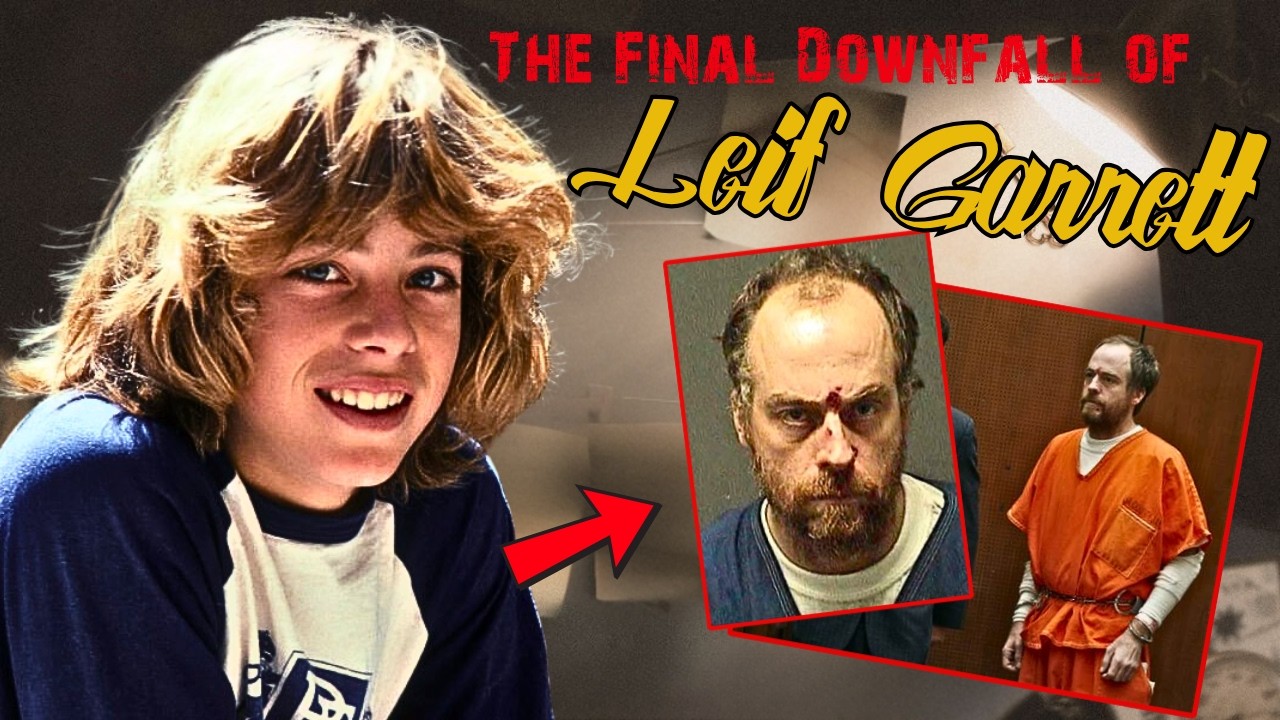
His passenger, a casual acquaintance named Roland Winkler, severed his spinal cord and was permanently paralyzed. The industry that engineered Garrett’s rise offered him no support during his legal and moral collapse. It simply replaced him with the next profitable face. Born Leif Per Nervik on November 8th, 1961, in Hollywood, Garrett was immersed in the entertainment industry from birth.
His mother, Carolyn Stellar, was an actress and costume designer who understood the mechanics of show business as a workplace rather than a dream. His father abandoned the family when Garrett was young, leaving Stellar as a single mother and creating a profound emotional void in her son. Garrett became dependent on his mother for both parental guidance and professional direction. The entertainment industry became the shared language of their household.
He entered the workforce at age five. At that age, a child lacks the cognitive ability to consent to a career or process the pressures of professional expectations. Stellar managed his schedule, selected his auditions, and negotiated his appearances. From Garrett’s perspective, acting was simply what he was told to do by the authority figure in his life.
He learned early that success brought praise and financial stability, creating a heavy burden of responsibility. His younger sister, Summer Dawn Lynn, was also pushed into acting, and the siblings frequently worked together, including in films like Walking Tall and Macon County Line. Throughout the late 1960s and into the 1970s, Garrett built a resume of minor television roles on shows like Gunsmoke, Family Affair, and The Odd Couple. He was a reliable working child actor, entirely dependent on the decisions of casting agents, producers, and his mother.
The discipline required to survive left little room for personal exploration. He was fulfilling the expectations of everyone around him, setting a pattern of compliance that would soon have devastating consequences. In 1975, CBS cast him in Three for the Road. The show was canceled after a single season, but it had inadvertently tapped into a lucrative demographic: American teenagers.
The teen magazine industry, led by publications like Tiger Beat and 16 Magazine, seized on his weekly television exposure, blond hair, and California aesthetic. His face dominated newsstands across the country. At the height of his popularity, the only celebrity poster outselling his in the United States belonged to Farrah Fawcett. His management saw an opportunity to monetize this popularity in the recording industry.
Despite having no vocal training and no desire to become a musician, Garrett was pushed into music. At age fifteen, he signed a five-album contract with Atlantic Records. His debut album consisted entirely of covers of 1950s and 1960s hits, sanitized for a preteen audience. The strategy worked, peaking at number 37 on the Billboard 200.
His second album, Feel the Need, featured original material and produced the hit single I Was Made for Dancin’, which reached the top 10 on the Billboard Hot 100 and achieved massive international success. This professional peak coincided exactly with the deterioration of his personal well-being. His management organized a comprehensive worldwide promotional tour. For a sixteen-year-old, the tour was entirely destabilizing.
He was surrounded by adults financially dependent on his ability to perform, with no peers, no traditional schooling, and no spaces where he could simply exist as an adolescent. When the concerts ended, his management allowed the underage Garrett to accompany them to nightclubs and bars. He was treated as a VIP, not as a child who needed supervision. According to Garrett’s own accounts, he began using illicit substances at age fourteen.
By sixteen, the usage had evolved from casual experimentation to a necessary tool for survival. His management largely ignored the developing addiction as long as he arrived on stage and performed. The crash on November 3rd, 1979, permanently shattered the illusion of his manufactured perfection. Garrett and Winkler were both heavily intoxicated when they got into the Porsche.
Neither secured their seatbelts. Garrett lost control on the winding canyon roads, and the vehicle plummeted approximately eighty feet before coming to a violent halt. Garrett suffered significant injuries but survived. Winkler was permanently paralyzed.
Because the incident occurred five days before Garrett’s eighteenth birthday, he was legally processed as a minor in some aspects of the proceedings. His driver’s license was suspended for one year, and he was placed on formal probation. In the civil lawsuit, the court applied the concept of comparative negligence. Winkler had willingly entered the vehicle with an inebriated driver, failed to wear a seatbelt, and knew the illicit purpose of the drive.
The jury ruled he had contributed significantly to his own injuries. This mitigated the financial damages Garrett was personally ordered to pay. His insurance covered the bulk of Winkler’s medical costs, but the court mandated Garrett pay $15,000 in punitive damages. The financial penalty was minor compared to his earning capacity.
The psychological toll was irrevocable. Garrett entered his twenties attempting to reclaim his autonomy from an industry that refused to let him grow up. He released the song I Am a Rebel in 1981, a title suggesting a desire to break away from the sanitized mold forced upon him. He wanted to return to acting, but his management viewed his natural maturation as a severe liability rather than an asset.
They wanted to maintain the teen idol persona indefinitely, demanding that he remain professionally frozen in time. When he expressed a desire for more mature projects, he was met with flat refusal. Denied autonomy professionally, he sought stability personally. He briefly dated actresses like Justine Bateman and Tatum O’Neal.
His first significant long-term relationship was with actress Nicollette Sheridan, lasting five years. In 1985, he proposed, and she accepted. Shortly after, she changed her mind and ended the relationship. The abrupt end removed one of his few stabilizing anchors.
After the disappointments of the 1980s, Garrett maintained a lower profile for several years. As the 1990s brought the rise of grunge, a full decade after leaving pop music, he found himself willing to sing again. Crucially, he refused to return to the corporate-controlled pop machine. He began collaborating with the Melvins, a heavy sludge metal band known for their anti-commercial sound, and recorded a cover of Nirvana’s Smells Like Teen Spirit.
By aligning himself with that genre, he was actively subverting his past and reclaiming his musical identity on his own terms. A year before that tour, he received a harsh reminder of the predatory contracts he had signed as a minor. His original record label was bought out, and the new company acquired the rights to his entire back catalog. They released a greatest hits album titled The Leif Garrett Collection and expected him to promote it.
Garrett was not entitled to a single cent of the royalties. He was asked to invest his energy into promoting a project that capitalized entirely on his name while a corporation collected the rewards. It was a profound invalidation of his early career. In 1999, personal tragedy struck with sudden force.
His partner, actress Elaine Bilstad, passed away unexpectedly. For someone who had used substances for over two decades to cope, the loss of the woman he loved pushed him into emotional free fall. He threw himself into professional endeavors, establishing his own independent record label, Tongue and Groove Records, and forming the band Godspeed with musicians Michael Scott and Christopher Wade Damers. For the first time in his life, he owned his work.
That same year, VH1’s Behind the Music approached him to feature his life story. The documentary culminated in a face-to-face reunion with Roland Winkler, the man he had paralyzed twenty years earlier. Winkler revealed a crucial detail: in the chaotic aftermath of the crash, Garrett’s actions had been life-saving. Despite his own injuries, Garrett had acted to ensure Winkler survived before emergency services arrived.
Winkler stated he harbored no ill will and offered his complete and unconditional forgiveness. For Garrett, who had carried a crushing burden of guilt for two decades, it was a transformative moment. The grim reality of severe chemical dependency does not adhere to the neat resolutions of television. On June 29th, 1999, Garrett was arrested for attempting to purchase narcotics from undercover police officers conducting a sting operation in MacArthur Park.
The publicized humiliation starkly contradicted the narrative of the reformed artist presented on television. He subsequently secured a role in the stage production of Joseph and the Amazing Technicolor Dreamcoat, finding in live theater a strict framework that required absolute punctuality and consistent performance. For the hours he was on stage, he was insulated from his problems. The full scope of his collapse became impossible to hide.
The millions of dollars generated during his peak years had evaporated. He initiated Chapter 7 bankruptcy proceedings. Court documents revealed his stated assets were reduced to basic household items, his clothing, and approximately $350 in cash. His sole source of reliable income was a $1,000 monthly gift from his mother.
His legal troubles continued. After a 2004 narcotics charge and a 2006 apprehension at a Los Angeles metro station, a judge sentenced him to ninety days in county jail after he failed court-mandated drug tests. The incarceration served as a brutal wake-up call. Following his sentence, he won the $50,000 grand prize on Fear Factor and later appeared on truTV presents: World’s Dumbest, willingly laughing at his own highly publicized mistakes.
Entering his late fifties, Garrett published his 2019 autobiography, Idol Truth. The book acknowledged his role in the poor decisions of his past while criticizing the adults who placed a heavily enriched, entirely unsupervised teenager in highly dangerous situations. He stepped into the role of caregiver for his parents during their final years, slowly working through deep resentments to reach a place of mutual understanding.
Leif Garrett survives as a cautionary tale, having reclaimed his identity and his voice from the devastating machinery of 1970s youth culture.






