John D. Rockefeller was born on July 8, 1839, in Richford, New York, to a family that was anything but wealthy. His father, William Avery Rockefeller, called himself a doctor but had no medical training. Known locally as Devil Bill, he sold patent medicines that promised to cure cancer, gambled, and eventually maintained a second family under an assumed name in another state.
He disappeared for months, leaving his wife and children to manage on their own. John’s mother, Eliza, a devout Baptist, provided the counterbalance. She taught her children discipline, thrift, and the practice of tithing ten percent of everything they earned to the church. From his father, young John learned that the world was full of opportunities for those clever enough to seize them.
From his mother, he learned that wealth without principle was worthless. The family settled near Cleveland, Ohio, in 1853. After finishing high school, John took a brief bookkeeping course and walked the streets of Cleveland for weeks looking for work. On September 26, 1855, a commission merchant named Hewitt and Tuttle offered him a position as assistant bookkeeper at fifty cents a day.
Rockefeller celebrated that date for the rest of his life, calling it Job Day. From his very first paycheck, he set aside ten percent for charity. He lived frugally, walked to work, and saved relentlessly. By 1858, at nineteen, he had enough to form a partnership with Maurice Clark, trading grain, hay, and other goods.
The following year, Edwin Drake struck oil in Titusville, Pennsylvania. The oil boom that followed was chaos. Prospectors drilled wherever they pleased, prices swung wildly from ten dollars a barrel to ten cents, and fortunes were made and lost in weeks. Rockefeller had no interest in drilling.
The drillers were gamblers taking all the risk. The real opportunity, he saw, was in what happened after the oil came out. In 1863, he and Clark invested four thousand dollars in a Cleveland refinery. Within two years, the partnership soured.
Clark was content with modest profits; Rockefeller wanted to expand aggressively. They agreed to resolve their differences through an auction. The bidding climbed for hours, and at seventy-two thousand five hundred dollars, Clark stopped. Rockefeller had won.
He now controlled the largest refinery in Cleveland. With a new partner, Henry Flagler, he expanded relentlessly, buying more refineries and negotiating volume discounts with the railroads. On January 10, 1870, he incorporated the Standard Oil Company of Ohio. Within two years, Standard Oil controlled nearly every refinery in Cleveland.
The method was simple and ruthless. Rockefeller would approach a competitor, show him his books, and explain that Standard Oil’s railroad discounts made competition impossible. The competitor could sell now at a fair price or watch his business collapse and sell later for nothing. Most sold.
Those who refused found prices cut in their markets, shipping rates mysteriously raised, and suppliers impossible to find. Rockefeller saw this not as cruelty but as efficiency. Competition, he believed, was inefficient. One phrase attributed to him captured his view completely: competition is a sin.
By 1880, Standard Oil controlled ninety percent of all oil refining in the United States. No company had ever dominated an American industry so completely. In 1882, Rockefeller’s lawyers devised the Standard Oil Trust, a mechanism that allowed shareholders of forty affiliated companies to transfer their stock to a board of nine trustees, giving Rockefeller centralized control over dozens of companies across multiple states. The arrangement was unprecedented and became a model that sugar, whiskey, cotton oil, and lead industries quickly copied.
The trust was headquartered in a nondescript building at 26 Broadway in lower Manhattan. From there, Rockefeller directed an empire that spanned the continent. His personal fortune grew beyond comprehension, but he lived modestly, refusing the marble palaces and lavish parties of his fellow industrialists. The scale of Standard Oil made it impossible to ignore.
Competitors filed lawsuits. State attorneys general launched investigations. Congressional committees demanded testimony. Editorial cartoons depicted the company as a giant octopus strangling the nation.
In 1892, the Ohio Supreme Court ordered the trust dissolved. Rockefeller complied technically, distributing assets to twenty separate companies, but the same men served on the boards, and the enterprise operated exactly as it had before. The woman who would finally bring him down grew up watching her father lose everything. Ida Tarbell was born in 1857 in Erie County, Pennsylvania, at the edge of the oil regions.
Her father built wooden tanks to store crude petroleum and prospered until Standard Oil arrived. She watched as independent producers were squeezed out one by one, and her father’s partner committed suicide. Tarbell became a writer, and in 1894 she joined the staff of McClure’s magazine. Her editor wanted an investigation into the most powerful corporation in America, and Tarbell accepted with personal as well as professional motivation.
The research took nearly two years. She read thousands of pages of court records and legislative testimony, interviewed ruined competitors, and traced the history of every major acquisition. Her most valuable source was unexpected: Henry H. Rogers, a senior Standard Oil executive and one of Rockefeller’s closest associates, agreed to meet with her regularly and answer her questions.
The first installment appeared in November 1902. Tarbell wrote with precision and restraint. She did not call Rockefeller a criminal; she simply documented what he had done. The railroad rebates that destroyed competitors.
The secret ownership of supposedly independent companies. The industrial espionage. She quoted from court testimony and corporate records, naming names and citing dates. The series ran for nineteen installments over two years, and circulation at McClure’s soared.
In 1904, the series was published as a book, The History of the Standard Oil Company, an immediate bestseller that made Tarbell one of the founding figures of investigative journalism. She had done what legislators and prosecutors could not: she turned public opinion decisively against Standard Oil. The government finally moved in 1906. Federal prosecutors filed suit under the Sherman Antitrust Act, charging that Standard Oil had conspired to restrain trade and maintain an illegal monopoly.
The trial lasted months, with more than four hundred witnesses testifying. Rockefeller, called to testify at age sixty-seven, claimed faulty memory and deferred to subordinates. The prosecutors had the documents. In November 1909, the federal court ruled against Standard Oil.
On May 15, 1911, the Supreme Court affirmed the verdict, finding that Standard Oil had violated the Sherman Act and ordering the corporation dissolved. The decision introduced the rule of reason: not every restraint of trade is illegal, only unreasonable ones. Standard Oil’s practices, the Court concluded, were unreasonable by any measure. The dissolution created thirty-four separate companies from what had been a unified empire.
On paper, the monopoly was destroyed. In reality, the same shareholders owned the same assets, and Rockefeller remained the largest individual shareholder in most of the successor companies. Then something unexpected happened. Freed from the legal troubles that had plagued the parent, the separate companies attracted new investment and expanded.
Before the breakup, Rockefeller’s holdings were worth approximately three hundred million dollars. Within two years, the combined value of his shares exceeded nine hundred million. The government had destroyed his monopoly and only multiplied his wealth. But the money came with blood on it.
In 1913, nine thousand miners walked off the job at the Colorado Fuel and Iron Company, a coal mining operation in which the Rockefellers held a controlling stake. The mines were among the most dangerous in the nation, with a death rate double the national average. Miners were paid by the ton, but the company weighed tons at 2,200 pounds instead of the standard 2,000. They were required to live in company towns and shop at company stores.
When the men demanded enforcement of state mining laws and recognition of the United Mine Workers, the company evicted them from company housing. The miners established tent colonies on the open prairie. On the morning of April 20, 1914, the Colorado National Guard moved against the largest camp at Ludlow, bringing machine guns. Gunfire erupted, and the tent colony caught fire.
By nightfall, approximately twenty people were dead, including women and children who suffocated in a pit beneath a burning tent. The nation recoiled. The blame fell squarely on the Rockefeller family. John D.
Rockefeller Jr. , known as Junior, had managed the family’s investments while the old man withdrew from business. He had never visited the mines and had believed company executives who assured him that outside agitators had caused the trouble. Called to testify before the United States Commission on Industrial Relations, he claimed ignorance of specific conditions and deferred to his managers.
Something had to change. Junior hired Ivy Lee, a pioneer in public relations, whose advice was radical for its time: stop hiding, go to Colorado personally, meet the miners, and let photographers capture it all. Junior did exactly that, touring the mines and listening to grievances. The experience genuinely affected him.
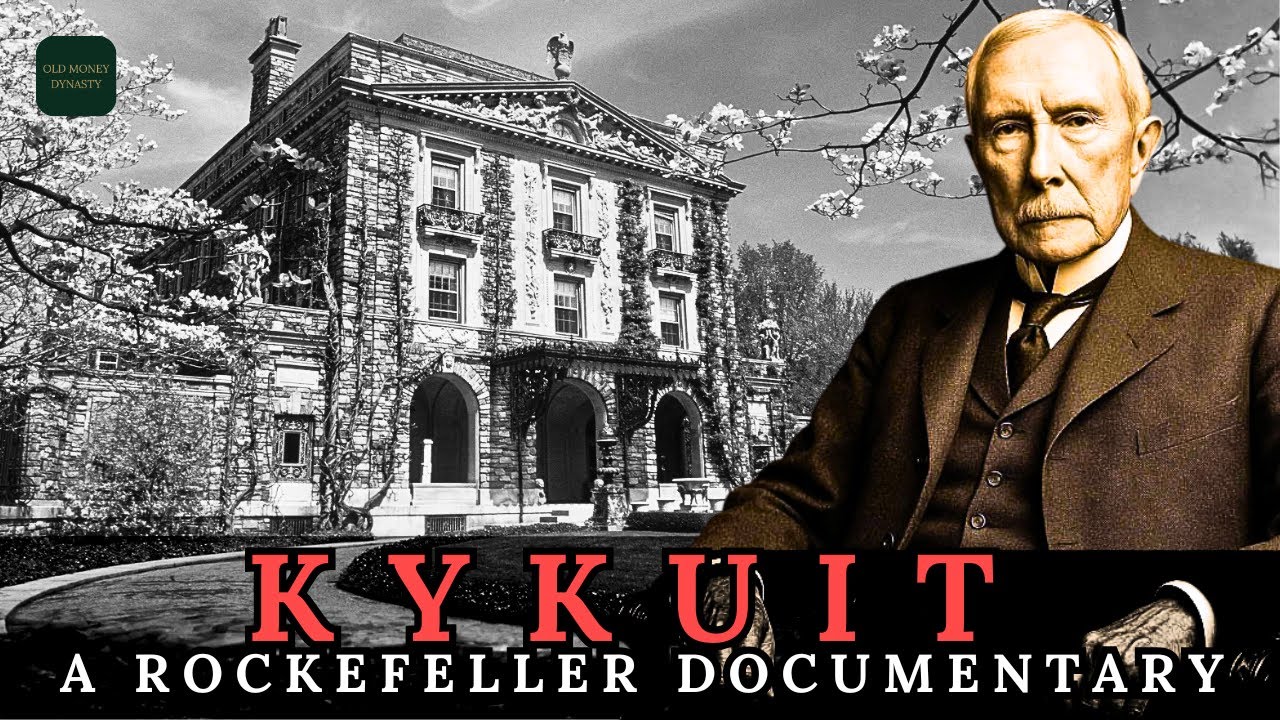
He implemented a company plan giving workers limited representation, and he would spend the rest of his life trying to make the Rockefeller name mean something other than blood and money. While lawyers fought over his empire, the old man was building a house. Rockefeller had purchased property on a hilltop in Westchester County called Kykuit, a Dutch word meaning lookout. The original house burned in 1902, forcing a decision.
Construction began in 1905 under the direction of his son, and the house was finally completed in 1913. By then, Rockefeller had largely withdrawn from active business. He spent his remaining decades at Kykuit, playing golf, walking the gardens, and dying there in 1937. Junior inherited the estate and dedicated himself to philanthropy.
Working with advisers, he developed a philosophy that wealth carried obligations. In 1926, a minister approached him with an audacious proposal to restore the colonial capital of Virginia, Williamsburg, to its eighteenth-century appearance. Junior poured more than sixty million dollars into the project over the following decades. During the Great Depression, he broke ground on Rockefeller Center, employing between forty and sixty thousand workers when nearly everyone else was laying them off.
His conservation donations protected the Great Smoky Mountains, Grand Teton, and other national parks. As the Second World War ended, he purchased seventeen acres along Manhattan’s East River for 8. 5 million dollars and donated the land to the newly formed United Nations, cementing New York’s role as the diplomatic capital of the world. By the end of his life, Junior had given away more than five hundred thirty-seven million dollars.
Combined with his father’s contributions, the first two generations directed over one billion dollars to charitable causes. The house that John D. Rockefeller built became a monument to the dynasty he created. Four generations called Kykuit home.
Junior filled it with Chinese ceramics and English furniture. His son Nelson, who became governor of New York and later vice president of the United States, transformed the estate into a living gallery of twentieth-century art, adding more than seventy works of modern sculpture to the gardens and filling the underground service passages with paintings by Picasso, Matisse, and Pollock. Nelson bequeathed his share of Kykuit to the National Trust for Historic Preservation, and his brothers followed. The estate opened to the public in 1994.
The Rockefeller Foundation, established in 1913, became the vehicle through which the family changed the world. Its campaigns eliminated hookworm across the American South and expanded to fifty-two countries. Foundation scientists developed the first effective yellow fever vaccine. The Rockefeller Institute for Medical Research produced discoveries that earned its scientists twenty-three Nobel Prizes.
The family’s gifts built the University of Chicago virtually from scratch. Abby Aldrich Rockefeller co-founded the Museum of Modern Art. The Rockefeller Foundation distributed more foreign aid than the entire United States government for decades, and its funding of the Green Revolution may have saved one billion lives from starvation. The story of Kykuit forces an uncomfortable question.
How do we judge a family whose fortune was built on practices that crushed competitors and triggered violence that killed women and children, yet whose philanthropy eradicated diseases and educated millions? The answer may be that both judgments are correct. John D. Rockefeller earned the label robber baron.
He built a monopoly that controlled ninety percent of American oil refining. But he also introduced what historians call scientific philanthropy, attacking root causes rather than treating symptoms. The suffering caused by monopoly capitalism cannot be erased by philanthropy. The families devastated by Ludlow cannot be consoled by university endowments.
And yet children today receive vaccines developed with Rockefeller funding, students study at universities Rockefeller endowed, and researchers work in laboratories Rockefeller built. The lookout that gave this estate its name still commands its view of the Hudson River. John D. Rockefeller chose this spot because he could see what others could not.
His descendants continue looking from this hillside, and the view itself remains.
