It began with laughter. In 1943, German pilots took to their cockpits and saw, for the first time, the American Republic P-47 Thunderbolt. They studied its bulk, listened to reports of its tremendous engine, and came to a simple conclusion: it was a lumbering beast, too heavy, too slow, too clumsy to ever pose a threat. They gave it a mocking nickname, the “seven-ton milk bottle,” and swore that their sleek, agile Messerschmitt Bf 109s and Focke-Wulf Fw 190s would swat it from the skies with ease.
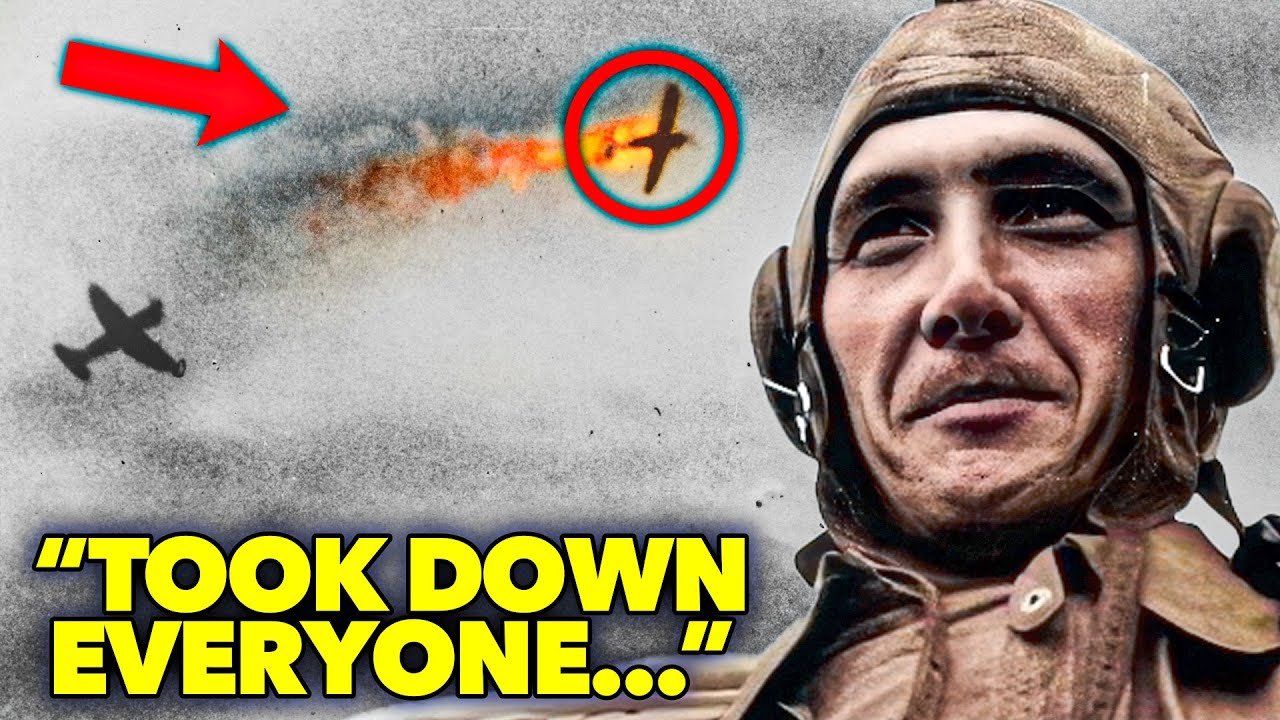
It was a joke, a symbol of American excess. The laughter did not last. Hidden beneath that bulky frame was a monster the German pilots had failed to see. It carried eight .
50-caliber machine guns, possessed a brutal dive speed that no other fighter could match, and its armor-plated toughness could shrug off cannon fire that would destroy any other aircraft. The story of the Thunderbolt, the machine that would turn that laughter into fear, began long before it ever met the Luftwaffe, in the tense, uncertain days of 1940. America was not yet at war, but its designers were already thinking about the kind of machine that would be needed to win it. At Republic Aviation, lead engineer Alexander Kartveli faced a challenge unlike any other.
US commanders wanted a high-altitude fighter powerful enough to escort bombers deep into enemy territory and tough enough to slug it out with the Luftwaffe’s finest. Kartveli’s answer was not sleek or elegant. It was brutal. He built the fighter around one of the largest engines ever fitted to a single-seat aircraft: the 2,000-horsepower Pratt & Whitney R-2800 Double Wasp.
From the start, the P-47 was not meant to be graceful. It was meant to be unstoppable. When the prototype rolled out in 1941, pilots were stunned. Fully loaded, it weighed nearly 17,000 pounds, dwarfing both the Spitfire and the Messerschmitt Bf 109.
Its wide fuselage bulged like a steel milk jug, earning it the nickname “Jug. ” It was a name meant as mockery at first, but it would soon be spoken with respect and even awe. The Thunderbolt carried firepower no other fighter could match: eight . 50-caliber Browning machine guns, four in each wing.
Each gun could spit 13 rounds a second, meaning the P-47 could unleash over 100 rounds into the air every second, nearly 13 pounds of lead at once. Many German fighters carried a pair of 20 mm cannons and two rifle-caliber machine guns. The Jug could drown its enemies in firepower. But firepower was only half the story.
The P-47 was designed like a tank in the sky. Its air-cooled radial engine could absorb punishment that would send a liquid-cooled Merlin or Daimler-Benz engine into flames. Its wings and fuselage were reinforced to handle incredible stress, and its cockpit was surrounded by armor plates, giving pilots a fighting chance against flak and cannon shells. Pilots would later swear the Jug could take more damage than any fighter of the war and still bring them home.
At first, this beast had problems. Its sheer bulk meant it guzzled fuel, and early versions had a painfully short range. Without drop tanks, it could barely escort bombers beyond the French coast. Its climb rate was sluggish compared to nimble German fighters, and pilots grumbled about its weight and size.
Yet beneath those complaints lay the truth. The Thunderbolt was not built for fancy maneuvers. It was built to dive like a hammer from the heavens, to hit with overwhelming force, and to survive what no other fighter could. It was a new kind of weapon for a new kind of war.
The world did not know it yet, but Kartveli’s creation was about to turn the skies over Europe into a proving ground. When the P-47 Thunderbolt first appeared over Europe in 1943, the reaction from German pilots was almost universal laughter. To the Luftwaffe, it looked like a mistake, an overweight brute pretending to be a fighter. Compared to the slim, agile lines of the Bf 109 or the Fw 190, the Jug looked bloated, sluggish, and utterly unsuited for dogfighting.
Luftwaffe intelligence mocked it as the “seven-ton milk bottle” and spread the belief that it was just another example of American excess. For men like Adolf Galland, one of Germany’s most famous aces, the formula for victory seemed obvious. The Luftwaffe had spent years perfecting air combat with nimble, lightweight fighters. German pilots prided themselves on precision, discipline, and the ability to outturn and outclimb an enemy.
Against that pedigree, the Thunderbolt looked laughable. They joked it was more likely to fall out of the sky under its own weight than win a dogfight. There was something dangerous hidden behind that arrogance. While German pilots mocked, American pilots adapted.
They learned quickly that trying to outturn a Bf 109 was suicide. But they did not need to. The Jug could dive like no other fighter in the war. In a steep dive, its sheer weight turned into raw speed.
Many German aces who tried to follow found their controls locking up, their wings shuddering as they approached the limits of their aircraft. The Thunderbolt simply kept going, pulling out at speeds over 500 mph, its pilot alive and ready to fight another day. The Germans also underestimated the Jug’s toughness. At first, Luftwaffe pilots reported with shock that they had poured cannon shells into the American fighter only to see it stagger, smoke, and somehow keep flying.
One ace described it as like shooting at a flying fortress in miniature. Another called it a beast that refused to die. The laughter that echoed in Luftwaffe briefings soon turned into frustrated growls. The most chilling realization came when those eight .
50-caliber machine guns roared. German pilots who had dismissed the Thunderbolt as a slow-moving target suddenly found themselves shredded in midair. A single burst could rip through wings, engines, or cockpits, leaving no time to escape. Luftwaffe veterans would later admit that underestimating the Jug had been a deadly mistake.
Their arrogance had blinded them to the fact that America had built not a toy, but a monster. By the time the laughter stopped, it was too late. The P-47 was a storm made of steel, and it was only just beginning to show Germany what real firepower looked like. The P-47’s true reputation was not forged on the drawing board or in mocking hangar talk.
It was baptized in fire over Europe in 1943. The skies had become a brutal chessboard. American bombers like the B-17 and B-24 were striking deep into occupied Europe, and the Luftwaffe’s mission was simple: tear them apart. German aces had mauled early bomber formations, confident that no escort could survive against them.
Then the Jug arrived. The Thunderbolt’s first missions were rocky. Its limited range meant it could only cover bombers partway, and Luftwaffe pilots pounced once the Jugs turned back. Losses were heavy, and some American crews began to doubt the new fighter’s value.
But when the Thunderbolt did engage, the results were shocking. In one of its first dogfights, a German pilot dove on what he thought was an easy kill. He opened fire, riddling the P-47 with cannon shells, and then stared in disbelief as it kept flying. Moments later, the Jug turned, its eight Brownings screaming in unison.
The German fighter disintegrated in midair. American pilots quickly learned the Thunderbolt’s strengths. It was not a dancer like the Spitfire or a duelist like the Mustang, but it was a hammer. They used the Jug’s weight to dive from altitude with terrifying speed, unleashing devastating bursts before climbing back to safety.
German pilots who tried to follow often lost control in their lighter machines, slamming into the ground or tearing their wings apart. One Luftwaffe ace admitted: “You could not follow a Jug in a dive. It would take you to your death. ”
The Jug also began proving itself in the role that would make it legendary: ground attack.
Armed with bombs and rockets in addition to its . 50 cals, the Thunderbolt tore through German convoys, trains, and tanks. German troops learned to fear the low growl of its engine, which meant that within seconds their columns could be ripped apart in a storm of lead and fire. The once-mocked milk bottle had become a predator that hunted not only in the skies, but on the ground.
By late 1943, the results were undeniable. Thunderbolts were racking up kill counts, their pilots returning with planes shredded by flak and cannon fire but still in one piece. Word spread quickly through Luftwaffe ranks. The Jug was no easy kill.
It was a machine that laughed at damage, struck like a hammer, and refused to fall from the sky. The mocking tone in German briefings began to change. What they once called a clumsy giant, they now whispered about as a nightmare. The P-47 had drawn blood, and with every mission, it was only getting hungrier.
By 1944, the Luftwaffe no longer laughed when they saw the bulky silhouette of a P-47 Thunderbolt. They feared it. When the Jug’s pilot pressed the triggers, eight Browning . 50-caliber machine guns roared to life, unleashing a torrent of destruction unmatched by any single-engine fighter of the war.
Four guns per wing, each spitting 13 rounds per second, meant over 100 high-velocity slugs screaming through the air every heartbeat. Against thinly armored German fighters, it was overkill. Against ground targets, it was slaughter. German pilots quickly discovered just how little margin for error they had.
A short burst was all it took, sometimes just a one-second squeeze, to rip apart a Messerschmitt or Focke-Wulf. The . 50 cals did not just puncture. They shredded, tearing wings from fuselages, igniting fuel tanks, and killing engines instantly.
Pilots who had survived countless dogfights against Spitfires or Mustangs admitted the Jug’s firepower was something altogether different. One Luftwaffe veteran recalled grimly: “It was like being hit by a flying wall of lead. ”
The killing power did not stop in the skies. By mid-1944, the Thunderbolt had evolved into a terror of the battlefield below.
Strapped with bombs and rockets, it became a flying artillery piece. German armor columns learned that even the heaviest Panzer was not safe when the Jug swooped low. A single rocket could blow the turret off a Tiger tank, while strafing runs turned trucks, supply trains, and convoys into flaming wrecks. The sound of those .
50 cals ripping through the air became a psychological weapon in its own right. German infantrymen spoke of freezing in terror when they heard the approaching Jug overhead, knowing they were seconds away from devastation. For the Americans flying her, the Thunderbolt was more than just a weapon. It was protection.
Pilots trusted the Jug to bring them home no matter how many holes were punched into her frame. Stories spread of P-47s returning with wings shredded, engines sputtering, even tails half destroyed, yet still flying. The Jug could take punishment that would doom almost any other aircraft. That toughness meant pilots could fly more aggressively, stay in the fight longer, and press attacks that might have been suicidal in any other plane.
The effect on German morale was profound. Where once Luftwaffe pilots had felt supreme confidence in their machines, now they faced an enemy that combined overwhelming firepower with near invulnerability. For ground troops, the Jug became synonymous with sudden death from above. On June 6, 1944, the largest invasion in human history began.
As Allied troops stormed the beaches of Normandy, thousands of aircraft swarmed the skies to shield them. Among them were P-47 Thunderbolts. That morning, German defenders who had mocked the Jug as a clumsy brute learned just how devastating it could be when unleashed at full scale. The Thunderbolt was everywhere.
Before dawn, Jugs roared across northern France, strafing rail lines, cutting communications, and blasting convoys carrying reinforcements to the coast. By daylight, they were circling the beaches, ready to pounce on any German unit that dared move in the open. For Wehrmacht soldiers, it was a nightmare. Crouching in a hedgerow, they would hear the distant rumble of engines, then see the massive frame of a P-47 diving straight at them.
Within seconds, eight . 50 cals were spitting fire, ripping apart trucks, artillery, and men alike. Survivors often spoke of the psychological torment, knowing that no matter where they went, the Jug could find them. For German pilots, the situation was equally grim.
The Luftwaffe was stretched thin, its numbers decimated by years of attrition. When they tried to challenge the skies over Normandy, they found themselves outnumbered and outgunned. P-47s flying escort and patrol duty tore into them with brutal efficiency. Even elite German aces who had mocked the Jug as a flying milk bottle admitted the truth after the invasion: against swarms of Thunderbolts, their Bf 109s and Fw 190s stood little chance.
What made the Jug so dangerous in Normandy was not just its guns. It was its adaptability. One moment it was strafing a Panzer column, the next it was dueling fighters over the beaches, then it was bombing artillery batteries hidden miles inland. German commanders, already overwhelmed by the chaos of the invasion, realized they could not move troops or supplies in daylight without risking annihilation.
The Jug had become a weapon of paralysis, freezing German forces in place while the Allies surged forward. D-Day marked the breaking point. From that moment on, the Luftwaffe was never able to regain control of the skies over Western Europe. Thunderbolts, once dismissed as a clumsy mistake, were now indispensable, an airborne hammer smashing German resistance from above.
For German troops on the ground, every shadow in the sky brought fear. For German pilots, every climb into the air felt like a one-way mission. After Normandy, the war in Western Europe shifted into a deadly pursuit. German forces retreated eastward, desperate to regroup while the Allies pressed their advance.
Above them, the P-47 prowled the skies like a predator. By late 1944, the Jug was no longer just a fighter. It had become one of the most feared ground-attack aircraft in history. The strategy was simple but devastating: choke the German war machine by destroying everything that moved.
P-47s armed with bombs, rockets, and those eight relentless . 50 cals scoured roads, railways, and bridges. Every convoy became a target. Every train, a death sentence.
German troops quickly learned that daytime movement was suicide. The moment a column of Panzers or trucks was spotted, the Jugs swooped down in waves, unleashing fire so intense survivors swore it felt like the ground itself was exploding. One German officer later admitted: “We feared the Jabos more than anything else. You could not escape them.
They were everywhere. ”
Jabo, short for Jagdbomber, was the nickname German soldiers gave the Thunderbolt and other Allied fighter-bombers. Among them, the P-47 stood out for its sheer brutality. Its rockets could blow apart even the heaviest Tiger tank, while its .
50 calibers turned infantry into shadows on the road. There are chilling reports of entire columns annihilated in minutes, black smoke and burning steel marking the Thunderbolt’s passing. For American pilots, this was where the Jug truly earned their love. They called it a flying fortress for one.
Tough enough to take them through anti-aircraft fire and still bring them back. Many told stories of returning to base with wings shredded, holes the size of fists punched through the fuselage, even engines coughing smoke. Yet the Jug held together. The plane gave its pilots courage, and in return, the pilots gave the Luftwaffe and Wehrmacht no quarter.
By the fall of 1944, German soldiers dreaded not just Allied armor, but the skies above. Every resupply, every retreat, every attempt to regroup risked sudden annihilation. The Jug had transformed war on the ground into a constant nightmare. Even when Luftwaffe fighters tried to intervene, they often found themselves outnumbered, unable to stop the Thunderbolts raining destruction below.
The road into Germany was paved with wreckage, shattered trains, burning trucks, and tank carcasses scattered across the countryside. It was a road carved not just by Allied armies, but by the Thunderbolt’s relentless hunting. In December 1944, Hitler made one last gamble to turn the tide: the Battle of the Bulge. Under the cover of winter snow and fog, German tanks and infantry surged through the Ardennes, smashing into thin American lines.
For a moment, it looked as though the Wehrmacht had recaptured its old ferocity. The Allies reeled, their supply lines shredded, their positions collapsing. But there was one thing Hitler had not counted on. The weather would not hold forever, and once the skies cleared, the P-47 Thunderbolt would descend with vengeance.
For the first week, dense clouds grounded much of the Allied Air Force. German troops, emboldened, moved convoys openly, rolling their Tigers and Panthers through icy forests. But by December 23, the fog lifted, and the nightmare began. Squadrons of Thunderbolts roared overhead, swooping low over snow-dusted roads.
What followed was carnage. American pilots called it turkey-shoot weather. German survivors called it hell. Columns that had advanced confidently just days before were now trapped on roads littered with burning wrecks.
The Jug’s rockets cracked open heavy tanks like eggshells. Its . 50 calibers turned trucks, fuel depots, and artillery into flaming ruins. One after another, bridges collapsed under bombing runs, cutting off retreat.
The Germans had committed their reserves, their last chance at a decisive blow, and the Thunderbolt ripped it apart from above. For Luftwaffe pilots, the battle was agony. They scrambled to protect their comrades on the ground, but every climb into the sky meant facing Thunderbolts already waiting at altitude. The Jug had grown into a hunter of hunters, and its pilots knew the stakes.
If they broke the German counterattack here, the Reich’s last hope would die in the snow. Pilots told chilling stories of the Bulge. One described strafing a column until the road itself looked like a graveyard of steel. Another recalled seeing German soldiers fleeing their vehicles, only to be cut down as the Jug’s guns stitched the snow with fire.
The psychological effect was total. Wehrmacht reports described entire units refusing to move by day, convinced that the sky itself was cursed. By January 1945, the Bulge had collapsed. The German dream of splitting the Allies in two was buried under burned-out tanks and shattered convoys.
When historians later traced the battle’s turning point, it was not just the infantry who held the line or the tanks that fought in the Ardennes. It was the P-47 Thunderbolt. The Jug had made the sky an Allied weapon, and in doing so, it had broken the back of Germany’s last great offensive. From then on, there would be no more counterattacks, no more bold thrusts by the Wehrmacht.
The road to Berlin was open, and overhead, the Jug still hunted, relentless as ever. By 1945, the Luftwaffe was crumbling. The P-47 Thunderbolt showed no mercy. Thunderbolts swept into Germany’s heartland, smashing rail yards, convoys, and tank columns with bombs, rockets, and the relentless roar of eight .
50 cals. German soldiers called them Jabos and admitted they feared the Jug more than artillery because there was nowhere to hide. In the air, desperate Bf 109s and Fw 190s tried to defend their skies, but by then, the odds were hopeless. The Jug’s diving speed and toughness gave it the edge, and its firepower shredded even elite pilots.
Luftwaffe veterans later admitted the Thunderbolt broke their morale. What once seemed like a clumsy giant had become a nightmare they could not kill. By the war’s end, the Jug’s thunder had echoed across Germany, marking the collapse of the Reich.
