In June of 1912, an old man lay dying in a hospital bed in Tucson, Arizona. He was sixty-seven years old. The sisters at St. Mary’s knew him as a respectable retired public servant, a man whose last working years had come with a government commission folded in his coat.
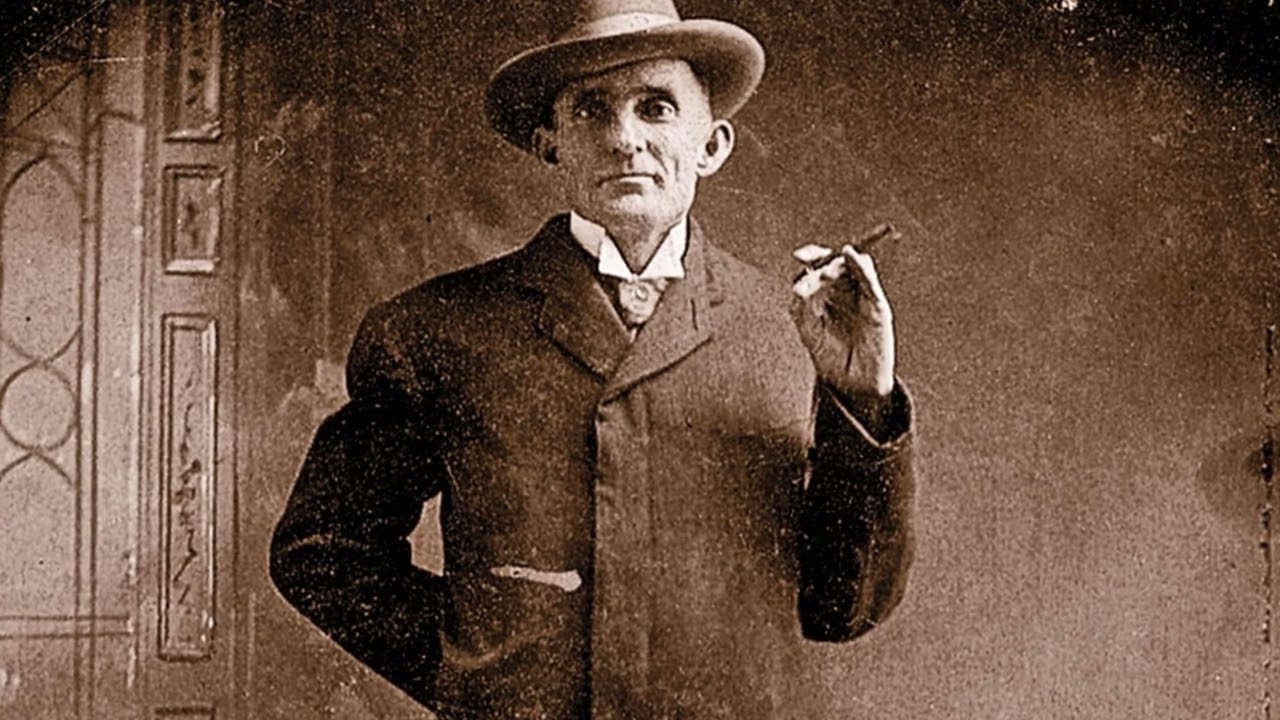
There was a clean bed, a doctor, a priest. When he died, the newspapers would call him a pioneer and an old peace officer, and they would be gentle about everything else. His name was John Harris Behan. Thirty years before that quiet morning, he had been the sheriff of Cochise County, the man who sold out the town of Tombstone so completely that the men who trusted the law there died young or ran under warrants, and the men who reached for a gun in the street bled out in the dirt.
Behan did neither. He died in a bed the government helped pay for. The movie gives him ten minutes, a smiling rival who lost his woman to Wyatt Earp. What the movie never shows is what happened after Tombstone, when the most compromised lawman in the county should have paid the highest price of anyone in this story and instead paid the lowest.
That story starts the way most of Behan’s story starts, with a deal. Johnny Behan. That is the first thing to get straight, because the legend is full of gunmen, and he was not one of them. He was a politician.
He came to Arizona young in the 1860s, tried his hand at hauling freight and running a small business, and figured out early that the real ladder in a territory was not the one you climbed with a gun. The frontier rewarded another trade more quietly than fast shooting: holding office. Up in Yavapai County during the Apache troubles of the early 1870s, he served as a deputy and then as sheriff, learning the trade from the inside. He won a seat in the territorial legislature.
He held a string of smaller posts, recorder, clerk, the unglamorous jobs most men overlook, and each one taught him the same lesson. On this frontier, the men who got rich were the men who got appointed to the office that collected, assessed, and stamped the money. And you reached that office by knowing the right people and staying out of the room where the shooting started. By the time silver turned a patch of Arizona desert into one of the richest boom towns in the West, Behan was exactly the kind of man who got sent to run things.
Personable, connected, a Democrat in a county the Democrats wanted badly to control, and completely comfortable in a room full of powerful men. In 1881, the territory carved a brand new county out of the bottom corner of Arizona and named it Cochise County. A new county needs a sheriff. On February 10, 1881, Governor John Fremont handed that job to Johnny Behan.
To a modern ear, sheriff sounds like a job about crime. In Cochise County in 1881, it was mostly a job about money. The sheriff was the tax collector. He assessed and gathered the county’s revenue, and he was paid in part out of what he brought in.
In a silver town at full boil, with saloons, gambling halls, and brothels running day and night, that was the richest county office in the territory. Wyatt Earp himself wanted it badly, not because he loved chasing rustlers, but because everyone who could count knew what it was worth. The governor needed a man he could trust to run the money. That was Behan exactly.
Before the appointment came through, there were two serious men who wanted to be the first sheriff of Cochise County: Behan and Wyatt Earp. Behan, being a politician and not a fool, went to Wyatt with an arrangement. Step aside, do not fight me for this, let me have the sheriff’s office, and I will make you my undersheriff. We will split the work.
You will have the standing and a share of the money, and neither of us has to lose. Wyatt stepped aside. He took the deal. Then Johnny Behan took the office and gave the undersheriff job to a man named Harry Woods.
Woods was not a lawman. He was the editor of the Tombstone Nugget, the Democratic newspaper in town, a paper as loyal to Behan and the ranchers as the rival Epitaph was loyal to the Earps. The second most powerful law enforcement post in the county went to the man who ran the friendly newspaper. Wyatt got nothing.
That is the second thing to understand about Johnny Behan. He got ahead of Wyatt Earp by using the law itself, the appointment, the office, the promise as a tool, and then he dropped it the moment it had done its work. Wyatt never forgot it. You can draw a line from that broken handshake straight through everything bloody that came after.
But the deal is only the opening move. To see the whole man, you have to look at how he ran the office once he had it. The sheriff collected the taxes on vice. Gambling tables, liquor licenses, brothels, even theaters, all paid the county, and all passed through Johnny Behan’s hands first.
For doing the collecting, the sheriff kept a cut: ten percent of everything he gathered. Ten percent of a sleepy county is pocket change. Ten percent of Tombstone at its silver peak was a fortune. Thousands of miners with silver money in their pockets and nothing to do at night but spend it.
Saloons that never fully closed. Faro tables and poker games running around the clock. Dance halls, cribs, theaters, every one of them a licensed, taxed business, and every one of those licenses and taxes flowing across the sheriff’s desk. Behan sat at the mouth of that river, and the law let him dip a tenth of it out as it went by, month after month, quietly, with a badge to make it official.
The editors of the Tombstone Epitaph watched Behan and his friends work that arrangement, and in 1881 they gave it a name that stuck for 140 years. They called it the Ten Percent Ring. The Epitaph was the Earp paper, with every reason to make Behan look like a thief, and its word should be held at arm’s length like any enemy’s. But what is not in dispute is this: the ten percent was real.
The office really did pay the sheriff a share of what he collected, and Behan really did collect the richest vice revenue in the territory. The argument was never whether he took the money. The argument was only whether taking it was corruption or just the job. That argument did not stay clean for long.
On January 31, 1882, Johnny Behan was arrested. Not for a shooting, not for a rustling job. He was arrested for collecting the same bills twice, three hundred dollars of them, billing the county for money that had already been paid. Double dipping, in plain words, by the man whose entire office handled the county’s money.
He was hauled in front of a justice of the peace, and then nothing happened to him. The case was discharged on a technicality. No trial, no penalty, no mark that stuck. The man caught with his hand in the county’s own money walked back out and went right on collecting.
An investigation years later found that Behan had banked around five thousand dollars during his time as sheriff, and where all of it came from was never established. Five thousand dollars in the 1880s was serious money, more than most working men saw in a decade, and it simply appeared in the accounts of a public servant on a public salary. No one ever made him explain it. The ring ran on money, but it ran on something else too: it decided who carried a badge.
A sheriff running the county’s vice revenue needs deputies who will not ask hard questions, and Behan knew exactly where to find men like that. He found them among the cowboys, the loose network of rustlers, smugglers, and border ranchers who ran the backcountry of Cochise County. They stole cattle out of Mexico, robbed the occasional stage, and voted Democratic, which made them useful to a Democratic sheriff. So Behan deputized them.
He pinned county badges on the very men the Earps were trying to run out of the territory. One of those deputies was Frank Stilwell. Stilwell rode for Behan, collected for Behan, and carried Behan’s authority. Then in the summer of 1881, Behan fired him for what the record politely calls accounting irregularities.
Read that plainly: Behan dismissed his own deputy for stealing from the tax money. That tells you two things at once, the kind of man Behan was hiring, and that even inside the Ten Percent Ring, there was a line, and it ran right where the skimming started cutting into Behan’s own share. Stilwell did not fade away. He drifted deeper into the cowboy faction, and his name would come back before this was finished, in a railroad yard at the wrong end of Wyatt Earp’s shotgun.
If you want to know whether the pattern was just business, look at what Behan did in his own house. A young woman named Josephine Sarah Marcus came to Tombstone believing she was going to marry Johnny Behan. She had met him earlier, followed him to the boom town, and moved in with him. For a while she signed her name Josephine Behan, though no record of an actual marriage has ever been found.
He kept the promise dangling, kept her waiting on a wedding that never quite arrived, while he was seen around town with other women. By her own account, it ended when she found him in bed with the wife of a friend, and she threw him out. Look at the shape of that. It is the same move he made on Wyatt Earp, run on a smaller stage: a promise offered because it was useful, kept exactly as long as it cost him nothing, dropped the moment the person on the other end had served their purpose.
And here is the detail the movie loves and the record confirms: Josephine Marcus walked out of Behan’s house and eventually into the life of Wyatt Earp, the very man Behan had crossed. Behan managed, in the space of a single year, to betray Wyatt Earp twice. Once over the office. Once over her.
That was the machine Johnny Behan built. It was quiet, profitable, and completely his. It ran on one assumption: that the peace would hold, the arrangement would keep humming, and nobody would ever force him to choose a side out loud. On October 26, 1881, somebody did.
You know this part. A vacant lot near the O. K. Corral.
Thirty seconds. Three men dead. But the gunfight is not Behan’s story. What Behan did in the hour around it is.
That morning, the tension between the Earps and the cowboys finally boiled over. Ike Clanton had spent the night and the morning armed and making threats. The town marshal, Virgil Earp, decided to disarm the cowboys, and he took his brothers Wyatt and Morgan and Doc Holliday to do it. Sheriff Behan saw it coming, and for one moment he did the actual job.
He went to the cowboys, the Clantons and the McLaurys, and tried to head off the fight. He said he would disarm them himself. He even checked Ike Clanton for a gun and found none. Then he walked toward the approaching Earps and told them he had the situation handled.
He did not have it handled. The two groups met in that narrow lot. Somebody’s nerve broke, and in about thirty seconds Billy Clanton and both McLaurys were dead on the ground. Behan stood close enough to watch it happen and could not stop any of it.
And here is the moment that truly defines Johnny Behan. It comes right after the shooting stops, because the instant it stopped, Behan had to choose a side out loud, the one thing his whole quiet machine had been built to avoid, and he chose against the Earps. He walked up to Wyatt Earp and told him he was under arrest. Wyatt refused, and the standoff held, but Behan had shown his hand.
Within days he was the star witness for the prosecution, testifying that the cowboys had thrown up their hands and tried to surrender when the Earps gunned them down. There was a problem with that story, and it started with Behan’s own words at the scene. In the moments before the fight, he had walked toward the Earps and told them to stop, saying he was there to keep the peace and had gone to disarm the cowboys. But he had not disarmed them.
The McLaurys were still armed when the shooting began. So the sheriff either failed at the one job he claimed to be doing, or he told the Earps a calming lie to buy the cowboys a few more seconds. Neither reading is flattering, and both come straight out of what Behan himself said happened. That surrender version, the testimony he gave, was the version that would have hanged Wyatt Earp and Doc Holliday for murder.
It fell apart in the hearing. Behan’s account was contradicted by three separate defense witnesses, and the judge did not believe enough of it to hold the Earps for trial. The county’s chief law officer, under oath in the most watched case in the territory, had his story set aside as unreliable. Remember the broken deal at the start of this?
Behan had used Wyatt Earp and discarded him a year earlier. And now, with the town watching, he tried to put a rope around Wyatt’s neck. The deal was the crack in the foundation. The gunfight was the wall coming down.
And Behan had just poured everything he had into the wrong side of it. The wall really did come down. What the Earps and the cowboys did to each other over the next six months turned Tombstone into a killing ground, and the sheriff who was supposed to keep the peace spent that whole season making it worse. It started with an ambush on the night of December 28, 1881.
Gunmen hidden in a half-built building fired shotguns into Virgil Earp as he crossed a Tombstone street. The blast shattered his left arm, and he never used it again. The suspects were cowboys. Witnesses gave them alibis.
Nobody was charged. Nothing happened. Then, on the night of March 18, 1882, Morgan Earp was shot in the back through the glass of a saloon door while he played billiards. He died on the table.
He was thirty years old. A second bullet had missed Wyatt’s head by inches. Again, the suspects were cowboys, men inside Behan’s orbit. Again, the coroner’s inquest produced no one who would answer for it.
Nothing happened. That was the moment Wyatt Earp stopped waiting for the law, because the law was Johnny Behan, and Johnny Behan had spent a year proving whose side he was on. Two days after Morgan died, Wyatt caught Frank Stilwell, Behan’s old deputy, in the railroad yard at Tucson and killed him. Then he rode back into Cochise County with a federal posse and a warrant nobody could cancel, and went hunting the men he blamed for his brothers.
This is the Vendetta Ride. Over a few weeks, Wyatt’s party killed Florentino Cruz, and at a place called Iron Springs killed Curly Bill Brocius, the closest thing the cowboys had to a leader. Where was the sheriff of Cochise County while all this happened? Johnny Behan formed a posse to stop it.
He got a warrant for the Earps, gathered around twenty men, and rode out to bring them in. But look at who was in that posse. Behan filled it with cowboys. He rode after Wyatt Earp with a company of the exact men Wyatt was out there hunting, including Ike Clanton and Johnny Ringo.
Some of the men riding under the sheriff’s authority were themselves suspects in the very killings Wyatt was avenging. The picture in the spring of 1882 was this: the county sheriff was leading a posse of accused murderers to arrest the federal officers who were hunting those same accused murderers. Two armed parties crossed the same desert, one a federal posse hunting cowboys, the other the county sheriff leading cowboys hunting the federal posse. The law of Cochise County had become one faction in a range war, and it was not even pretending anymore.
The federal authorities backed the Earps and their warrants. The county apparatus backed Behan and his. Two versions of the law pointed at each other across the same stretch of Arizona, and the sheriff had put himself and his badge squarely on the side of the rustlers. Whatever else you want to call that, it was a choice, and Behan made it on purpose.
Behan’s posse never caught the Earps. It chased them across southern Arizona and lost them. By the middle of April, the Earps had ridden out of the territory for good, under murder warrants, never to come back and answer them. Wyatt Earp had killed at least three men with the county sheriff formally chasing him, and he simply rode away into the rest of his life.
Add it up by the summer of 1882. Three cowboys dead at the O. K. Corral.
Virgil Earp crippled. Morgan Earp murdered. Stilwell, Cruz, and Curly Bill dead in the Vendetta Ride. The Earps gone.
The Clantons scattered. Tombstone itself starting to burn out as the silver played out, and a fire gutting the downtown. Every man who had stood at the center of Behan’s world was dead, ruined, or running. And Johnny Behan was about to lose an election.
By September 1882, the county had had enough of him. He was even feuding with his own deputy, William Breakenridge, one of the few competent men left in the office, and the quarrel spilled into public view and cost him what goodwill he had left. The graft reputation had followed him everywhere. The county he was elected to protect had spent a year watching him protect the men who were shooting it apart.
When it came time to run again, his own party would not even put his name forward. He did not lose a close race. He never got on the ballot at all, because the Democrats simply refused to nominate the Democratic sheriff. In November of 1882, Johnny Behan left the sheriff’s office of Cochise County in something close to disgrace.
No re-election, no honors, run out of the job by his own side. This is the part of the story where the man is supposed to fall. He sold out the town. He backed the losing faction.
He got caught billing the county twice. He lost his office in disgrace. In any story that ends the way we want stories to end, this is where Johnny Behan disappears into a hard, small, forgotten life. That is not how Johnny Behan’s story went.
Watch what happens to a man who owns the system even after the system throws him out. Within a few years, Johnny Behan had a new government job. In 1887, he turned up at the Yuma Territorial Prison, the harshest lockup in the Southwest, a place of iron cages cut into a bluff above the Colorado River, where the desert heat did the work no guard could, and the territory sent the men it wanted broken. Behan arrived at Yuma on the staff, not in a cell, and he climbed fast.
Within about a year he was the superintendent, the man in charge, running the whole institution. The man the voters had thrown out for mishandling the county’s money, the man who had been arrested for double billing and left carrying a graft nickname, was now the official the territory trusted to run its prison and handle its budget. Nobody in Yuma seemed to remember Tombstone. Or if they did, it did not matter, because a man who knows how the system works is exactly the kind of man the system keeps hiring.
That was only the start of the second life. In 1893, the federal government appointed Behan an inspector at the Customs House in El Paso, on the Texas border. Read that job description slowly. The man whose deputies in Tombstone had been the cattle smugglers running stock across the Mexican line was now a federal officer paid to stop smuggling across the Mexican line.
The poacher was handed the warden’s keys, and nobody blinked. The next year, the government made him a Chinese exclusion inspector, enforcing the immigration law of the day. A few years after that, he was drawing a federal salary from the United States Patent Office in Washington, about as far from a Tombstone gunfight as an American could get and still be on the payroll. Then he went to war.
When the Spanish-American War came in 1898, Behan went with it, working as a quartermaster handling army supply at the camp in Tampa, Florida. He was in his fifties by then, and still the government found a place for him. When the fighting spread to China during the Boxer Rebellion in 1900, Johnny Behan, the old sheriff of Cochise County, was there too, on the other side of the world, still on a government payroll, still useful, still landing on his feet. As late as 1910, two years before he died, Arizona handed him one more badge: a commission as a railroad policeman.
Count them: county sheriff, prison superintendent, customs inspector, immigration inspector, patent office, army quartermaster on two continents, railroad policeman. For thirty years after Tombstone threw him out, Johnny Behan was never long without a badge, a title, and a public paycheck. Every time one system was done with him, he found another one to serve. And then, on June 7, 1912, in that hospital bed in Tucson, it ended the way almost nothing in this story ended.
Peacefully. An old man in a clean bed, tended by nuns, with a priest close by. The exact medical cause is given a little differently depending on which record you read: his heart, hardening of the arteries, an illness he had carried quietly for thirty years. What every account agrees on is how it looked.
Johnny Behan died slow and warm and cared for, a respectable old public servant, and the papers were kind. Hold that image, the clean bed and the gentle obituary, and set it against the men who shared his story. Johnny Behan was, by any honest reading of the record, the most compromised lawman in Tombstone. He ran the Ten Percent Ring.
He deputized cattle thieves. He gave testimony a court would not believe. He turned the sheriff’s office into one gun in a range war. And of every major figure in the Tombstone story, he is the one who paid the smallest price of anyone in it.
Look for the punishment in his life, and you cannot find it. He was never convicted of anything. He was never shot. He was never run out of the territory the way the Earps were.
Never hunted. Never forced to leave his own name behind. The single arrest on his record was thrown out on a technicality within a day. The worst thing that ever happened to Johnny Behan was losing one election.
And even that turned into a thirty-year run of better and better jobs. The record of his life has a hole in it, exactly where the consequences are supposed to be. How does that happen? How is it that the man who bent the law the furthest is the one the law never touched, while the man who trusted it, or defied it, or simply stood near it paid in blood and exile and early graves?
The movie promises you that the crooked man gets his in the end. Behan never got his. Behan got a pension-adjacent job and a peaceful death at sixty-seven. Either the story we tell about frontier justice is wrong, or Behan understood something about that frontier that the brave men never did.
Walk past the graves. Frank Stilwell, the deputy Behan hired and fired, was shot to pieces in the Tucson railroad yard in March 1882, gunned down by Wyatt Earp’s party. He did not live to see thirty. Morgan Earp, shot in the back over a billiard table, dead at thirty.
Curly Bill Brocius, the cowboy leader whose faction Behan protected, killed by Wyatt at Iron Springs, his body never recovered. Johnny Ringo, who rode in Behan’s posse, found dead against a tree at Turkey Creek that same summer at thirty-two, with an argument about how he died that has never been settled. Ike Clanton, who helped start the whole thing at the O. K.
Corral, shot dead by a detective at Eagle Creek in 1887 while the law closed in on his rustling, running from consequences to the very end. Doc Holliday, coughing his life out from tuberculosis in a Colorado sanitarium in 1887, dead at thirty-six. And Wyatt Earp, the man Behan crossed at the very beginning, left Arizona under a murder warrant and spent the next forty-seven years drifting through mining camps and saloons and hard luck, famous only at the very end of his life, dying in a rented room in Los Angeles in 1929. Every one of them dead young, or dead broke, or gone under a warrant they could never come home to answer.
And in the middle of all of them stands Johnny Behan in his clean hospital bed, with a priest and a gentle obituary. The sheriff who sold out the town outlived, outearned, and outrested nearly every honest and dishonest man who ever stood beside him. We are taught that the West was won by the man who was fastest or bravest or straightest, the gunfighter and the lawman standing in the street at high noon. But look at who is standing at the end of this story.
The fast men are in the ground. The brave lawman died broke. The man left standing never drew a gun that mattered. He collected.
He deputized. He testified. He filled out the paperwork of power. And he held the office that owned the money.
The law in Cochise County was never missing. There was a sheriff, there were deputies, there were courts and inquests and warrants and hearings the whole way through. It ran the entire time, but it was never really pointed at the town. Every part of it, the office, the fees, the badge, the posse, existed to serve the man who held it.
That is why the arrest went nowhere, and the false testimony cost him nothing, and the graft never stuck, and the disgrace turned into thirty more years of government work. The system did not fail Johnny Behan. The system worked for Johnny Behan exactly as it was designed to, right up to the priest at his bedside. The men who believed the law would protect them if they only stood their ground learned the truth in the dirt of a vacant lot, a railroad yard, and a canyon at Turkey Creek.
Johnny Behan never had to learn it, because he was never once confused about what the law was for. He understood, from that first handshake with Wyatt Earp, that the badge was something you held and used, and that the man holding it was the last man it would ever come down on. Tombstone survives in its way. It runs today on the story it could not survive the first time.
Actors in period costume reenact the gunfight on Allen Street every day for tourists, and the gift shops sell replica revolvers and shot glasses, and the old Epitaph prints keepsakes. The town that could not keep its own people alive turned out to be very good at selling their deaths. And about seventy miles up the road, in a Tucson cemetery, is the grave of the man who sold it out. He is not a villain there.
He is just an old pioneer, buried respectable, the way he lived his whole second life. Every other man in this story paid for Tombstone in blood, or in exile, or in a legend that ate them alive. Johnny Behan is the one who got to die in a clean bed, cared for, with the government still signing his checks.
On that frontier, that was what winning looked like.
