No call came through to Meadowbrook Cottage on the night of October 15, 1968. There was no knock, no sound of footsteps at the door. The quiet that had surrounded Robin Douglas-Home for the past twelve months simply continued to enfold him, as it did every evening, while the Sussex landscape sank into autumnal gloom. He was thirty-six, by himself in the cottage, and he had just finished a bottle of barbiturates.
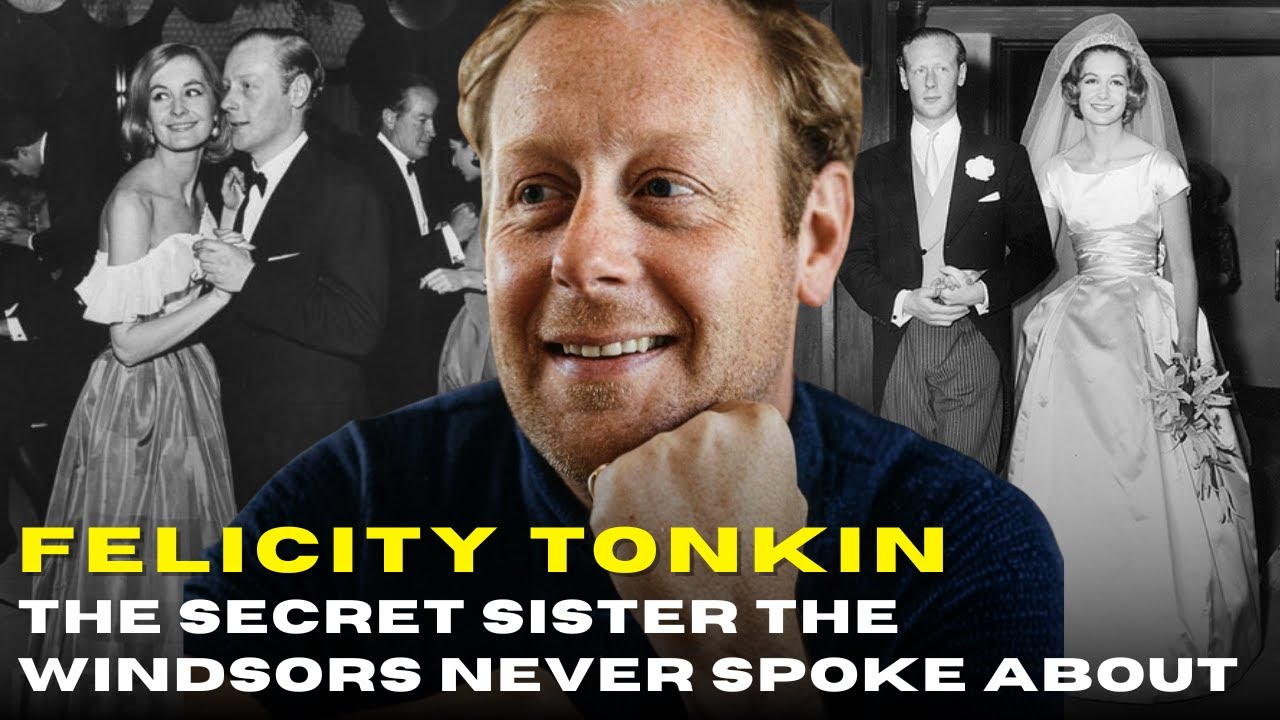
Sleeping pills were the favoured way out for the upper classes in twentieth-century Britain: tidy, painless, silent. A lengthy sleep, a final solution to the sleeplessness of a shattered heart. He stretched out on his bed, and as the medication decelerated his pulse and his breathing, the stillness of the cottage enveloped him altogether. The telephone stayed silent.
Nobody came through the door. The princess did not arrive. Robin Douglas-Home had entered the world in 1932 at the very core of the British establishment, a realm of sodden tweed, chilly nurseries, and total, unchallenged privilege. He was of the Douglas-Home family, offspring of the Earls of Home, a lineage that had protected the Scottish border for hundreds of years.
His uncle was Alec Douglas-Home, the man renowned for giving up his earldom in order to become Prime Minister of the United Kingdom. His father was the Reverend Henry Douglas-Home, a well-known ornithologist the public called “the bird man.” In the genetic raffle of the British upper class, Robin had won the jackpot. He had the bloodline, the ties, and the breeding that equipped him to govern the world, or at the very least to oversee a considerable part of it.
The route for a boy of his rank was fixed well before he took his first breath: Eton, a military commission in a distinguished regiment like the Seaforth Highlanders, a fitting marriage to a girl with a hyphenated surname, and a lifetime of stoic, unfeeling duty to his class. Feelings, in the Douglas-Home vocabulary, were to be stifled as resolutely as a cough in church. Frailty was not simply a defect; it was a violation of good manners. Yet nature plays harsh tricks with old bloodlines.
Now and then, in a household of soldiers and statesmen, men of iron and soil, a boy is born who is made of glass and air. Robin was that boy. He was a poet delivered into an army regiment, a man out of step with his own ancestry. While his cousins talked politics and hunted grouse across frozen moors, Robin felt pulled toward the piano.
It was no casual pastime but a compulsion he could not resist. He had a natural, almost unearthly sensitivity to melody, above all the intricate, sorrowful cadences of jazz. Music grew into his private tongue, the sole means he had of giving voice to the surge of feeling churning beneath his polite, public-school surface. He attempted, with heartbreaking effort, to perform the part assigned to him.
He attended Eton, where he mastered the art of concealing his tenderness behind a crooked grin and a modest, self-mocking humour that won him wide affection. He entered the army, put on the uniform, and acted out the role of a soldier. Yet the brutal truth of service life must have abraded his spirit like coarse paper. He was an officer who would rather be reading Keats or hearing Gershwin.
By the 1950s, Robin had drifted into the sparkling shallows of London high society. This was the cocktail age, an odd period of transition in which the British aristocracy was frantically attempting to drown, through its parties, the drab memories of war and the waning of empire. Robin turned into the golden boy of this circle. He was the guest you wanted at your dinner table.
He was good-looking, certainly, but in a hurt, harmless manner that made women long to rescue him. And once dinner was over and the brandy had been poured, Robin would take his place at the piano. The room would go utterly quiet. His playing had an intimacy to it, as though he were murmuring a secret to each person present, one at a time.
He performed melancholy songs, Cole Porter and Jerome Kern, with an insight that surpassed mere technique. He grasped the lyrics because he had inhabited them. He was forever hunting for the great love, that life-altering bond that would validate his existence and steady his roving spirit. In 1959, he believed he had discovered it.
He wed Sandra Paul, a woman of extraordinary beauty and an accomplished model. On paper, they were the ideal couple of their era: the refined aristocrat and the dazzling cover girl. The society columns were full of their pictures. Yet beneath those polished black-and-white photographs, the union was a catastrophe.
Robin’s emotional hunger was immense, a limitless pit that nobody could ever satisfy. He was needy, uncertain of himself, and given to spells of crushing despair. The marriage fell apart beneath the burden of his fragility. When they divorced in 1965, for Robin it was far more than a legal formality.
It was proof of his most profound, most secret dread: that he was unworthy of love. Under the rigid moral standards of 1960s aristocracy, divorce remained a mark of shame, a dereliction of duty. Robin found himself adrift: a man of thirty-three, a broken marriage, an erratic career as a writer and journalist, and a mounting feeling of hollowness. He was a man crossing a tightrope with no net beneath him.
He frequented the select clubs of Mayfair, The 400, Casanova’s, Annabel’s, evening after evening, performing at the piano and drinking far too much, scanning the smoke-hazed rooms for someone to rescue him. He was a delicate spirit in a city on the verge of plunging into the stark consumerism of the Beatles age, a remnant of a gentler time floating in a world that was growing noisier and more jaded. In this condition of deep exposure, fate, with pitiless timing, set him on a collision course with the one woman in England who was even more damaged than he was. The year was 1966.
The setting was the Casanova Club, a softly lit refuge of velvet couches and thick drapes, where the wealthy and the royal retreated to escape the intrusive gaze of the press. Robin was seated at the piano, his long fingers gliding lightly across the keys, performing a gentle tune while deep in reflection. The door swung open, and the mood of the room shifted at once. A small party came in, moving with that assured, peculiar formation that always accompanies the royal family.
At its centre stood a woman who required no introduction. She was tiny, scarcely five feet in height, yet she dominated the space like a colossus. She gripped her cigarette holder as though it were a weapon. Her eyes, ringed with those arresting blue-violet shadows, scanned the room with a blend of weariness and challenge.
It was Princess Margaret. She was thirty-six years old, precisely Robin’s age. She was the Queen’s sister, the second most significant woman in the land, and possibly the most captivating woman alive. But she was also the most miserable.
Her wedding to the photographer Antony Armstrong-Jones, Lord Snowdon, had started in 1960 as a rebellious fairy tale, a match between a princess and a bohemian artist that seemed to promise a modernized monarchy. Yet by 1966 that fairy tale had soured into something closer to a gothic horror. Margaret and Tony were two creative, volatile people shut inside a cage of royal protocol. What had once been passion had become a blood sport.
Snowdon wielded his wit like a blade, cutting her with remarks and sarcasm that only a husband could get away with. He knew precisely where Margaret’s insecurities lived: her small stature, her absence of formal education, her deep terror of becoming unimportant once the Queen’s children were grown. He aimed at each of them with a sniper’s accuracy. The quarrels at Kensington Palace were the stuff of legend, ringing down the corridors of Apartment 1A.
He ridiculed her, paid her no attention, and flirted with other women right before her eyes. Margaret, a woman raised to be the centre of the universe, was being taken apart piece by piece by the one man she could not control. She drank too much. She was lonely.
She was starved for love and tenderness. When Margaret watched Robin at the piano that night, something inside her moved. It was not only the music, though Margaret cherished music above almost all things. It was the man himself.
She looked beyond the name Douglas-Home. In his eyes she caught a sadness that answered her own. She walked over to the piano. They spoke.
The pull between them was instant, but it was not the pull of some fleeting physical affair. It was something much more perilous. It was the pull of two souls that matched. Robin looked at the princess and did not see Her Royal Highness.
He did not see the jewels or the lofty reputation. He saw a woman in distress. He saw a woman locked in a gilded cage, ringed by attendants who feared her and a husband who loathed her. To a man with a knight-in-shining-armour complex, she was impossible to resist.
He wanted to rescue her. Margaret, for her part, saw in him a safe harbour. After the sharp tongue and aggressive masculine force of Lord Snowdon, Robin came as a soothing balm. He was soft-spoken, respectful without fawning, and of the nobility, so he grasped the unwritten rules of her world.
He knew when to bow, how to address her, how to make himself scarce. But he was an artist too, so he understood her heart. He regarded her with an admiration that asked nothing in return, something she had not felt in years. That night at the Casanova Club marked the start of the end for Robin Douglas-Home.
He did not realize it yet, but he had walked onto a battlefield carrying only a bouquet of flowers. He believed he was stepping into a love story. In truth, he was stepping into a power struggle between two giants, Margaret and Snowdon, and he was fated to be collateral damage. He went home that night with the scent of her perfume haunting his imagination, convinced he had found his muse.
He believed his life at last had a purpose: to love and protect Her Royal Highness. He did not grasp that the House of Windsor often treats outsiders like cut flowers, brought in to brighten a room, kept in water only while they are fresh, and once they begin to wilt, quietly thrown out through the back door. Robin was at the height of his bloom, but the clock had already started ticking. Their romance did not erupt in the flash of a tabloid scandal.
It grew in the quiet, desperate gaps between their public lives. It was an affair carried on in shadows, fed by the frightening kinship of two people who felt they were drowning while everyone watched. After that first electric meeting in 1966, the shape of their relationship was set with the speed and precision of a chemical reaction. Margaret was a wounded bird hunting for a safe nest, and Robin was the man who had spent his whole life building one, waiting for something fragile enough to fill it.
Their relationship shifted quickly from the smoky, half-public atmosphere of Mayfair nightclubs to the private, hushed world of Apartment 1A at Kensington Palace. To outsiders reading glossy magazines or watching newsreels, this residence was the sparkling heart of swinging London, the home of the Earl and Countess of Snowdon, the most stylish couple in the British Empire. It was a place of celebrity parties, avant-garde art, and high fashion. But Robin Douglas-Home knew the truth.
Behind the heavy oak doors and the flawlessly chosen modern furniture, the mood was often poisonous, heavy with Margaret’s cigarette smoke and the stifling tension of a dying marriage. By late 1966, the union of Margaret and Antony Armstrong-Jones had sunk into a refined form of psychological warfare. Snowdon was a man of enormous talent and charisma, but he carried a cruel streak that was startling in its inventiveness. He knew exactly where to hit.
He knew that beneath Margaret’s regal, haughty surface lay a woman crippled by doubts about her height, her lack of formal education, and her fear of growing irrelevant. He paid her no mind at their own dinner parties. He flirted openly with other women while she sat frozen in humiliated silence. Margaret was a woman under siege in her own home.
Her confidence was in tatters. Her celebrated love of life had hardened into brittle, defensive haughtiness. Into this war zone came Robin Douglas-Home. He became the antidote.
When Snowdon was off on photographic assignments or simply lost in his own whims and separate life, Robin would come to the palace. He did not come to conquer. He came to serve. He would sit at the grand piano in the drawing room and play for hours.
The melodies of the great American songbook, Gershwin, Porter, Kern, drifted through the apartment, filling the silence that Snowdon usually filled with insults. To Margaret, Robin was a revelation. He was the exact opposite of Snowdon. Where Tony was sharp, critical, and demanding, Robin was gentle, accommodating, and adoring.
He did not concern himself with protocol, the Crown, or constitutional implications. He concerned himself with her. He listened as she talked about her life, her frustrations, her loneliness, with an attentiveness that made her feel seen, perhaps for the first time in years. He prized her not as Her Royal Highness or the Queen’s sister, but as a desirable, intelligent, dazzling woman.
He restored her confidence brick by brick with patience and reverence. This was the sanctuary. For a few golden months in late 1966 and early 1967, Robin believed he had found the great love he had always sought. He was not merely a lover.
He persuaded himself he was a rescuer, saving a princess from an ogre. The physical proof of this intense spiritual bond lay in the letters. Robin, a writer by trade and a romantic by nature, poured his soul onto the page. His letters to Margaret were long, poetic, and painfully revealing.
He described a love of rare grandeur, a bond that rose above the merely physical and brushed against the sacred. He wrote of the kinship of their minds, certain they were two halves of a single soul at last brought together. “I love you,” he declared in one letter that would one day echo through the halls of power. “I love you as I have never loved anyone before.
“
And here is the crucial, tragic detail: Margaret answered him. This is what lifts the tale beyond a solitary fixation and turns it into a mutual catastrophe. Royalty is schooled from the cradle in the discipline of discretion. They learn never to commit anything to paper that might later be turned against them, never to hand over a fragment of themselves they cannot reclaim.
Even so, in the relief of being adored, Margaret let her guard down. She wrote to Robin with startling candour. She admitted her misery. She spoke of how much she depended on him.
She gave him affectionate pet names. She stoked the fire of his devotion, because in the chill of her marriage it was the one source of warmth she had. Yet beneath the surface of this relationship lay a basic misreading, a mismatch of intentions that Robin, dazzled by romance, never saw. To Robin, it was fate.
In his mind he had already begun to inhabit a future in which they were together. He pictured her divorcing Snowdon, something still utterly unthinkable in the 1960s. He pictured a quiet life for them in the countryside, among books and music, far removed from the rigid demands of the court. He was in it to win.
To Margaret, Robin was a means of survival. He was a remedy. He was the oxygen mask she clutched for when the pressure inside the cabin of her marriage fell. She did love him, yes, in her own tangled fashion.
She loved the way he made her feel. She loved that he rattled her husband. But she was a Windsor. She had been raised in the long shadow of the Abdication Crisis.
She understood what it cost to put love before duty. In her heart, Margaret knew how the game was played. Their refuge was a temporary shelter, not a permanent home. She was taking a leave of absence from her life, not walking away from it.
Lord Snowdon loomed large over their love affair. In a strange way, it was a game for three players. Snowdon, with a photographer’s instinct for detail, spotted the shift in his wife. He saw her confidence coming back.
He caught the murmurs circulating in their circle. Jealousy stirred in him, though not necessarily born of love. His own feelings were notoriously changeable, but he was possessive. Margaret was his wife, the subject of his lens.
It is a harsh question for history to settle: did Margaret use Robin to provoke Tony’s jealousy? The answer is probably a painful yes. Whether she knew it or not, she understood that a handsome, well-bred aristocrat at her feet would sting her husband. And it did.
The affair shifted the balance of power in the marriage. Tony started to notice her once more. The quarrels grew sharper, the stakes climbed higher. Robin was the wedge Margaret drove in to force some reaction out of her emotionally distant husband.
But a wedge is often tossed aside once it has done its work. As 1967 dragged on, the strain mounted. The secrecy was wearing her down. The press was beginning to close in.
And Robin, heartened by their closeness, started to ask for more. He wanted the relationship defined. He wanted a commitment. He was no longer willing to be the secret pianist who had to slip away before the husband came home.
He wanted the fairy-tale ending. He started to press her. Leave him. Be with me.
We can be happy. Margaret, sensing the demand, started to pull back. The force of Robin’s love, once a warm bath, began to feel like it was smothering her. She was a woman who tired of things easily.
She was temperamental, a courteous royal euphemism for emotional volatility. The freshness of unconditional worship was wearing off. She missed the spark, the danger, even her husband’s cruelty. Robin was safe, and for a woman like Margaret, safety meant boredom in the end.
She needed the friction of Tony Snowdon to feel alive. Robin’s goodness gave her nothing to push against. The turning point arrived in late 1967. Margaret and Tony, tied together by their two children, David and Sarah, by their shared social position, and by their strange addiction to each other’s drama, chose to try again.
They spoke of a fresh start. They made plans to reconcile. For that reconciliation to work, distractions had to go. Loose ends had to be tidied away.
Robin Douglas-Home was the first loose end to be cut. It did not come with a dramatic quarrel or a tearful farewell. It came through the slow, cold drift of royal exclusion. The calls from Kensington Palace grew rarer.
When Robin rang, he was told Her Royal Highness was busy or resting. Margaret’s letters grew briefer, cooler, more formal. The invitations to country weekends ceased. Robin was baffled.
He could not make sense of the change. He reread her old letters, searching them for clues, trying to grasp how the woman who had bared her heart to him could turn into a stranger. He never saw that his purpose had been served. He had soothed her, restored her confidence, and provoked enough jealousy in her husband to make him want her back.
The task was done. The hired hand was being dismissed. He tried to force the matter. He sent desperate, pleading letters begging for an explanation.
He tried to see her, but the royal gate had been shut in his face. The refuge had been sealed. The royal family has a method for handling people who become inconvenient. They simply cease to acknowledge that they exist.
It amounts to a social death. By Christmas 1967, Robin Douglas-Home was a ghost in his own life. He watched from the outside as the newspapers printed accounts of Princess Margaret and Lord Snowdon’s happy appearances together. He saw photographs of them smiling, presenting a united front.
To the world, all was well in the House of Windsor. But Robin knew what really lay inside, and that knowledge was devouring him. He felt used, not merely physically or emotionally, but in his very existence. He had given his soul, and it had been handled like a rented house, lived in for a season, then left without a backward glance.
He was no longer the golden boy. He was a liability, quietly cast off by the very world that had once cheered him. As 1968 began, Robin withdrew to his cottage in West Sussex. He was alone.
The piano lid stayed shut most of the time. The depression that had always waited in the corners of his mind began to creep toward the centre. He was a man who had tasted the nectar of the gods, only to be thrown down from Olympus. For a sensitive soul like Robin, such a fall was not something one recovered from.
It was something one endured, until one no longer could. There is a peculiar cruelty in the way the royal family casts aside those close to them. It is not active malice. It is a passive withdrawal of affection.
Princess Margaret never hated Robin Douglas-Home. She merely ceased to need him. Within her worldview, shaped by the utter self-absorption of her position, this was simply how things worked. Seasons change.
Favourites arrive and depart. Courtiers get swapped out. Yet she neglected to reckon with the human toll. She presumed Robin operated under the same rules, that relationships were games, that feelings were coins to be spent and devalued.
She never grasped that for Robin this was no game. It was his life. In the archive of their letters, there lingers the unfinished feeling of a conversation left hanging. Robin was still holding a telephone whose line had gone dead.
The silence that settled over him in late 1967 was not simply an absence of sound. It was emptiness made present. He had peered into the heart of the monarchy and discovered it lacking the one thing he prized above all else: loyalty. The year 1968 was a period of worldwide turmoil.
In Paris, students were ripping up cobblestones to hurl at police, clamouring for a new world order. In Vietnam, the Tet Offensive was demolishing the myth of unbeatable American might. In the United States, the killings of Martin Luther King Jr. and Robert Kennedy left a nation in tears and in flames.
The world was noisy, brutal, and demanding change. Yet in a quiet, ivy-clad cottage in West Sussex, a different sort of war was being lost. A silent, lonely war of attrition was unfolding inside Robin Douglas-Home’s mind. While the world blazed with the fires of revolution, Robin was freezing to death in the chill of royal exile.
The shift from court favourite to persona non grata ranks among the cruellest psychological ordeals a person can face. It is not a sudden execution. It is a gradual, methodical strangling. When Princess Margaret chose to shut the door on their relationship in late 1967, she did not merely end a love affair.
She in effect revoked Robin’s passport to his own existence. The social machinery of the British upper class is tribal, running on a hierarchy of loyalty lifted straight from the Middle Ages. When a rift opens between a subject and a royal, there is no middle ground. There is no idea of staying friends with both sides.
The Crown’s gravitational pull is total. Friends Robin had known for decades, people he had dined with, laughed with, played piano for through endless country weekends, abruptly became unavailable. Dinner invitations ceased. Phone calls went unanswered.
Eyes turned away at the few parties he still ventured to attend. These people did not hate Robin. Many of them loved him deeply. But to be spotted in his company was to risk displeasing her.
To console the rejected lover was to take a stand against the princess. In the high-stakes game of social standing, nobody was prepared to burn their bridges with Kensington Palace for a melancholy pianist. Robin found himself isolated in a crowded room, an outcast in the only world he had ever known. He retreated to his cottage, Meadowbrook, looking for comfort in solitude.
But silence makes a hazardous companion for a man inclined toward melancholy. Without the diversions of the social world, Robin was left alone with his thoughts, and his thoughts were consumed wholly, obsessively, by Margaret. He entered a period of painful excavation. He became an archaeologist of his own heartbreak.
He spent hours poring over the letters she had written him throughout the golden months of their affair. He studied the ink, the handwriting, the phrasing of the sentences. “I love you,” she had written. “You are my sanctuary.
” He read these words until they swam before his eyes, attempting to solve an impossible equation. How could the woman who wrote this be the same woman who now treated him as though he had never existed? It was a kind of psychological manipulation, possibly unintentional, born of Margaret’s capacity to compartmentalize her feelings, yet devastating all the same. Robin started to doubt his own reality.
Had he imagined the depth of their bond? Had he lost his mind? He knew he had not. The letters were proof.
The memories of her head resting on his shoulder while he played “The Man I Love” were real. The cognitive dissonance, the gulf between what he knew to be true and the reality he now inhabited, was tearing his mind apart. He was caught in a loop of grief, replaying the relationship scene by scene, hunting for the mistake, the misstep he must have made to deserve this complete erasure. In a desperate effort to channel his pain into something creative, or perhaps to find a kindred spirit in the void, Robin threw himself into his work.
He had written a biography of Frank Sinatra years earlier, and in 1968 he tried to write his way past his pain. Looking back, the choice of subject was deeply telling. Sinatra was the ultimate embodiment of melancholy romance. A man of enormous talent and power, famously tormented by loneliness.
A man who sang about the small hours, when the whole world sleeps and you are alone with your regrets. Robin did not simply write about Sinatra; he identified with him. He saw in the singer’s turbulent emotional life, above all his gut-wrenching loss of Ava Gardner, a mirror of his own suffering. He wrote about the agony of loving a woman who was bigger, wilder, and more untouchable than himself.
The biography became a container for his grief, a coded message to the world about the cost of loving legends. He was composing his own obituary through the life of another man. But work could not hold back the tide for long. As the summer of 1968 gave way to autumn, as the golden light drained from the Sussex fields, Robin’s depression, the “black dog” as Winston Churchill had named it, began to snarl.
He made one last, desperate attempt to close the gap. He reportedly reached out to Margaret once more, pleading for closure, for a conversation, for anything that acknowledged their shared past. The reply was silence. The reconciliation between Margaret and Lord Snowdon was being put on public display.
There were photographs of them on holiday, photographs with their children. They both looked, if not happy, then at least united. They were like an unbreachable fortress, while Robin stood outside the walls, clawing at the stone until his fingers bled. The final impulse remains a mystery known only to the dead, but friends later remembered a change in him in early October.
The sharp edge of despair dulled, replaced by a strange, settled calm. It is a phenomenon often observed in those who have reached their final decision. The struggle was finished because the choice had been made. He stopped fighting the current and resolved to let it carry him.
On the fifteenth of October, 1968, Robin Douglas-Home prepared to leave the party. The scene at Meadowbrook that evening was heartbreakingly orderly. He did not smash the furniture in a rage. He did not burn the letters.
To the very end he stayed a gentleman, a man long accustomed to settling his affairs before taking his leave. He tidied the house. He sorted his papers. Maybe he settled at the piano one final time, sounding a last chord that hung in the stillness, a requiem he played for himself.
He took his seat at the desk to write his farewell letters. Suicide notes tend to be frantic scrawls, yet Robin’s were said to be lucid and deeply sorrowful. He wrote to his family, begging forgiveness for the grief he was about to bring them. He wrote of love.
He wrote that he could not picture any future he could endure. The suffering of the present was total. Hope for what lay ahead amounted to nothing. To go on without her was not living; it was only existing.
And he was far too worn out merely to exist. He gazed at the horizon of the coming forty years and found nothing but the grey void her absence would leave. He reached for the bottle of barbiturates, the sleeping pills, the chosen exit of the well-born in the twentieth century. It was a clean death.
No blood, no violence, only a long sleep, a lasting answer to the insomnia of a shattered heart. He swallowed the pills. He stretched out on his bed, shut his eyes, and perhaps drove his mind back to the Casanova Club, to the scent of her perfume, to the instant before everything changed. As the drugs took hold, slowing his heart, slowing his breath, the silence of the cottage closed around him completely at last.
Robin Douglas-Home died as he had spent the last year of his life: waiting for a rescue that would never arrive. When his body was found, the shock that struck London was seismic. The nephew of a former Prime Minister, found dead. The headlines were respectful, yet sensational.
The coroner’s verdict was suicide while the balance of his mind was disturbed. It was the standard legal wording of the era, a merciful fiction meant to blunt the stigma of self-murder. But those who knew him, his few remaining friends, his family, understood that his mind was not disordered in any chaotic way. It was broken.
It had been forced to bear a pressure it was never built to withstand. He died of a condition that was very aristocratic, very particular. He died of exposure. He had handed his heart to the freezing winds of royal indifference, and it had stopped beating.
Word spread swiftly along the elite telephone lines. It arrived at Number 10 Downing Street, where his uncle, Alec Douglas-Home, mourned the loss of his nephew. It arrived at the St James’s clubs, where men shook their heads over brandy and murmured about poor Robin. And at last, it arrived at Kensington Palace.
How the news was received in Apartment 1A can only be guessed at, but the public response was revealing. Princess Margaret issued no statement. No show of shock. No condolences released to the press.
The royal protocol machine, built to shield the living by disregarding the dead, set to work. The narrative was assembled quickly. Robin was a troubled man, battling depression. His death was a self-inflicted tragedy, and the palace had no part in it.
The erasure that had started during his life was finished by his death. He was labelled a friend, or a distant acquaintance. The passionate letters, the nights at the piano, the promises of love, all were buried alongside him. Robin Douglas-Home’s suicide was the last desperate act of a man straining to be heard.
He had tried to give voice to himself through music, through writing, through love. But in a world that would not listen, his death became his loudest declaration. It was a cry of anguish that broke the polite silence of his class. With his life he proved the fairy tale was a lie.
Princes do not always rescue princesses. Sometimes the princess destroys the prince. There is a profound melancholy in Robin’s suicide that reaches past the ordinary tragedy of unrequited love. It speaks to how utterly disposable people become in the orbit of the Crown.
In the days after his death, the silence from the one person he died for must have rung deafeningly in the ears of his grieving family. It drove home the cruel lesson Robin had learned too late. Closeness to power is not intimacy. You can be in the room.
You can be in the bed. You can be in the heart. But you are never of the blood royal. Robin’s death was not merely a suicide.
It was a sacrifice laid on the altar of royal image. He was the wreckage left in the wake of a royal marriage setting itself right. He was a price that had to be paid. The funeral of Robin Douglas-Home was a grim, rain-soaked occasion, a scene of British repression against the grey backdrop of a country churchyard.
It was attended by the pillars of the establishment: former prime ministers, the nobility, figures from the art world, and the quiet, stoic men of the Douglas-Home family. They stood in their dark coats, heads bowed, mourning the golden boy whose light had been so tragically put out. But as the hymns climbed towards the damp sky, the absence of one mourner cried out louder than the choir. Princess Margaret was not there.
There was no wreath carrying a royal crest. There was no representative from Kensington Palace standing discreetly at the back of the congregation. Protocol was absolute and unforgiving. The royal family does not publicly mourn a lover, least of all one who had died by suicide beneath a cloud of scandalous rumour.
For the Crown, Robin Douglas-Home ceased to exist the instant he swallowed the pills. He was now merely an unfortunate incident, a mess to be cleared away by time and the strict enforcement of silence. His death was handled not as a tragedy to be mourned but as a potential public relations crisis to be managed. Yet while the palace could dictate the guest list at the funeral, it could not control the web of whispers in London.
In the weeks and months after Robin’s death, a frightening truth began to surface for the courtiers guarding the Queen’s sister. Robin had left behind more than a corpse. He had left behind evidence. This chapter is the one most often cut from official records: the tale of the scandal that nearly brought down the monarchy twenty years before Princess Diana stepped in front of the cameras.
It is the tale of the letters. Through the desperate final months of his life, Robin had done more than pine. He had been fighting for his sanity. He had kept a cache of deeply personal letters from Margaret, enough to strike terror into the palace should they ever come to light.
In these letters, the Queen’s sister had exposed herself as never before. She had criticised her husband, Lord Snowdon, with biting clarity. She had voiced her deep existential dependence on Robin. She had written of love, of need, of the suffocating reality of royal life.
She had closed them with pet names. She had been human. Had those letters been made public in 1968, the fallout would have been catastrophic, a nuclear bomb. The context must be remembered.
This was not the 1990s, when royal divorces, recorded phone calls, and tell-all interviews had become commonplace. This was the 1960s. The monarchy was still venerated as a sacred institution, a model of Christian morality and stability. The Queen was the Defender of the Faith.
The notion that the Queen’s sister was conducting an illicit affair with a suicidal pianist, writing about the breakdown of her marriage in explicit detail, would have triggered a constitutional earthquake. It would have shattered the myth of the royal family that Queen Elizabeth II had worked so hard to build after the Abdication. Robin was aware of the power of what he held. In his darkest moments, he was said to have considered publishing them, not out of malice.
He was too noble for blackmail, and he loved her too much to destroy her. But it was out of a desperate, consuming need for recognition. He wanted the world to know he had not been a delusional stalker. He wanted proof that the love had been real.
He wanted to scream into the void: “Look, she loved me. ” “I mattered. ” But in the end, his upbringing won. He died without the letters being published.
He carried the secrets to his grave, one final act of nobility towards the woman who had abandoned him. He protected her reputation even as she destroyed his life. And yet, the existence of the letters transformed Robin from a tragic victim into a posthumous threat. The palace was in a state of terror.
Where were the letters? Who had them? Would his grieving, angry family publish them to clear their son’s name? The machinery of the establishment moved quietly but ruthlessly to ensure the Douglas-Home papers never saw the light of day.
A heavy silence descended on the subject. Biographers were discouraged from digging too deep. Friends were warned not to speak to the press. The royal omertà, a pact of silence, was imposed with cold efficiency.
For Princess Margaret, the aftermath of Robin’s suicide was a psychological minefield. Outwardly, she remained the cool, glittering princess. She continued to perform her duties. She kept smoking her cigarettes.
She kept drinking her famous Grouse whiskey. But those who knew her well, the few allowed into the fortress of her secrets, noticed a change in her hardness. There is a heavy price to pay for being the cause of a good man’s death. You cannot mourn him, because mourning him is an admission of guilt.
You cannot speak his name, because speaking his name is an invitation to scandal. So you bury the grief deep inside, where it festers. Margaret had to pretend Robin was just a friend who had tragically lost his way. She had to listen to people gossip about his instability without defending him.
She had to be complicit in the character assassination of the man who had loved her more than anyone. Perhaps the repression of this guilt fed the spiral of self-destruction that characterized Margaret’s later years. Her drinking increased. Her behaviour became more reckless, more imperious.
She was trying to escape a ghost that haunted her. Robin had been the only man who gave her a reflection of herself that was kind and gentle. Without him, all that remained were the harsh, distorted mirrors of the press and her husband. She had killed the only witness to her vulnerability.
And here lies the bitterest irony of this entire tragedy. Robin died for nothing. He had been sacrificed to save Margaret’s marriage. The reconciliation with Lord Snowdon, the new beginning that required Robin’s exile, was a sham.
It was a bandage on a bullet wound. The toxic dynamics of the marriage resurfaced almost immediately after Robin’s departure. Snowdon did not stop his affairs. The rows did not stop.
The cruelty did not stop. In fact, without Robin as a safety valve for Margaret’s emotions, the marriage collapsed faster. Robin had been the pillar of stability. He provided the affection Margaret needed to endure Snowdon’s neglect.
Once he was gone, the edifice could no longer stand. Just a few years later, Margaret began her affair with Roddy Llewellyn, a younger, less suitable version of Robin, which led to the final, noisy divorce of 1978. Robin Douglas-Home walked towards his death believing his removal was necessary for the princess’s happiness and stability. He thought he was the obstacle in the way of a royal fairy tale.
But he was wrong. He was not the obstacle. He was the glue holding things together. By removing himself, he did not save her.
He accelerated her decline. The historical debate about Robin’s life is not about what he did, but about what was done to him. He represents an uncomfortable truth the monarchy struggles to acknowledge even today. The institution consumes people.
In the royal narrative, outsiders are often treated as organ donors. They are brought in to provide vitality, heirs, or emotional support for the central characters. When the transplant succeeds, they are absorbed. When it fails, or when they are no longer needed, they are cast out.
Robin was an emotional donor for Margaret. He gave her his heart to keep hers beating. When she was strong enough to stand again, he was discarded. His story is the prelude to the tragedies that followed.
When we look at the life of Princess Diana or the struggles of Meghan Markle, we see echoes of Robin Douglas-Home’s story. We see the sensitive outsider, a person of feeling colliding with an institution built on duty. We see the same pattern of seduction, exploitation, and then isolation. Robin was the canary in the coal mine.
His death was a warning that the air in the palace was toxic to anyone who breathed it too deeply. For decades, his name was successfully erased. He became a footnote, an answer to a trivia question: who was the pianist Margaret dated before Roddy? But history has a way of unearthing its martyrs.
In recent years, as archives have opened and the nineteenth-century silence has lifted, Robin’s story has resurfaced. The publication of his letters, portions of which eventually emerged, revealed the depth of the relationship and vindicated him. They proved he was not the clinging, unstable stalker depicted by palace whispers. They proved he was a man deeply loved by a princess who simply lacked the courage to choose him.
But vindication offers little comfort to the dead. There is one final, chilling detail in the aftermath of Robin’s death. Years later, it was said that Margaret kept a memory. Not a photograph, not a ring, but a memory of the music.
Friends would occasionally remark that late at night, once the parties had wound down and the guests had departed, Margaret would sit by herself in her apartment, playing the records Robin had once favored. She would listen to jazz piano, gazing into emptiness, perhaps recalling the evenings when a tall, gentle man sat at her own piano and made the world feel like a safe place. Yet she never mentioned him. In her circle, Robin’s name was a forbidden word.
She shut him away in a vault within her heart, together with her other failures and regrets. She made him into a secret, and secrets, as the Windsors understand better than anyone, are the heaviest burdens a person can bear. He died to set her free, but by dying he became her jailer. The silence she kept bound her to him.
As the years went by and her private life turned into a spectacle of decay, one cannot help but wonder whether she grasped the enormity of her mistake. She had cast away the jewel to hold on to the stone. Robin’s death in the autumn of 1968 was like a stone dropped into a deep well. The echo of the splash was brief.
The palace machine violently smothered the ripples, and soon the water’s surface was back to its glassy, impenetrable calm. The royal family, masters of the move-forward philosophy, did precisely that. Seasons changed. There were investitures to attend, ships to launch, hands to shake.
Life in the House of Windsor is a relentless march forward, a parade that does not halt for the wounded or the dead. The band kept playing, while the pianist was left behind in the silence of his Sussex cottage. But if one examines closely the timeline of Princess Margaret’s life, stripped of official engagements and carefully selected photographs, one can see that Robin’s suicide was not merely an ending. It was a turning point.
It marked the moment when the last trace of genuine hope in her life curdled into a permanent, cynical bitterness. Margaret was thirty-eight when Robin died. She lived for another thirty-three years. To the casual observer, these years were filled with royal pomp, holidays on Mustique, ballets, endless cigarettes and cocktails, and late-night sittings at Kensington Palace.
But behind the image of the party-loving princess, a slow tragedy was unfolding. Robin had been the last man to offer her a lifeline to a different kind of life. He offered her a life built on shared vulnerability, art, and tender affection. He was an intellectual match for her, loving her not for her crown but for her soul.
By rejecting that life, by retreating into the fortress of her toxic marriage to Lord Snowdon, out of fear, tradition, and royal duty, she sealed her own fate. She chose the safety of a known hell over the risk of a possible paradise. The repetition of history in 1973, when Margaret met Roddy Llewellyn, was a cruel parody. The similarities were haunting.
Like Robin, Roddy was a gentle, artistic soul who loved nature. Like Robin, he was fragile and offered an escape from the rigours of royal life. But where Robin was a contemporary, a writer, a man of substance, Roddy was a gardener, seventeen years her junior, a “toy boy” in the eyes of the press. The affair with Roddy, which eventually led to the public explosion of her marriage in 1976 and the first royal divorce since Henry VIII, was a distorted echo of her relationship with Robin.
She was trying to recreate the sanctuary she had found with the pianist. But the context had changed. She was harder now, more desperate, more demanding. She had learned nothing from Robin’s death except that she needed to take what she could get while she could get it.
She devoured Roddy in a way she never devoured Robin, perhaps because she now knew that happiness was fleeting and men could not be relied upon. Robin’s legacy is one of wasted potential. He was the right man at the wrong time. He offered her unconditional love, but she was so shackled by the transactional nature of the royal family that she could not trust it.
Yet his story’s importance far transcends the personal tragedy of a single princess. Robin Douglas-Home was a harbinger of what was to come. He was the first victim in the modern era of the Windsor public relations machine, the first in a line of overly sensitive outsiders the institution would consume. Look at the parallels with Princess Diana.
Like Robin, Diana was a romantic who married into a practical, utilitarian family. Like Robin, she sought recognition and love in a system designed for duty and emotional rigidity. Like Robin, she was labelled unstable, emotional, and inconvenient when her needs became uncomfortable. Robin’s suicide was a warning signal no one heeded.
The royal family does not know how to deal with people who feel too much. They view sensitivity as a defect to be corrected rather than a virtue to be cherished. If Margaret had been brave enough to choose Robin, if she had divorced Snowdon in 1967 and married the man who adored her, she might have humanized the institution decades earlier. She might have proven that a royal could prioritize mental health and happiness over rigid protocol.
She could have set a precedent that love was a valid reason to change one’s life, even for a Windsor. Instead, the system doubled down on its repression, paving the way for the catastrophic marriages of her nephews, Charles and Andrew, in the years to come. The message sent by Robin’s erasure was clear: conform or disappear. Robin Douglas-Home remains relevant today because he represents the eternal struggle between the individual and the institution.
In the twenty-first century, as we follow the saga of Prince Harry and Meghan Markle, we are watching a replay of the same dynamic. They looked at history, at Margaret, at Diana, at the forgotten pianist, and decided to refuse the role of victim. They refused to die quietly in a cottage, metaphorically or literally, to preserve the image of the Crown. In this light, Robin’s death was not in vain.
It serves as a stark historical proof of what happens when you decide to stay. It is the worst-case scenario that proves why leaving is sometimes the only rational act. In the end, Robin Douglas-Home was a man who made the fatal mistake of bringing a human heart to a knife fight. He believed in the power of love to conquer class, duty, and history.
He was wrong. But his mistake was noble. He died because he refused to become cynical. He refused to accept a world where love was merely a transaction and affection a strategic resource to be used and withdrawn.
He clung to his romantic idealism until it became incompatible with his survival. As the years pass, the specific details of the scandal fade. The names of the nightclubs, the dates of the letters, the gossip of the 1960s, all turn to dust. But the emotional core of the story remains hard as diamond.
This is the tale of a man who crafted a tune of such beauty and sorrow that it shattered him. Princess Margaret passed away in 2002, her frame exhausted by strokes and years of self-medicating. After cremation, her ashes were laid in the tomb of her father, King George VI. Robin Douglas-Home rests in a peaceful rural churchyard.
Distance, rank, mortality, and the unsparing rewriting of royal history keep them apart. Yet in the honest chronicle of the heart, they stay entwined. The princess and the pianist, two solitary spirits who crossed paths in the darkness, briefly clasped hands, and were wrenched apart by the harsh light of morning. She was the great love of his life.
He was the casualty of hers. Visit the British Library now, or dig through the musty stacks of a niche bookshop along Charing Cross Road, and you may come across a copy of Robin’s biography of Frank Sinatra. It has long been out of print, a remnant of a bygone era, its paperback cover slowly fading. But open it, and you are not reading about Sinatra.
You are reading the autobiography of Robin Douglas-Home. You are encountering the words of a man striving to convey that celebrity is a cage, that being admired is not the same as being loved, and that the quiet after the night ends is the most deafening sound in the world. He composed his own farewell within the pages of another man’s life. No memorial stone honors Robin at Kensington Palace.
No reference to him appears in the official guidebooks. The royal family managed to scrub him entirely from their story. But being erased is not the same as never having existed. Each time a royal marriage crumbles from a shortage of emotional sustenance, Robin is there.
Each time an outsider is flattened by the palace apparatus, Robin is there. He is the specter at the feast, the warning tale murmured in hallways by those who still recall. And maybe, somewhere past the reach of etiquette and titles, where there are no kings or queens, only souls, the piano lid stands open at last. The smoke has dispersed.
The listeners have departed. And Robin is simply playing. Not for a princess in need of rescue. Not for a crowd seeking amusement.
But for himself.
