In the autumn of 1946, on a Thursday evening in Harlem, Ellsworth “Bumpy” Johnson walked down the sidewalk with his wife beside him. He was one of the founders of the African-American criminal underworld in Harlem, a man feared by gangs and respected on the streets, but to the police he was target number one. That evening, a car rolled up from behind and stopped just enough to block their path. An officer stepped out and asked for papers, calling it a routine check in an unstable area.
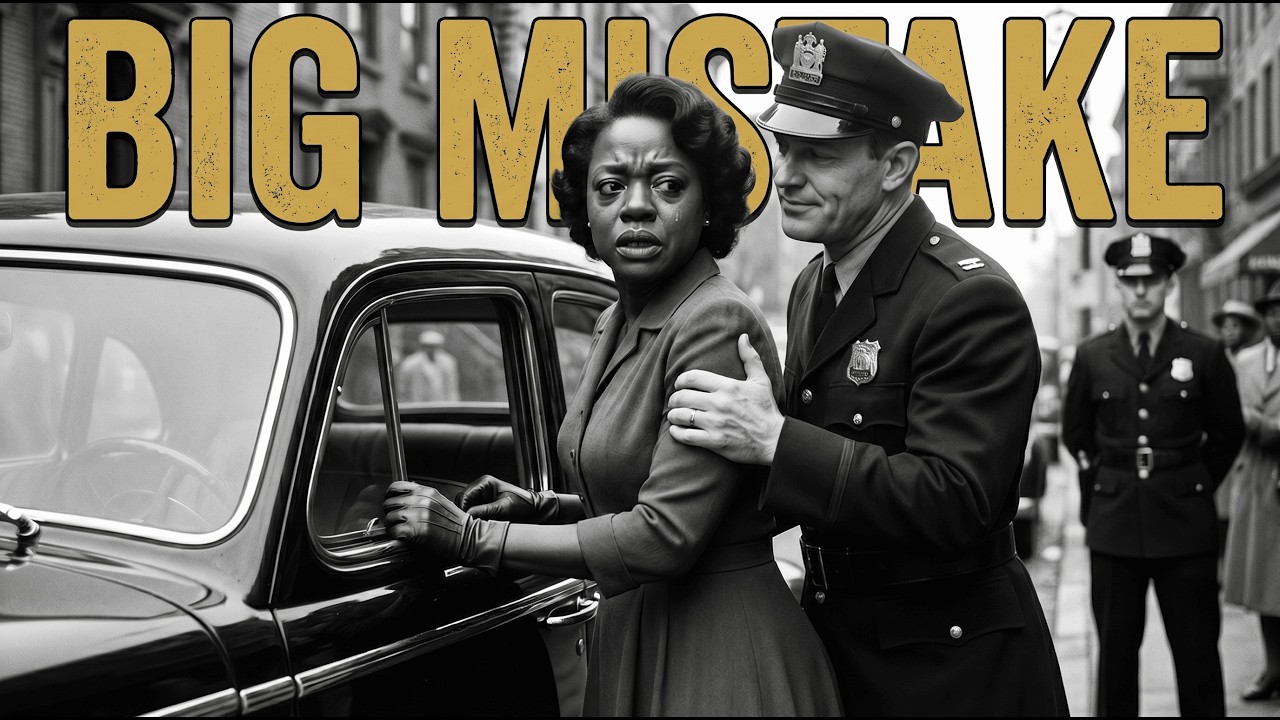
Bumpy did not move quickly. He studied the officer’s stance, the way his shoulder stood like a man who had already decided who was guilty. The second officer moved to the side, not for safety but for angle, and addressed Bumpy’s wife with exaggerated politeness. He asked her to open her bag and began checking it slowly, his fingers lingering a little longer than needed, a little lower than allowed.
Bumpy understood the pattern. They were not looking for documents. They wanted him in motion so they could claim he assaulted them, resisted them, and turn lies into official record. When his wife asked what they were doing, the officer smirked and called it standard procedure.
Bumpy handed over his papers without sharp moves. The officer held them like a leash, not to check but to lead. At last, the officer returned the papers and told them to move along, no tricks. The car stayed for a moment, like a signature under the scene.
Around the corner, Red, Bumpy’s trusted associate, said the stop was not random. Bumpy agreed. They wanted him to twitch, he said, which meant next time they would pull harder. He walked home evenly, not faster, because when a man walks evenly after something like that, he is no longer walking.
He is counting. The next morning, Bumpy sat by the window at home, counting. Red stood by the wall with his hands free, which was not relaxation but readiness. Bumpy’s wife prepared for work with movements too steady, the way people move when they have been touched and want to reveal nothing.
She said she would walk, and Bumpy sent Red with her. Outside, the street was crowded, a curtain for those who did not want to be remembered. Near a noisy corner, a car stood not like it was parked but like it was placed. Two officers stepped out too calmly and called to his wife, saying they needed just a minute.
Red stayed to the side, not interfering. Bumpy watched from the shadow of a storefront to get the full view. The officers spoke quietly so the words would leave no witnesses. One leaned closer than needed for conversation.
His wife held steady, but her fingers on the bag strap turned white. Then came a word that did not need to be shouted to become a weapon: daughter. Bumpy understood by the way his wife blinked, once, a little slower than usual. The officers ended the conversation with the smiles of people who believe they cannot be touched and drove off, leaving an aftertaste meant to build submission.
When Bumpy stepped out of the shadow, his wife told him what they wanted. They said if she did not help them find something on him, their daughter would have problems her whole life. Her whole life was the favorite currency of people who had nothing honest to offer. Bumpy told her she owed them nothing and gave them nothing.
Later, Red said they would come again. Bumpy answered, let them. They wanted him to snap, so he would not give them a reaction. He would give them a reason.
At home, Bumpy sat at the table with paper instead of a weapon. He wrote down patterns, times, places, the car, the manner, the words about the child. Blackmail loved fog, and Bumpy loved light. He told Red they would make the uniforms tight on the officers and make sure they had nowhere left to hide their hands.
They touched his family, he said, so they decided themselves they did not need the law. Good. Then the law would need them. On Monday morning, the phone rang at 6:17.
Red answered, listened, and reported that Bumpy’s wife was alive but they had started moving faster. They left the house without hurry. Near his wife’s work, a car stood in the same intentional parking style. Bumpy stayed aside so he would not give them a show.
His wife came out of the building steady, and one officer stepped toward her almost gallantly, his hand lingering on her elbow a second longer than allowed. Bumpy did not approach or interfere. From a distance, he raised his hand and caught his wife’s gaze, a signal that he was there and she should hold steady. Then he turned and walked away, the way people walk when they do care, because when your opponent waits for your strike, the best move is not to give him your hand but to give him his own rope.
At home, Red placed new details on the table. The officers were not alone. Someone in the department was cleaning their tails, and they wrote reports in advance, blank ones waiting for signatures. Bumpy said they would not catch them on emotion but on paper.
For the first days, Bumpy did nothing loud. He collected rhythm, where they stood in the morning, where they ate, who they checked on Fridays, which corners they preferred, which patrols showed up nearby. Red brought the pieces in like a newspaper that could not be printed. On the third day, Red reported that the officers stopped at a spot after shift to pick up envelopes, not every day so it looked random.
Bumpy said envelopes were not a sin, but the sin was when an envelope turned into permission to touch other people’s women and children. Bumpy made a move people of his reputation rarely made. He did not go to settle it. He went to build.
There were always people in the city who liked clean storefronts, not out of morality but out of profit, because overbold cops broke the market and confused the price. Bumpy found the right ears, higher up, and he did not ask for a favor. He presented a problem that spoiled statistics, budgets, and elections, and he attached confirmation: time, place, routes, patterns, witness points that could be checked. Not someone told me, but here is where to look.
Within a week, the first cracks appeared. One of the officers grew nervous, looking around more often, smiling less, sitting longer in the car before stepping out. Then they were pulled off their usual route and called in for a talk. The second part of the plan was the cleanest.
Nothing led back to Bumpy. Two bad cops had gone too far, and a system had to respond when enough weight was placed on the table. Internal Affairs dug through their reports and found time inconsistencies and a search that did not match the call log. Paper always betrays those who thought it served them.
Then came the point of no return. One of the officers tried to rewrite the story, pretend there had been no pressure on the wife, that it was assumptions, a provocation. But a man who lives arrogantly for months leaves too many traces where he never looks, too many checks without cause, too many complaints that got lost, too many coincidences around the same pockets. The coincidences aligned against them.
They were suspended, quietly at first, then louder. Badges taken, weapons turned in, calls stopped. In the second week, Red brought the final word. They had been charged, not just for the checks but for more, extortion, falsification, abuse of power, and one of their own had talked.
Too many people got tired of covering for them. Bumpy poured himself coffee, and when Red asked about the family, Bumpy said they would not touch the family anymore because now the officers had walls of their own. They received real time, not symbolic. In prison, the uniform was just a memory of who they had been, and memory protects no one.
Red said it was not easy for them in there, and Bumpy did not ask for details. He set the cup down and said let them remember every morning why you do not touch another man’s family with borrowed hands. Outside, Harlem went on living, just as loud and just as certain everything would repeat.
But Bumpy knew not everything does, because sometimes doing it right once is enough for bad men to lose the habit of thinking they are untouchable.
