The explosion came at dawn, two sharp blasts that sent a neighbor of Lola Ann Welch outside to look. Smoke was already curling from her home, and by the time the first fire trucks arrived, the house was almost fully engulfed. Neighbors gathered in the yard and told the firefighters what they feared most: Lola was probably still inside. Many of the firefighters knew her personally.
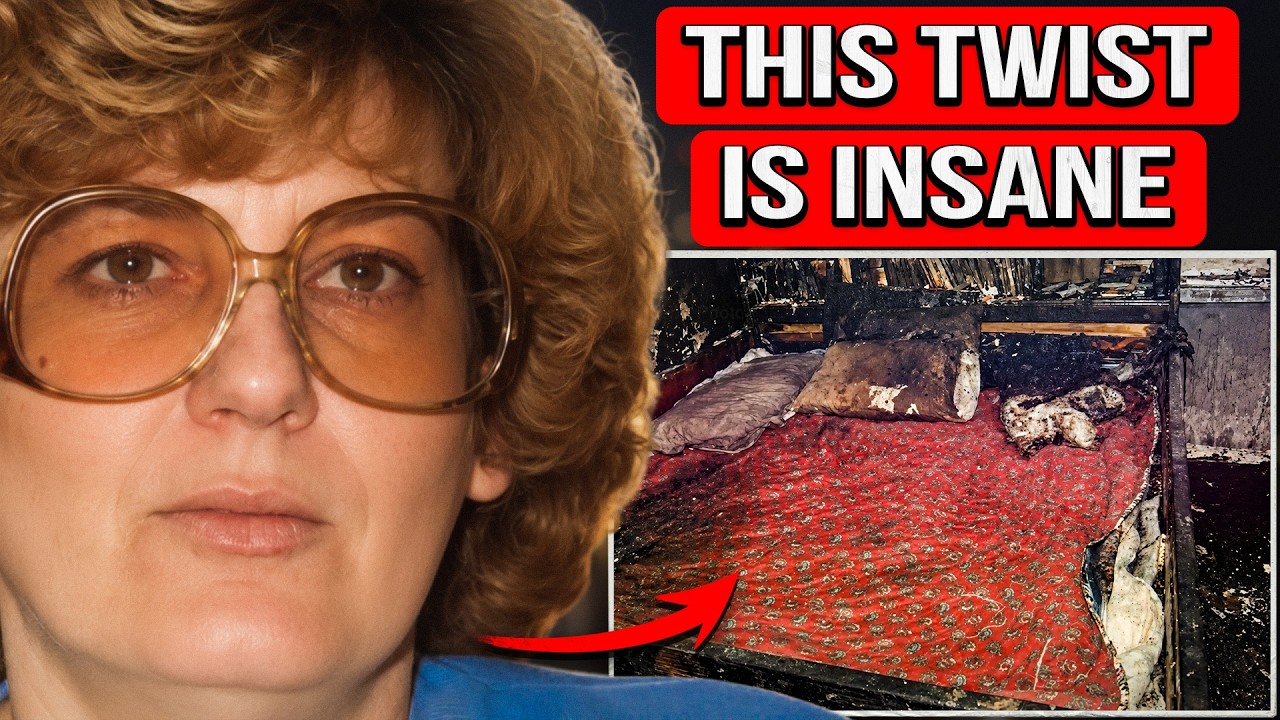
Lola had volunteered with the local emergency services for years, helping with office work and later riding along on ambulance calls, and they held her in genuine respect. Some of them decided at once to risk going in. They climbed through a window into her bedroom and found her unconscious on the floor beside the bed. Based on where she lay, they believed she had woken up and tried to get out of the room before her strength gave out.
As they carried her outside, another explosion rocked the house somewhere behind them, but they managed to bring her to safety. She was not breathing. Despite frantic resuscitation efforts, she died shortly after. Lola Ann Welch was born on October 15, 1947, in Mississippi.
She grew up in a large family, the second of seven children, and was known from a young age for her kindness and open nature. Around the age of ten, she met the boy who would later become her husband, and they married shortly after graduating from high school. In 1970 they had a son, followed by a daughter a few years later. Her husband worked in construction and often had to travel between cities for jobs, so Lola spent most of her time caring for the home and the children.
By the late 1970s, the family had settled in the small town of Horn Lake, Mississippi, about twenty minutes outside Memphis. In 1981, after about fifteen years of marriage, Lola divorced her husband and was left to raise their two children alone. She trained as a nurse and began working in healthcare, later taking a job as a medical records clerk at a Memphis hospital. Outside of work, she began volunteering with the local fire department.
At first she helped with clerical tasks, but she soon started accompanying the crews on ambulance calls, and over time she came to know many of the local firefighters and paramedics. Around that same period, Lola was dealing with something far more difficult. She was diagnosed with breast cancer and spent the following years in treatment. For a while, the cancer went into remission, but she later developed leukemia, and by 1994, at the age of forty-seven, her health had deteriorated significantly.
Even so, she had no intention of giving up. She told those around her that she planned to keep fighting the disease for as long as she could. Now, with the fire under control, investigators began searching for its source. What they found inside the home did not seem right.
Near the front door stood an electric heater, still plugged in, with a damaged cord. Beside it was a propane tank of the kind usually used for outdoor grills, except this one was inside the house with its valve partially open. Gas was leaking slowly, and with the heater running nearby, the situation was extremely dangerous. A frayed cord could suggest a faulty heater and an accidental fire, but the open propane tank was much harder to explain.
Lola had spent years working with local emergency services; she knew very well how dangerous it was to keep something like that in the house. The firefighters began to wonder whether the fire had really been an accident. Lola’s body was sent for autopsy. The medical examiner determined that she had not died from burns but from carbon monoxide poisoning.
They also found a sleeping medication in her system at a fairly high level. Taken together, the details were strange enough that the police believed the case deserved closer examination. Investigators began to question whether Lola had taken that amount of sleeping medication on her own, or whether someone else had given it to her. Her advanced cancer made the first possibility seem reasonable, but it raised another question too: could Lola have set the fire herself because of her illness?
When investigators spoke with her family, they learned something that made that theory hard to accept. Lola’s son said he had visited her just a few days before the fire and had not seen any heater or propane tank in the house. As far as he knew, his mother did not take sleeping pills either. Her family strongly doubted that Lola would have set the fire herself.
Though she was seriously ill and facing ongoing health problems, she had not seemed depressed and was still determined to keep fighting. She had spoken with her son shortly before her death and had been in good spirits. The idea that she had decided to end her life made no sense to them. Moreover, her family said Lola would never have started a fire knowing it could endanger her neighbors and the firefighters who came to help her.
Yet the police could find nothing clearly proving that someone else had started the fire. No one had seen any strangers around Lola’s house that night, and the flames had destroyed nearly everything inside, including anything that might have helped investigators understand what happened. With no other leads, the investigation stalled almost immediately, and Lola’s death was officially ruled an accident. But while investigators were still trying to decide whether there was more to the fire than it first appeared, something unexpected was about to happen.
About a week after the fire, the police received a call from a woman who knew Lola personally and had heard about her death. Just a few hours earlier, something had happened that she could not explain. She had been shopping in a store when, to her shock, she saw Lola walking calmly through the aisles as if nothing had happened. She was completely certain she had not mistaken her for someone else, and she could not understand how a woman presumed dead could be wandering through a store only days later.
After that strange phone call, investigators asked the woman to come to the station and questioned her about how she knew Lola in the first place. She told them she worked as an insurance agent and had sold Lola a life insurance policy worth five hundred thousand dollars about four months before the fire. A policy of that size required a medical exam, which Lola had passed without any problems; nothing serious had appeared regarding her health. That struck the investigators as immediately odd, because Lola had been battling cancer for years.
With that kind of medical history, she would never have qualified for a policy of that value. None of it made sense. The investigators showed the woman some photographs of Lola, but to their surprise, she said the woman she knew as Lola looked completely different. Then, almost at once, she pointed to someone else in one of the photos.
Lola was pictured with several people close to her, and the insurance agent said the woman who had actually bought the policy was Lola’s close friend, Linda. The investigators had no idea what exactly was going on. They contacted the healthcare worker who had conducted the required medical exam, and she gave them the same answer. The woman who had shown up claiming to be Lola was, in fact, Linda.
At that moment, the police realized Linda had been impersonating Lola while applying for the life insurance policy, and had even undergone the medical exam in her name. But they still did not have a complete picture of what they were dealing with. When investigators spoke with Lola’s family, they learned that Linda and Lola had known each other for nearly twenty years. When Lola’s family moved to Horn Lake, the two women lived near each other and soon became very close friends.
After Lola’s divorce, Linda helped her a great deal. While Lola was undergoing cancer treatment, Linda brought her groceries and made sure she did not miss her medical appointments. They were so close that Lola’s family practically considered Linda one of their own. But when investigators began examining insurance records and financial documents, they discovered that the five hundred thousand dollar policy was not the only one at all.
Over the years, several other life insurance policies had been taken out in Lola’s name. The first, the smallest, was worth five thousand dollars. Two others were worth seventy-five thousand and two hundred thousand dollars. Just a few weeks before the fire, another policy had been taken out for around thirty-eight thousand dollars.
The paperwork listed either Linda or her husband as the beneficiary. With additional accidental death benefits, the total potential payout was more than one million dollars. That left the investigators with a deeply troubling picture. Linda appeared to have been impersonating Lola to apply for insurance policies and pass the medical exams.
If Lola died, all that money would go to Linda and her husband. That was more than enough for the investigators to bring Linda in for questioning. During the interview, she admitted that she had pretended to be Lola and taken the medical exam in her place. But she claimed she had not done any of it behind her friend’s back.
According to Linda, it had all been Lola’s idea. She said Lola knew her time might not be long and wanted to make sure her children would have some money after she was gone. The problem was that because of her cancer, Lola would never be approved for a large life insurance policy. So Lola had devised another plan and asked Linda to pretend to be her.
The idea was for Linda to collect the insurance money after Lola’s death and then pass it on to her children. That raised an obvious question for the investigators. If the money was really meant for Lola’s children, why were they not simply named as beneficiaries? But Linda had an explanation for that too.
She said that when Lola first bought a small five thousand dollar policy, she had named her mother as the beneficiary. But her mother felt uncomfortable receiving money because of someone’s death and told Lola she wanted nothing to do with it. As for Lola’s children, Linda said she had considered naming them instead, but ultimately decided they were still too young to handle that kind of money responsibly. Lola, she claimed, was worried they might spend it recklessly, so she turned to her closest friend for help.
According to Linda, the plan was for her to receive the money and then give it to Lola’s children gradually over time. Investigators spoke with Lola’s mother, who confirmed that she had indeed asked her daughter to remove her as beneficiary, and she knew Lola had replaced her name with Linda’s. But that only explained the first and smallest policy, the one Lola had bought herself. The rest were a different story.
If Linda had impersonated Lola to apply for insurance and pass medical exams in her name, that was fraud, regardless of how she tried to justify it. What mattered more to the investigators, though, was finding out what had happened to Lola. When they spoke with her son, they learned that he had only known about a small policy meant to cover funeral expenses. When investigators told him there were policies worth hundreds of thousands of dollars, he did not believe them at first.
His mother simply could not afford premiums of that size, he said. Someone must have been making large, regular payments on all those policies, and Lola did not have that kind of money. Furthermore, neither he nor his sister had received anything close to what Linda claimed she intended to give them. Lola’s son said that shortly after his mother’s death, Linda had called them and given each of them two hundred and twenty-seven dollars and fifty cents.
But before handing over the money, she made them sign documents waiving any further claims related to their mother’s estate. By that time, Linda and her husband had already received a substantial amount of insurance money. They had collected around two hundred and seventy-five thousand dollars from two policies, plus another nine thousand dollars from insurance connected to Lola’s car. Since Linda had not given Lola’s children another cent, her story about the scheme being something the two women had devised together became very hard to believe.
Investigators also discovered that Linda had already spent a large portion of the money on personal purchases, including several rental properties. At that point, it was clear they were dealing with at least a major insurance fraud scheme. The remaining payments were frozen, and the FBI became involved. Federal investigators took over the insurance side of the case, while local investigators kept trying to determine whether the fire at Lola’s home had been set deliberately.
But they still could not connect Linda to Lola’s death. At the time of the fire, Linda had been at home with her family, and there was no real doubt about her alibi. The police had also not found any evidence that the fire had been deliberately set. The possibility of murder was quickly running out of leads.
Investigators continued searching for anything that might help and spoke with Linda from time to time, but she stuck to the same story. Meanwhile, they noticed something strange. Linda somehow seemed to know the same unpublicized details about the case that the police knew. She was aware of the latest developments in the investigation.
Investigators began looking into how she could have gotten that information. Before long, they discovered that one of the police dispatchers was a close friend of hers and had been keeping her updated on what the investigators were doing. The investigators decided to use that to their advantage. They wanted Linda to feel comfortable enough that she would not run or do anything that might hinder the investigation.
So they fed the dispatcher false information. She was told the police believed the fire was probably an accident caused by faulty electrical wiring, and that no one was seriously looking at Linda as a suspect. For the next several months, the case did not advance. It was not until December 1996, two years after the fire, that charges were finally filed.
Linda, her husband, and their two daughters were indicted in federal court over the fraudulent insurance policies and the money collected after Lola’s death. All four were later released on bail pending trial. As for the investigators looking into Lola’s death, little had changed. They still could not prove Linda had anything to do with it.
But that was about to change. A few weeks after the arrests, in January 1997, a man who knew both Lola and Linda came forward with interesting information. He told investigators that before the fire, Linda had asked him twice to kill Lola. According to him, she said Lola had cancer and would die anyway, so they should end her suffering before she had to endure more pain.
He refused, and afterward Linda began asking him questions about how someone could set a house on fire without it looking suspicious. At the time, the man had not taken her words seriously, and for reasons that were not entirely clear, he remained silent for two more years after the fire, deciding to speak only after Linda’s arrest. Still, his story was not enough to arrest her for Lola’s murder, so investigators devised a plan. They asked the man to wear a wire and meet with Linda, hoping he could get her to say something about the fire.
But Linda was extremely cautious and said nothing linking her to the incident. Again, the investigators came up empty. Then, only a few weeks later, they got another unexpected breakthrough. A man facing a prison sentence approached them, hoping to make a deal with prosecutors.
He said he had important information about Lola’s case and knew details about how she had been killed. According to the informant, the fire had been set by a man he knew named Charles Dan. Dan made money doing various repair work, which was how he had come to know both Linda and Lola. The informant claimed Dan had confessed to killing Lola and said Linda had paid him to do it.
But one detail in particular caught the investigators’ attention. Dan had told him that Lola’s death was supposed to look like an accident, because otherwise Lola would not receive an additional two hundred thousand dollars from the insurance company. That point stood out immediately because that detail had never been made public. The largest insurance policy, the one worth five hundred thousand dollars, did include an additional two hundred thousand dollars if Lola died in an accident.
Investigators decided to see if they could confirm the informant’s story. They learned Dan was under judicial supervision, so they arranged to have him called in for a meeting with his probation officer. The informant, wearing a wire, was also placed in the waiting area, supposed to pretend he was there for his own probation appointment. The idea was to get the two men talking and then have the informant bring up Dan’s earlier confession.
As part of the plan, he was supposed to say he was thinking about getting rid of someone himself and considering starting a fire, so he wanted Dan’s advice. The plan did not really work. Dan did not confess anything about Lola’s murder. However, he did say something along the lines of, “Once you kill someone, you can’t really escape your past.
” To the investigators, it sounded as though Dan might be feeling some guilt over something he had done. They also learned he had a long criminal record, including lesser offenses, and had struggled with drug addiction for years. With no better options, the investigators decided to talk to Dan themselves, hoping that if he really felt guilty, he might finally tell them what had happened. On February 20, 1997, they went to his home, and Dan seemed to understand almost immediately why they were there.
He agreed to go with them to the station, and after a short conversation, he quietly confessed that he was the one who had set the fire at Lola’s house. According to Dan, Linda had offered him five thousand dollars in 1994 to kill her friend. She had tried to justify it by saying Lola was dying of cancer and suffering, so ending her life would spare her more pain. Linda claimed Lola wanted to die anyway, but said she could not bring herself to kill her personally.
She also told Dan that Lola wanted to leave a large amount of insurance money to her children, which meant her death had to look like an accident. At first, Dan refused, but he eventually agreed, and the two began planning together. Shortly before the crime, Linda asked Lola to keep a propane tank in her home for a while, saying she planned to give it to a relative later. She also gave Dan money to buy a small electric heater.
On the evening of December 18, Dan went to Lola’s house under the pretext of stopping by to check on her. The two already knew each other, and Dan visited her from time to time, so Lola had no reason to be suspicious. At some point, Lola asked Dan to make tea for her, and while he was preparing it, he secretly added a sleeping medication to the drink. Once she was asleep, he went out to his car, brought the heater inside, and placed it near the propane tank that was in the house.
Then he crumpled several newspapers and put them near the heater, opened the tank’s valve, and turned on the heater. Dan said he had also deliberately damaged the cord so that after the fire it would look like an electrical short had caused everything. Then he simply left the house and drove away. The propane slowly filled the room, and several hours later, the heater ignited the papers, causing an explosion and starting the fire.
The next day, Dan went to see Linda and received the first thousand dollars, with the remaining four thousand to be paid over time. Many of the details Dan provided had never been made public, and they matched what firefighters had found inside Lola’s home. For the first time, the police had someone who not only connected Linda to her friend’s death but also admitted to his own personal involvement in the murder. Still, Dan’s statement alone might not have been enough to build a case against Linda.
So the next day, investigators equipped him with a wire and sent him to her home. Dan told Linda the police had started asking him troubling questions about Lola and asked her what he should do. But Linda was more cautious than the investigators had hoped. She refused to talk about the murder and instead offered him five hundred dollars to leave town.
That certainly seemed suspicious, but the investigators did not get the recorded confession they had been hoping for. Dan’s confession was enough, however, to obtain a search warrant for Linda’s home, and what they found there opened an entirely new chapter in the investigation. Alongside paperwork related to the insurance policies in Lola’s name, police found several life insurance policies for a man named Robert Stovall. Linda, or members of her family, were listed as beneficiaries, even though Robert was not related to them.
Stranger still, investigators found an identification card in Robert’s name bearing Charles Dan’s photograph. The police looked into Robert and eventually found him in Tennessee. He was a forty-four-year-old disabled man who had previously been cared for by Linda’s mother, which seemed to be how Linda had learned about him. Robert had never agreed to have life insurance taken out on him, and according to investigators, he did not even know Linda.
Investigators went back to Dan and asked whether Linda had ever spoken to him about harming Robert too. Dan admitted that after Lola’s death, Linda had indeed offered him another ten thousand dollars to kill someone else. Again, the plan was to make the death look accidental. Dan forged an identification card with his own photo under Robert’s name, and with money from Linda, bought an old car they planned to use to stage a fatal car accident with Robert’s body inside.
Dan said Linda had driven him to the town where Robert lived, but they never got the chance to carry out the plan because Dan was arrested on another unrelated charge. And it did not stop there. Dan told investigators that about two years after the fire at Lola’s house, he had committed another crime on Linda’s behalf. This time, she asked him to set fire to a house owned by her daughter.
But no one was supposed to die in that fire. The goal was simply to collect the property insurance money. At that point, investigators began to realize that Lola’s death might not have been an isolated incident at all. It seemed to be part of a much larger pattern, in which Linda had repeatedly tried to make money through insurance payouts.
By then, the investigators had a confession from the man who had set the fire, details about the crime that only someone involved could know, insurance records, and evidence of another murder plot. So on March 11, 1997, more than two years after Lola’s death, Linda was finally arrested. Before the murder case went to trial, Linda had already pleaded guilty in the federal insurance fraud case. In February 1998, she admitted to three additional fraud charges and was sentenced to twenty-seven months in prison.
But when it came to Lola’s death, she continued to deny any involvement. Her murder trial began in August 1999 and lasted only six days. Charles Dan became the prosecution’s main witness, telling the jury in detail about his agreement with Linda and how he had set the fire. His account was backed by other evidence that emerged during the trial.
One of Linda’s acquaintances remembered that shortly before the fire, Linda had talked about buying a grill as a gift and said she had left the propane tank at Lola’s house. The defense did not deny that Linda had fraudulently taken out insurance policies in her friend’s name. Instead, her lawyers argued that committing insurance fraud did not prove she was connected to Lola’s murder, and they suggested Dan might have set the fire on his own. Linda also insisted that Lola had known about the insurance scheme and wanted the money to go to her children after her death, even though Linda had given them almost nothing from it.
In the end, the jury convicted Linda of murder and conspiracy to commit murder. She was sentenced to life in prison without the possibility of parole, plus an additional twenty years for the conspiracy charge, to be served consecutively. Meanwhile, Charles Dan pleaded guilty to conspiracy to commit murder and was also sentenced to life in prison. In his case, however, parole was possible because he had cooperated with investigators.
Linda later tried to have her conviction overturned, but in 2001, the Mississippi Supreme Court rejected her appeal, leaving her with no chance of release. She spent more than two decades in prison and died of natural causes in 2023 at the age of seventy. For Lola’s family, one of the hardest parts of the whole case was not just what had happened, but who had been behind it. Her son later said they had treated Linda almost like family, and it was especially difficult for him to understand how someone his mother had trusted so deeply could arrange her murder for money.
Linda had been Lola’s best friend for nearly two decades, and all that time, Lola had no idea that the woman she trusted had spent months planning her death while continuing to act like a loving friend.
