By the early 1890s, Paul Halliday’s farm in Sullivan County, New York, had turned into a place nobody cared to approach. Decay hung in the air of the farmhouse, and flies clouded the property. Neighbors who had once put up with the disorder spilling from the farm now stayed well away. When investigators at last pried up the floorboards, they uncovered the remains of two women: Margaret McQuillan and her daughter Sarah.
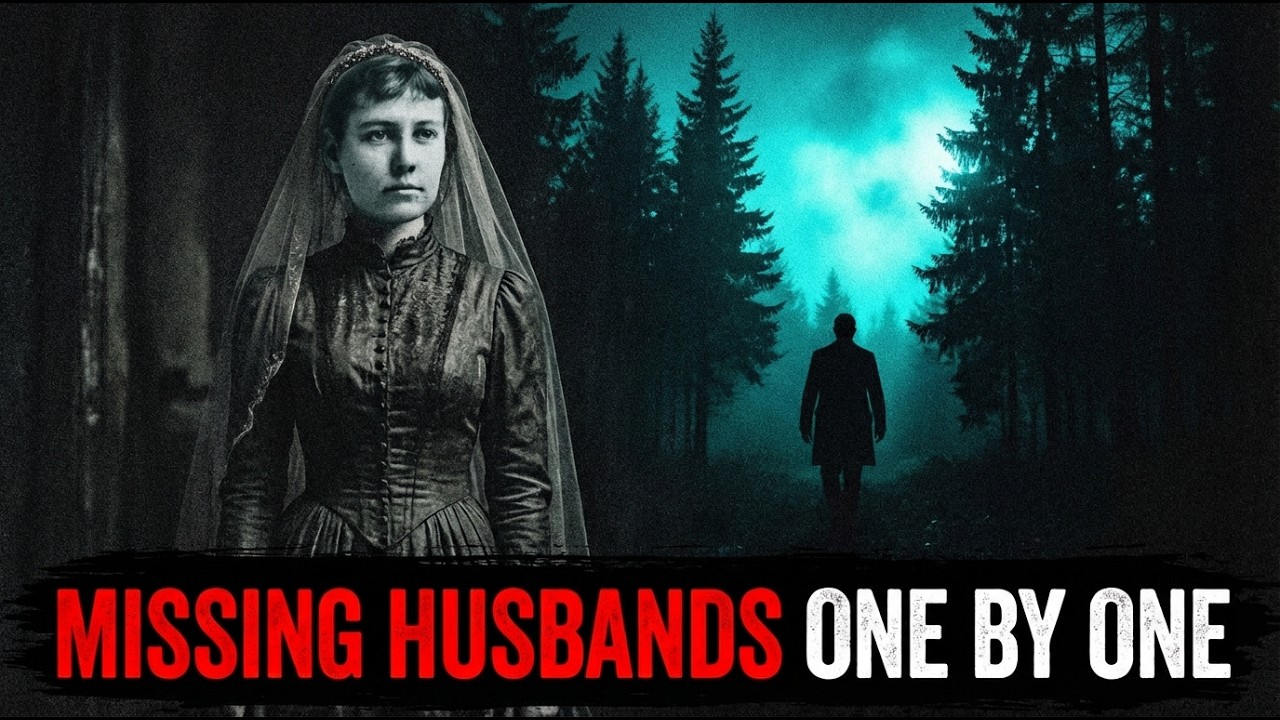
Close by, they found the body of Paul Halliday, the farmer who had wed Lizzie and who had vanished months before. For more than twenty years, a trail of death and disappearance had shadowed Lizzie Halliday through rural New York. Only at this point did the authorities start to comprehend the true extent of what had been sitting in plain sight all along. The woman at the heart of it all had been born Eliza Margaret McNally in County Antrim, Ireland.
She reached America at some point in the 1860s, young and on her own, stepping into a country that had a fixed role reserved for Irish immigrant women: domestic labor, invisibility, and silence. For years she drifted through the lowest tiers of New York’s economy, scouring floors and laundering linens, leaving barely a mark of her presence. But Lizzie broke from the usual immigrant narrative in one key respect. She wed again and again, and the men she wed had a habit of ceasing to exist.
How many times she actually married remains a matter of dispute. Some historians tally four, others as many as six. The records disagree with one another, in part because rural marriage paperwork was haphazard and in part because Lizzie was constantly on the move, swapping names, towns, and stories. What nobody disputes is the pattern.
One husband after another either died, vanished, or ran. At least two of her early husbands perished in circumstances neighbors afterward called sudden and unforeseen. No autopsies were carried out. No inquests were convened.
In rural New York during the 1870s and 1880s, a man dying of a sudden fever or stomach complaint was a tragedy, but not so rare as to warrant scrutiny. Fires, too, trailed Lizzie from town to town. Property would go up in flames at suspiciously handy moments, sometimes soon after an insurance policy was taken out, sometimes just as she needed an excuse to move on. She was tied to a series of thefts, small enough to dodge serious charges but large enough to bankroll her next chapter.
And yet none of this linked her to any crime in the eyes of the law. The system was never designed to spot a wandering woman crossing county lines. There were no centralized records and no coordinated policing. To disappear and resurface as someone slightly different, a person needed only a fresh town and a short memory.
Lizzie had both. Not all of her husbands were victims of violence at all. Some simply left, or she deserted them, and the marriages came apart without legal formality, since divorce was costly and cumbersome. How many of these men were murdered and how many were just casualties of bad marriages in an age when walking away was simpler than filing papers cannot be determined with any certainty.
The scandal-hungry press of the 1890s would afterward lump every missing husband into a murder victim for the sake of a stronger headline, but the historical record is far murkier than the newspapers cared to admit. By the late 1880s, Lizzie had a reputation across Sullivan County as someone to avoid. Neighbors bolted their doors. Landlords turned her away.
The local sheriff knew her name by heart. Everyone could see the danger, yet nobody possessed the legal means to act on it. Then Paul Halliday, a quiet, aging farmer of modest means, married her. It would have been all but impossible for him to have known her history.
Lizzie’s past lay scattered across several jurisdictions, none of which talked to the others. There was no background check, no database, no system that could have flagged a woman leaving a trail of dead and missing husbands stretching back two decades. The marriage came apart almost at once. Lizzie’s behavior grew erratic.
She picked fights with neighbors, disappeared for days with no explanation, and threatened Paul outright. Then the fires returned. Buildings on the Halliday property caught fire at a rate that ruled out coincidence. Barns and outbuildings burned, and the pattern she had carried out of her earlier marriages trailed her like a signature.
Paul reportedly attempted to have her committed at least once. She was briefly institutionalized, evaluated, and set free. Whatever the doctor observed was not sufficient to keep her locked away. She came back to the farm, and Paul stayed trapped in a marriage he could not safely leave.
Then Paul vanished. He no longer turned up at the general store. He no longer worked his fields. For weeks, nobody could say whether he was alive, dead, or simply gone.
Neighbors started asking questions, but they did so quietly, since probing into Lizzie Halliday carried risks of its own. Around the same period, Margaret McQuillan and her daughter Sarah disappeared. They were not wealthy or prominent people, the sort whose absence takes days to notice because no one of consequence is waiting on them. But in time someone did notice, and the search brought authorities to the Halliday farm.
Investigators found the remains of Margaret and Sarah McQuillan hidden under the farmhouse. These were not natural deaths. The details, splashed widely across the press, confirmed deliberate violence against two women who had the misfortune of crossing Lizzie’s path at the wrong moment. The remains of Paul Halliday were discovered not far from where the McQuillan women had been hidden.
His disappearance was a mystery no longer. Lizzie was taken into custody, and for the first time the whole sweep of her history poured into public view. Journalists swarmed Sullivan County. Newspapers nationwide vied to coin the most dramatic description of what Lizzie stood for, finally landing on a phrase that would cling to her for the rest of her life: the worst woman in America.
The trial opened in 1894. The courtroom was crammed, with reporters from New York City, Philadelphia, and Chicago battling for seats. The prosecution laid out its case step by step: the McQuillan women, Paul Halliday, the physical evidence taken from the farm, and the timeline of Lizzie’s movements. They also brought in her earlier marriages, the fires, the thefts, and the decades of chaos as background, painting a picture of a woman whose adult life had climbed steadily toward violence.
The defense contended that Lizzie was genuinely and deeply insane. She had been institutionalized before, examined by doctors who recorded severe disturbance, and released regardless because the infrastructure for long-term psychiatric confinement hardly existed. The jury was unmoved by the sympathy argument. They convicted Lizzie and handed down a death sentence.
But the sentence was appealed. Doctors examined her again and concluded, this time with greater authority, that she was legally insane. The death sentence was commuted, and Lizzie was sent to the Matteawan State Hospital for the Criminally Insane in Beacon, New York. The public was outraged.
Papers that had devoted months to branding her America’s most monstrous woman now aimed their fury at the courts that had let her live. The courts insisted the law left them no choice. For roughly twelve years, Lizzie slipped out of the public eye. At Matteawan, she grew older and settled into the daily rhythm of the institution.
Then, in 1906, she took another life. This time the victim was a nurse, Nellie Wickes, cut down with a pair of scissors within the facility’s walls. Wickes came into regular contact with Lizzie, and the institution had put her close to a convicted killer without the precautions needed to keep her safe. She died of her wounds.
The questions that came next were brutal. How does a woman already convicted of multiple killings, already ruled criminally insane, already locked inside a maximum security psychiatric hospital, still find a way to kill again? The answer led to an institution starved of funding and packed beyond capacity, where staff were stretched too thin and the safeguards against violence had worn away. There was no second trial.
Lizzie was already locked away for life. She stayed at Matteawan under stricter supervision. Lizzie Halliday died there in 1918. No family came forward to claim the body.
There was no funeral. No marker was ever set. The confirmed tally of her victims stands at four: Margaret McQuillan, Sarah McQuillan, Paul Halliday, and Nellie Wickes. Those deaths rest on physical evidence, court records, and documented investigation.
The newspapers of the 1890s credited her with as many as twelve victims, sweeping every vanished husband and unexplained death into a story that grew more lurid with each printing. Some of those claims may have held truth. Others were all but certainly fabricated by reporters who knew a serial killer with twelve victims outsells one with four. What is certain is that at least two of her former husbands died in circumstances no one ever investigated.
No autopsies were ever carried out. No evidence was ever gathered. No one ever asked the questions. It was not that Lizzie was too cunning to be caught.
It was that no one made the attempt. The systems that should have shielded the people around her broke down again and again across more than two decades. Lizzie Halliday was not unseen because she was sly. She was unseen because the country she lived in was never built to notice people like her.
By the time it finally turned its gaze, there were bodies beneath the floorboards.
