The ground was cold beneath his knees. It was late April 1872, and the sun had not yet risen over Gettysburg, Pennsylvania. A man knelt at the edge of a plowed field outside the town. His name was Rufus Weaver.
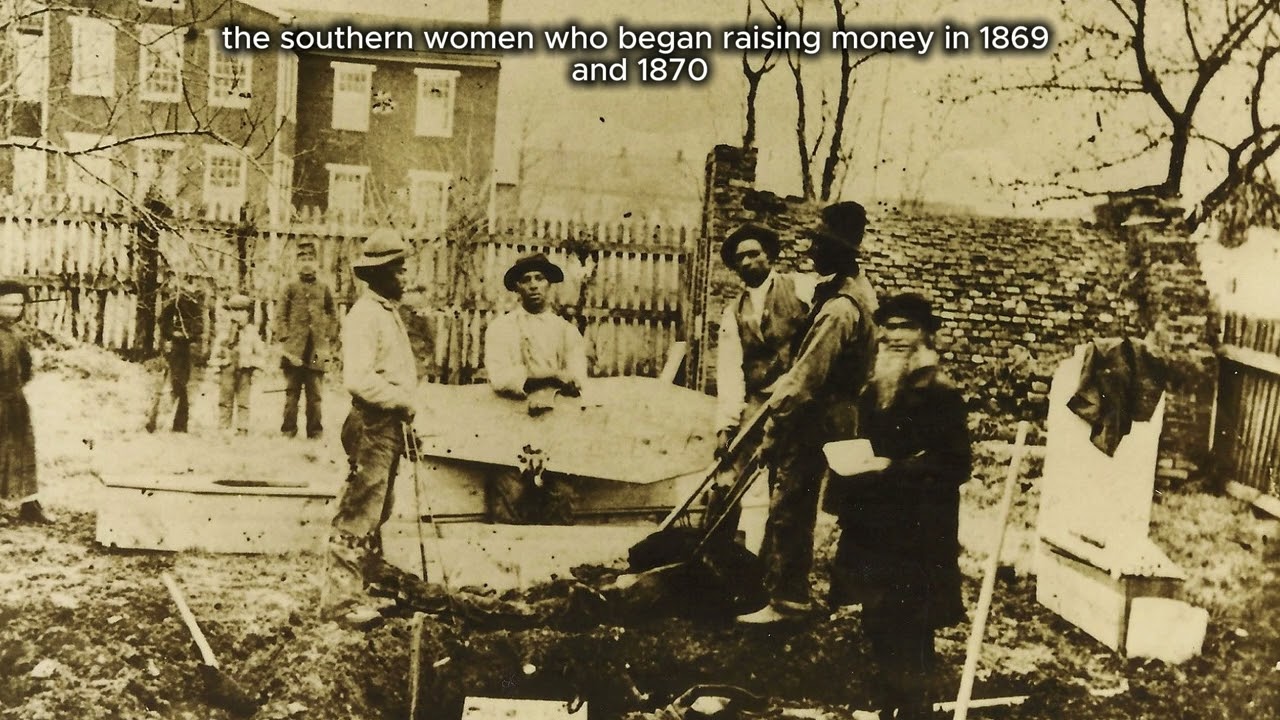
He was just past thirty. In Philadelphia, he taught anatomy to medical students. His hands knew the human skeleton the way a farmer’s hands know a horse’s reins. The field had already been turned.
The farmer was preparing it for corn. Within weeks, the seeds would go into the earth and no one would dig here again until harvest. So he had to dig now. He held a paper close to the lamp.
The handwriting on it was not his. It belonged to his father, Samuel Weaver. Samuel had died a little over a year earlier, in a train accident in February 1871. What the father left behind was a record of farms, fences, and grave counts—the kind of notes a meticulous man makes when he walks a field still full of the dead.
Daylight came up gray. There was mist over the low ground. Rufus looked across the furrows and saw nothing at all. That was the problem.
Nine years earlier, in the first days of July 1863, men had been buried in this earth in haste. Sometimes a single man, sometimes a trench holding dozens. Often the only marker was a wooden board stuck in the dirt with a number carved into it. The board did not last.
The fence beside it did not last. Nine spring plowings had passed over this place. Nine harvests had come out of it. A laborer pushed his shovel into the soil.
He stopped. Something pale showed in the dark earth. Rufus would not let the man finish. He dropped to his hands.
He replaced the shovel with his fingers. The thing in the dirt was small, no longer than the joint of his thumb. He knew its Latin name. He knew which hand it came from.
He placed it in a box. Then he reached for the next piece. The men under this field had not come from Pennsylvania. They came from Virginia, from Georgia, from the Carolinas and Mississippi.
They had come north with an army that marched into his birthplace. Rufus Weaver was born in Gettysburg. His father was the man who had exhumed the Union dead and moved them to the new cemetery on the hill. Now the son knelt in a cornfield gathering the bones of the other side.
He would do this from before dawn until after dark. He would do it for two summers under this contract. He would send more than 2,900 of these men south to Richmond alone. And he would spend the rest of his long life writing letters demanding, politely and then less politely, what he was owed.
He would die in 1936 at the age of ninety-five with his claim still unsettled. Here is the question at the heart of this story. Why did the dead of America’s most famous battlefield stay under a farmer’s plow for nine years? And why was the man who finally brought them home a Northerner, a son of Gettysburg, the son of the man who buried the other army?
The sources on this story do not always agree. The numbers of remains vary slightly from account to account. The dates of some shipments differ by a few days. Most of what follows comes from Rufus Weaver’s personal letters.
Some comes from the women who hired him and from the newspapers of the time. The historian Janet MacKee assembled much of it after examining those letters one by one. There are no villains here—not the farmers, not the ladies of Richmond, not the Union burial parties. Everyone you will meet had a reason for what they did.
Some of those reasons were good. Some were not. They were all human reasons. The Battle of Gettysburg was fought on July 1, 2, and 3, 1863.
When it ended, the town of 2,400 people was surrounded by the dead. The commonly cited estimate approaches 7,800 men killed outright. Thousands more died of their wounds in the following weeks in barns, churches, farmhouses, and tents. On July 4, it rained.
On July 5, Robert E. Lee’s army was already moving south. The Army of the Potomac followed within a day or two. They left behind the surgeons, the wounded, and the dead.
The burials were done quickly. They had to be. July in Pennsylvania is hot. Soldiers, civilians, and anyone who could carry a shovel dug where the men had fallen.
Some graves got a headboard with a name, company, and regiment. Many got nothing. Some were long shallow trenches holding ten or twenty men side by side. At the end of the trench, a board.
On the board, sometimes just a number. There is a photograph from the Rose farm taken on July 5. It shows Confederate dead laid out in a row waiting for the trench. Under magnification, some of the headboards are readable.
They mark a regiment from South Carolina. These may have been the men of Joseph Kershaw’s brigade who crossed that farm on the afternoon of July 2. Within weeks, the governor of Pennsylvania and a Gettysburg lawyer named David Wills began planning something new: a cemetery dedicated to the soldiers who died here. A national cemetery set on Cemetery Hill.
Wills put out a call for bids to exhume and rebury the Union dead. Bids ranged from $1. 59 per body to $8. The lowest bidder got the contract.
But someone had to stand at every grave and determine who was inside. That work went to a local teamster named Samuel Weaver. His title was superintendent of exhumation. Samuel insisted on opening every grave in his presence—not most of them, every one.
He looked at the cloth, blue for Union, gray or butternut for Confederate. He looked at buttons, boots, underclothing, anything in the pockets. He noted hair color and height whenever he could. A letter in a pocket could give a man back his name.
A crew led by a Black Gettysburg resident named Basil Biggs did most of the heavy work. They hauled empty coffins from the railroad depot, opened the graves, and hauled the filled coffins back to the hill. The pace was punishing. A newspaper letter from that month described fifty to seventy-five bodies being exhumed and moved daily.
Other accounts suggest Samuel Weaver was moving up to one hundred bodies in a single day. Work began in late October. It was nowhere near finished when Abraham Lincoln stood on November 19, 1863, and spoke for about two minutes. Over about nine months, 3,354 Union soldiers were taken from the fields and placed in that cemetery.
Every time Samuel Weaver opened a grave and saw gray cloth, he closed it again. He was not paid to move those men. The national cemetery was for Union dead. That was the law, and that was the funding.
So the Confederate dead stayed where they were—in the trenches at the Rose farm, under the fruit trees near the Black Horse Tavern on the Fairfield Road, in rows behind Camp Letterman, the great Union general hospital on the York Pike east of town where many wounded Confederate prisoners died, in meadows and orchards at country crossroads. Samuel did one thing he was not paid to do. He recorded where they were. Now consider where that leaves us.
The most visited battlefield in America had a national cemetery within five months. The President of the United States came to dedicate it. A short distance away, in the same soil, thousands of men lay in fields that would be plowed for corn and wheat the following spring. And the one after that.
And the one after that. Nine years. Why so long? The answer is not one thing.
It is several things piled on top of each other, each one enough on its own to keep those men underground. Start with the land itself. Gettysburg was a farming area before the battle and remained a farming area after it. The fields had to produce or the families living on them would not eat.
Many of those families had lost a great deal. Fences had been torn down for firewood. Crops had been trampled flat by two armies. Horses had been seized.
Barns had become hospitals. Take the Sherfy farm on the Emmitsburg Road. Joseph and Mary Sherfy grew peaches there, and their orchard was known throughout the county. On July 2, 1863, that orchard was one of the worst places on the battlefield.
A bullet passed through the folds of Mary Sherfy’s dress. She kept the dress. The family barn burned. Fifteen charred bodies were found in what was left of it.
Two years later, an advertisement appeared in the Baltimore Sun selling peaches from the battlefield, from that same orchard, at $4. 50 per twelve quarts. This is not told to judge the Sherfy family. It is told because this is the nature of life.
It continues. It must. The trees still bear fruit. The fields still need planting.
A man plowing does not stop for an unmarked grave he cannot see. After a few seasons, he cannot see any of them. One account says forty Confederates remained in the Sherfy peach orchard after the reburial effort ended. They were never recovered.
By 1869, word reached the South that the Gettysburg graves were disappearing. They were not being stolen or desecrated. They were simply vanishing under ordinary farm work. Years later, Rufus Weaver wrote about what that meant for the remains.
He said that as farming continued over the graves, they were subject to decomposition or absorption. The men were returning to the soil. Each season made finding them harder. Each season made finding some of them impossible.
That was the first factor: time. The earth was erasing them. The second factor was a piece of paper. When the South began asking about its dead, people knew exactly whom to ask: Samuel Weaver.
He had opened the graves himself. He had seen the gray cloth. He had kept his notes. Southern women who began raising money in 1869 and 1870 approached him first.
Then, in February 1871, Samuel Weaver was killed in a train accident. Imagine that list for a moment. A dead man’s notebook describing graves he chose not to open, in fields he would never walk again. It passed to his son.
Rufus Weaver was born in Gettysburg in 1841. He grew up in that town. He graduated from Pennsylvania College, now Gettysburg College, in 1862, one year before the battle. No one knows for certain whether he was at home during those three days of July.
The historians who have studied his life say plainly that it is unknown. But he certainly heard every detail from his family. His father’s work afterward was the talk of the town. After college, Rufus went to Philadelphia to study medicine and anatomy.
By the spring of 1871, he was a lecturer in anatomy at Hahnemann Medical College. He was building the career he had chosen. He had no reason in the world to return to the fields. But he had the list.
And he had something else, something his father never had. He knew the human body down to its smallest bone. So when the letters came from the South, Rufus agreed. Sit with that for a moment.
He was a Northern man in a Northern city, with his professional future ahead of him. The request was to return to his hometown and exhume the remains of the soldiers of the army that had invaded it. He could have mailed the list south and let someone else do the work. He did not.
Which brings us to the third factor: the people who would not let the dead stay in Pennsylvania. They were women. After the war, nearly every Southern city of any size formed what was called a Ladies’ Memorial Association. Their first purpose was caring for the graves of Confederate dead.
In Winchester, Virginia, an appeal printed in newspapers across the South raised enough money to gather 2,489 Confederate soldiers from scattered graves in the lower Shenandoah Valley. They were reburied in Stonewall Cemetery, opened in 1866. That was in Virginia, close to home. Gettysburg was another matter.
It was far away. It was in the North. The South in those years had very little money. For a while, the most a family could do was send someone to look for a single man.
But when the reports came in 1869 that the graves were being plowed level, four associations began raising money: Charleston, Raleigh, Savannah, Richmond. These women were swallowing grief. Many had lost husbands, sons, brothers. They wanted those men brought home, to ground where someone would put flowers on the grave every spring.
That is a natural human feeling. Some of those same associations also did a great deal over the following decades to shape how the South remembered the war and the cause it fought for, including the question of slavery at its core. Both things are true. You can hold them together.
The men in the trenches were not just symbols. They were somebody’s sons. In the spring and summer of 1871, Rufus Weaver went to work for the first three associations. For Charleston, he sent 84 sets of remains.
A memorial service was held in Charleston on May 10, 1871. Most of these men came from the Rose farm, where Kershaw’s South Carolinians advanced on day two, and from the cemetery and orchard near the Black Horse Tavern, which had been Kershaw’s field hospital. About a dozen more came from Camp Letterman. One of the Camp Letterman men was named Elijah Amick.
He served in the 15th South Carolina. He died in a Union hospital, was buried in the hospital cemetery, and lay there for eight years. Rufus Weaver exhumed him. Today Elijah Amick lies in Magnolia Cemetery in Charleston.
One name out of thousands. But it is a name, and he is home. To Savannah, Weaver sent about 100 remains that summer. They were reburied in ceremonies during August and September.
To Raleigh, he sent 137 remains. Forty-five of them came from Camp Letterman. Twenty-seven came from the Jacob Hankey farm on the Mummasburg Road, which had been a field hospital for Robert Rodes’ division. Fourteen of the 137 could not be identified.
They were sent anyway. They were honored in Raleigh on October 1, 1871. That fall, Rufus Weaver sat down and wrote a letter to a woman in Savannah named Mrs. C.
L. Campbell. The letter was dated October 9. He told her he had sent lists of the dead to every Southern state.
Only Georgia, North Carolina, and South Carolina had acted. Then he named the state that puzzled him most: Virginia. He noted that it was close, and that its list of known dead was smaller than Georgia’s. Yet it had not brought its dead home.
Then he wrote a sentence that stays with you. He said that if everyone had seen what he saw and knew what he knew, they would have no peace until every father and brother and son of the South had been brought home from the North. The first part is his own words. What had he seen?
He did not say. I suspect he did not need to. Before we get to what Virginia did next, there is a fourth factor, and it is the one that makes this story uncomfortable. The land did not belong to the dead.
It belonged to the living. Every one of those graves was on someone’s farm. To dig, Weaver needed permission. And not every farmer was willing to give it for free.
During that first season, while the women of Charleston were trying to recover South Carolina’s men from the Rose farm, the farmer John Rose refused. According to an account written in 1929, he said the bodies could not be moved unless the ladies paid him. The president of the Charleston association kept at it. She received help from the wife of a farmer whose name the report does not give.
In the end, John Rose gave his permission without taking any money. The other story is harder. In that same summer of 1871, the family of Lieutenant David Winn of the 4th Georgia hired Weaver to find and return his body. Winn had been buried on a farm owned by a man named David Blocher.
Blocher demanded payment for allowing the remains to stay on his land all those years. Weaver later wrote that he obtained permission through persuasion and reproach. Then Blocher found something. David Winn wore a gold dental plate holding his false teeth.
Blocher took the plate. He refused to hand it over unless he got $10. He was paid five. In a letter to the Winn family, Weaver described Blocher’s act as degenerate and base.
Those were his words, not mine. But in the same letter, he told the family something else: the other graves were being cared for and respected by the landowners. So let us be careful about judging David Blocher. I am not defending what he did with that plate.
But these farmers had two armies cross their land. They lost their fences, their crops, their livestock, sometimes their barns and homes. Some filed claims with the government for years afterward and got little or nothing. Now strangers were arriving with Southern money to dig in their fields, and money was in the air.
Most farmers simply let Weaver work. One tried to recover something. One did something we might all shrink from. They were not monsters.
They were farmers who paid for a battle they did not choose, standing in a field full of other men’s sons. Now, Virginia. In November 1871, a letter reached Rufus Weaver in Philadelphia. It came from Mrs.
E. H. Brown, secretary of the Hollywood Memorial Association in Richmond. She asked him to meet her in Gettysburg to arrange the removal of Virginia’s soldiers.
She did not come alone. With her was Captain Charles Dimmock. During the war, he served in the Confederate engineers. Now he was the city engineer of Richmond.
They met. Things went well. By February 1872, Weaver had sent Dimmock a list of the remains he expected to collect, along with a practical suggestion: why not ask Pennsylvania to help with the costs? Dimmock’s reply was polite and very firm.
The ladies could not ask for that kind of help. They would accept it if Pennsylvania offered on its own, but they would not request it. The meaning is clear. The women of Richmond would bring their dead home with their own money, through a Northern man they paid to do it, and they would ask nothing of the North afterward.
Then the women of Richmond made a decision that changed the scale of everything. They had originally planned to bring home only Virginia’s known dead. At some point that winter, they widened the plan. They would take them all.
Every Confederate soldier still in Gettysburg—from Virginia, Georgia, Mississippi, Alabama, Texas, known and unknown. A price of $3. 25 per set of remains was agreed. The money went through Baltimore to the account of a woman named Ada Eggerton.
She belonged to a family with Southern sympathies. Her brother-in-law had been held at Fort McHenry during the war on suspicion of Southern activity. During the war, she had worked to send aid to Confederate prisoners at Point Lookout. Ada Eggerton would be the link between Rufus Weaver and the Richmond association for the next thirty years.
Remember her name. She will appear again. Rufus Weaver began work for Richmond on April 19, 1872. In a letter to Ada Eggerton that spring, he explained his urgency.
The farmers were preparing their land for corn, and he wanted to do everything he could before the fields were planted. Once the corn was in, the graves would be closed to him until autumn. Think about what that work actually was. These were not coffins.
These were men buried in blankets or nothing at all, in shallow ground, nine years before. What remained was mostly bones—bones in wet clay, bones tangled with roots, bones mixed together in a trench where twenty men lay side by side. A laborer with a shovel could find the skull and the big leg bones. But he missed the rest.
The small bones of the hands and feet, the kneecap, the delicate wrist bones. He would not know whether he held the remains of one man or parts of two. Rufus Weaver would know. He wrote about it years later in a letter to a Richmond lawyer named Robert Stiles.
He said he did not merely supervise the work but took the most important part into his own hands, gathering the bones himself. He explained that it required a person with anatomical knowledge to collect every bone, which the laborers could not do. Then he wrote this: he regarded every bone as something important and sacred. Sacred.
That is his word. Here is what one of his days looked like, as he described it in that same letter. He began work in the field with his men at dawn, often before. He did not return home until after dark, with what he called his precious load.
After dinner, he arranged each set of remains in its proper order. He attached a label to each one. Then he wrote the day’s record—what was found, where, and who it might belong to. By then it was midnight or past.
He wrote that he generally worked between eighteen and twenty hours out of every twenty-four. He also kept what he called a full labor force in the field that summer, and he paid their wages out of his own pocket. It was not just digging. A man in a box is not much comfort to a mother if no one knows his name.
So Weaver went to Washington, where the captured Confederate army records were kept. He spent about seven weeks there. During that time, he copied more than 14,000 names from the original Confederate death records. Fourteen thousand names, in his own hand, so he could match a regiment or company written on a rotting wooden board with a man’s name.
That same man, in his career, was known for one work above all else: he was described as the first person to successfully dissect the entire human central nervous system, from the brain down to the smallest nerves. That dissection was used to teach medical students for generations. It is still on display at Drexel University College of Medicine in Philadelphia. This is the man who went into the cornfields.
A man whose life’s work was patience with the smallest parts of the human body. He was the only kind of man who could have done this job properly. And in all of Pennsylvania, he may have been the only one who wanted to. You can see his care in the lists he sent south with each shipment.
Every set of remains carried a note about where it was found. They read like this: “East of Mr. E. Beitzer’s house in the meadow under a peach tree.
” Or: “Under a walnut tree at the turn of the road on Mr. Crawford’s farm, 3. 5 miles from Gettysburg at Marsh Creek. ” “Under a walnut tree at the turn of the road.
” Someone in Virginia or Georgia read those words years after losing a son, and finally knew where he had been. On June 13, 1872, the first shipment bound for Richmond left Gettysburg. It contained 708 sets of remains. Which brings us to the sixth factor: coming home.
The boxes went by rail and then by water. They were unloaded from steamboats at the port of Richmond. Sources differ on the exact date. One account has the shipment arriving on June 15.
The procession through the city is usually dated the 20th. What happened that day is beyond doubt. The boxes were loaded onto wagons. The wagons were draped in black.
They moved slowly through the streets of Richmond toward Hollywood Cemetery, on the hills overlooking the James River. Bands played funeral dirges. People lined the streets, many of them weeping. Behind the wagons marched more than a thousand former Confederate soldiers.
Among them were Generals John Imboden, James Lane, and George Pickett. Nine years earlier, almost to the month, Pickett’s division had advanced across the open ground south of Gettysburg on July 3. Now he walked behind wagons full of men brought back from that same battlefield. I cannot tell you which of those men had served under him.
No one can. But he walked behind them all. They were buried together on a slope inside Hollywood Cemetery. It has been called Gettysburg Hill ever since.
The Reverend Dr. Moses D. Hoge spoke over their graves. He thanked God that their sons and brothers had come back, as he said, “from graves among strangers.
” “Graves among strangers. ” I understand why he said that. But keep in mind who those strangers were. One of them was standing in a Pennsylvania field that same week, on his knees, his hands in the dirt.
Rufus Weaver kept working. On August 3, he sent a second shipment of 882 sets of remains. On September 10, a third of 683. Then the fields were planted or harvested again, and the season ended.
2,273 men in one summer. At $3. 25 each, Weaver billed the Hollywood Memorial Association $7,385 for 1872. By the end of that year, he had received only $1,300.
And here is the seventh factor, the one that has nothing to do with the dead and everything to do with what happened to the man who brought them home: money. Captain Dimmock had assured Weaver in early 1872 that the ladies had $4,000 ready for the Gettysburg dead. Weaver had no reason to doubt it. The Charleston, Savannah, and Raleigh associations had paid him in full the previous year.
But the Richmond association had placed its money in a Richmond bank called Maury & Co. In 1873, the country entered a financial panic. Banks across America closed their doors. Maury & Co.
was one of them. In June 1873, a Richmond man named Colonel W. C. Carrington, of the Association of Confederate Veterans, wrote to Ada Eggerton.
He said Mrs. Brown had told him the money was there, enough to finish the work, but it was held in a bank that had stopped payment. He said Weaver could safely rely on being paid in full eventually. The following March, Major Robert Stiles wrote to Eggerton as well.
A bond from Maury’s had come due on March 1. Mrs. Brown had gone to the bank early that day. Nothing could be done.
But the debt was secured by land, he said, and Weaver would certainly be paid when the land sold. Stiles was wrong. Hold on to one fact, because it is the core of this story. In the spring of 1873, Rufus Weaver had been paid about one dollar for every five and a half dollars he had claimed.
He knew the money had not arrived. And still he returned to the fields on April 9, 1873. Why? He told us, years later, in a sentence I will give you in his own words: “The work had to be done then or it would never be done.
” He understood what the plows were doing. He knew that with every season he waited, more men would vanish into the soil forever. Perhaps he trusted Richmond’s promises. He had good reason to, after the previous year.
But I do not think that is all of it. I think a man who calls every bone sacred does not leave a job half-finished because a bank in another state failed. He sent 333 more bodies on May 17, in time for Memorial Day on Gettysburg Hill, and 256 more in June, and then, after the summer, the last 73 in early October. On October 3, 1873, he finished his work.
Across six shipments, Richmond received about 2,935 remains. Add the men he had sent to Charleston, Savannah, and Raleigh in 1871, and the total comes to about 3,300. One figure frequently cited is 3,320. My own count from the shipments shows slightly less.
Sources differ, and the honest thing is to tell you so. Hundreds were never found at all. The plow had won that race before he even started. For the 1873 season, Weaver billed $2,151.
He was paid $880. So let me ask the question again, because we now have most of the answer. Why did those men wait nine years? Because the government that built the cemetery on the hill buried only its own dead.
Because the South was broke and far away. Because the land belonged to farmers who had already lost enough. Because the one man who knew where the graves were died in a railroad accident. And because the task, when it finally came, required a particular kind of man—a man with an anatomist’s hands, a dead father’s list, and a willingness to work twenty hours a day for people who could not pay him.
And why would a Gettysburg boy, the son of the man who buried the Union dead, do this for the other side? Here is what I believe. I believe Rufus Weaver did not see a division in that soil. I believe he saw bones.
Each one had a Latin name. Each one belonged to a man who had a mother somewhere. His father recorded where those men were in 1863, when no one was paying him to care. The son finished what the father began.
He completed his father’s list. That is what the women of Richmond could not see from a distance, and what many on both sides could not see for long after. The fields at Gettysburg were not Union fields and Confederate fields. They were one field, and the Pennsylvania soil itself held them both and gave each back only to those who came looking.
After 1873, the payments stopped. Between July 1873 and December 1878, there is no record that Weaver received anything from Richmond. On Christmas Day 1878, Ada Eggerton wrote to Mrs. Brown.
She said she had been writing to her for three years on the subject without receiving any reply. The Hollywood Memorial Association had accomplished what it set out to do. The dead were home. With no further money or projects, the association had nearly stopped meeting.
Its members aged, some died, others moved away. The years passed. Weaver became a distinguished professor. He taught, performed the famous dissections, and wrote another letter now and then.
In 1889, sixteen years after the last shipment, he wrote to Ada Eggerton again. The unpaid principal was $6,356. With interest, he estimated he was owed more than $12,000. He wrote that he constantly read in the newspapers about money being raised for Confederate monuments, while his debt went unpaid.
He said it caused him great embarrassment, and he called it a sacred debt of honor. Ada Eggerton went to Richmond. By that time, the Hollywood Memorial Association had been revived under new leadership. Its new secretary was a woman named Kate Pleasants Minor.
When the documents were laid before the ladies, she described the shock in a memorable phrase: “a thunderbolt from a clear sky. ” Most of the current members had never heard of this debt. Some of the older members said they did not remember it at all. It took them two years to investigate.
They referred it to an advisory board, a group of Richmond men that included Robert Stiles. On December 31, 1891, the board gave its answer. Weaver’s claim was legitimate. The board suggested the ladies assign to Weaver their claim against the failed Maury bank.
It was worth on paper about $3,800. The ladies argued they could not be held responsible for interest on a debt they had never known about. Weaver agreed. He would waive the interest if they paid the principal.
To cover the difference, the ladies wanted to ask the Virginia legislature for money. Their advisory board advised against it. They did it anyway. They contacted influential men in the legislature, and the request went before the state finance committee.
It succeeded. $3,000 for Rufus Weaver was inserted into the general appropriation bill. The ladies believed it was over. Then the Maury estate paid Weaver three small sums over the next year.
They totaled $1,250. 81. That was the last money he would ever receive. Eight years later, in December 1901, he wrote to Kate Minor again.
He was sixty years old. He said nearly nine years had passed without a word from the association. He politely asked about the chances of receiving the remaining balance of the principal: $1,196. 34.
Kate Minor replied in pencil. She wrote: “The association has turned over all its assets and considers its responsibility ended. ” She did not understand why he was waiting on them. Then, in letters pressed so hard into the paper that you can still see the imprint of the hand, she wrote this: “There is no money at all to be had.
” She also noted there were no legal proceedings through which he could obtain the money even if it existed. She was right. The Hollywood Association had first been formed while Virginia was under military rule after the war. It had never been formally incorporated as a legal entity.
There was no legal body to sue—only a group of women, most of them now dead, and their sense of honor. A year later, someone tried to help him from another direction. A chapter of the United Daughters of the Confederacy began appealing across the South to raise the money owed to Weaver. The Hollywood ladies objected.
They insisted the matter was between their association and Dr. Weaver alone, and demanded the appeal stop. Let me be fair to Kate Minor. She inherited a thirty-year-old debt she had not created, from a bank that failed before she was involved, and she had nothing to pay it with.
Her letter was sharp. But it was not entirely wrong either. She was not the villain. Neither was Mrs.
Brown, who trusted a bank. Neither was Captain Dimmock, who made a promise he believed in. The panic in New York and Richmond did what no one in this story intended. And Rufus Weaver?
He did not go bankrupt. His profession gave him a comfortable life. But he never stopped feeling that he had been badly treated by people he had trusted completely. In one of his letters to Eggerton, he wrote that all the lawyers in the country could not erase an obligation of honor.
Ada Eggerton died in 1906 at the age of seventy-seven. She had kept his letters for more than thirty years. Rufus Weaver lived long past her. He outlived most of the people in this story.
He died peacefully in Philadelphia in 1936, at the age of ninety-five. His obituary in the Philadelphia Inquirer praised his long career as a professor of anatomy. It did not mention the famous dissection. It said nothing at all about the fields of Gettysburg.
He was buried in Mount Vernon Cemetery in Philadelphia. His headstone is simple. His name, his birth date, his death date. Nothing else.
Gratitude came late. In 1997, a monument was erected in Oakwood Cemetery in Raleigh, where the first 137 of his men had been buried in 1871. His name is carved on it. In 2014, a bronze plaque honoring him was placed on Lefever Street in Gettysburg, the town where he was born.
And in 2015, a plaque was placed on Gettysburg Hill in Hollywood Cemetery, among the men he brought home. It acknowledges a debt of honor and recognizes his generosity and humanity. A debt of honor. More than a century after that letter written in pencil, someone in Richmond finally answered him with those words.
But I told you at the beginning that this story does not end in 1873, and it does not end with Rufus Weaver either. Because they did not find them all. On an evening in March 1996, a man walked the battlefield at Gettysburg before sunset. His name was Kurt Johnson.
He was fifty-two, a National Park Service ranger—though not at Gettysburg. He worked at Fort Clatsop, in Oregon. He was a visitor like anyone else, walking the place on his own time. He walked along what they call the Railroad Cut, an old unfinished railroad bed running through the hills west of town.
On July 1, 1863, Confederate soldiers jumped into that cut to use it as a trench, and Union soldiers attacked them there. Men from both armies died in and around that place. In the fading evening light, Kurt Johnson saw something protruding from the earth, something brown and broken. He later said it looked like bone of some kind.
He was a soldier. The first one found from that battle in fifty-six years. Archaeologists came. The remains were taken to the Smithsonian.
What came back to us was a young man in his early twenties, about five feet eight or nine inches tall. They had parts of his skull, his lower jaw and teeth, a shoulder blade, part of his spine, his pelvis, ribs, both arms, one lower leg, and one foot. What they did not have was any knowledge of which side he belonged to. Some thought he was a Confederate, perhaps from Mississippi.
The Park Service stated plainly that there was no physical evidence to prove whether he wore blue or gray. No name. No regiment. No army.
So the government of the United States decided to bury him in the Soldiers’ National Cemetery at Gettysburg—the cemetery Samuel Weaver filled with Union dead in 1863, the cemetery where Lincoln spoke, the one place in that town that had once been reserved for a single side only. They buried him on July 1, 1997, the anniversary of the first day of the battle. He received a full military service. Historian James McPherson spoke.
There were two elderly women. One was Alberta Martin of Elba, Alabama. She was ninety years old. In her youth, she had married an elderly Confederate veteran.
She was one of the last living widows of a Confederate soldier. The other was Daisy Anderson of Denver, Colorado. She was ninety-six. She too had married an old veteran when she was young.
Her husband had been born enslaved. He escaped and joined the Union army. Two widows of the war, one from each side, standing together in the summer heat at the grave of a boy no one will ever know which side he was on. I still think about the boy who lay in the railroad cut for 133 years.
Perhaps Rufus Weaver passed within a few hundred yards of him. Perhaps his father passed closer still. The plows turned around him or over him, season after season. And when the earth finally gave him up, the country did for him what in 1863 it did for only half the men at Gettysburg.
It carried him up the hill. Maybe that is why this story still matters. For nine years, the dead of Gettysburg were divided by the color of the cloth they were buried in. One side got the top of the hill and a president.
The other got the plow. It took a Gettysburg boy with his father’s list, and a group of women who would not forget, and $3. 25 per man, to begin closing that gap. It took another 125 years for a single unknown soldier to close it completely.
Today he lies in a plot marked “Unknown remains from the Civil War. ” No name. No state. No army.
The grass is cut short over him. The wind comes off the fields to the west, from the hills where the cannon were placed, over the stone walls in the orchards and the plowed land where the farmers still grow corn. It moves across the hill. It moves across the low rows of gray stones.
And it does not stop at any of them. They were not monsters. They were not heroes.
They were men, and they were there.
