She had known, from almost the first season of their marriage, exactly why Harry liked her. The money was the point. He had never pretended otherwise, not really. What no one could have predicted, not even Elizabeth herself, was that she would stay for twenty-eight years—through the gossip, through the humiliation, through the slow and terrible collapse of the man she had chosen.
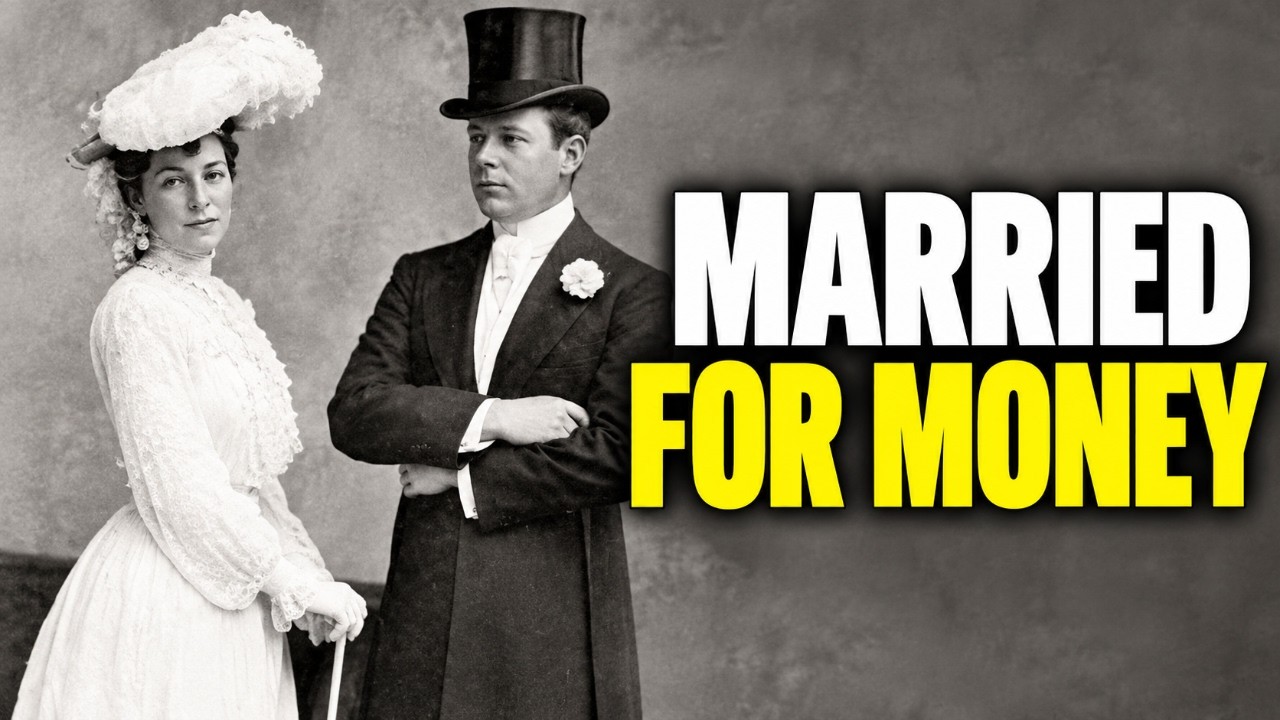
She stayed until the final curtain came down in a Baltimore bedroom in 1929. The story begins in the 1860s, with a fortune so vast it barely exists anymore. Elizabeth Warton Drexel was born into Philadelphia royalty. Her father, Joseph W.
Drexel, was a powerhouse banker, a partner in the Drexel financial empire with ties to none other than J. P. Morgan himself. She grew up among servants and mansions, carrying a name that opened every door in America.
But money like that carries its own quiet curse: when you are that rich, you never quite know why people like you. Every compliment, every gesture of affection, arrives wrapped in the question of whether it would have come at all without the inheritance. Her father died in 1888, and Elizabeth inherited a massive fortune. She was young, wealthy, and about to learn exactly what that meant on the marriage market.
In 1890, she married John Vinton Dahlgren, the son of a famous Civil War naval officer. It was a respectable match. It was also short. Dahlgren died in 1899, leaving Elizabeth a widow—a wealthy one, and suddenly the most tempting target in high society.
Enter Harry Lehr. Harry Sims Lehr was born in Baltimore in 1869, and he was nobody. No fortune. No family name.
No real position in the world. But he had one gift, and it was lethal: he was the most entertaining man in America. Harry could mimic anyone. He could charm anyone.
He could take a dull dinner party and turn it into the talk of the season. He rose through Newport society as the favorite of the powerful hostess Mamie Fish, and he became the social entertainer the wealthy could not do without. The press nicknamed him King Lehr. His parties were legendary and frankly ridiculous—there were reports of a dinner thrown entirely for dogs, and another with a monkey as the guest of honor.
In the Gilded Age, when the rich were bored out of their minds, Harry Lehr was the cure. But there was a problem. Harry was a sensation, not a rich man, and society was starting to whisper that his lifestyle needed funding. A man who entertained the elite for a living could not keep it up on charm alone.
In 1901, Harry Lehr married Elizabeth Drexel Dahlgren. The wedding was big news, and society columnists loved it. Here was the biggest personality in Newport, marrying one of its wealthiest widows. It looked like a fairy tale for the social pages.
But the people close to them saw something else. By most accounts, Harry made no great secret that money mattered in the match. He was frank about it in the way a charming man can be frank when he knows he is the one who is wanted. And Elizabeth went in with her eyes open—or at least, that is how she would later tell it.
She saw a man who made her laugh. She saw a man who made life feel like a performance, and she wanted a life like that. The early years looked like a triumph. The Lehrs were everywhere.
Newport in the summer, Europe in the off-season, with Paris in particular becoming a second home. Harry was the center of every room, and Elizabeth was the woman who made it all possible—the money, the houses, the standing. But here is where the marriage gets complicated. Harry was the star.
Elizabeth was the bank. And she knew it. Over time, accounts of the marriage describe a husband who flirted constantly, who craved attention, and who seemed more married to the party than to his wife. Gossip speculated about his private life.
Some historians have suggested that Harry’s relationships—with women, and perhaps with men—were never as conventional as the marriage suggested. It is impossible to prove what Harry was or was not. But what is certain is that the marriage was never simple. Elizabeth kept the household running.
She kept the money flowing. And she kept up the appearance of a happy marriage in an age when divorce was a scandal that could wreck a woman’s reputation for life. That first question—the one that haunts the very rich—was answered for her. Elizabeth knew exactly why Harry liked her.
And she stayed anyway. For years, the world saw only the sparkle. But behind the sparkle, something was wearing Harry down. The Gilded Age was ending.
The world that had made him famous was fading. The great Newport hostesses were getting old. A new generation did not care about his dog dinners or his famous wit. And the First World War changed everything about how the rich lived and what society valued.
Harry, the man who had built a career out of being adored, was starting to be ignored. His health began to fail—not just his body, but his mind. By the late 1920s, Harry Lehr was reportedly suffering from serious mental decline. The charming performer who had once ruled every ballroom was growing confused and unwell.
This is the part nobody in society wanted to talk about. The king of Newport, the man who had made the elite laugh for decades, was falling apart. And this is where Elizabeth’s story turns. She could have walked away.
She had had every reason to for years. The humiliation. The whispers. The knowledge that she had been, in some sense, a means to an end.
A divorce, even then, might have been possible for a woman of her wealth and standing. But she did not walk away. Instead, she took care of him. Reportedly, she saw to it that he received medical care.
She stayed involved as his condition worsened. The woman who had once been the bank for his lifestyle was now his caretaker through his decline. Harry Lehr died in Baltimore in 1929. The marriage had lasted twenty-eight years.
He had married her, according to the story, for money. And she had stayed with him until the end. That is not a fairy tale. It is something far stranger—and in some ways, far more moving.
Then, in 1935, Elizabeth did something remarkable. She published a memoir. It was called King Lehr and the Gilded Age. She could have written a bitter takedown.
She had every right to. Instead, she wrote about Harry with a strange mix of affection and honesty. She portrayed his charm and his flaws. She captured the madness and the magic of the era they had lived through.
In doing so, she gave history one of the best firsthand portraits of Newport society at its peak. It was not a revenge book. It was something more complicated: a woman trying to make sense of a marriage that never fit any simple label. She was not a victim in her own telling, and she was not a saint.
She was a woman who made a choice, lived with it, and told the truth about it afterward. Elizabeth’s story did not end with Harry. In 1936, she married again. This time it was Lord Decies, an Irish peer.
After everything she had been through, she found a second act in the aristocracy of Britain. She lived the rest of her life as Lady Decies, and she passed away in 1944. Three marriages. A fortune that attracted attention everywhere she went.
A life that moved from Philadelphia to Newport to Paris to the British peerage. And the middle chapter—the Lehr years—was the one she chose to write about. The easy version of this story is that a rich woman got used by a charming man. And sure, that is part of it.
But it misses something. Elizabeth was not naive. She lived in a world where marriage was often a transaction, where women with fortunes were pursued for what they owned. She understood the game better than most.
What makes her story stand out is not that she was used. It is that she kept showing up—through the scandal, through the whispers, through Harry’s collapse. She did not walk away when it would have been easy, and frankly understandable, to do so. Was that love?
Was it loyalty? Was it pride, or fear of scandal, or a stubborn refusal to admit the mistake? The honest answer is probably all of them at once. Real relationships are rarely just one thing.
Money makes you wonder why anyone likes you. Elizabeth spent her whole life with that question, and somehow, in the end, she answered it on her own terms. She told her story. She told it honestly.
And she let history decide. The world remembers Harry Lehr as the king of a glittering, ridiculous age. But if you read between the lines, the real strength in that marriage was never the man in the spotlight.
It was the woman who paid for the stage—and then stayed to the final curtain.
