On a June morning in 1890, the Duchess of Fife went into labor at her London residence. The child, a son who would have carried the courtesy title Marquis of Macduff, was delivered stillborn. Court physicians confirmed the boy had been perfectly formed. For the duke and duchess, the loss was devastating.
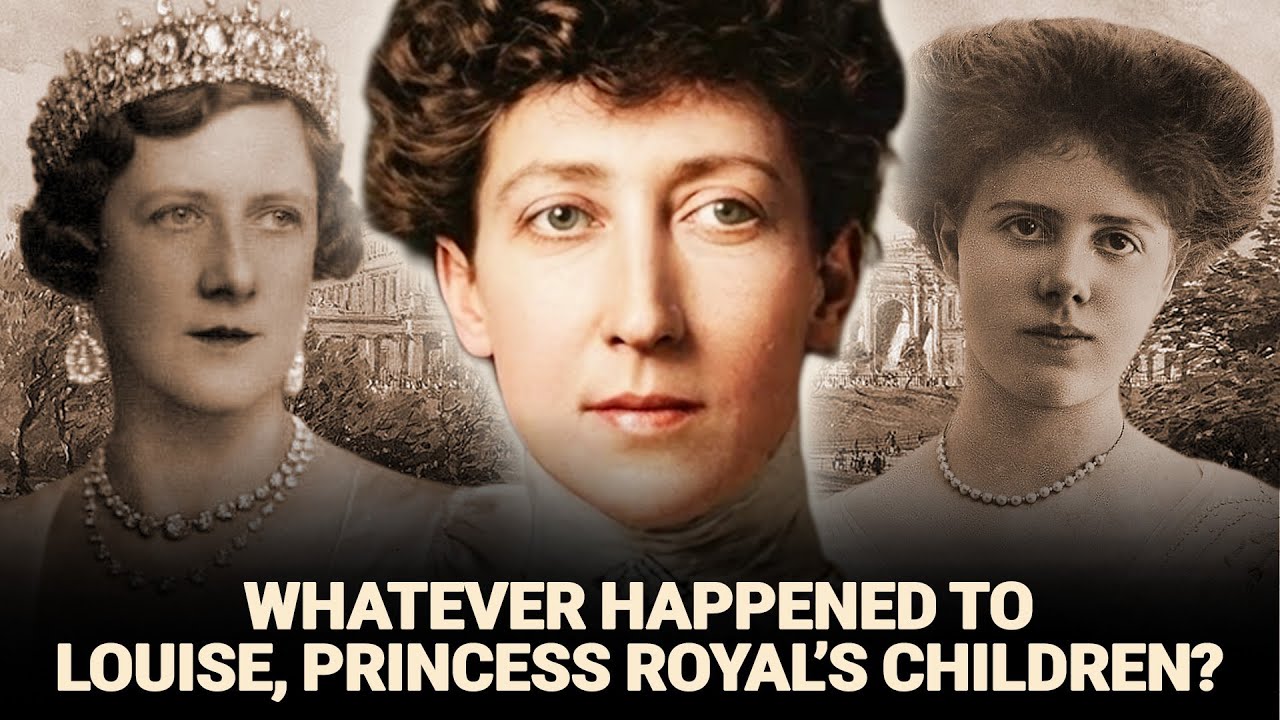
For the future of their newly created dukedom, it was a warning. Louise, Princess Royal, had married Alexander Duff, first Duke of Fife, in 1889. As the eldest daughter of Albert Edward, Prince of Wales, Louise occupied a unique place in the late Victorian royal hierarchy. The marriage was not merely a romantic union but a carefully orchestrated alliance.
The dukedom, created specifically for the occasion, elevated the Duff family into the upper echelons of British aristocracy while preserving Louise’s royal status. Their household at Mar Lodge in Scotland and their London residence established a setting that was aristocratic rather than purely royal. This distinction would shape the lives of their children, who would grow up with royal blood but ducal expectations. The Duke of Fife’s wealth came from extensive Scottish estates and business interests, making the family financially independent from the civil list.
This independence would later allow their children greater freedom than many of their royal cousins enjoyed. Crucially, the creation patent of the dukedom included a special remainder. Under traditional British peerage law, the title could only pass through the male line. But the special remainder allowed that if the direct male line failed, the title could pass to the first duke’s daughters and their male heirs.
This unusual provision reflected the royal connection and the expectation that the Fife line should continue through Louise’s descendants, even without a direct male heir. The stillbirth transformed what should have been a celebration into a sobering reminder of the uncertainties surrounding aristocratic succession. The concentration of hopes on a single male heir had proven dangerous. Legal experts examined the succession provisions to clarify exactly how the title would pass if the direct male line failed.
The special remainder, once merely theoretical, suddenly became essential to the dukedom’s survival. On 17 May 1891, the Duchess of Fife gave birth to her second child, a daughter. Lady Alexandra Victoria Alberta Edwina Louise Duff entered the world, bringing renewed hope to a family still mourning their loss. As the elder daughter, she would eventually become crucial to the title’s survival under the special remainder provisions.
Her names reflected her royal heritage: Alexandra honored her great-grandmother, Queen Alexandra of Denmark; Victoria connected her to the reigning monarch; Alberta recalled Prince Albert. From birth, her position was unique. She was the granddaughter of the heir to the throne, daughter of a duke, and potentially the future holder of a ducal title in her own right. On 3 April 1893, the Duchess gave birth to her third and final child, a second daughter named Ma Alexandra Victoria Georgina Bertha.
As the younger daughter, Ma was less likely to inherit the ducal title directly, but her potential role in the succession remained important under the special remainder provisions. This position allowed her somewhat greater freedom in life choices while maintaining the possibility of dynastic significance. The sisters’ childhood unfolded in the distinctive environment of the Fife household, occupying a middle ground between royal formality and aristocratic independence. Their education followed the pattern established for aristocratic daughters, with private tutors providing instruction in languages, history, literature, and the social graces expected of their rank.
French and German were emphasized, reflecting the international connections of the royal family. Scottish history received particular attention given the family’s Highland estates. The death of Queen Victoria in 1901 marked a significant transition. Louise’s father became King Edward VII, elevating the family’s status within the royal hierarchy.
In 1905, the King issued letters patent granting the title and style of princess to both Lady Alexandra and Lady Ma. The elevation was unusual and reflected the specific circumstances of the Fife family’s position. While the daughters had always been granddaughters of the sovereign, their father’s ducal rather than royal status had initially limited their titles. The 1905 elevation corrected this and placed them on equal footing with other royal grandchildren.
As Princess Alexandra entered her twenties, her public profile increased significantly. In a decision that surprised many observers, she chose to pursue formal training as a nurse. She enrolled at London Hospital in 1910, beginning a rigorous course of study that would qualify her for professional medical service. She lived in nurses’ quarters, followed the same schedule as other trainees, and received no special treatment.
Her instructors noted her particular aptitude for organizational work and her ability to maintain composure under pressure. The death of Alexander Duff, first Duke of Fife, on 29 January 1912, marked a crucial turning point. He died in Egypt, where he had traveled seeking relief from lung problems that had troubled him for several years. He was 62.
Under normal peerage law, the dukedom would have become extinct with his death, as he left no surviving sons. However, the special remainder allowed the title to pass to his daughters, making Princess Alexandra the second Duchess of Fife in her own right. The College of Arms confirmed her right to succeed, making her one of the few women in British history to inherit a ducal title in her own right. On 15 October 1913, Princess Alexandra married Prince Arthur of Connaught at the Chapel Royal, St James’s Palace.
The wedding was a significant royal occasion attended by King George V and Queen Mary. Prince Arthur, the son of the Duke of Connaught, was a career military officer with extensive experience in colonial administration. The marriage settlement carefully protected her ducal inheritance. The outbreak of World War I in August 1914 provided Princess Alexandra the opportunity to apply her nursing skills in service of her country.
She immediately volunteered for medical duty and was assigned to military hospitals treating wounded soldiers returning from the Western Front. Her wartime service took her to hospitals across Britain and later to field hospitals in France. She worked long shifts treating casualties, assisting in surgeries, and helping to organize the massive medical effort. Her royal status was largely set aside during these activities, with fellow nurses and patients addressing her simply as Sister Alexandra.
On 9 August 1914, Princess Alexandra gave birth to her only child, a son named Alistair Arthur Windsor, born at her family’s Scottish estate just as Europe descended into war. His birth secured the future of the dukedom under the special remainder provisions while creating a new generation of royal descendants. A few years earlier, on 12 November 1923, Princess Ma had married Charles Noel Carnegie, 10th Earl of Southesk, uniting two ancient Scottish noble families. She became Her Highness Princess Ma, Countess of Southesk.
On 23 September 1929, she gave birth to her only child, a son named James George Alexander Bannerman Carnegie. His immediate inheritance would be the Southesk earldom, but his position as Princess Ma’s son made him a potential heir to the Fife dukedom if the direct line through Princess Alexandra failed to produce surviving male heirs. The war years brought personal anxiety to Princess Ma, whose son James served with distinction in the British Army. Princess Ma died on 14 December 1945 at the age of 52 following a brief illness that had developed during the final months of the war.
Her death left her teenage son James as the heir to both the Southesk earldom and the potential future of the Fife dukedom. His position became crucial when Princess Alexandra’s son Alistair was killed in action during the North African campaign on 26 April 1943, at the age of 28. His death removed the male heir expected to continue the ducal line. The succession crisis required immediate attention.
Under the special remainder provisions, the title would eventually pass to Princess Ma’s son James, or his male heirs. Princess Alexandra’s grief was compounded by concerns about the preservation of her family’s legacy. Decades of careful preparation for her son’s inheritance had been rendered meaningless. She gradually reduced her public commitments while maintaining essential ceremonial and charitable responsibilities.
Her later years were marked by efforts to preserve family history and traditions for future generations. Princess Alexandra died on 26 February 1959 at the age of 67, having served as Duchess of Fife for nearly half a century. The funeral, attended by Queen Elizabeth II and other senior royals, recognized both her royal status and her achievements as a duchess in her own right. With her death, the Fife dukedom passed according to the special remainder provisions to her nephew James Carnegie, who also held the Southesk earldom.
This consolidation of titles created one of the most historically significant noble inheritances of the twentieth century, combining ancient Scottish traditions with royal connections spanning multiple generations. The current Duke of Fife, James’s son David Carnegie, maintains the Scottish estates and traditions established by his grandmother Princess Ma while preserving the royal connections that characterized Princess Alexandra’s public service. The three children of Louise, Princess Royal, represented three distinct patterns of aristocratic succession and legacy preservation. The stillborn Marquis of Macduff demonstrated the fragility of dynastic planning.
Princess Alexandra’s life illustrated the possibilities and challenges of female inheritance of noble titles. Princess Ma’s legacy showed how secondary lines could become crucial to family continuity. The special remainder provisions that had seemed merely theoretical when created proved essential to the ducal title’s survival, ensuring that a century after the first duke’s marriage, the Fife legacy endured through the descendants of his younger daughter.
