In 1984, Barbara Walters was the most recognized woman on American television, an interviewer who had sat across from presidents and dictators with a composure that never seemed to crack on camera. But composure is a performance, and behind the studio lights, a relationship from nearly a decade earlier was still pulling at the seams of everything she had assembled. It touched her marriage, her career, and the carefully managed image that was her most valuable asset. She had spent decades teaching the world to trust her with other people’s secrets.
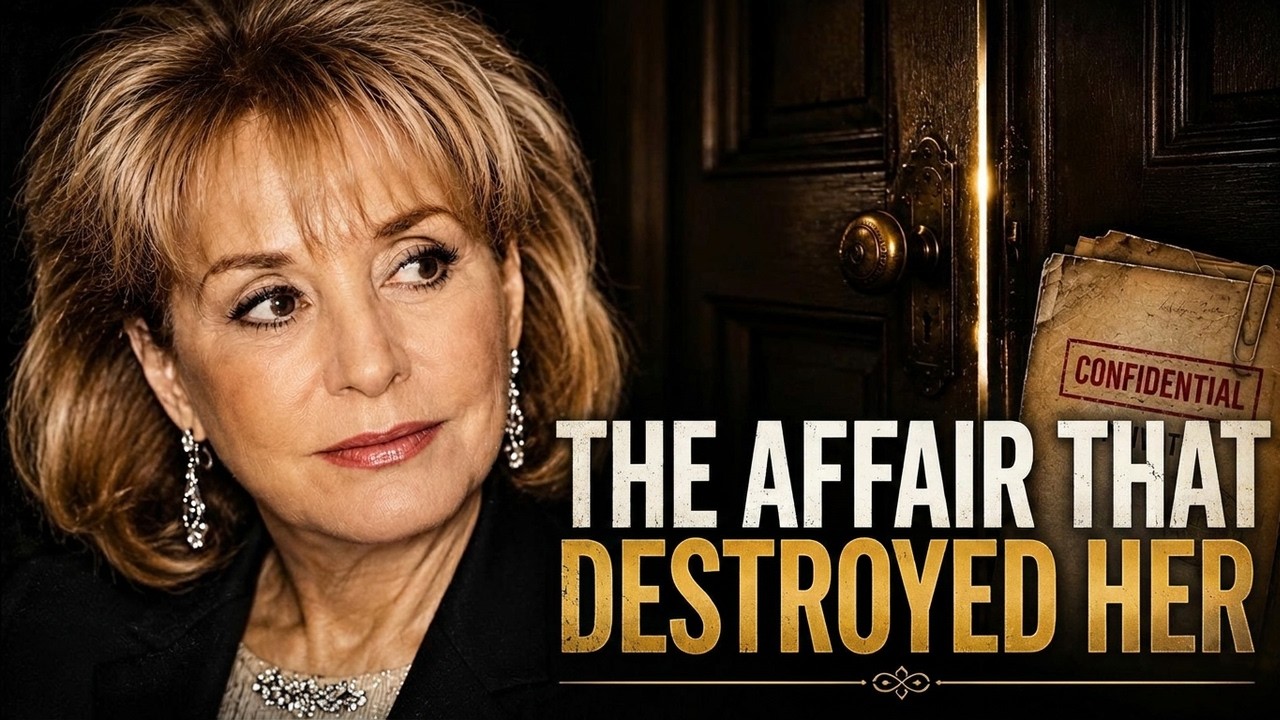
Now she was carrying one of her own. She had started as a writer, not a star. In the early 1960s, NBC hired her to write for the Today Show, a woman handing scripts to the men who read them aloud. She stayed in the background, learning how the machine ran, then pushed her way in front of the camera.
By 1974, she was named co-host of Today, the first woman to hold the title, and she was landing interviews her rivals could not touch. In 1976, ABC offered her a record-breaking contract, making her the first anchor in American news to earn that figure. Male colleagues bristled. Critics questioned whether a woman belonged in the anchor chair at all.
She answered by outworking the room and refusing to leave. For much of that climb, there was Lee Guber, a theatrical producer with a gift for staging musicals. They married in 1963 and raised a daughter, Jacqueline. Their marriage lived across distance as much as togetherness; his theaters and her broadcasts rarely occupied the same city on the same night.
What held them was partnership more than passion, an arrangement of two people who admired what the other could accomplish and asked few questions about the space in between. Then a senator walked into the studio. Edward Brooke was the first black senator elected since Reconstruction, a Massachusetts Republican who had won a state that was 97 percent white, and he carried himself like someone who knew every room was watching him. He was married, charming in a way that felt earned rather than practiced, and quietly vulnerable in ways the cameras never caught.
When she interviewed him during the early 1970s, the conversation was supposed to run a few minutes. It kept going long after the crew wanted to break down the lights. They talked about power, about race, about the strange loneliness of public life, and each recognized something familiar in the other. What started as admiration turned into something neither could control.
At first it was late phone calls after broadcasts wrapped and the Senate emptied out. Then came carefully arranged meetings tucked into the margins of two impossibly busy schedules. For three years, they believed they could keep it hidden. Hotels were booked under names that were not theirs.
Flights were timed around Senate recesses so his absences had explanations already waiting. Every meeting was choreographed down to the entrance and the exit, and underneath it all sat the guilt of coming home to a daughter and a husband whose calm she was quietly betraying. In Washington, secrets are currency, and someone was paying attention. By 1977, the pattern was too clean to ignore.
The same car outside the same building. A dinner reservation under a name that was not quite right. Rival campaigns kept mental files on men like Brooke, and reporters compared notes over drinks. Nothing had been printed, but in those circles, a rumor does not need proof to do damage.
Then Brooke’s wife discovered the truth. The accounts of how Remigia Brooke found out have never fully agreed. Some say phone records, others a letter she was never meant to read, a few insist it was a confession pulled out of a tired man. However it happened, the shape was the same.
She had spent more than three decades standing at her husband’s side, and now she understood that the woman folded into the whispers was one of the most recognizable faces in America. In 1978, Remigia filed for divorce, and the filing dragged Barbara Walters’s name into public view. The divorce papers did not stop at infidelity. They alleged that Brooke had mishandled money, that campaign funds and personal finances had blurred in ways a sitting senator could not afford to explain.
There were gifts, she claimed, unreported and quietly given, some of them tangled up with a name the public was only beginning to whisper. Now the Senate Ethics Committee was reading the same headlines everyone else was and taking notes. The photographers set up outside Barbara’s apartment building on the Upper East Side, lenses trained on the lobby door. Inside ABC, colleagues who had once envied the interviews she landed now traded glances in the hallways.
Lee Guber said nothing, refusing every reporter who reached for a quote. Friends said he was less angry than quietly undone. Inside ABC, the conversation stopped being about a love affair and started being about money. Her contract had made her the highest-paid anchor in the country, and executives found, to their quiet relief, that the audience had not moved.
The decision came in a room without cameras. They would stand by her in public, but privately the message was firm: end it and end it now. She said no. There would be no press conference, no carefully worded apology.
She would not explain herself to anyone. She went back to work and behaved as though nothing had happened. But Brooke’s world was collapsing faster than hers. The ethics committee began asking questions that had nothing to do with romance and everything to do with numbers.
The subpoenas went out for financial records, and investigators found gifts that had never been declared and loans with soft terms and softer repayment schedules. Some of those lines led toward names that had nothing to do with government at all, one of them belonging to a woman the country already recognized on sight. A subpoena threat hung over her. Her lawyers worked late in small meetings, figuring out how exposed she really was.
The affair, the loans, the man himself, all of it could be laid open in a single afternoon of testimony. Before that could happen, Brooke made a desperate move. He chose his own words before anyone could choose them for him. He admitted to personal failings and financial mistakes, denied breaking the law, and refused to say her name.
Not once. He took the full weight of the scandal onto a single set of shoulders, spending his final credibility shielding her from the wreckage. Back in Massachusetts, the ground was shifting under him fast. By the time the 1978 re-election campaign got underway, the affair was his record.
Voters who could not have named a single bill he had sponsored knew exactly whose name he had been linked to. Somewhere in the middle of it all, money had changed hands; she had allegedly loaned him a sum, the exact figure never pinned down. The tabloids seized on the money with an appetite the affair alone had never fully satisfied. Her lawyers explained that the loan was personal, made in good faith, and repaid in full with interest.
On paper, it was airtight. But the court of public opinion does not operate on legal distinctions. The woman who had pressed presidents on ethics was now the story about ethics. Her daughter Jackie was a teenager then, old enough to read the papers and understand exactly what they were saying about her mother.
Barbara did what she could to build a wall around her, but children see through the walls their parents build. Brooke’s divorce filings turned his home into an exhibit and their private failures into a public record. The affair ended sometime in late 1978. Accounts differ on who made the decision, but by the time the Senate investigation closed in, they were no longer speaking.
There is no evidence they ever spoke again. In November 1978, Brooke lost his re-election by ten points, a landslide defeat that erased a career in a single evening. He gave a concession speech that acknowledged the obvious: the affair had become the only thing voters knew about him. The ethics committee chose to admonish him, a formal rebuke for financial improprieties tied to the loans he had failed to disclose.
He kept his seat, but he lost the only thing a senator cannot rebuild once it is gone. Barbara’s own divorce from Guber had been finalized in 1976, handled quietly with no public accusations, ending the partnership that had steadied her through her rise. The imbalance between their fates was almost absurd. The senator was rebuked, isolated, finished.
The journalist kept her show, her salary, and her name only grew larger. ABC had paid her a reported fortune, her Q rating was among the highest in broadcasting, and that value became a wall between her and the ruin closing in on him. But survival came with a price no balance sheet could capture. Invitations kept coming, but the warmth in them thinned.
Old friends who had once whispered secrets to her now whispered about her. She did the only thing that had ever answered when she called it: she worked. By the early 1980s, the whispers had softened. The big interviews came back, and the ratings held steady.
She never confessed, never offered the tidy on-air reckoning the culture loves. She simply kept arriving poised and prepared until arriving was the only story left to tell. In 2007, Brooke published his own memoir and named her, confirming the relationship Washington had whispered about for thirty years, taking responsibility where she took refuge. A year later, when Barbara published Audition, the man whose name once shared her headlines appeared barely at all.
She wrote of a relationship that could not survive the spotlight, acknowledging that she had caused pain, but she never fixed a name to the sorrow. In 2015, Edward Brooke died at ninety-five. The obituaries led with the line that had defined him before anyone whispered otherwise: first black senator elected since Reconstruction. The affair waited until paragraph six, a footnote to a life that had in the end been measured by something larger.
Barbara released a short statement, calling him a man of extraordinary courage and conviction, a pioneer who opened doors that stayed open. No mention of Washington in the late 1970s. No mention of the years they had known each other.
She honored the senator and let the rest stay where she had always kept it, somewhere outside the frame.
