The 9 mm pistol appeared without warning. On September 3rd, 1997, Jocelyn Wildenstein showed up unannounced at the East 64th Street townhouse, anticipating either an empty home or her husband’s company. Instead, she discovered Alec in their marriage bed with a 21-year-old Russian model. When she confronted him, he drew the weapon and aimed it at her and her two bodyguards, turning a domestic dispute into a criminal matter.
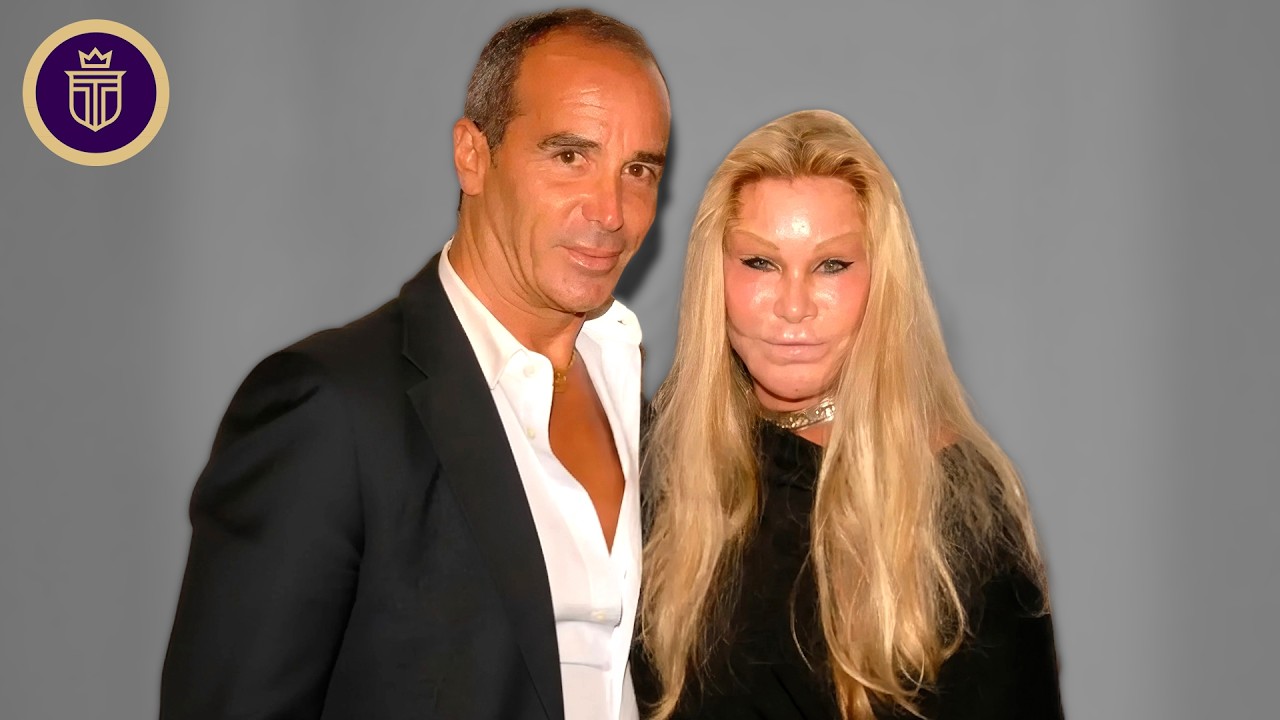
Manhattan criminal court judge Martin Murphy promptly issued Jocelyn an order of protection, permitting her to stay in the townhouse while prohibiting Alec from the premises. The Wildenstein heir spent a night behind bars after his arrest for menacing. A single night in jail was a disaster for a family that had functioned in the shadows for more than a century. The Wildensteins had constructed a multibillion-dollar art empire on one rule: absolute discretion.
Their clientele, from dictators to oligarchs to collectors who preferred not to disclose the origins of their money, paid top dollar for silence. The family shifted masterpieces by Rembrandt, Van Gogh, and Cézanne through offshore trusts, Caribbean shell companies, and warehouse facilities whose locations were fiercely guarded secrets. Old money families have straightforward rules about scandal: avoid it completely, or if that fails, contain it at once. The Wildensteins had adhered to those rules for four generations.
Now police reports, criminal charges, and tabloid coverage were destroying their carefully preserved invisibility. The marriage that ended in that bedroom had started with a lion hunt in Kenya. Jocelyn Périsset grew up in modest circumstances in Lausanne, the daughter of a sporting goods store manager. By 1977, she had reinvented herself as a sophisticated huntress who could fly planes and charm billionaires.
Her transformation came through calculated relationships: first with Swiss filmmaker Sergio Gobi, then studies in Paris, and finally the patronage of Saudi arms dealer Adnan Khashoggi, whose parties linked the global ultra-wealthy. Khashoggi’s introduction proved pivotal, leading her to Ol Jogi Ranch in Kenya, a 66,000-acre wildlife conservancy 225 kilometers north of Nairobi. The Wildenstein family had just bought 49 percent of it, turning the property into their African domain, complete with luxury amenities that would eventually include 55 man-made lakes and 200 buildings. This was typical Wildenstein excess.
The family had built its fortune over four generations since Nathan Wildenstein fled the Franco-Prussian War in 1875 to establish what would become the world’s most powerful art dynasty. By 1977, Daniel Leopold Wildenstein controlled an inventory that museum directors could only dream of acquiring. The New York storeroom alone contained 20 Renoirs, 25 Courbets, 10 Van Goghs, 10 Cézannes, 10 Gauguins, two Bicellis, eight Rembrandts, eight Rubens, nine El Grecos, and five Tintorettos: approximately 10,000 paintings valued at over ten billion dollars. His son, Alec Nathan Marcel Wildenstein, born August 5th, 1940, in Marseilles, had been raised without choices.
“I never had a choice,” he would later tell Vanity Fair. “There was none. I was told from since I was like this, I would be an art dealer. “
That weekend at Ol Jogi in 1977, Alec needed someone to eliminate a problem lion at a neighboring ranch.
Jocelyn asked to accompany him. His response revealed everything about their future dynamic: “As long as you keep your mouth shut. ” The Swiss huntress impressed the heir with her marksmanship and her silence, qualities the secretive Wildensteins valued above all else. Within a year, on April 30th, 1978, they eloped to Las Vegas, bypassing the family’s formal machinations, though Daniel would later claim Jocelyn signed a prenuptial agreement stripping her of all claims to family wealth.
From that moment, Jocelyn entered a world where monthly expenses routinely exceeded one million dollars. Court documents would later reveal the anatomy of their spending: 547,000 annually on food and wine, 60,000 on flowers, 42,000 on personal grooming, 800,000 on clothing. The couple maintained five residences simultaneously: a 150-year-old French château, a penthouse in Olympic Tower, a double-wide townhouse on East 64th Street where Alec’s brother Guy lived one floor above them, the sprawling Ol Jogi Ranch, and a Caribbean retreat. For 17-year-old daughter Diane’s birthday, they commissioned a three-million-dollar mansion at Ol Jogi, a monument to excess that served no purpose beyond paternal indulgence.
Surgical modifications began transforming Jocelyn Wildenstein’s face in the 1980s, though the narrative surrounding these procedures remains contested between husband and wife. The widely circulated story claimed Alec, obsessed with the big cats populating Ol Jogi, had encouraged his wife to surgically alter her features to resemble the felines he collected. Jocelyn rejected this narrative entirely, telling The Sun, “Really? Will they have to try to find something against me?
“
The documented procedures progressed through phases over two decades. Initial surgeries in the 80s reportedly included canthoplasty, reshaping her eye corners into elongated, upturned angles; aggressive blepharoplasty on her eyelids; and large cheek implants creating the prominent cheekbones that became her signature. The 90s brought escalating modifications: multiple facelifts, extensive injectable fillers or fat grafting, possible chin and jaw implants producing an increasingly sculpted appearance. Alec’s documented reaction evolved from apparent approval to eventual horror.
He told Vanity Fair she was thinking that she could fix her face like a piece of furniture. While Jocelyn’s appearance transformed, the couple’s spending reached levels that court documents would expose as pathological. Monthly checks from their Chase Manhattan account ranged between 200,000 and 250,000 dollars: routine expenditures exceeding most American annual salaries. The 1995 accounting revealed staggering details: 60,000 annually on Manhattan telephone bills alone, excluding international calls; laundry and dry cleaning consumed 36,000 yearly; pet care for their menagerie cost 60,000; insurance for Jocelyn’s jewelry collection, including a 30-karat diamond ring, added 82,000.
The ten-million-dollar jewelry collection accumulated over two decades included custom Cartier pieces and the legendary 350,000-dollar Chanel dress she claimed to have designed with Karl Lagerfeld. Alec reportedly didn’t blink at this purchase. According to Jocelyn’s Vanity Fair interview, Ol Jogi Ranch operations required 366 permanent staff members, maintaining two swimming pools, 55 artificial lakes, and 200 buildings across 66,000 acres. Their aggregate personal and household expenditures in 1995 and 1996 totaled well over 25 million dollars, according to court records.
Food and wine alone cost 547,000 annually, more than 10,000 weekly on dining. Flowers added another 60,000 yearly, while veterinary care and pet accessories consumed 60,000 more. Their 5,000-dollar monthly phone bill suggested constant international communication across their global properties. Architectural and design fees, storage costs, and travel expenses pushed their burn rate toward one million monthly.
By the mid-90s, society photographers struggled to capture Jocelyn’s surgically altered features at charity galas and art openings. The natural Swiss beauty had vanished behind procedures that made other socialites whisper behind champagne flutes. Yet appearance modifications paled beside marital deterioration as Alec pursued younger women while Jocelyn maintained their million-dollar monthly spending. Then came September 3rd, 1997.
The family apparatus responded to the scandal with coordinated financial warfare designed to force Jocelyn’s submission. Her monthly allowance plummeted from 150,000 to 50,000 dollars, a 67 percent reduction. All credit cards were cancelled, severing her access to family financial infrastructure. Household staff received orders to ignore her instructions, eliminating her authority.
Her personal accountant was dismissed abruptly, with neither notice nor justification. Most harshly, the family shut her out of Ol Jogi Ranch, where her mother, Lilianne, was under Alzheimer’s care. Safe combinations across the townhouse were changed overnight, cutting off access to stored valuables and documents. Alec would later tell Vanity Fair, “My father couldn’t accept that, and I couldn’t either.
“
Instead of yielding to financial strangulation, Jocelyn brought in aggressive legal counsel for battle. Alec’s defense team, headed by celebrity divorce lawyer Raoul L. Felder, pursued a strategy that would prove calamitous. They asserted that Alec earned close to 100,000 dollars a year as an unpaid personal assistant to Father Daniel Wildenstein.
Every asset—properties, paintings, jets—supposedly belonged solely to Daniel, not to Alec. The son held no independent wealth at all, despite signing documents that shifted millions among family companies and acting as a corporate officer. This plea of poverty disregarded documented evidence of million-dollar monthly spending from accounts bearing Alec’s name. The defense rested on portraying vast marital expenditures as nothing more than borrowing from paternal generosity rather than shared assets.
State Supreme Court Judge Marilyn Diamond would deem this narrative an insult to judicial intelligence, and it exposed the entire Wildenstein empire to unprecedented scrutiny. Judge Diamond’s review of Alec Wildenstein’s financial disclosures sparked outrage at claims of poverty from a man spending millions each month. “An insult to the intelligence of the court and an affront to common sense,” she declared, listing evidence of Alec’s economic agency. He had signed documents moving millions between Wildenstein entities and offshore accounts.
He served as vice president of 64th Street Corporation, which owned the townhouse and gallery. His New York pistol license identified him as a Wildenstein and company officer. Yet he claimed zero annual income while writing quarter-million-dollar monthly checks. The judge’s investigation uncovered what generations had concealed through Swiss banks and Caribbean trusts.
Two previously unknown shell companies surfaced in the Cayman Islands and Guernsey alone. Documents revealed systematic wealth concealment through Luxembourg corporations and Bohemian accounts. Alec fled the country rather than appear for depositions, while attorney Felder blamed “substantial tax problems we believe created by the plaintiff.” Judge Diamond’s response carried menace: “There are going to be more substantial tax problems by people continuing to take certain positions.
“
Forced discovery exposed spending that shocked even Manhattan’s jaded wealthy. The couple’s 1995 expenses alone exceeded 25 million dollars. Telephone bills reached 60,000 annually for Manhattan alone. Food and wine consumed 547,000 yearly.
Personal grooming—massages, pedicures, electrolysis—cost 42,000. Clothing expenditures for Jocelyn exceeded 800,000 annually. The true bombshell was Daniel Wildenstein’s secret art inventory: ten billion dollars of masterpieces, including 20 Renoirs, 25 Courbets, 10 Van Goghs, 10 Cézannes, 10 Gauguins, two Bicellis, eight Rembrandts, eight Rubens, nine El Grecos, and five Tintorettos. French authorities, alerted by American proceedings, launched tax investigations into undeclared Wildenstein assets.
The family faced their worst nightmare: governmental scrutiny across multiple jurisdictions. By late 1998, continued exposure threatened more than financial loss. Potential criminal prosecution loomed. The settlement finalized in 1999 awarded Jocelyn 2.
5 billion dollars plus 100 million annually for 13 years. The total approached 3.8 billion dollars—history’s largest divorce settlement. But structural flaws emerged immediately.
Much of the payment came as artwork, including paintings attributed to Velázquez and Cézanne. Real estate and trust arrangements comprised additional portions rather than liquid cash. Judge Diamond added her infamous stipulation: Jocelyn was legally prohibited from using settlement funds for cosmetic surgery. The clause validated Alec’s narrative about Jocelyn’s appearance while attempting to control her spending.
The Wildensteins had inflated artwork valuations, padding the settlement’s nominal value while transferring difficult-to-liquidate assets. Their final deception in a marriage built on secrets. The Velázquez painting valued at tens of millions in Jocelyn’s settlement proved worthless: a forgery discovered years after the divorce. The Cézanne attributed at 40 million dollars fetched only 4.
7 million at auction, a devastating loss revealing systematic valuation inflation. These discoveries suggested the Wildensteins had deliberately padded the 3.8-billion-dollar settlement with overvalued art. When Alec died from prostate cancer in 2008, the family trust immediately began maneuvering.
By March 2015, they terminated Jocelyn’s 100-million-dollar annual payments entirely. Her final payment totaled just 111,000 dollars, a fraction of the promised amount. The trust argued Alec’s death eliminated their obligations, leaving Jocelyn without recourse. “For the last 8 years, they have entirely severed my financial support,” Jocelyn told The Telegraph in 2023.
She survived on 900 dollars monthly from Social Security, relying on friends’ charity. “I wasn’t ready for it,” she admitted about the sudden poverty. Without annual payments, her Trump World Tower condominiums became unsustainable burdens. Property taxes and maintenance accumulated until foreclosure eliminated 11.
75 million dollars in assets. The properties that once symbolized wealth became instruments of financial destruction. On May 4th, 2018, Jocelyn Wildenstein filed Chapter 11 bankruptcy. Her checking account contained zero dollars.
Assets included a 2006 Bentley worth 35,000, clothing valued at 1,000 dollars, and household items. Against these, she owed 4.6 million to Modern Bank, 70,000 to American Express, and hundreds of thousands in legal fees. Her signed affidavit stated, “I often turned to friends and family in order to pay my ongoing expenses.
“
Celebrity Net Worth calculated she likely received significantly less than 50 million dollars total from the settlement. The 3.8 billion had been carefully constructed fiction. The 4.
5 million allegedly owed from Alec’s estate remained disputed and uncollectible. Lloyd Klein, her fashion designer fiancé, stayed through the financial collapse. By 2023, financial desperation drove her to participate in an HBO documentary. Guy Wildenstein maintained family silence about the payment cessation while French authorities continued investigating tax fraud.
On December 31st, 2024, Jocelyn Wildenstein died at 84, exactly 25 years after her record settlement. The woman who supposedly won history’s largest divorce award died essentially penniless. Billions in art appraisals and trust promises had vanished like smoke once the family controlling them decided the show was over.
