The north-facing slope above Cold Iron Gap looked like nothing at all. That was its power. It was simply ground that rose away from a tiny mountain hollow in the Blue Ridge, eleven miles west of the county seat, where the road gave out a mile early and became two dirt ruts and hope. The people who lived in that gap, sixty families at most in 1894, did not go above the old logging camp.
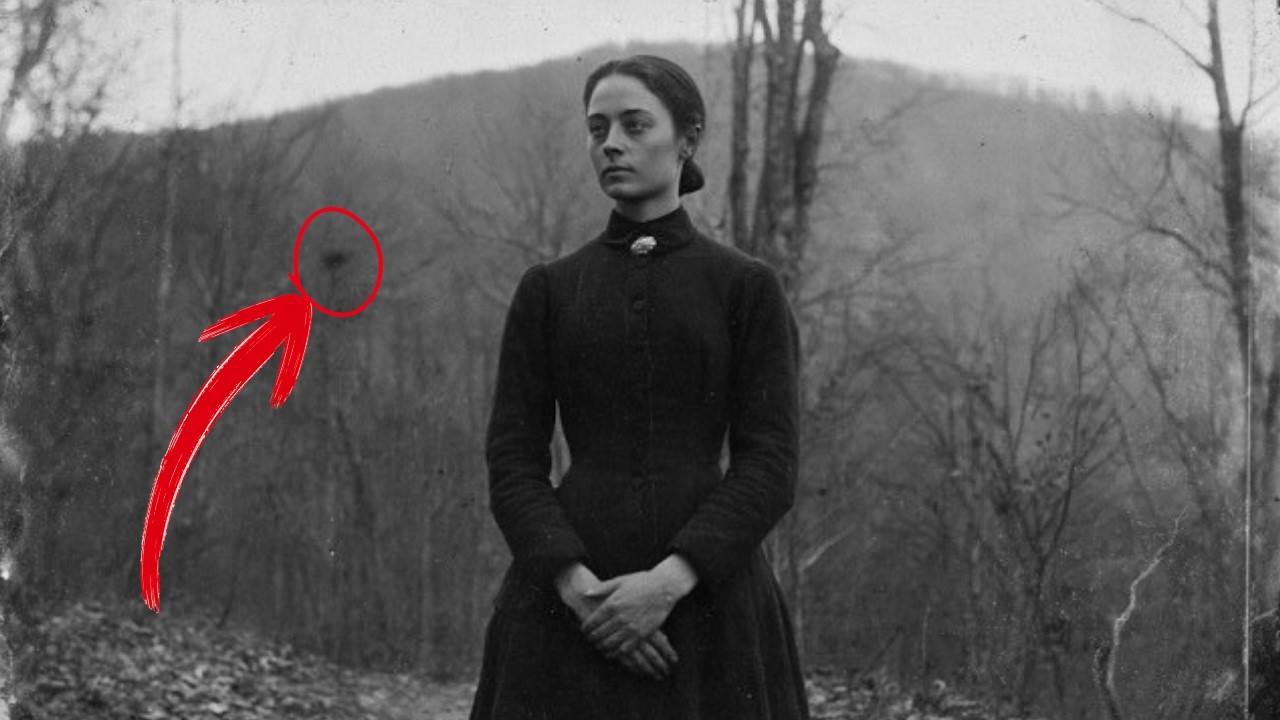
They did not have a reason they could state. They just did not, and their fathers had not, and their fathers before them had not. Vera Suddeth was thirty-four in October 1894. She was tall for a mountain woman, nearly five foot seven, with a straight back and chestnut hair pinned at her neck.
She was not a doctor, but women came to her with coughs and burns and griefs that sat too heavy in the chest, and she kept dried yarrow and bloodroot and slippery elm in tins on a shelf above her washbasin, along with a small leather book of what her grandmother had taught her, written in a hand so close and careful you had to squint to read it. She took no pay. People brought her jam jars, a pork shoulder at slaughter time, a bolt of calico at Christmas. Every clear evening from April until the first snow, Vera left the forge at a quarter to four, walked east out of the settlement for half a mile, and took a path up the north slope past the abandoned lumber camp and the cold spring to a flat rock about twenty yards above it.
She sat there for perhaps half an hour, watching the light leave the far ridge, then came home. She had done this since she was seventeen, for seventeen years, and she had never once stayed on the hill after dark. She was not afraid of the woods. She simply knew what the people there knew: you came down before dark.
And she always did. Ottalie Bedabone lived in the last cabin before the path began. A widow since the flood of ’89, thin as a broomstick, she stood on her porch every evening smoking a clay pipe her husband had made her, and she saw everything that passed. So when she said that on the evening of Wednesday, October 10, 1894, Vera Suddeth walked past her cabin at a quarter past four, waved a little, and did not come back down before dark, she was certain.
She sat on the porch until the last light left the ridgetop. She saw the smoke rise from the forge chimney below. She saw the forge shutters close. She said later she never saw Vera come down.
Absalom Suddeth noticed at supper. Vera always left him a covered plate on the stove, and it was cold under its cloth when he came in at half past six. He called her name once, in his quiet way. Then he walked out to the road and looked up at the north slope, long enough for his neighbor Finn Skaggs to come out and ask what was the matter.
Finn was seventy-two, a retired mail carrier with a bad hip and a strong memory. He looked at the slope himself in the full dark, and said: Absalom, do not send anyone up there tonight. Wait for light. Absalom asked why.
Finn did not answer. He said good night and went inside. Absalom took his lantern to Ottalie’s cabin, and she said the same thing in different words: Do not go past the mill wheel tonight. Wait for light.
Absalom stood on the track with the lantern hissing in his hand until his arm tired. He called her name once, only once. He said later he stopped because the echo came back to him strangely, not sounding like his own voice when it bounced off the trees. He went home.
He did not sleep. At six nineteen on the morning of Thursday, October 11, Vera Suddeth came down off the hill. Ottalie was the first to see her. Vera walked slowly, not limping, just slow, arms hanging at her sides.
Her hair had come loose. Her shoes and the hem of her skirt were stained with a red clay Ottalie did not recognize, and Ottalie had lived in Cold Iron Gap her whole life. Ottalie called to her, asked if she was hurt. Vera kept walking.
She passed within six feet of the porch and did not look at her. Her eyes were open. She was breathing. She looked like a woman who had been given a set of instructions and did not want to make a mistake in the counting.
She went in her back door, sat at her kitchen table, placed her hands flat on the wood, palms down, and did not move. Absalom found her there. When he called her name, she turned her head and said in her usual voice, clear and calm: Absalom, is the water hot? He said it was.
She said good, she wanted to wash. And as she unbuttoned her cuffs, he saw her hands. They were dirty, red clay under the nails. But the silver scars from apple peeling, on her left hand, thumb, index finger, and ring finger, had been on her left hand for as long as he had held them.
That morning they were on her right hand. Same three scars, same shape, on the other hand. Dr. Wentworth Kittredge examined her at eight that morning.
He was fifty-eight, trained in Bristol, and he kept a journal. He noted her pulse regular, her pupils even, her temperature a full degree below normal, and the red clay on her shoes, and that she remembered nothing of the previous fourteen hours and felt no distress about it. He noted the scars on the wrong hand. At the bottom of that day’s entry he wrote: Mrs.
Suddeth has returned. Something else has returned as well. I cannot yet say what. For three days she was ordinary.
She cooked, she swept, she carried Absalom’s dinner pail to the forge. She was quieter than before, and she held his hand at every meal, which she had not done in years. But on Sunday night at about two in the morning, he woke to find her standing in the middle of the road outside their house in her nightgown, barefoot, facing the north slope. He brought her inside.
In the morning she remembered none of it, and wept a little, and said she did not want to go up there again, ever. That evening Ottalie came to the doctor, a rare thing, and told him that on Sunday night at about two twenty she had looked out her kitchen window and seen someone standing on the road halfway between her cabin and the mill. The person wore the same dress Vera had come down from the mountain in, stained with red clay. The person stood perfectly still for twelve or thirteen minutes, arms hanging at her sides, head tilted slightly, as if listening.
Ottalie said she was sure enough that she barred her door for the first time in fourteen years, lit every lamp in her cabin, and sat in the middle of the floor until dawn. She asked the doctor: Is Vera Suddeth in that house right now? Kittredge said yes, Vera was in the house. Ottalie said: Then who was on my road on Sunday night?
In his journal Kittredge wrote: The woman on the road and the woman in the kitchen cannot both be Mrs. Suddeth. But both may be here. The case broke open on Tuesday, October 16, when Vera, in the middle of an ordinary conversation about salt pork, said plainly: Cleatis Renchaw, thirty-one, of Boone.
Then she blinked, set down her fork, and asked her husband why she had said that. She knew no one by that name. That evening, drying a plate, she said it again, and added: Went up in June of ’67 and never came down. Absalom went to Kittredge, who went to the county courthouse and pulled the missing persons files from summer 1867.
There were three. One was Cleatis Renchaw, thirty-one, of Boone, a gold prospector. His brother had filed the report on July 18, 1867. Renchaw had gone into the mountains west of the county seat in June of that year with a mule, a set of picks, and a notion about a silver vein described to him by a Cherokee man when he was a boy.
He wrote his brother one letter from the county seat, dated June 12, saying he had found a mark of the vein, that it was above a spring in a north-facing hollow eleven or twelve miles west of town, and that he expected to return within two weeks. The mule was found near the head of Cold Iron Creek in late August. The picks were never found. Cleatis Renchaw was never found.
Vera Suddeth was born in 1860. She was seven years old in the summer Renchaw went up. She was not living in Cold Iron Gap. Her people were over the ridge in Watauga County.
There was no one alive in the gap in 1894 who had known him personally. There was no reason in the natural world she should know that name. And yet she knew it, and his age, and his town, and the year he left. When Kittredge asked her where the names came from, she said: Doctor, I do not know where they come from.
I know where they are going. They fall downward. When I am empty, I will go up and bring the rest. He stayed the night.
At three in the morning they heard her get up, walk to the kitchen, open the back door. She stood there in her nightgown, looking at the north slope, and said over her shoulder, in her ordinary voice: Not tonight. Not yet. Then she closed the door and slept until morning.
Kittredge wrote: She is being counted. I do not know by whom. On Friday, October 19, Finn Skaggs came to the doctor and told him what he had never told anyone. In December 1867 he had been riding past the old logging camp and stopped at the spring to water his horse.
He heard a man calling from above the spring, calling a woman’s name. The name was Merriweather. The voice, he said, did not come from the top of the mountain. It came from inside it, like a man calling from the bottom of a well.
He never took that road again when he could avoid it. And Merriweather, he told Kittredge, was the maiden name of his wife’s mother, a woman of Boone, courted in the summer of 1867 by a young prospector her family refused because he had no future. He went up the mountain that summer and never came back. Kittredge wrote on a separate sheet: Whatever is at the spring above the logging camp knows the names of people who knew Cleatis Renchaw, and it is drawing them down through Vera.
God help us. God help her. On Sunday, October 21, a cold, clear day, Vera went to the little wooden church with Absalom and sat quietly through the sermon. That evening she took a nap.
Absalom stepped out to check the forge fire for about twenty minutes. When he came back, the front door was open and Vera was gone. She had gone out in her Sunday dress, no coat, wearing her house slippers. Absalom ran.
He caught her arm just above Ottalie’s cabin. She turned and smiled at him the way she had smiled when they were courting, and said, gently, embarrassed, pleased: Absalom, please let go of my arm. He refused. She said please again.
She said: Very well. And she turned and went up the path, and he walked with her because he would not let go of her arm. Ottalie called to him: Absalom, do not go past the mill wheel. He did not look back.
They went past the mill wheel together. That was the last anyone in Cold Iron Gap saw of them. On Monday morning, October 22, Absalom came down the north slope alone. His Sunday shirt was torn at the shoulders.
His palms were bloody, not at the knuckles but the palms, as if he had held onto something rough for a long time and refused to let go. He had a wound on his face from temple to jaw. He sat at his kitchen table, put his hands flat on it the way Vera had done nine days before, and told Kittredge she had gone into the mountain, above the spring. He said he tried to follow her.
He said he got his shoulders in and something on the other side took hold of his shirt at both shoulders and held him there, and spoke to him, and told him to go home. The voice knew his name, and his father’s name, and the name of a horse his father had lost in the war, which no one knew but Absalom. The voice told him Vera was required, and thanked him for raising her. He said the mountain did not try to keep him.
He said that was the worst part, that it did not want him. It wanted her. Sheriff Rufus Thrill organized a search of twenty-two men. They went up on Tuesday and searched for three days.
Above the spring, on a rocky ledge about forty yards up, they found the entrance to an old mine, small, barely wide enough for a man’s shoulders, running straight into the mountain. A lantern on a pole would not light the depth of it. They called Vera’s name into the opening and waited two hours. They heard water in the deep, and once, what Thrill described in his report as a shifting of rocks.
They never heard her voice. Two men wanted to widen the entrance. Thrill said no, plainly, twice. He said he would not put the county’s name on opening that hole.
He put a guard on it that night, a young deputy named Eliam Coldwater, twenty-six, steady, religious, a good shot. He was seen at the entrance at eight that evening. He was seen at midnight by a man who came up to keep him company for an hour. Eliam waved him away and said he was fine.
Eliam Coldwater came down the next morning with his hair gone white on one side. He never said why. He resigned that evening, moved to Kentucky the next month, lived a long life, and never spoke of that night to anyone. His grandson said in 1961 that his grandfather once, drunk on his own porch, said that what was in that mountain came to the entrance from the inside around three fifteen in the morning and spoke to him through a crack in the rock, in a voice that knew his mother’s baptismal name, a name she had not used since she was seventeen.
The voice told him his turn had not come, told him to go home, and warned him never to return. Sheriff Thrill wrote his report. In the box where the state required a disposition, he had six words to choose from: missing, lost, astray, suspected criminal, deceased, run away. He sat a long time with his pen over the paper.
He wrote: astray. He signed it, and his hand was shaking when he handed it to the clerk. He never closed the case. It stayed open on his desk until he retired in 1906.
When he retired, he told the man who took his place: There is a place in Cold Iron Gap on the north slope that took a woman from us in 1894. Do not send anyone up there. If someone is lost there, write the word astray. It is the word we have.
It is not the right word for what happens. But it is the word we have. Absalom sold the forge in the spring of 1895 and moved to the county seat, where he worked in a livery stable. He never remarried.
He went to the small Methodist church three buildings from his lodging and sat in the same pew every Sunday, second from the back, west side. He was known for weeping quietly during certain hymns. If asked about his wife, he would say only that she was gone. He would not say when.
He would not say how. He lived to be seventy-one, died of a chest ailment in the summer of 1924, and in his last year, he told his nephew that he still heard Vera on his porch in the first hours of the morning. He said she never came to the door. She stood in the road in front of the house as she had on that October night, and looked up, not at the house, at something in the sky above it.
He said he went out to her once, in the first year, and walked to the edge of the porch and called her name, and she turned, and he saw her face, and he went back inside and barred the door and never went out to her again. He said it was Vera’s face. It was Vera’s face, but something behind it was counting him the way a man counts change on a table. He said his feeling, in those last months, was that when he died, whatever came to check on it would move to the next name on the list.
Dr. Kittredge died in 1902. His journal remained in a locked cabinet until his grandson, a young lawyer named Isaiah Kittredge, opened it in 1922, read it straight through, did not sleep for two nights, had the last thirty pages photographed, and burned the original in his office fireplace. He said he burned it because he did not want anyone trying to go up to that spring based on what was in it.
The last page of the photographs, written the morning after Vera went into the mountain, reads: The mountain has taken back what it counted. It will count again. The town of Cold Iron Gap is not on any map anymore. It emptied out in the 1920s, closed its last door in 1946.
The road was left to rot. The spring is still there. In the spring of 1955, a Forest Service surveyor named Duane Caldwell, nephew of Eliam Coldwater, was running a boundary line above the old logging camp and came to the rocky bench about forty yards above the spring. He found an ancient stonework, three feet wide, sealing what looked like a small mine entrance.
The mortar was mossed over. Pressed into the wet mortar of the top course, where a person standing outside would have pressed it, was the print of a small right hand. Long fingers. Three of the fingertips had left small, silver marks in the mortar.
The marks were scars. Whoever placed that hand there had pressed palm and scarred fingertips into the wet mortar and left it to dry, and it had stayed that way for nearly sixty years, waiting for someone to notice. Duane Caldwell took a photograph. It is in the county historical society, reference Cold Iron Gap Boundary Survey, 1955, plate 7.
He requested a transfer in 1956. He retired in 1988 to the Oregon coast, as far from the eastern mountains as he could get. He never gave an interview about the survey. He died in 2001.
His notes went with him. The mountain is still there. It does not look hard. It looks easy, like ground you could walk for pleasure, a good place to sit on a flat rock at the end of the day and watch the light leave the far ridge.
Vera Suddeth left her home in her house slippers and did not come back. The word on her file is astray. That is the word they had. It was not the right word for what happened.
But it was the word they had.
