In January 897, the body of Pope Formosus, nine months dead, was borne into a courtroom in the Lateran Palace in Rome. Someone had descended into the crypt of St. Peter’s, opened the tomb, raised out what was left of the former pope, robed it in the garments of his office, and seated it on a throne. A deacon stood at the chair’s side to give answers on the dead man’s behalf.
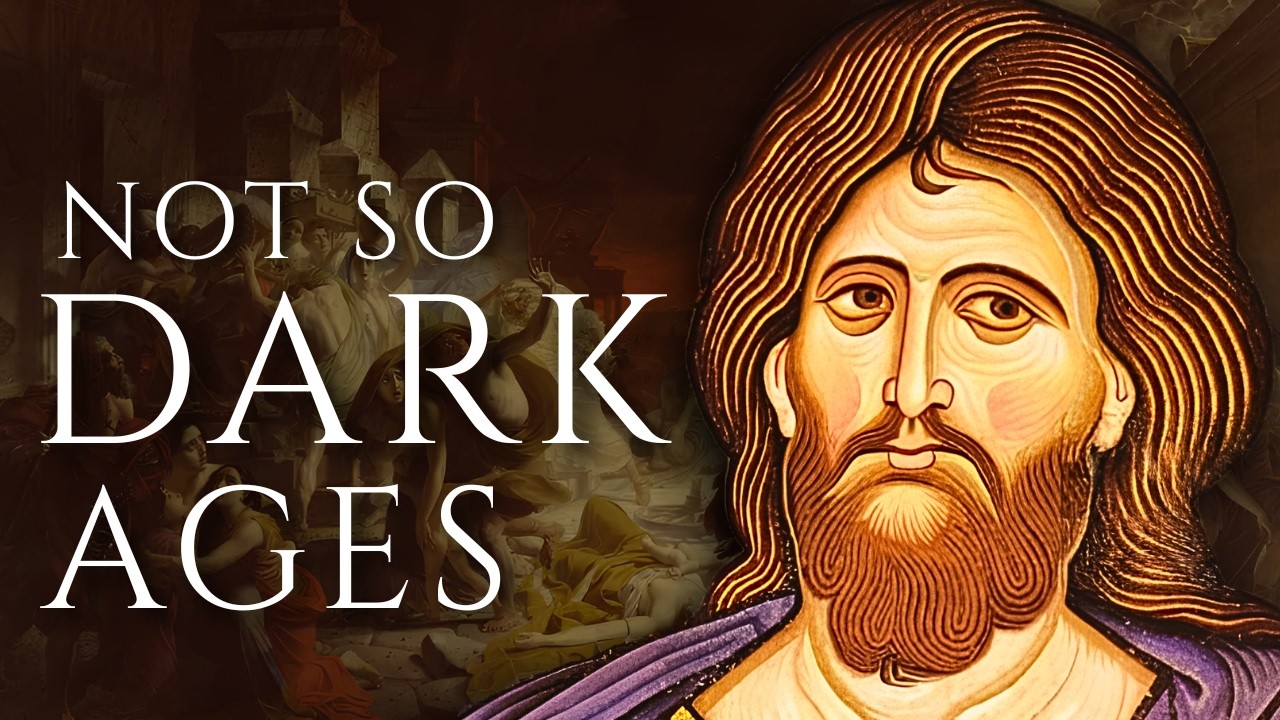
The judge was the sitting pope, Stephen VI, who hurled the charges one after another: that Formosus had held another see before he held Rome, that he had cleared himself of accusations, that he had been ambitious. The bishops of the Roman church sat on their benches and watched a living man interrogate a dead one who was, by most accounts, unraveling. The corpse was declared guilty. The dead man’s vestments were torn away.
The three fingers of his right hand, the ones he had used to bless, were severed. He was laid in a pauper’s grave, disinterred, and cast into the Tiber. A monk or a fisherman drew the body from the river and concealed it. An earthquake struck the Lateran while the dispute still burned, and people read it as a verdict.
Within months, Stephen was seized by a crowd, cast into prison, and strangled in his cell. Seven hundred years later, a cardinal in that same city, Cesare Baronio, sifting the records of the tenth-century popes for a history of the church, arrived at that trial and the decades that trailed after it. He wrote that he was entering an obscure age, a saeculum obscurum, a dark age. He meant the popes, and he meant roughly a hundred years.
The phrase escaped his control. Within two centuries, it stretched over everything from the fall of Rome to the Renaissance. A thousand years of Europe filed under darkness, and it is still the first thing most people think of when they hear the word medieval. The stretch Baronio was describing has plague pits and skull cups in it.
It also has Hagia Sophia and the shape of the lowercase letters in every printed book. Both are true at once. The fall begins with a wedding night. Attila the Hun died in 453 in his bed on the night he wed a young woman named Ildico.
The account reaches us through Jordanes, working from a lost history by Priscus, who had actually sat at Attila’s table on an embassy a few years before. Attila drank hard at the wedding feast and went to bed late. In the morning, his attendants found the bride seated beneath her veil, weeping, and Attila lying on his back, dead, with no wound upon him. He had suffered a nosebleed, one of his frequent ones, and with him flat on his back and senseless from wine, it had run down his throat instead of out of his nose.
He drowned in it. The Roman world he had been terrorizing did not grow safer with him gone. Two years earlier, the general Aetius had halted Attila’s army at the Catalaunian Plains. Aetius was the last truly capable soldier the Western Empire had.
In 454, the emperor Valentinian III summoned him to an audience, listened to him for a while, and then drew a sword and cut him down with his own hand. One of the courtiers said afterward that the emperor had cut off his right hand with his left. Six months later, Valentinian was killed by two of Aetius’s former bodyguards. Within three months, the Vandal king Gaiseric had a fleet in the Tiber.
Pope Leo went out to meet him and secured an agreement that the Vandals would hold back from fire and from killing. In exchange, they took everything else for fourteen days, methodically. They stripped the gilded bronze tiles from the roof of the Temple of Jupiter. They took the treasures Titus had carried back from the temple in Jerusalem nearly four hundred years earlier.
They took the empress and her two daughters. Twenty-one years after that, a Germanic officer named Odoacer decided there was no point pretending anymore. He sent the imperial regalia east to Constantinople and retired the last emperor, a teenage boy called Romulus Augustulus, to a villa in Campania on a pension. That was 476.
The city that had been sacked twice in forty-five years kept shrinking. Odoacer himself got seventeen years. The Eastern Emperor sent the Ostrogoths in under Theodoric to remove him. After three years of war, the two agreed to rule Italy jointly.
Ten days after the agreement, Theodoric held a banquet to celebrate it. Odoacer came. Two of Theodoric’s men seized his arms, and Theodoric stepped forward and cut him down himself, one stroke from the collarbone to the hip. Odoacer’s brother was shot dead trying to reach a church.
His wife was thrown into prison and starved. His son was killed trying to come home. That was the man who then ruled Italy for thirty years. And ruled it rather well.
He kept the Senate and repaired the aqueducts and hired Romans to run the paperwork of his kingdom. The most important of them was Boethius, born into one of the grandest families in Rome around 480. Consul at thirty, master of offices at forty, both of his teenage sons made consuls in the same year. In his spare time, he was translating Aristotle into Latin so that the West would still have him if the Greek was lost.
Around 523, a fellow senator was accused of treasonable letters to Constantinople. Boethius stood up and defended him, and the accusation moved on to Boethius. He was arrested and taken north to Pavia, held in confinement for the better part of a year. While he waited, he wrote a book.
The Consolation of Philosophy is a dialogue between a prisoner and the figure of Philosophy herself, who appears in his cell and talks him through why fortune’s wheel turns and what a man can keep when it does. It became for the next thousand years one of the most copied and translated books in Europe. Then they killed him. A cord was looped around his forehead and twisted with a stick until his eyes were forced out of their sockets.
Then they beat him to death with clubs. Not long after, a large fish was served at the king’s dinner, and Theodoric looked at the head on the plate and saw the face of Symmachus, Boethius’s father-in-law, teeth bared, staring up at him. He went to bed shaking and died a few days later in 526. In Constantinople, the emperor in those years was Justinian.
He took the throne in 527, a man with a lawyer’s cast of mind and a wife, Theodora, whose early life had been spent in the circus. Within ten years he came close to losing everything, and then raised the grandest church in Christendom on the ground left by the riot that nearly swept him away. In January 532 the capital’s two chariot-racing factions made common cause over a bungled execution and rioted for a week. They put half the city to the torch, the old cathedral included, and set up a rival emperor.
Justinian was already packing to run. Theodora held him back, remarking that purple makes a fine shroud for a burial. So instead of fleeing, he ordered his generals to march the troops into the Hippodrome. The stands were crammed with rioters, and every exit had been shut.
When the soldiers finally emerged, the figure circulating through the city was 30,000 dead. Justinian’s throne was safe. He rebuilt on the ruins. On the site of the burned cathedral he raised Hagia Sophia, and he did it in less than six years.
The dome spans 31 metres and rests on a circle of forty windows, so that seen from below it seems to hover. The structure has endured for close to 1,500 years. During those same years, his jurists were distilling a thousand years of Roman legal thought into the Digest and the Code, the bedrock of the legal systems of most of continental Europe and South America today. His glory lasted one year after the church was finished.
Then the sun faded. From 536 onward, for roughly a year and a half, the sun rose somehow wrong, and people across the Mediterranean set down the same observation independently. A senator in Ravenna grumbled that the sun had turned bluish, that a man at noon cast no proper shadow. A churchman in Syria recorded that the sun gave light for only about four hours a day.
Procopius stated it most bluntly: the sun gave its light without brightness, like the moon, and men were terrified. A volcano, most likely in Iceland, had driven a column of ash high enough into the atmosphere to spread around the globe and stay there. Four years on, another volcano in the tropics repeated the feat. Tree rings from Ireland to Siberia reveal growth all but halting for ten years, the coldest decade in 2,000 years.
And then came the bacterium. The plague of Justinian arrived in Constantinople in the spring of 542. Procopius watched it enter the city and recorded it in greater detail than any physician of the day. It began among the poor down by the harbor.
A person would wake with a mild fever. A day or two afterward, swellings appeared in the groin or the armpits. Some sank into a coma so deep they could not be roused to eat. Others were seized by a raving delirium and hurled themselves into the sea.
The daily death count climbed to 5,000, then 10,000. The gravediggers could not keep pace, so they went to the towers of the fortification wall, ripped off the roofs, and began dumping bodies inside. Justinian caught the disease himself, a bubo forming in his groin, and for several weeks the Roman Empire was governed by Theodora and a few officials pretending all was well. He pulled through.
The plague pushed west and did its damage in Italy and Gaul, and it returned again and again for two centuries. Italy in those years was a battleground as well. Justinian had resolved to reclaim the old western provinces, and his general Belisarius landed in Italy in 535 to wrest it from the Goths. The war dragged on for nearly twenty years and laid the country waste more completely than the barbarians ever had.
Rome was besieged, captured, lost, and captured again. In 546 the Gothic king Totila got inside the city after the inhabitants had eaten the dogs, the mice, and the nettles sprouting from the walls. He tore down a third of the walls, drove the surviving residents out into the countryside, and departed. For forty days or more, no human being lived in the city of Rome.
The aqueducts had been severed during the sieges, and to most of them the water never returned. When the fighting ended in 554, the Goths were finished as a people, and the peninsula lay in ruins. So when the next wave crossed the Alps fourteen years later, there was scarcely anyone left to resist. The Lombards entered Italy in 568 under a king named Alboin.
Before Italy, the Lombards had dwelt up on the Danube, locked in a long war with a neighboring people called the Gepids. It ended in a battle in which Alboin slew the Gepid king, Cunimund, with his own hand. He took Cunimund’s daughter, Rosamund, to wife, and had Cunimund’s skull cut down and mounted as a drinking cup. Paul the Deacon, writing 200 years later, states plainly that he had seen the cup himself.
Four years into the conquest of Italy, at a feast in Verona in 572, Alboin got drunk, called for the cup, had it filled, and sent it down the table to his wife with the message that she should drink cheerfully with her father. She did as she was told. Then she set about arranging her husband’s murder. The man she enlisted, a warrior named Peredeo, entered Alboin’s bedchamber while he slept.
Rosamund had taken the king’s sword and bound it fast to the bed frame so it could not be drawn. Alboin woke, groped for the sword, could not free it, and fought with a footstool for as long as a man can fight with a footstool. Then they cut him down. Across the Alps, the Franks were tearing one another apart with knives.
Nearly all we know of the early Frankish kings comes from Bishop Gregory of Tours, who wrote a vast and gossipy history of the Franks in the 580s and 590s. He was in the thick of it. He knew these people. The feud that consumed the century began with a marriage.
Chilperic, king in the north, had a mistress named Fredegund and a queen named Galswintha, a Visigothic princess from Spain. Galswintha complained about the mistress and asked to go home. Not long afterward she was found strangled in her bed, and within days Chilperic married Fredegund. Galswintha’s sister was Brunhilda, queen of the neighboring Frankish kingdom of Austrasia.
Brunhilda wanted blood for her sister and spent the next forty years getting it. She ruled Austrasia through her son and then her grandsons. In 613 the nobles turned on her and handed her over to Fredegund’s son, Clothar II, who had every reason to hate her. The chronicler says Clothar had her tortured for three days first.
After that she was mounted on a camel and led through the army’s lines. Then they bound her by her hair, a single arm, and a single leg to the tail of an unbroken horse and set it loose. The horse hauled her over the ground until her body came apart. Whatever the hooves and the earth had not destroyed was collected and set on fire.
A generation after Brunhilda, the Merovingian kings began to dwindle. The family holding the office of mayor of the palace produced Charles Martel, who halted an Arab army near Tours in 732, and his son Pepin, who in 751 sent to the Pope asking whether it was proper that the man holding the power should wear no crown. The reply was the one he hoped for. The last Merovingian was removed, his long hair was shorn, and he was dispatched to a monastery.
Pepin was anointed with holy oil. And his son was Charlemagne. Charlemagne comes closer than anyone else in this entire period to being a hero. He also gave the order for the single most terrible act in the written record of these centuries.
The war was fought against the Saxons, the pagan peoples beyond the Rhine, and it lasted more than thirty years. Each time the Frankish army withdrew, they rose up again. In 782, a Saxon uprising led by a chief named Widukind trapped a Frankish force in the Süntel Hills and annihilated it. Charlemagne rode north in a rage.
Widukind got away, but the Saxon nobles surrendered the men they claimed were to blame. What the royal Frankish annals set down is that at Verden on the river Aller, the king had 4,500 Saxons beheaded in a single day. The record is a single sentence from the official court chronicle maintained by his own clerks. That same year he issued a legal code for Saxony making it a capital offense to refuse baptism.
The war was also profitable. In 796, Charlemagne’s son breached the ring fortress of the Avars, and the treasure taken from it traveled west in fifteen wagons, each pulled by four oxen. Part of that gold went to Baghdad, to the Caliph Harun al-Rashid, who sent back, among other gifts, a white elephant named Abul Abbas. It walked from the Mediterranean coast across the Alps to Aachen, arrived in 802, lived at the Frankish court for eight years, and died while on campaign.
The other side of this is Alcuin of York, an Englishman whom Charlemagne brought in to establish a school at the palace. From that school came something that is still right in front of you if you are watching this on a screen. Alcuin and the scribes at Tours and Corbie and Fulda settled on a new script, small and legible with spaces between the words, with the tall and short letters we would now call upper and lowercase: Carolingian minuscule. Six hundred years afterward, Italian humanists unearthing ninth-century manuscripts assumed that such beautiful clear writing had to be the ancient Roman hand itself, and they copied it.
The first printers copied the humanists. When you type a lowercase letter, you are using Charlemagne’s handwriting reform. The scribes did something else as well: they preserved the classics. From all the centuries before 800, fewer than 2,000 manuscripts have survived.
From the ninth century alone, more than 7,000. Practically everything you have ever encountered from Roman literature reaches you through that copying. Charlemagne himself could not write. His biographer reports that he kept wax tablets beneath his pillow and practiced letters in bed when sleep would not come, but he had begun too late.
He stood about six feet tall, had a high, thin voice that caught people off guard, and would not give up roast meat when his physicians told him to. He died in 814 of pleurisy at Aachen and was buried beneath his own church. In the year 1000, his tomb was opened by a young emperor, Otto III, who wished to look at him. The account that came back was that Charlemagne sat upright on a marble throne with a crown on his head, and that the flesh had largely gone from the face, except that the nose had dropped away.
Otto had a gold nose fashioned to take its place. The school at Aachen was drawing on a tradition that had been sustained for the two preceding centuries at Europe’s far edge, in Ireland and the north of England. The Lindisfarne Gospels were painted around 700 on the tidal island of Lindisfarne off Northumbria by a single monk, Eadfrith, who ground his own pigments, some of them perhaps from lapis lazuli that had traveled from Afghanistan. The Book of Kells, made around 800 probably on Iona, is that same idea driven to obsession.
The great scholar of that tradition was Bede, who passed his whole life in the twin monastery of Wearmouth and Jarrow and who wrote in 731 a history of the English church. He also resolved to date everything from the incarnation of Christ, and it is largely because Bede’s book was copied everywhere that we count years the way we do. That was the world the Vikings sailed into. On the 8th of June, 793, ships came up out of the sea to the island of Lindisfarne, where Eadfrith had painted his gospels.
The heathen, as the chronicle describes them, wretchedly laid waste God’s church there through plunder and slaughter. Alcuin, at Charlemagne’s court in Aachen when word reached him, wrote back in a state of shock. Some of the monks were killed where they stood, cut down at the altar. Some were dragged down to the shore and drowned.
Some were carried off in chains to be sold. He also asked what the Northumbrians had done to deserve it. Among the sins he listed was that the men of Northumbria had taken to cutting their hair and trimming their beards in the pagan style, so as to resemble the very people who were now murdering them. For seventy years, it was raids, summer work, monasteries and coastal towns.
Then in 865, the Great Heathen Army came ashore in East Anglia, seized horses, and did not return home. It stayed through the winter. It moved north to York in 866. When the two rival kings of Northumbria ceased fighting each other long enough to assault the city together in March 867, the army admitted them and killed them both inside the walls.
For King Edmund of East Anglia, the tale of his death was set down a century afterward. The Danes seized him and demanded that he divide his kingdom and renounce Christ. He refused. They bound him to a tree and struck him with clubs.
Then the archers stood back and drove arrows into him slowly until, in Abbo’s words, he bristled with them like a hedgehog. Then they struck off his head and flung it into the brambles. The searchers who arrived later found the body but not the head. As they moved through the wood, they heard a voice calling, “Here, here, here,” and found the head lying between the front paws of a gray wolf that was guarding it.
The shrine at Bury St. Edmunds grew into one of the wealthiest in all of England. Some of that army, meanwhile, has been recovered from the ground. They spent the winter of 873 at Repton in Derbyshire, where they cut a defensive ditch clean through the local church.
In the 1980s, archaeologists opened one of the mounds and came upon a charnel deposit of almost 300 individuals, largely men aged 18 to 45. Radiocarbon testing published a few years back placed the entire group within the correct decade. It is thanks to Alfred that the English still possess a country. The army descended on Wessex in 878 in the depths of winter and trapped him at Chippenham just after Twelfth Night.
With a handful of men he fled into the Somerset marshes and concealed himself on an island at Athelney. By his biographer’s telling, he was also unwell through most of his adult years with a painful internal ailment that struck him first at his own wedding feast and never truly left him. From that island he gathered the men of the western shires, confronted the Danes at Edington that May and defeated them, and their King Guthrum consented to baptism with Alfred standing as godfather. Afterwards Alfred raised fortified towns in a network spanning Wessex, assembled the first English navy, commissioned the year-by-year chronicle so the kingdom would hold a record of itself in its own tongue, and turned his attention to books.
He lamented that when he took the throne, scarcely a priest south of the Humber could render a letter from Latin. Among the works he chose to put into English was The Consolation of Philosophy, which Boethius had written in a cell at Pavia three and a half centuries before, awaiting the cord and the clubs. Now the Vikings, seen from within. In 922, an Arab diplomat by the name of Ahmad ibn Fadlan was dispatched on a mission to the king of the Bulgars on the Volga.
During his stay there, a company of Rus, the Scandinavian traders who controlled the river routes, turned up to trade, and one of their chieftains died. Ibn Fadlan observed how they handled it and set it all down. It stands as the only eyewitness record of a Viking ship funeral anywhere in existence. By his account they were the tallest men he had ever encountered, shaped like palm trees, fair-haired and ruddy, and every last one of them carried an axe, a sword and a knife at all times.
He describes them as the filthiest of God’s creatures. The dead man was placed in a temporary grave for ten days while his funeral garments were sewn. Then his slave girls were asked which of them would die alongside him, and one girl answered that she would. From that instant on, she was not permitted to change her mind.
On the appointed day, a ship was dragged up onto the bank. The old woman they called the Angel of Death took charge of everything from that point onward. The girl moved from tent to tent among the men of the company, and each of them lay with her and said, “Tell your master I did this for love of him.” Then they brought her to a door frame erected on the shore and raised her up three times.
The first time she said, “I see my father and mother.” The second time she said, “I see all my dead kin seated together.” The third time she said, “I see my master seated in paradise, and paradise is green and beautiful, and he is calling me.” They led her up to the ship and into the tent, and six men followed her inside.
The men outside started striking their shields with sticks, and Ibn Fadlan explains that the purpose of the din was to keep the other slave girls from hearing her screams. The old woman looped a cord around her neck and thrust a broad dagger between the girl’s ribs again and again while the men hauled on the cord until she moved no more. Then the ship was set alight. A Rus standing beside Ibn Fadlan said something to the interpreter and laughed.
The interpreter relayed it to him: “You Arabs are fools. You take the man you love best and put him in the ground for the worms to eat, while we burn him in a moment and he goes to paradise that very hour.”
The trade was chiefly in people. Our word slave derives from Slav.
The Slavic peoples of Eastern Europe were carried west and south in such numbers that the ethnic name itself became the word for the condition. In 1086, when the Norman conquerors surveyed England, they discovered that at the very least one person in ten was owned. Most people across these centuries did not die like Brunhilda or the girl on the Volga. They died of being alive in the seventh century, and the skeletons are the record.
Excavate an early medieval cemetery and roughly a third of the graves belong to children. Women died in childbirth at a rate that turned every pregnancy into a gamble. Anyone who reached adulthood bore the marks: lines across the teeth where growth halted in a hungry year, abscessed teeth on every side, a dental abscess left untreated killing you at 30. Healed weapon cuts in skulls.
The law was drafted to leave marks as well. Anglo-Saxon law codes set a price on everyone. Alfred’s law assigns a separate price for a wound that leaves the bone exposed. Æthelstan’s laws hanged any thief over twelve years old caught with more than eightpence.
Cnut, the Danish king who came to rule England, wrote it into law that a second offender should lose his hands or his feet or both, so that, in the words of the text, his soul might be saved. Between the plagues and the poisonings came the ordinary famines. In the wet years, rye stored damp developed a fungus called ergot, which constricts the blood vessels. In 857, a chronicle from the Rhineland describes a great pestilence of swollen blisters that consumed people with a loathsome rot so that their limbs came loose and dropped off before they died.
Ergotism. First the burning, a sensation people described as fire beneath the skin, which is how it came to be called holy fire or St. Anthony’s fire. Then the fingers and toes turn cold and black and dry out and mummify, and eventually a foot or a hand can simply come away at the joint without bleeding, with the person still conscious and watching.
Yet the same centuries were also growing better at feeding people. The heavy wheeled plow spread across northern Europe and allowed farmers to break open the deep wet clay soils the Romans had never managed to cultivate. The horse collar arrived and let a horse pull from its shoulders rather than its throat. Water mills went from a Roman rarity to something every village possessed.
When the Normans carried out their survey of England in 1086, they tallied close to 6,000 of these mills. Spain developed its own equivalent of all this. Once the Visigoths had settled there, they brought forth in the 600s a bishop of Seville by the name of Isidore, who resolved to write down everything and actually did so. His Etymologies amounts to an encyclopedia of the entire body of ancient knowledge, and for the following 800 years it was copied into practically every library in Europe.
That kingdom, with its encyclopedia and its law, collapsed in a single afternoon in 711. An army of Arabs and Berbers crossed over from Morocco led by a commander called Tariq, and the Visigothic king Roderic was defeated and disappeared. Within four years, the entire peninsula except for a mountain strip in the north was governed from Damascus. Rome by that point had arrived at the very decades Baronio was writing about.
Formosus had served as pope from 891 to 896, a fairly capable and fairly upright man in a Rome where the papacy had turned into a trophy contested by noble families. Following his trial and everything else, the pope two places after him had Formosus reburied in St. Peter’s with full honors. Then in 904 a pope from the original anti-Formosus camp, Sergius III, took power and restored the entire verdict.
Sergius, as Liutprand of Cremona tells it, kept as his mistress a fifteen-year-old Roman noblewoman called Marozia, and the son she bore by the Pope in time became Pope John XI. Marozia married three times, and her son from her first marriage turned against her in 932 and had her imprisoned. A document from 986 survives in which a bishop is dispatched to absolve an old woman in a cell named Marozia shortly before she is executed. If that is indeed her, she passed half a century in the dark.
Alberic, Marozia’s son, governed Rome for twenty years, and on his deathbed he made the nobles swear to elect his teenage son as pope. They complied, and the son became John XII at around eighteen. Liutprand’s description of him is the most extraordinary thing in the entire period. He claims John converted the Lateran into a brothel, that he ordained a deacon in a stable, that he blinded his own confessor and castrated a cardinal who died from it.
When the German king Otto arrived in Rome and had him deposed in 963, John bided his time until Otto had departed, returned with an army, and settled accounts with the men who had voted against him. A cardinal deacon had his right hand severed. A notary was deprived of his tongue and his nose. In 964, at roughly 27, he died while in bed with a married woman.
Liutprand detested the Roman aristocracy and composed the whole account to justify the deposition. Even so, the papacy of those decades was inherited and fought over like a farm. The man who reached it in 999 and actually did something with it came from about as far from Rome as one could possibly be. Gerbert of Aurillac was a peasant’s son from the mountains of central France, handed to a monastery as a boy.
Around 967, a passing Catalan count spotted how quick he was and brought him south across the Pyrenees to study. The monasteries of Catalonia stood on the border with the Muslim caliphate of Córdoba, and the monks there had for decades been quietly collecting Arabic books on mathematics and astronomy. Gerbert devoted three years to learning what the Arabs knew. He constructed an abacus and worked it with the nine Arabic numerals rather than Roman ones, the first occasion those figures had been used in the Latin West for calculation.
He constructed an armillary sphere from wood to demonstrate to his students how the heavens moved. He served as tutor to Otto III, and in 999 Otto made him pope. He adopted the name Sylvester after the pope who had baptized Constantine. To the Roman clergy, he was a foreign sorcerer who did arithmetic with heathen symbols.
Within a generation, the tale had spread that he had learned it all from the devil. He had learned it from a civilization that stood at its peak while Rome was digging up popes. In the years Marozia sat in her cell, Córdoba under the Caliph al-Hakam II was the largest city in Europe, with a library that later writers claimed held 400,000 volumes. The streets were paved, some of them illuminated at night, and no city in the Latin West could claim as much.
Otto died in 1002 of a fever, probably malaria, at 21. Gerbert died in Rome in 1003, four years into his papacy, and was buried in the Lateran. Rome recalled him differently. Within a century, pilgrims were being told that the stone of his tomb grew wet whenever a pope was about to die.
The kingdom Alfred built held together unified for a century. Then the raids returned in the 980s under Ethelred, whom later generations would call the Unready. In 991, a fleet came ashore at Maldon in Essex, and the ealdorman of the shire, Byrhtnoth, an old man with white hair, met them on the causeway leading to their island camp and allowed them across to the mainland so the fight could be fair. He was killed.
The poem about it recounts that a Viking spear passed through him, and his arm was hewn so that his gold-hilted sword dropped from his grasp. The monks of Ely, who had been his friends, came and retrieved him and discovered that the Danes had taken his head. They buried him with a ball of wax where it should have been. When the tomb was opened in 1769, they found a very tall skeleton with no skull.
After Maldon, Ethelred’s government began paying the Danes to go away, and the sums rose each time. In 1002, he attempted something different. On the 13th of November, St. Brice’s Day, he gave orders that every Danish man in England was to be killed.
In Oxford, the Danes fled into the church of St. Frideswide for sanctuary, and the townspeople set the church alight with them trapped inside. In 2008, workmen excavating in Oxford uncovered the ditch of a Neolithic henge and found the bones of somewhere between 34 and 38 young men, all roughly 16 to 25 years old, heaped on top of one another in the ditch. Nearly every skeleton had been stabbed or cut, most of them in the back, the pelvis and the legs, wounds of the kind you get running from someone with a sword.
Several had been burned. The isotopes in their teeth pointed to Scandinavia. The killings gained Ethelred nothing. The Danish king Sweyn Forkbeard came to conquer in 1013, and the country gave up on Ethelred and submitted town by town.
Sweyn died five weeks after being accepted as king. His son Cnut took the entire kingdom three years later, and for a generation England was governed from Denmark. The Byzantines in those same years stood at the summit of a long recovery. Basil II spent the bulk of his reign battling the Bulgarians.
In July 1014, he caught their army in a mountain pass at Kleidion and wiped it out, and, as the chronicler reports, seized 15,000 prisoners. He ordered every one of them blinded. Each hundredth man kept a single eye, so that he might lead the remaining ninety-nine. The columns were sent back across the mountains to their Tsar Samuel.
At the sight of them approaching, Samuel broke down, and two days later he was dead. From then on Basil was known as the Bulgar-Slayer. And at Europe’s opposite extremity, the Vikings were up to something of which neither Rome nor Constantinople had any knowledge. The Norse had settled Iceland in the 870s and established a national assembly there in 930.
In 985, an outlaw by the name of Erik the Red led a fleet of settlers westward from Iceland to a coast he had named Greenland. Around the year 1000 his son Leif journeyed west once more and returned with tales of a land of wild grapes and timber. In 1960, a Norwegian couple came upon the remains of eight turf buildings at the northern tip of Newfoundland. A few years ago, the wood the Norse had cut there was dated, and the tree rings yielded an exact year: 1021.
While Ethelred’s men were piling skulls in a quarry pit in Dorset, other Scandinavians were cutting down trees in Canada. The Greenland farms endured longer than anyone else in this story. The final written record from them is a wedding held in 1408 in the church at Hvalsey, whose stone walls still stand. After that, the letters cease.
An Icelandic account from the 1540s tells of a crew that put in there and found a single dead man lying face down on the shore, dressed in a hood and homespun, and no one else.
