The shot came from behind, a single crack that cut through the cold air of Ravensbrück. Violette Szabo, twenty-three years old, knelt in the alley between the crematorium and the punishment block, facing her death as she had faced the war that had brought her here. The SS-Rottenführer Schult pulled the trigger, and the woman the men and women of the Special Operations Executive had adored for her courage and her infectious Cockney laughter was gone. Her companions, Denise Bloch and Lilian Rolfe, too weak to stand and carried on stretchers, met the same fate moments later under the unflinching gaze of Fritz Suhren, the camp commandant who had pronounced the death sentence.
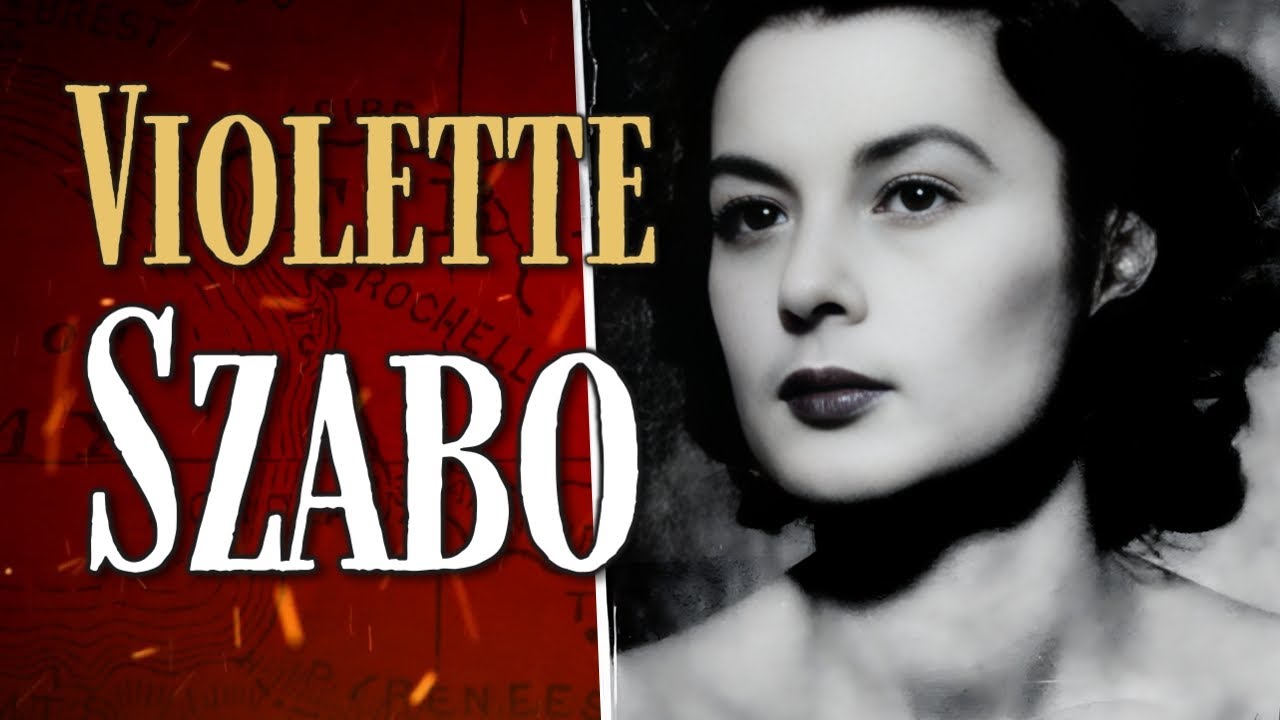
The precise date of the execution is not known, but it is believed to have occurred on or before the 5th of February 1945, less than two months before the Red Army liberated the camp. Violette Szabo would never see that liberation. She would never see her daughter again. She had been born Violette Bushell on the 26th of June 1921, in the radiant heart of Paris, the only girl among four brothers.
Her father, Charles George Bushell, was an Englishman who had been drawn into the First World War as a British Army driver. While serving his country, he met and fell in love with Reine Blanche Leroy, a seamstress from Pont Rémy. When the echoes of artillery fire faded, they settled in London, where Charles became a jack of all trades, driving taxis and peddling cars. The 1930s brought the icy grasp of the Great Depression, and the Bushell family was not immune.
Charles and Reine made the painful decision to send young Violette and her youngest sibling, Dickie, to live with their maternal aunt in the rustic tranquility of Picardy. Violette’s adventurous spirit found a home there, and she became fluent in French. The family was eventually reunited in South London shortly after her eleventh birthday. Violette blossomed into a vivacious sprite, a whirlwind of activity amid a gaggle of brothers and male cousins.
Whether it was gymnastics, long-distance cycling, or ice skating, she took on all physical challenges with relish. She was at heart a tomboy, spending countless hours honing her marksmanship under the stern tutelage of her father. Rumour had it she seldom missed her target. Upon returning to London, Violette had to relearn English after enrolling at a school in Brixton.
Her bilingual prowess made her a curiosity among her classmates, and within the confines of her home French was often her language of choice, except around her English-speaking father, with whom she often found herself at loggerheads. In the wake of one heated disagreement, she even dared to abscond to France, but like most angsty pre-teens, soon returned home. As she ventured into her early teens, Violette became enchanted with the world of French fashion. She became the apprentice to a South Kensington corset maker at age fourteen.
Later, she would navigate the bustling aisles while working at Woolworths on Oxford Street, and when the Second World War broke out in 1939, she was working at the famed Brixton department store, Le Bon Marché. Young Violette could not possibly have contemplated that she would soon be trading her needle and thread for a Sten submachine gun. In the grim dawn of 1940, Violette joined the Women’s Land Army, an organization established to bring women into the agricultural labor force to fill the gap left by men shipped off to war. She traveled to the verdant pastures of Fareham in Hampshire, where she was put to work as a strawberry picker.
It was not long, however, before she was drawn back into the heart of London, where she entered the metallic belly of an Acton armaments factory. It was while working there that, amid the jubilant chaos of the London Bastille Day Parade in 1940, she met Étienne Szabó. He was a man of Hungarian origin and a gallant non-commissioned officer in the French Foreign Legion. Their hearts twined together in a dizzying whirlwind romance.
Their brief courtship culminated in an intimate wedding ceremony a mere five weeks later. Nineteen-year-old Violette and thirty-one-year-old Étienne scarcely had time to savor their nuptial bliss before duty called Étienne away. Violette now manned the switchboards at the General Post Office, her fingers dancing across the keys as the Blitz raged outside. For someone of Violette’s nature, the monotony of her job soon wore thin.
She was prompted to enlist in the Auxiliary Territorial Service, which she did on the 11th of September 1941. After completing specialized artillery training, she was eventually posted to Frodsham in Cheshire. There she was surprised to learn of her pregnancy, and thus she soon traded her uniform for maternity clothes and returned to London to await the birth of her first child. On the 8th of June 1942, while living in a flat in Notting Hill, she gave birth to her daughter, named Tania Szabó.
Unbeknownst to Violette, just a day after Tania’s birth, her husband courageously faced off against the relentless onslaught of the 15th Panzer Division at Bir Hakeim in North Africa. Violette soon returned to work, this time in the South Morden aircraft factory, where her father served. It was during this time that she received the dreadful news of Étienne’s death. Her heart ached at the knowledge that he had fallen, never having had the chance to meet their daughter.
It was Étienne’s death that steeled her resolve to accept an offer to train as a field agent with the British Special Operations Executive. This was her poignant tribute to her fallen love, her personal rebellion against the enemy that had robbed her of him. Precisely how Violette Szabó found herself being recruited by the SOE remains shrouded in mystery, her official file revealing little. Her fluency in French and her impressive stint with the ATS likely caught the keen eye of the SOE recruiting for F Section, whose agents went to occupied France to fight against the German Army.
One can only imagine that Violette would have received an invitation to attend an interview concerning war work with a man named E. Potter. Beneath this mundane alias, however, hid Selwyn Jepson, F Section’s cunning recruiter. Violette was picked for the demanding role of a field agent, and her formal commission found her in the ranks of the First Aid Nursing Yeomanry, a civilian disguise often donned by female SOE operatives.
Her induction into the shadowy world of spycraft took her to STS-4, a secluded training school nestled within the sprawling grounds of Winterfold House. Despite some reservations, her instructors passed her on to the Special Training School 24 of Group A at another training camp tucked away in the remote Scottish Highlands. Her performance was again met with mixed reviews, but she nevertheless progressed to Group B and the final stage of her training. Violette’s next destination was the SOE’s illustrious finishing school at Beaulieu in Hampshire.
A whirlwind of instruction awaited her, ranging from the art of escape and evasion to the science of cryptography, uniform recognition, and weaponry and demolitions training. The grand finale of her grueling training regime was mastering the art of parachute jumping, held at Ringway Airport near Manchester. A mishap during her initial attempt resulted in a severely sprained ankle, which compelled her to take a brief hiatus to recuperate and for her first deployment to France to be delayed. After recovering from her injury, Violette returned to complete her parachuting course, achieving a second-class pass in February 1944.
Taking a pause from her training, and knowing that she would soon be deployed to France, she made her will, in which she left everything she owned to her dear daughter Tania. Bracing herself for war, she began to prepare for her first mission to France as an SOE agent. Violette’s first mission required her to serve as a courier for the Salesman circuit, headed by Philippe Liewer. However, after receiving reports from France that several resistance members in the Rouen area had been arrested by the Gestapo, the mission had to be postponed.
This unexpected delay proved fortuitous for Violette, buying her time for a refresher course in wireless operation back in London. It was during this time that Violette met famed SOE cryptographer Leo Marks. Considered a misfit by his superiors during training, Marks went on to become a hero of the SOE. At the time, the SOE used the imperfect poem code system to encrypt their Morse code communications.
Violette was given a French nursery rhyme to use as her cipher, but observing her battle to learn and remember it, Marks gave Violette his own composition, “The Life That I Have,” as her code poem. Under the cloak of darkness on the night of the 5th and 6th of April 1944, a Westland Lysander aircraft whisked Violette and Liewer away from RAF Tempsford in Bedfordshire, landing them in German-occupied France near the quaint village of Azay-le-Rideau in the verdant Loire Valley. Violette assumed the guise of Corinne Reine Leroy, a commercial secretary operating under the code name Louise, a fond nickname from her past. Violette and Liewer, operating as Major Charles Staunton, labored to assess the damage caused by the German arrests.
Violette’s daunting task was to probe the ruins of a circuit that once boasted over 120 members. She traveled alone across the network’s area of operations to investigate further. What she discovered was grim: the circuit lay in irreparable shambles, its leadership having been decimated. Violette returned to Liewer and delivered her bleak report.
Her mission, although bearing mostly bad news, had been a success owing to the intelligence Violette managed to gather on the locations of local factories producing war materials for the German Army. This information was used to plan Allied bombing targets. For her efforts, Violette was promoted to ensign. Violette flew back to England on the 30th of April 1944, but she did not have much time to rest after returning home, for the Allied D-Day landings were scheduled for just a few weeks later.
She was soon called back to France on her second and, unfortunately, final mission. Inclement weather and the ever-present German Army patrols thwarted two attempts by the SOE to send Violette back into France. Then, as dawn broke on the 8th of June 1944, just two days after D-Day, Violette soared into the skies aboard a USAAC Liberator along with her fellow agents of the SOE. The team was dropped by parachute on the outskirts of Limoges in west central France.
Codenamed Salesman 2, the team’s mission was to set up a new network among the local resistance groups and support the ongoing Allied liberation of France. Adopting the alias of a young widow from Nantes, Madame Villeret, Violette was tasked with helping to bring order to the disarray of the local Maquis and to sabotage German communication lines. Liewer was met with disappointment when he discovered, to his dismay, that the local Maquis were poorly led and ill-prepared for the task at hand. With an air of determination, Liewer dispatched Violette as his liaison officer to the more active Maquis groups in Corrèze and the Dordogne.
These groups were led by Jacques Poirier of the SOE, head of the recently renamed Digger circuit. Unbeknownst to them all, they were operating under the hulking shadow of the German 2nd SS Panzer Division, which was inching its way north towards the battlefields of Normandy through the very territory they were operating in. It is arguable that the lack of intelligence regarding the German Army movements in the area would ultimately cost Violette her life. Violette set off on her mission on the morning of the 10th of June, against Liewer’s better judgment for Violette to travel by bicycle.
She made the critical error of traveling as a passenger in a car driven by a young Maquis leader codenamed Anastasie, whose real name was Jacques Dufour. Armed with a Sten gun and ammunition, and dressed in a lightweight suit and flat shoes, Violette set out on her journey, traveling in defiance of the German prohibition against the use of French cars following D-Day. The commuting pair risked drawing even more attention to themselves as they drove the fifty kilometers to Violette’s next waypoint. After collecting another resistance member, Jean Barriou, their journey along the sun-drenched fields of south central France was suddenly thwarted.
Appearing before them just outside Salon-la-Tour was a German roadblock. The German troops were desperately searching for Helmut Kämpfe, the Waffen-SS Sturmbannführer who had been abducted by the French Resistance. The German soldiers’ suspicions were immediately aroused when they saw the French vehicle along the road. As the car reduced speed, Barriou, unarmed, seized the opportunity to escape, jumping from the vehicle and returning to base to warn the Salesman team of the impending danger.
When Dufour brought the car to a halt, he and Violette sprang into action. A fierce gunfight ensued, both sides firing at each other relentlessly. German armored reinforcements soon arrived on the scene. Pinned down, Violette and Dufour managed to vault a gate and sprint across a field towards a small stream.
In the process, Violette severely twisted her previously injured ankle. There was no way she could continue on foot, and so she urged Dufour to continue on without her. Behind the veil of a cornfield, she sought refuge under an apple tree and provided covering fire, thus enabling Dufour to make his escape. For thirty intense minutes, she waged a solitary war against the Germans.
In the skirmish, she killed at least one German corporal and wounded a number of others. Inevitably, her ammunition reserves were depleted. Stricken and alone, she fell into the hands of her German enemy. Violette was soon transferred to the custody of the Sicherheitsdienst, the SS security service, in Limoges.
There she was interrogated for four days. She gave up no information, only telling her captors her fake name, Vicki Taylor. She was then moved to Fresnes prison in Paris for further interrogation and torture by the SD. By this stage, the Germans were well aware of her true identity and her role as an SOE agent.
There would be no happy ending for Violette. As George Patton’s Third U. S. Army and the other Allied forces carved their way through France towards Paris, the Germans relocated their most valuable French captives to Germany.
Shackled to her fellow SOE operative Denise Bloch, Violette, along with other imprisoned agents, many of whom were familiar faces, was herded onto a train on the 8th of August 1944. Upon reaching Reims, they were confined in a large barn for a few restless nights. During this time, Violette, tethered to the optimistic Bloch, managed to wash her clothes and share her daunting experiences with her colleague Harry Peulevé. Their journey led them to Saarbrücken, and on the 25th of August 1944, after an arduous eighteen-day journey, they arrived at their final destination: the notorious Ravensbrück concentration camp.
Ravensbrück was a women’s only facility, and Violette was housed there along with Denise Bloch and another SOE agent, Lilian Rolfe. Despite being forced into grueling labor and suffering crippling hunger during their imprisonment, Violette exhibited a resilience that proved contagious among her fellow prisoners. After bravely refusing to manufacture ammunition at a nearby munitions factory, Violette and many others were forced to labor outside the camp boundaries digging potatoes. As winter descended, the women were moved to a punishment camp at Königsberg, where they faced brutal physical labor, enduring torturous early morning roll calls and dressed only in thin summer attire to combat the chilling East Prussian winds.
The prisoners barely survived on their meager food rations. Despite their plight, Violette remained hopeful of liberation, all the while plotting her escape while she worked. By late January 1945, the three British agents held in captivity, already suffering from their ordeals, were placed in solitary confinement, a blow that finally shook Violette’s otherwise resilient spirit. In the stark cold alleys of Ravensbrück, a young woman’s story of grit and defiance was tragically snuffed out at just twenty-three years of age.
Violette faced her death bravely, kneeling as the Grim Reaper in the guise of SS-Rottenführer Schult loomed over her. In a retrospective appraisal in 2012, Max Hastings celebrated Violette’s legacy as a woman adored by the men and women of SOE both for her courage and her endless infectious Cockney laughter. Her trainers’ reports, however, were a patchwork of praises and criticisms, doubting her finesse and influence ability, yet admiring her indefatigable cheerfulness and willingness to please. On the 17th of December 1946, Violette became the second woman posthumously honored with the esteemed George Cross.
The French government paid tribute to her courage in 1947 with the Croix de Guerre with bronze star, and again in 1973 with the Médaille de la Résistance. Violette’s George Cross, gazetted on the 17th of December 1946, was lovingly received by their four-year-old daughter Tania from King George VI himself. Étienne Szabó was also posthumously awarded the Croix de Guerre for his military service to France. Their combined honors are believed to make Violette and Étienne the most decorated married couple of the Second World War.
In the landscape of the media, Violette Szabó’s life has shone like a beacon of bravery, being commemorated in print and on the silver screen. The 1958 British war drama film “Carve Her Name with Pride” was released as an adaptation of the book by R. J. Minney of the same name.
Tania Szabó went on to pen a gripping account of her mother’s missions in France, published in 2007 as “Young, Brave and Beautiful. ” Today, Violette Szabó’s name lives on as an inscription on the Valençay SOE memorial, a testament to her sacrifice for the liberation of France.
