The call came to the hospital in the late morning of December 5, 2001. Nancy Smith, thirty-two, had not shown up for her shift, and for a woman her colleagues described as dependable and responsible, that was unusual enough to cause real worry. Friends and coworkers tried to reach her. When their calls went unanswered, her parents decided to drive to the home she had recently bought on Provost Drive in New Windsor, New York.
What they found inside was the nightmare every parent fears. Nancy was dead on the living room floor, the victim of a brutal attack. She had been stabbed and beaten to death. The scene immediately told investigators this was no accident, but in the confusion and grief of that first day, they had almost nothing else to go on.
Nancy had built a life that gave no hint of such an end. She held degrees from SUNY Oneonta and Marist College, and had carved out a successful career in healthcare at Horton Hospital in the Hudson Valley. Friends remembered her as kind, smart, and hardworking. The crime stunned the quiet community of New Windsor, where violence of this kind was all but unheard of.
Investigators threw themselves into the case. They interviewed witnesses, scrutinized friends, coworkers, and acquaintances, and re-examined evidence again and again as forensic technology advanced. For more than two decades, over a thousand leads were chased by local police, state authorities, and federal agents. Each promising thread eventually ran into a dead end.
The lack of answers was devastating for Nancy’s family. Holidays, birthdays, and anniversaries of her death passed without justice. Her parents spent the rest of their lives wondering who had taken their daughter from them. Tragically, both parents died in 2024 without ever learning the identity of their daughter’s killer.
Investigators kept working the case, even after sixty-five DNA samples failed to match anyone. Then one small piece of evidence changed everything. The breakthrough came from a single strand of hair. In 2023, more than two decades after the crime, investigators sent the hair to a commercial database.
Through family connections, it led them to a person of interest in South Carolina. The hair produced a DNA profile, and that profile eventually pointed toward a man named Robert Young. In 2024, investigators traveled to Myrtle Beach to obtain a DNA sample from Young, a musician who had played in several bands in Dutchess County years before. The sample was a match.
In April 2026, investigators went back to South Carolina and questioned Young about Nancy. The fifty-eight-year-old denied any involvement, and the police returned to New York to continue building their case. Just days after that interview, Young was found dead in his apartment, an apparent suicide. Investigators never established a motive for Nancy’s murder.
There had been no signs of forced entry at her home. Nancy, a music lover, had met Young at a Hudson Valley music venue called The Chance. Her family said Young’s death meant he would never stand trial, but it also spared them the pain of court proceedings. Because of his death, he could no longer be arrested or tried.
Police then announced they considered the case solved. One mystery remained unanswered: the motive. Authorities never publicly said why Nancy was targeted. In May 2026, nearly twenty-five years after the murder, New Windsor police formally revealed the results of their investigation.
For Nancy’s surviving family, the announcement brought mixed emotions. Relief, grief, and the knowledge that the man responsible would never face a courtroom. Barbara Stultz, Nancy’s sister, put it plainly. “People say there is closure, and there is in a way,” she said.
“There’s relief, there is little peace. ” She added: “Nothing will bring Nancy back to us, but at least this person can’t hurt anybody else and do this to another family, because like I said, it really doesn’t get better and it never goes away. ” The case stood as a powerful example of how DNA technology continues to solve crimes that once seemed impossible. One hair, preserved for nearly a quarter of a century, accomplished what thousands of leads could not.
Nearly forty-eight years of effort finally paid off in identifying a man whose remains were found in Florida in 1978. On November 24, 1978, partial skeletal remains were discovered in a wooded area near highways 10 and 75 in Lake City, Florida. The bones were scattered and partially buried under soil and pine needles. Beside them lay a piece of denim pant leg.
A forensic anthropology examination determined the remains belonged to an adult white male, likely between thirty-five and fifty years old at the time of death. Investigators had very little to work with, and the man’s identity remained unknown. He became known as Lake City John Doe. A sketch was made and released to the public, but it produced no identification.
Case details were entered into the national system for missing and unidentified persons. In 1996, eighteen years after the case was opened, it gained renewed attention. Experts from the University of Florida’s Human Identification Laboratory determined the victim was likely a white male between thirty-five and forty-five, standing about five feet nine inches tall. His bones showed signs of arthritis, a healed fracture in his heel, and years of hard physical labor.
Investigators also believed he was right-handed. A facial reconstruction was created, and mitochondrial DNA testing was conducted in the early 2000s. Despite these efforts, no matches were found. The man’s identity remained a mystery for another three decades.
In 2025, investigators partnered with Astreum to use investigative genetic genealogy, a process that allows investigators to identify individuals from DNA evidence even when there is no known reference sample to compare against at first. Officials from the Columbia County Sheriff’s Office and the Florida Department of Law Enforcement worked together to submit forensic evidence to Astreum’s laboratory. Scientists there extracted DNA from the evidence using high-resolution genome sequencing to build a comprehensive SNP profile of the man. This profile supported a forensic search led by Astreum’s in-house forensic genetic genealogy team, generating new investigative leads about the man’s identity.
Follow-up investigation led investigators to possible relatives. A major breakthrough came on January 5, 2026, when a private forensic laboratory found a link. A family member later provided a DNA sample that confirmed the identity. On May 6, 2026, it was announced that the man was known as Lonnie N.
Reeves. Lonnie was born on November 21, 1943. His sister Linda told investigators she had not seen him since the early 1970s and did not know whether he was alive or dead. Investigators said he was known to hitchhike and live as a transient at the time.
He had served in the United States Coast Guard and had a passion for art. He had been married and left behind two sons. Before his disappearance, family members last saw him walking along a beach in New Jersey. They tried to file a missing person report with New Jersey State Police in 1976, but because he was a transient, authorities did not classify him as missing.
Linda described his life as that of a cowboy and said he lived an extremely physically active lifestyle, which could explain some of the injuries found in his skeletal remains. “He was good,” she said. “He was good. He was a real cowboy, real, real cowboy.
” Despite the circumstances of his body’s discovery, investigators ultimately found no evidence that his life was ended intentionally. Authorities concluded there was insufficient evidence of criminal suspicion and determined his death was from natural causes. However, because only skeletal remains were found and so much time had passed, many details surrounding his final years remain unknown. Columbia County Sheriff Wallace Kitchings expressed regret that the remains had not been identified sooner.
“We apologize for the length of time this has taken,” he said. “No family should have to go decades without knowing what happened to their loved one. ” The remains were released for cremation and the case was officially closed. After nearly half a century as an unidentified person, Lonnie finally got his name back, bringing long-awaited answers to his surviving family.
“Nobody gave up,” Linda said. “They just kept trying and kept moving forward. It’s been a long time. Fifty-five years of not knowing where he was or how he was.
It’s finally over. ”
A young woman’s case haunted southern Illinois for more than four decades. For years, investigators had almost nothing to work with. No arrests, no clear suspect, only scraps of evidence left in a remote rural field.
Her family lived through decades of uncertainty before the case suddenly broke open thanks to advances in DNA testing. In March 1984, Lisa Ann Carnes, twenty-six, lived in the small community around Massac County, Illinois. Friends described her as kind and social, with plans for the future and strong family ties. On the morning of March 30, a property owner in Massac County, checking on previous vandalism, discovered blood on the yard of the home, the back porch, and the door frame, indicating an attempted break-in.
The Massac County Sheriff’s Office sent Deputy Barger to investigate. Deputy Barger documented the scene and found a blood-stained shoe near the home and a second shoe about fifty yards east of the residence. As the morning wore on, authorities discovered five small pools of blood on the road near the property. Shortly after, pieces of clothing were found on the roadside, including a woman’s wool sweater with a set of keys in the pocket.
A deputy from Pulaski County at the scene examined a photo attached to the keys and recognized the people as Lisa and her husband Ernest. Later that day, Lisa’s body was discovered in a rural field south of County Road 1150 North and east of U. S. Route 45 in Massac County.
The next day, March 31, an autopsy revealed she had suffered a fatal gunshot wound to the chest, causing death by massive hemorrhage. Signs of blunt force trauma to her head were also noted. Several pieces of clothing were found near the site where her body was discovered. The remote location immediately raised troubling questions.
Why was she left there? Was she shot somewhere else and then transported to that field? And perhaps most disturbingly, who did this? Shortly after, Lisa’s truck was found abandoned miles away, adding another mysterious dimension to the investigation.
A driver heading toward Metropolis reported seeing a woman matching Lisa’s description walking along the road. During the initial investigation, forensic techniques were limited. Investigators relied heavily on witness interviews, physical evidence, and traditional investigative work. Despite their efforts, the case stalled quickly.
Violent crime was rare in the quiet rural communities of southern Illinois, and Lisa’s case left many fearful and anxious. Rumors circulated in the area for years, but none led to criminal charges. Investigators never publicly identified a possible suspect during the early stages of the case. As time passed, leads dried up, witnesses moved away, and newer investigations took over.
Eventually, Lisa’s case became one of those haunting cold files, never forgotten, but seemingly never to be solved. Still, Lisa’s family kept pressing for answers. Authorities later acknowledged that her relatives helped keep interest in the case alive for decades. Investigators finally reopened Lisa’s case and examined evidence collected from the original crime scene using modern DNA testing methods.
According to later reports, the investigation involved the forensic genealogy company Parabon NanoLabs and financial assistance linked to the true crime YouTube channel Explore With Us. Investigators reportedly traced the DNA profile first to the son of one potential suspect. The son was ruled out because of his age, but the investigation soon turned toward George E. Bradfield.
Investigators later interviewed Bradfield, who admitted he had worked as a blacksmith at the Missouri Portland Cement plant in nearby Joppa, Illinois, around the time Lisa was killed. Authorities also interviewed Bradfield’s current wife, his ex-wife who was married to him between 1971 and 1980, and another woman said to have been in a relationship with him during the mid-1980s. In April 2026, more than forty-two years after Lisa’s murder, authorities announced a stunning breakthrough. On April 22, a Massac County grand jury indicted seventy-six-year-old Bradfield, of Owensboro, Kentucky, on five counts of murder.
The announcement shocked longtime residents, many of whom believed the case would never be solved. Prosecutors did not immediately release all details of the investigation because the case was still ongoing. On April 23, Bradfield was arrested in Owensboro, Kentucky, and placed in the Daviess County Detention Center pending extradition proceedings. Illinois State Police stated the arrest resulted from collaboration between Illinois State Police, the Massac County Sheriff’s Office, the FBI’s Behavioral Analysis Unit, the Owensboro Police Department, and Parabon NanoLabs.
Massac County State’s Attorney Josh Streitmayer publicly announced the arrest during a press conference on April 24. Streitmayer said investigators had obtained evidence linking Bradfield to the crime but declined to discuss specific details publicly. On April 27, Bradfield appeared before a court in Kentucky and waived his right to contest extradition, allowing Illinois authorities to transport him to Massac County without a lengthy legal battle. A Kentucky judge ordered him held without bail pending transfer.
On April 28, Bradfield was transported to Illinois and placed in the custody of the Massac County Sheriff’s Office. He was later moved to the Tri-County Detention Center in Ullin, Illinois. On April 30, Bradfield appeared before a Massac County court and formally pleaded not guilty to the five charges. Court proceedings revealed the prosecution had begun presenting evidence gathered through DNA testing, witness interviews, and historical investigative records.
Some evidence discussed during hearings was said to have been withheld from the public to avoid influencing future jurors. One of the most significant hearings took place on May 6 and 7, when Judge William Thurston denied Bradfield’s request for pretrial release. During the hearing, the prosecution presented evidence alleged to include DNA extracted from multiple locations linked to the crime scene. The hearing included statements alleging that Bradfield had previously denied any physical contact with Lisa, and arguments that the forensic evidence contradicted that denial.
Authorities also stated Bradfield had access to firearms during the relevant time period. The prosecution also presented a recorded phone call between Bradfield and his son, and arguments suggesting Bradfield posed a potential flight risk. Defense attorney Cervantes argued the state had failed to meet the legal standard necessary to deny release and challenged the strength of the prosecution’s evidence. Judge Thurston ultimately ruled that Bradfield would remain in custody pending trial.
Bradfield remains in custody in Illinois. Illinois State Police continue to request information from the public regarding Bradfield and the 1984 investigation. For Lisa Carnes’s family, the arrest was the first major sign that justice might finally be possible after more than forty-two years of waiting. The remains of two men missing for decades were finally identified thanks to new DNA testing.
In 1995, a skeletal human arm and hand were discovered near the Hoopa airfield along the Trinity River in northern California. A DNA sample was obtained from the remains and entered into both the California Missing Persons DNA Database and the National DNA Index for unidentified persons. The DNA profile was routinely compared to profiles of missing persons and other human remains in the Combined DNA Index System. No matches were ever identified.
For nearly thirty years, the identity of the remains remained unknown. In 2025, the Humboldt County Sheriff’s Office partnered with the California Department of Justice and Astreum for forensic genealogy. In July 2025, the Sheriff’s Office received a report from Astreum indicating the DNA profile could belong to Charles Mars. The report identified several genetic relatives, including a nephew.
Sheriff’s Office investigators contacted the nephew, who confirmed that his uncle, Charles Mars, had drowned in the Trinity River. In May 1993, sixty-three-year-old Charles fell into the Trinity River near the Big Rock river access area outside Willow Creek, California. Witnesses saw him being carried away by the strong current. A California Highway Patrol officer and Humboldt County Sheriff’s deputies responded to the distress call.
The officer spotted Charles’s body floating past the north end of Clover Flat. The river was searched by boats, on foot, and with the assistance of a Coast Guard helicopter. However, Charles’s body was never recovered. The nephew provided a DNA sample, which was sent to the California Department of Justice for comparison against the unidentified remains.
In March 2026, California DOJ scientists confirmed the remains belonged to Charles Mars. On August 11, 1996, a human skull was discovered at the bottom of a steep embankment off Fickle Hill Road near Arcata, California. Investigators recovered the remains, but years of exposure to the elements had severely degraded the DNA. Only a partial profile could be obtained.
The partial DNA profile was entered into both the California Missing Persons DNA Database and the National DNA Index for unidentified persons. It was routinely compared to profiles of missing persons and other unidentified human remains in the Combined DNA Index System, but no matches were identified. The Humboldt County Sheriff’s Office and the California Department of Justice later partnered with Astreum to determine whether advanced forensic DNA testing could help identify the remains or a close relative. Astreum scientists used forensic genome sequencing to develop a comprehensive DNA profile.
Once complete, Astreum’s in-house genealogy team used forensic genetic genealogy to generate investigative leads. After nearly three decades, forensic genealogy provided a breakthrough in the case. In December 2025, Astreum reported that the DNA profile most likely belonged to Gregory Hugh Oliver, who had been reported missing in Florida. Investigators identified a DNA sample from Gregory’s mother, and in March 2026, the California Department of Justice confirmed the match.
Gregory was originally from Florida. His family last saw him in 1982, and the last communication they received from him was a letter postmarked July 1983. In the letter, he wrote of his desire to travel. After that, he vanished without a trace.
Despite the identifications of both men, significant questions remain unanswered. In Charles’s case, authorities believe the remains were the result of the 1993 drowning accident, and investigations indicated no criminal suspicion. In Gregory’s case, investigators still do not know exactly how his life ended once he reached California, or what happened to him between his disappearance from Florida and the discovery of his skull in 1996. His cause of death remains undetermined, but the missing person case has been solved.
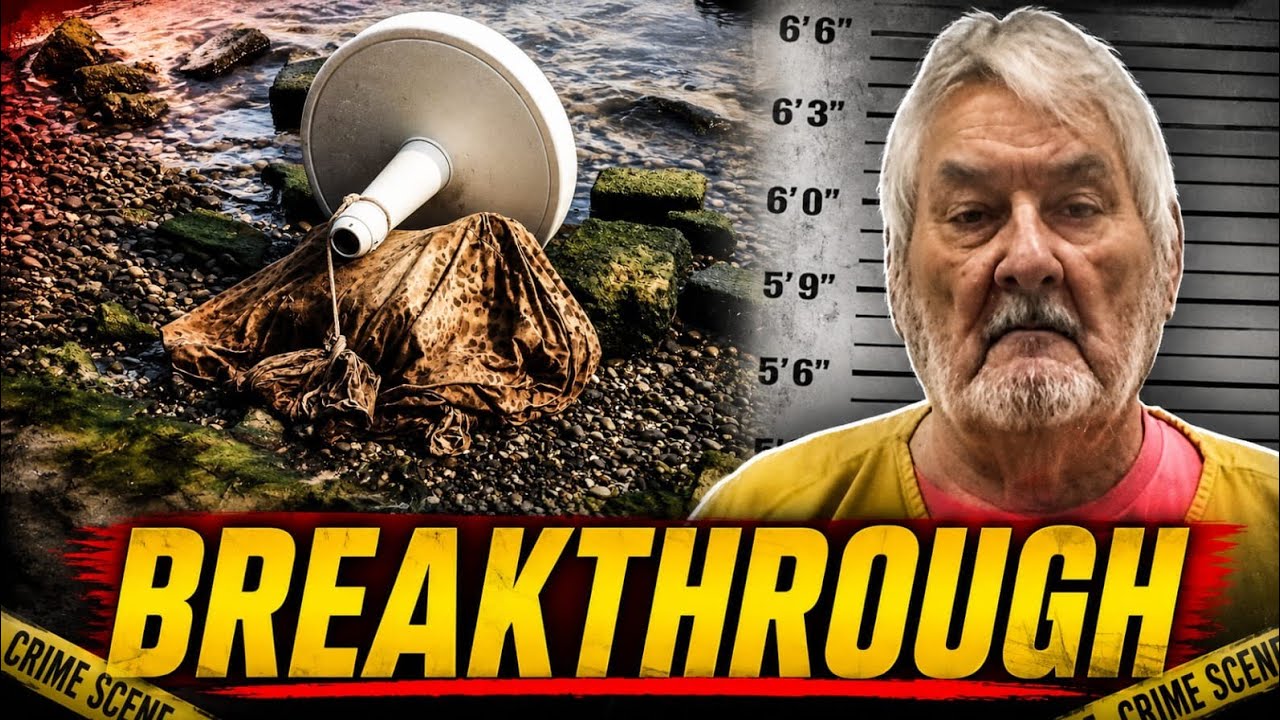
These cases highlight how modern forensic genealogy helps investigators restore identities to unidentified remains decades after traditional methods have stalled. Anyone with information about these cases, any missing person, or an active cold case investigation is asked to contact Investigator Mike Fridley at 707-441-3024. A cold case known as the “Main River Girl” haunted Germany for nearly twenty-five years before finally seeing a breakthrough. At noon on July 31, 2001, a horrifying discovery was made in the waters of the Main River in Frankfurt, Germany.
The body of a young girl was floating in the river. Her body was wrapped in a brown leopard-print bedspread and weighted down with a heavy umbrella stand, an obvious attempt to hide her remains forever. But despite those efforts, the river gave up its secret. The victim appeared to be no older than fifteen or sixteen.
She had long dark hair, pierced ears, and a distinctive nose. Investigators quickly realized this was no ordinary case. The girl’s body showed evidence of extreme violence, but it also told a story of much longer suffering. The autopsy revealed she had died from blunt force trauma.
Her ribs were broken, and her lungs and spleen had been damaged by a severe beating. But what shocked investigators more were the injuries that had healed long before her death. She had old fractures that had not been properly treated, signs of burns, scars, and a deformity known as “cauliflower ear,” typically caused by repeated trauma. The evidence suggested she had suffered years of abuse before her life ended.
Police estimated she had been dead only a few days before being thrown into the river. The coverings and clothing found with her provided few clues. Some of the textiles appeared linked to South Asian cultures, leading investigators to believe she or her family may have been from Afghanistan or Pakistan. Yet despite intensive investigations, no missing person report matched the victim.
She seemed to have vanished from the world without anyone officially reporting her missing. As months turned into years, the mystery deepened. Investigators published facial reconstructions and appealed to the public time and again. The unknown girl became known as the “Main River Girl.
” Her image circulated through police databases and media reports across Europe, but no one came forward with information that could identify her. For nearly a quarter of a century, she remained nameless. The case eventually became part of Interpol’s “Identify Me” campaign, an international initiative launched to identify women whose bodies had been found across Europe and whose names remained unknown. In 2024, authorities once again asked the public for help.
This renewed publicity generated new leads and reports that investigators had never received before. Those reports would finally crack the case. In 2026, twenty-five years later, German authorities announced a stunning development. The girl was identified as Diana S.
, a sixteen-year-old from Offenbach, a city near Frankfurt. Investigators also revealed they had arrested a suspect: Diana’s own father, a sixty-seven-year-old German citizen. He was taken into custody on May 12 and held in pretrial detention on suspicion of murder. According to investigators, Diana disappeared in 2001, but for reasons still under investigation, her disappearance was never successfully linked to the unidentified body found in the river.
The renewed investigation and public appeals eventually led police to the family and uncovered new evidence. Authorities did not publicly disclose all details of their findings as the investigation was still ongoing. The identification brought an end to one of Germany’s most haunting unidentified person cases. For nearly twenty-five years, the teenager existed only as a police sketch and a criminal file.
She had no name, no known family, no voice. Yet advances in forensic science, combined with public assistance and years of investigative work, finally gave her back her identity. Today, Diana S. is no longer remembered as the “Main River Girl,” but as a young woman whose life was marked by years of abuse, and whose death was hidden for decades.
While investigators continue working toward a final resolution, identifying Diana brings closure to the missing person case, and the arrest of a suspect represents a major breakthrough in a case that once seemed destined to remain unsolved forever.
