In January 1965, according to one of his biographers, doctors warned the Duke of Gloucester against driving if he could possibly avoid it. He took the wheel of his Rolls-Royce anyway. His wife later wrote that she sat beside him so she could grab the steering wheel or press the brakes if he drifted off. She must have dozed off herself.
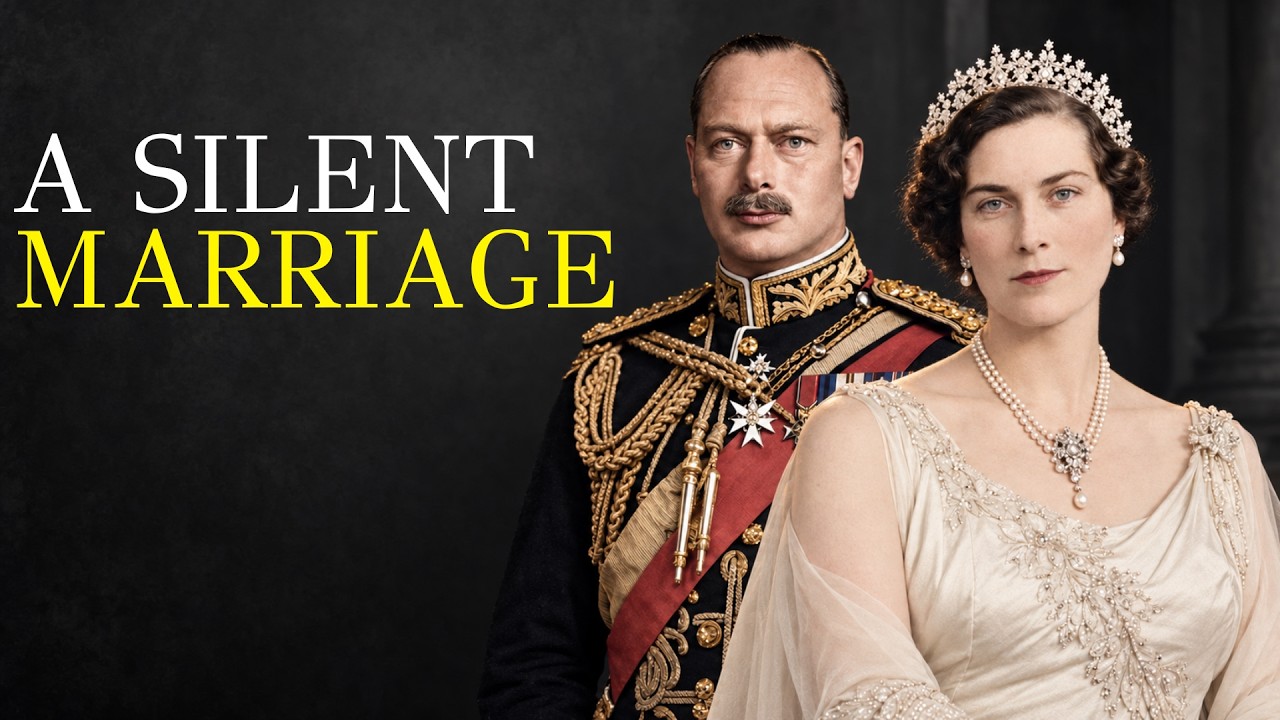
The car ended up overturned in a cabbage field. In 1935, she had married him wearing a gown of pale pink satin, and was known as the Winter Princess. Yet when she came to write her memoirs, she wanted her life story to end at the point her marriage began. Why?
To understand that wish, it is necessary to know the girl she was before the wedding. Lady Alice Montagu Douglas Scott was born on Christmas Day 1901, the daughter of the man who would become the seventh Duke of Buccleuch. She remembered herself as a very shy and rather plump girl. She described her debut at a Windsor ball as a miserable evening spent hiding behind a pillar.
When she was about fourteen, she nearly drowned at sea. In that moment, she made a private pledge. In exchange for her life being saved, she promised to dedicate it to a useful purpose. She remembered that promise well.
She would later call it a most secret vow. For years, the useful purpose looked much like freedom. In 1929, she went to Kenya. When her parents refused to fund the life she wanted, she funded it herself by selling her watercolours in Bond Street.
She painted. In later years, she attempted to climb Mount Kenya, and described herself as a pre-beatnik type. Then, in her memoirs, comes a sentence that changes how everything before it should be read. She wrote: I had a feeling I would marry Prince Henry one day.
Perhaps without admitting it to myself, I had gone to Kenya to taste the last freedom before giving up my private life completely forever. A last taste of freedom. Not a first taste of love. The prince in that sentence had been part of her world since the 1920s, when her brother brought him home on leave from their regiment.
She described him then as a shy, modest young man who was always happy to join in the fun. He was Prince Henry, the third son of King George V and Queen Mary, called Harry by the family. A third son was not expected to amount to much, and Henry was, in Alice’s words, extremely shy. He had grown up afraid of his father.
One contributor to a 1977 commemorative book about his son noted that Henry was determined his own son should never fear him as much as he himself had feared his father in boyhood. Henry found his place in the army as a cavalry officer in the Tenth Royal Hussars, and dreamed of one day commanding his regiment. According to biographer John Van der Kiste, he was known behind his back as Uncle Pineapple because his bald head wobbled like the top of a pineapple when he dozed in the saddle during trooping the colour rehearsals. He had a darker side as well.
His authorised biographer admitted he was not averse to a glass of whisky or the occasional swear word. In the late 1920s, a chapter of his private life was said to have been closed with the payment of a very large sum of money. That matter was kept quiet. What mattered then was his mother.
According to Van der Kiste, when Henry was abroad during his brother’s wedding in 1934, Queen Mary wrote that she hoped he would think about marriage on his return. He needed little encouragement. The courtship that followed was not a romance of grand gestures. The two went on long walks together in Richmond Park, where Henry preferred the privacy and could train his dogs.
Alice wrote: He did not overwhelm me with flowers because he did not do things that way. But each time I saw him, I realised more clearly what he wanted. He was so shy, and I am afraid I did not make it easier by pretending not to notice. It is a strange kind of romance, in which both parties seemed to be waiting for the other to speak first.
The words finally came in the summer of 1935, during a weekend party in the north of England for the opening of the grouse season. Alice recalled there was no formal proposal from him. She believed he muttered something sideways during one of their walks. There was no doubt about her acceptance.
She said she had had a very good life, and beside her great happiness at marrying, felt it was time to do something more useful. In fact, she was still thirty-three. The happiness in that sentence is real, but so is the duty, and so is that old vow to the sea. There were sweeter moments too.
While staying with friends near his camp at Catterick, before the engagement was announced, she asked if she could invite her friend to dinner. Her host returned home to find the friend was Prince Henry, and was deeply embarrassed. Over the following days, they drove around the countryside, visited local antique shops looking for things for their future home, and ate at quiet country inns. Henry must have been recognised, she wrote, but nobody called the press.
The news leaked before the official announcement. One morning at breakfast, the telephone rang at the family home in London, and a reporter asked what was going on between Lady Alice and Prince Henry. Her brother answered pretending to be the butler, and said it was the first he had heard of it. On 25 August, King George V wrote to Alice’s father expressing how happy he and the Queen were.
In the same letter, he admitted he had not yet met the bride, though he was sure she would be charming. The king had given his blessing to a woman he had never met. Was that a sign of an arranged marriage, or merely the formality of an age in which two grand families already knew each other well? Historian Deborah Cadbury put it plainly, writing that the time had come for Henry to find a bride, and well-meaning relatives settled on one strong candidate.
Hugo Vickers noted the royal family looked to a small area of Scotland for consorts, and considered Lady Alice one of them. The irony is that Alice herself found matchmaking disgusting, describing one Scottish hostess as an unbearable matchmaker. Yet Vickers also wrote that history may refrain from revealing how much this union was arranged and how much was a love story. When pressed, Alice only said she had enjoyed many years of freedom and now felt she had to contribute more to life.
The wedding was meant to fill Westminster Abbey. Then, on 19 October 1935, Alice’s father died of cancer, and the ceremony was moved to the private chapel at Buckingham Palace on 6 November. According to the Independent, the shy bride was greatly relieved not to have to endure the grand public ceremony. Her dress was one of Norman Hartnell’s first major royal commissions, made of pale pink silk.
Among the eight bridesmaids were nine-year-old Princess Elizabeth and her sister Margaret, aged five. The Telegraph later reported that more than a million people lined the route when the couple left for their honeymoon. Three days after the wedding, a letter arrived for the new bride from her father-in-law. Alice had written to the king about losing her father, and George V replied that he was touched, adding: I would really like to try and take his place, and I will do all I can to help you.
His last letter to her was dated 14 January 1936, and signed your devoted father. Six days later he was dead. Alice was in bed with flu when the final call came, but she reached Sandringham before the king died and returned to London with Queen Mary. Within months, the Winter Princess had lost her father and the king who promised to replace him.
Queen Mary later wrote to her that what she missed most was that your father and I always talked things over. They expected a quiet life. Their first home was the Royal Pavilion at Aldershot, near Henry’s regiment. Alice remarked that the only royal thing about it was her husband.
Then, in December 1936, Henry’s elder brother, King Edward VIII, abdicated to marry Wallis Simpson. The Duke of York became King George VI. Henry was appointed to act as regent if needed until Princess Elizabeth reached eighteen. According to the Telegraph, he had to give up his military career.
The Independent noted he had wanted nothing more than to command his regiment. According to Deborah Cadbury, the new king told Henry and their brother Prince George, Duke of Kent, they could no longer do as they pleased and must accept responsibility. Alice, according to the Telegraph, had to adjust overnight from being a wife of an officer to one of the principal figures of the state. The marriage carried a particular sorrow.
In the autumn of 1938, Alice wrote, I had a second miscarriage. Doctors advised a holiday. We decided to go to Kenya. The name Kenya recurs again and again in this marriage.
Finally, on 18 December 1941, after years of waiting, Alice gave birth to a son, Prince William of Gloucester. Henry, overjoyed, was granted two days’ emergency leave. Everything in this story would eventually revolve around that boy. A second son arrived in August 1944 by caesarean section.
Alan Lascelles, the king’s private secretary, noted in his diary that King George VI preferred the name Charles, but the Gloucesters seemed to prefer Richard. They got their wish, and the boy became Prince Richard. In 1945, the family was sent to Australia, where Henry became governor-general. Queen Mary wrote to her brother hoping they would succeed, adding it might give Harry a chance to show his true mettle.
Alice found Government House full of silverfish, mice, rats, and enormous spiders. When Henry heard an Australian would succeed him, he was said to have shouted: Then I have apparently wasted my bloody time. In 2019, an Australian critic wrote that, like many of his countrymen, he had heard rumours about the duke’s drinking there, though no contemporary record confirms it. During the war, Queen Mary did not write to her son but to his wife, suggesting Henry bring his own whisky on his next visit because there was not much left and it was very expensive.
Historian Theo Aronson went further than most, writing that the duke’s dependence on alcohol to ease the tensions and frustrations of his days was becoming more obvious. Other accounts are more moderate, mentioning only a fondness for a glass of whisky. The truth may lie somewhere between. Alice, as far as is known, never wrote about it at all.
In the 1950s, writer James Pope-Hennessy visited the Gloucesters at Barnwell Manor, their country house in Northamptonshire, and his private notes are the closest thing to a window into the marriage. The duke entered with bulging eyes and veered like a attacking sailing ship towards the drinks tray, struggled with the ice tongs, and swore. Pope-Hennessy recorded a long silence as they stood by the window looking at the ground. At dinner, Henry announced he had never tried mince pie and did not know what was in it.
Raisins, Harry, said the duchess. And peel. One reader compared the account to a P. G.
Wodehouse story, and it is genuinely funny. But look at it again as a portrait of a marriage: a husband staring at the drinks tray, a guest staring at the ground, a wife quietly translating the world for him, one pie at a time. Henry’s brother, the former Edward VIII, was crueller. In a letter to Wallis, he said the Gloucesters were kind hosts, but of course they do not speak our language and never will.
Yet there were other letters too, and the evidence points both ways. From France during the war, Henry wrote: My darling Alice, I hated leaving you yesterday so much that I could hardly hide my grief. Aronson noted the shy duchess shared many of her husband’s interests, above all a love of open spaces. For their silver wedding anniversary, Henry designed her a garden.
Kenya returned to the marriage in 1950, when Henry and Alice travelled there together. It was the country she had once gone to for a last taste of freedom, and where they had gone together to recover after her 1938 miscarriage. During that visit, a letter arrived for the duke. According to writer Mary Lovell, it came from the celebrated aviator Beryl Markham, and he did not reply.
To understand that unanswered letter, it is necessary to open the chapter said to have been closed with money. According to Lovell, Henry and Beryl first met while hunting in Leicestershire. In 1928, Henry went on safari in Kenya with his elder brother, the Prince of Wales. Among their hosts were Beryl and her husband, Mansfield Markham.
Biographers say an affair followed. When Beryl came to London that November, she was already months pregnant with her husband’s child. She stayed at the Grosvenor Hotel near the palace. Historian Jane Ridley reports she was seen running barefoot through the corridors of Buckingham Palace.
Lovell recounts from Markham family sources that when Queen Mary made an unexpected visit to her son, Beryl hid in a cupboard until the visit was over. In 1929, the king sent Henry on an official mission to Japan, reportedly to put distance between them. When he returned home, Lovell wrote, Beryl’s husband discovered the affair and threatened to name the king’s son in a divorce suit, using the prince’s own letters as evidence. Lovell writes that Queen Mary met Mansfield Markham herself and told him firmly it would not do.
One simply could not name a royal prince in a divorce suit. The price of silence depends on who is asked. A source involved in the arrangement told Lovell that Queen Mary insisted on £15,000. The Markham family was certain it was £10,000.
Either way, biographers report a trust fund paid Beryl an income for the rest of her life, though the trust papers have never been examined publicly. A darker rumour claimed Beryl’s son Gervis was secretly Henry’s son, but Lovell herself dismissed it: according to her reconstruction, Beryl conceived in Kenya around May 1928 while Henry was in England. Biographer John Van der Kiste believed guilt over the Markham affair, along with his frustrated military ambition, left Henry frustrated and depressed in the years before his marriage. Lovell offers a striking observation: with the old king’s death and Prince Henry safely married to Lady Alice, Beryl would have faced no royal displeasure in returning to England.
In other words, perhaps his wedding was one reason his former mistress felt free to come back. Was Alice merely a bride, or was she also a solution? There is no evidence Alice ever knew. No record suggests she ever mentioned Beryl Markham publicly, and no one has established the affair affected the marriage itself, which began long after the affair ended.
But in Kenya in 1950, her husband received a letter from his past and left it unanswered. Perhaps that silence was his most faithful act. Or perhaps it was simply the way he dealt with everything. That brings the story back to the cabbage field.
On 30 January 1965, the Duke and Duchess of Gloucester attended the state funeral of Winston Churchill in London. According to Van der Kiste, doctors warned the duke not to drive if he could avoid it because of his failing health and circulation, but he insisted on getting behind the wheel of his Rolls-Royce. Alice remembered she sat beside him to grab the wheel if he dozed off. Van der Kiste places her in the back seat with a chauffeur in front.
The accounts disagree. In Alice’s version, the car veered off the road and ended up overturned among cabbages. Fortunately, Prince Henry was thrown clear through the open door. Alice suffered a broken arm and facial wounds requiring fifty-seven stitches.
The Winter Princess, who had walked down the aisle in pink satin, was now injured in a winter field. The man once called Uncle Pineapple for falling asleep on his horse may have dozed off again, or suffered a mild stroke at the wheel. It was never established. According to the Telegraph, it was the duke, who appeared uninjured, who never seemed to fully recover.
In June 1968, a severe stroke left him unable to speak. What followed was a kind of silence surrounding silence. At his death, it was noted in the House of Lords that the duke had not been in good health for years and therefore had not appeared much in public. When Cecil Beaton described a royal celebration in 1970, his original diary noted the duke was too ill to attend; the 1979 printed version said he was elderly.
The family medical history holds another unanswered question, this time concerning the son. In 1968, William was initially diagnosed with porphyria, a rare hereditary blood disorder long associated with the madness of King George III. The authors of The Purple Secret wrote that William most likely inherited it from his father, especially with rumours the duke himself had been diagnosed with porphyria. They added that whether the old duke truly had it would be answered when relevant records were released.
As far as is publicly known, they never were. Alice became his carer. She wrote: I used to talk to him hoping he might hear or understand, or show him pictures of things I thought might interest him. She was never sure how much he absorbed.
At harvest time she took him on tours of the farm with the dogs, and they sat for long periods watching the huge machinery, which she found strangely soothing. When the Queen came to visit with Prince Philip and the Prince of Wales, Van der Kiste wrote, Henry wanted to get up and dress properly. During tea, Alice only apologised that he was not strong enough to come downstairs, and that was the only hint of his condition. As she later led the Queen to his room, the thin man in the wheelchair made a great effort to stand, bent slightly, and kissed her on both cheeks, until the Queen insisted he sit down again.
In June 1972, according to the same biographer, Henry sat in his wheelchair at Barnwell and wept while watching his brother’s funeral on television. That same summer brought the family one last happy day. On 8 July 1972, their younger son Richard, a Cambridge-trained architect, married a Danish secretary named Birgitte van Deurs at St Andrew’s Church in Barnwell. It poured with rain.
Henry was too ill to attend the ceremony, but according to Van der Kiste, he joined them at the reception afterwards. Alice later wrote: Fortunately both William and Prince Henry shared in Richard’s wedding happiness. The best man was William, the handsome elder brother and heir to the dukedom, the son the press had always found more interesting than the quiet bridegroom. William had returned home in 1970 to manage the Barnwell estate after his father’s health declined, at the Queen’s request, according to the Independent.
His romantic relationship with a former Hungarian model who had been divorced twice had faded, a relationship the Telegraph later said had caused a scandal in the family. Now he was the dutiful son, standing beside his mother in the house where his father sat in silence. He was thirty, a licensed pilot who had taken part in amateur air races. Asked once whether his mother objected to his flying, he said: No, it was a family tradition and something he very much wanted to do.
On Monday 28 August 1972, a bank holiday, Prince William of Gloucester flew in the Goodyear International Air Race at Halfpenny Green, an airfield near Wolverhampton, with his co-pilot Vyrell Mitchell. Reports estimated the crowd at around 30,000. Shortly after take-off, the small Piper made a sharp turn at very low altitude, struck a tree, and fell. Spectators, among them three boys, rushed to help, but both men were dead.
Only seven weeks had passed since William stood beside his brother at the altar. The official accident report found no mechanical fault. It concluded the aircraft made a sudden, steeply banked turn at too low an altitude, possibly an instinctive diversion to avoid houses in a neighbouring village. The report also stated full post-mortem examinations found no medical conditions that caused or contributed to the accident.
Yet one aviation official admitted in the 1977 commemorative book: To this day, I find it difficult to believe that Prince William, who was by no means a reckless pilot, would have made that sharp turn at that low altitude. The authors of The Purple Secret placed William’s porphyria alongside his friends’ doubts, but stopped short of claiming it caused the crash. The post-mortem found nothing to suggest it. The official answer is that it was a split-second turn.
The unofficial feeling among those who knew him is that it was out of character. Both may be true at once, and no other explanation was ever offered by the family. Alice was at home that day. According to the Telegraph, another pilot in the race flew directly to Barnwell to tell her in person.
The aeroplane had carried her son into the sky, and now another aeroplane carried the worst news of her life. Then came the question no wife should ever have to face. Her husband could not speak. The same television screen that had shown him his brother’s funeral may have told him his son was gone.
She never knew for certain whether he understood. Alice wrote the answer, or its absence, with painful honesty: I never knew whether I ought to tell Prince Henry or not, but I think he understood from watching the television. She wrote: I was completely stunned, and I have never been the same since, although I tried to persuade myself that to have known him and lost him was better than never to have had him in my life at all. The little bridesmaid from her wedding was now Queen Elizabeth II, who cancelled a planned visit to the Munich Olympics.
William was buried at Frogmore, near Windsor. When he was gone, what remained of the marriage was a woman talking to a husband who could not answer. Henry did not outlive his son by long. On 10 June 1974, he died at Barnwell, the last surviving son of King George V and Queen Mary.
In the House of Lords, a peer paid tribute to the duchess, who had suffered in the past few years so much and with great courage. Richard had already given up architecture after William’s death. Now he took on his father’s titles and duties, just as Henry had once given up the army. The Civil List Act of 1972 had already provided for her widowhood, anticipating her loss before it happened.
Instead of becoming the Dowager Duchess, Alice asked the Queen to be known as Princess Alice, Duchess of Gloucester. The Queen agreed, partly to avoid confusion with her daughter-in-law. Prince Henry is no longer with me. William is no longer there.
Alice wrote: I feel deprived of so much that brought happiness into my life. She returned to her work, shy as ever, and continued until she was very old. In 1995, the Independent reported the family could no longer afford Barnwell, and repeated what people were saying: that Princess Alice, aged ninety-three, was crying. The paper noted that Henry’s garden, planted with love for their silver wedding anniversary, was her pride.
In 2003, she became the longest-lived member of the British royal family in history. Guinness World Records documented her age as 101 years and 269 days. She died peacefully in her sleep at Kensington Palace on 29 October 2004, aged 102. Her funeral was held on 5 November, the eve of her wedding anniversary.
She was buried at Frogmore beside Henry and William, the husband she had cared for and the son she had lost. When she wrote her memoirs, according to her obituary in the Independent, Alice wanted to end her life story at around thirty-four, when she gave up her freedom and married, but publishers persuaded her to bring the story up to date. She once wrote that when she was given a life of public duty, a most secret vow was fulfilled. She kept that vow through a past of her husband she may never have known, a career he had lost, a son she buried, and six years of silence at his side.
The part of her life she did not want to tell was the part that asked the most of her. So was it a love story, or a promise made by a fourteen-year-old girl to the sea?
