In 1943, Princess Alice of Battenberg sheltered Rachel Cohen and members of her family inside her home in occupied Athens. The Cohens were Jewish, and the German occupation had placed them in mortal danger. Under Nazi rule, hiding Jewish people carried a punishment that could include death. Alice, a British-born princess living alone in a city controlled by the Axis, acted anyway, using her position and her house to protect people who had nowhere else to go.
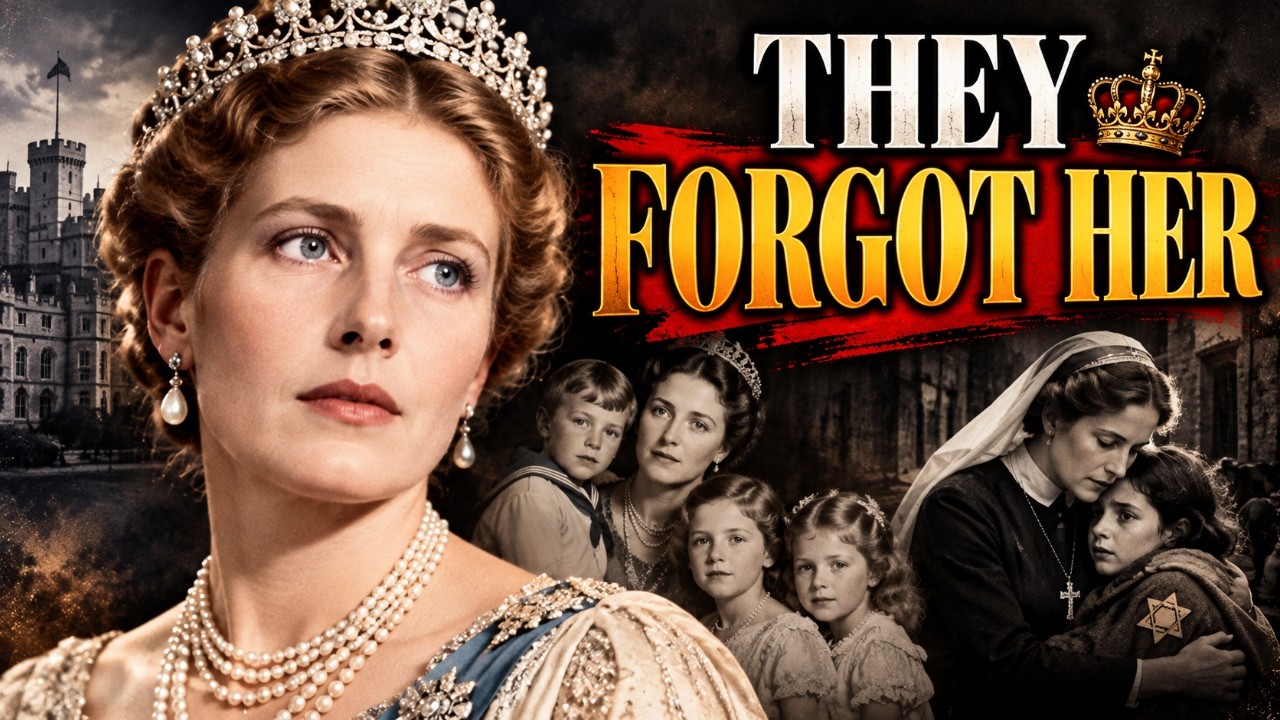
It was not the life anyone would have predicted for her at Windsor Castle on February 25, 1885, the day she was born into one of Europe’s most powerful royal networks. Her mother was Princess Victoria of Hesse and by Rhine, a granddaughter of Queen Victoria. Her father was Prince Louis of Battenberg, a member of a German aristocratic family who would later rise to a senior position in the British Royal Navy. Her birth connected her to royal houses across Britain, Germany, Greece, and the wider continent.
From the start, she belonged to a world of royal tradition, political alliance, and expectation. But Alice was different in a way that would shape her entire life. She was born with significant hearing loss, discovered during early childhood. In an era with far less understanding and support for deaf children, the condition could have become a crippling obstacle.
Instead, Alice learned to read lips and mastered several languages. Her impairment never prevented her from becoming an intelligent, determined young woman, though it remained a constant part of a life that repeatedly forced her to adapt to circumstances beyond her control. She grew up surrounded by the European royal elite. She was related to Britain’s future King George V and to Russia’s Empress Alexandra through the wider family network, and Queen Victoria herself reportedly admired the young princess’s intelligence and character.
Beneath the polished surface, however, Europe was entering an era of transformation. Monarchies that had survived for generations would soon face war, revolution, and upheaval. Alice could not have known how completely those events would reshape her future. In 1903, she married Prince Andrew of Greece and Denmark, connecting her to the Greek royal dynasty.
The couple had five children: four daughters and a youngest child, Prince Philip, born in 1921. Philip would eventually become the husband of Queen Elizabeth II and the longest-serving royal consort in British history. At the time of his birth, though, the family’s future was far from secure. Greece was politically unstable, and the royal family was caught between competing forces.
Prince Andrew served in the Greek army, but his military career became entangled in the crisis that followed Greece’s disastrous war with Turkey. In 1922, a military tribunal held him responsible for failing to carry out his duties adequately during a campaign. He was sentenced to banishment from Greece; his death sentence was commuted, and he was permitted to leave the country. Alice and her family were forced into exile.
Their escape became one of the defining moments of their lives. The family left aboard a British naval vessel, and the young Philip was carried in a makeshift cot fashioned from a fruit box. The image would later become one of the best-known details of the family’s early history. For Alice, the meaning was immediate: the royal life she had known was no longer dependable.
Her husband had been politically disgraced, her family had lost its home, and the future had become uncertain. But exile was only the beginning of a far more difficult chapter. In the years that followed, Alice underwent a profound religious transformation. She became deeply interested in Christianity and increasingly devoted to spiritual life.
Eventually she came to believe she had a special religious mission. Her behavior alarmed her family, and she was diagnosed with a psychiatric illness. In 1930, she was admitted to a sanatorium in Switzerland, where she remained for about two years. The separation from her husband and children was a painful turning point.
Philip was still a young boy when his mother entered the institution, and he would spend much of his childhood living with relatives and attending schools far from his parents. The reasons for Alice’s condition have been interpreted differently over time, and modern observers have questioned how her experiences were understood and treated in that era. What is clear is that she endured a period of profound personal upheaval and separation from the family she loved. When she eventually left the sanatorium, her life took another unexpected direction.
Her marriage to Prince Andrew had effectively broken down; the two lived largely separate lives. Andrew spent much of his time away from her, while Alice devoted herself increasingly to religious service. Rather than returning to the comfortable existence expected of a European princess, she chose a quieter, more independent path. In 1938, she returned to Greece and settled in Athens.
By then Europe was moving toward another catastrophic conflict. Nazi Germany was expanding its power, and soon the Second World War would engulf the continent. Italy invaded Greece in 1940, and Axis forces occupied the country in 1941. Food shortages, poverty, and fear became part of daily life for countless Greek families.
Alice remained in Athens through the occupation, even as members of her extended family lived elsewhere in Europe. Her decision to stay would reveal a side of her character rarely visible to the public. In 1943, she sheltered Rachel Cohen and members of her family in her home. The Cohens were Jewish, and the German occupation placed them in grave danger.
Hiding Jewish people under Nazi rule could lead to severe punishment, including death. Alice nevertheless used her position and her home to help protect them. Her actions were later recognized by Yad Vashem, Israel’s official memorial to the victims of the Holocaust, which named her Righteous Among the Nations in 1993, an honor awarded to non-Jews who risked their lives to save Jews during the Holocaust. Her decision was extraordinary not because she was a princess, but because she acted when helping others carried real danger.
During the occupation, she also devoted herself to charitable work, assisting people suffering from poverty and deprivation. The contrast between her royal origins and her wartime life was striking. Born into privilege, she spent her later years helping people who had almost nothing. Her actions challenged the idea that royal status was simply about ceremony, wealth, and public appearances.
The most meaningful use of privilege, it turned out, could be to protect someone who had none. Even as Alice demonstrated courage in Athens, her relationship with her son remained complicated by years of separation. Philip had grown up largely outside his mother’s care, shaped by boarding schools, relatives, and the responsibilities of his position. In 1947, he married Princess Elizabeth, the future Queen Elizabeth II, bringing him permanently into the center of the British royal family.
Alice attended the wedding, but her own circumstances remained very different from the public life her son would lead. In 1949, she founded a religious nursing order called the Christian Sisterhood of Mary and Martha. She wore the habit of a nun and devoted herself to religious service. The organization reflected her enduring spiritual commitment, though it struggled to establish itself and never became a large, lasting institution.
Her life was now far removed from the grand royal world into which she had been born. History was not finished with her. In 1967, a military coup in Greece forced Alice to leave Athens and return to Britain. She moved to Buckingham Palace, where she spent her final years close to Prince Philip and Queen Elizabeth II.
The image of the elderly princess living at the palace was a remarkable conclusion to a life that had included exile, illness, religious devotion, and wartime bravery. She died in London on December 5, 1969, at the age of 84. Initially she was buried at St. George’s Chapel at Windsor Castle.
But she had expressed a wish to be buried at the Russian Orthodox Church of Mary Magdalene in Jerusalem, near the tomb of her aunt, Grand Duchess Elizabeth Feodorovna. In 1988, her remains were transferred there, fulfilling that wish nearly two decades after her death. Princess Alice’s story stands as a reminder that royal history is not only a story of crowns, marriages, and succession. It is also a story of individuals who faced suffering, made difficult choices, and sometimes performed acts of courage far from the public eye.
Alice endured personal hardship, separation from her children, and the upheavals of war. Yet she also chose to protect people in danger when doing so could have placed her own life at risk. Her legacy cannot be reduced to her royal title or her connection to Queen Elizabeth II. She was a woman who lived through extraordinary change and found ways to serve others despite the difficulties she faced.
For years her story remained overshadowed by the fame of her son and the monarchy he joined through marriage. But her actions during the Holocaust revealed a courage that deserved to be remembered in its own right. She was not simply the mother of Prince Philip.
She was a survivor of exile, a woman of deep religious conviction, and a humanitarian who helped save a Jewish family during one of humanity’s darkest periods.
