In the blazing Caribbean afternoon of August 2010, Lady Anne Conor sat in a lawyer’s office in Saint Lucia, ready for the final chapter of a marriage that had been a psychological war lasting fifty-four years. She was the daughter of an earl, the devoted lady-in-waiting to Princess Margaret, and the woman who had quietly helped build the paradise island of Mustique for the world’s elite. But when the lawyer read the will of her late husband, the betrayal was absolute. In his will, he left his Saint Lucian estate to Kent Adonai, triggering years of legal fallout that tore the family apart.
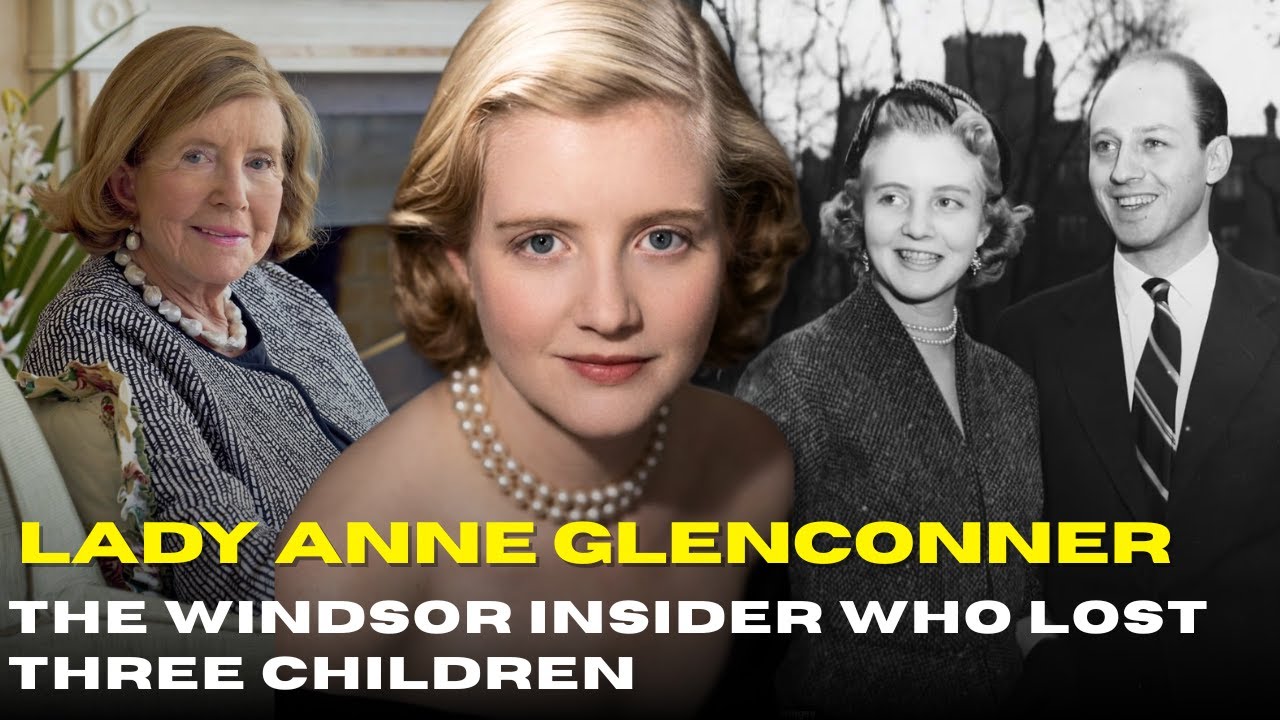
There was nothing for Anne. Nothing for their children. In one final, spiteful strike from beyond the grave, the man she had nursed and endured had not merely disinherited her—he had erased her existence entirely. This public humiliation was only the closing scene of a gothic horror story disguised as an aristocratic fairy tale.
To the outside world, Anne was the smiling figure in the background of royal photographs, holding the sunscreen and gin for Princess Margaret. But while the cameras focused on the glitter of royalty, they overlooked the woman in the shadows whose life was unraveling into a tragedy so cruel it defied belief. While she organized perfect picnics for Mick Jagger and the Queen, she was secretly burying two sons—one after years of heroin addiction, the other from AIDS—and trying to save the third from a coma. This is the untold story of the woman who spent her life wiping away an princess’s tears while no one noticed she herself was drowning in her own.
The shield that allowed her to survive this tropical betrayal had been forged decades earlier, in a place far colder than the Caribbean. Anne Coe was born in 1932, not in a home but in a monument to absolute coldness: Holkham Hall in Norfolk. It was one of England’s grandest historic palaces, a mansion of marble and alabaster so vast it had its own internal climate. Yet it was a dead beauty, where architectural perfection was inversely proportional to human warmth.
Her father was widely described as emotionally distant, and Anne grew up with very little parental affection. He had wanted a male heir to secure the dynasty. When Anne was born, disappointment covered her cradle like a funeral shroud. She was the wrong sex, a spare part in a machine designed only to produce patriarchs.
Anne’s childhood was a harsh lesson in stoicism. She grew up in the nursery wing, completely separated from her parents, seeing them only at brief daily appointments. She grew up believing that love was a luxury and that her existence was an inconvenience to be minimized. During the World War II years, as Nazi bombs fell on London, Anne and her sister were evacuated to a draughty cottage on the estate grounds to save heating coal.
There, the two aristocratic daughters learned to earn their keep by selling pottery to tourists. Queen Mary, grandmother of Queen Elizabeth II, was one of their most frequent customers—a woman who resembled a terrifying warship dressed in lace. Anne learned early that members of the royal family were not people to be feared, but people to be served. She mastered the art of curtseying before she learned long division.
She learned that emotions were messy things to be packed away like winter clothes, never displayed in public. This brutal training would later become the shield that kept her alive, but it was also the prison that trapped her soul. Her life’s path seemed to reach its peak early, a sweet trick of fate. In 1953, the world held its breath for the coronation of Queen Elizabeth II.
Anne Coe, just twenty-one years old, radiant and with a waist so slender a man could encircle it with his hands, was chosen as one of six maids of honor. It was the role of a lifetime. She walked down the aisle of Westminster Abbey, carrying the heavy velvet train of the new Queen, bathed in the golden light of history. She was the pampered aristocratic girl, courted by dukes, photographed by Cecil Beaton’s lenses.
In the black-and-white pictures of that era, Anne looks like a goddess from myth—perfect, elevated, and happy. But perfection is a crushing burden. Beneath the satin and family diamonds, Anne was desperate to escape her father’s golden cage. Holkham Hall, with its endless halls and cold silence, was suffocating her.
She wanted a way out. She wanted adventure. And tragically, that escape appeared in the form of Colin Tennant. Colin Tennant, who would later become Lord Glenconner, was a man forged from charm and danger.
He was heir to a vast chemical fortune. Devastatingly handsome, sharp-witted, with a magnetic charisma that made it impossible to look away. When Anne met him, he was the center of every party, a man who could charm the birds from the trees. He was different from the boring aristocratic men her father wanted her to marry.
He promised her travel, freedom, and a life unbound by Holkham’s antiquated rules. She married him in 1956, ignoring the whispered warnings of friends, ignoring the glint of cruelty that flared in his eyes whenever things didn’t go his way. Anne naively thought she was marrying her liberator. She didn’t know she was signing a life sentence with her own personal jailer.
The honeymoon was the first crack that shattered that illusion. Colin, despite his vast wealth, took Anne to a dilapidated hotel in France, refusing to spend any money on comforts. When Anne, accustomed to the cold luxury of Holkham, complained gently about the dirty sheets, Colin exploded in rage. It was the first time she witnessed his fits—a state of violent, irrational madness that left her trembling.
He screamed, smashed furniture, and hurled insults at her in public, only to return minutes later to the role of the polite aristocrat as if nothing had happened. Anne, trained never to cause trouble, learned to swallow her fear. She became the shock absorber for her husband’s madness, offering smiling apologies to the hotel staff, pretending everything was fine. She convinced herself it was just the eccentricity of a genius.
She didn’t know it was a symptom of a mental instability that would torment her for half a century. But there was another relationship running in parallel, one that sometimes overshadowed her hellish marriage: her bond with Princess Margaret. They had been friends since childhood, two girls trapped in the glare of the spotlight. Margaret was the “spare” in the monarchy—beautiful and talented, but with no real role except to support her sister Elizabeth.
Anne saw a reflection of herself in Margaret, a woman constrained by duty and birth. When Margaret married the photographer Antony Armstrong-Jones, Anne was there. And when Anne married Colin, Margaret became an essential part of their lives. In 1971, Anne was officially appointed as the princess’s lady-in-waiting.
It sounded like a title from a fairy tale, but in reality, working as a lady-in-waiting to Princess Margaret was grueling labor wrapped in velvet. It was a strange combination of personal assistant, drinking companion, punching bag, and unlicensed therapist. Margaret was a complex woman. She was intelligent and witty, but also extremely domineering.
Demanding and often rude. She snapped her fingers for cigarettes, demanded fresh drinks at three in the morning, and publicly insulted her hosts at parties. But Anne loved her. She looked past Margaret’s prickly exterior to see a vulnerable, lonely woman starving for love.
And through Colin, the stage was set for their most famous months. In 1958, in a fit of his usual madness, Colin Tennant bought a small, uninhabited, mosquito-infested rock in the Grenadines called Mustique. It had no fresh water, no electricity, no roads—just wild scrub and stray cattle. He paid £45,000 for it.
Everyone in London thought he had completely lost his mind. But Colin, with the vision of a mad genius, saw a kingdom. He wanted to build a paradise beyond the suffocating rules of British society, where he would be king and the laws would be his own. As a calculated, late wedding gift, Colin granted Princess Margaret a plot of land on Mustique.
It was a gesture of lavish generosity, but it was also a clever business move. Colin knew the elite would follow the princess anywhere. And he was right. Soon, Mustique became the most exclusive party on the planet.
Mick Jagger, David Bowie, fallen aristocrats, and top fashion models began flocking to this virgin island. It became a haven of debauchery where champagne flowed like water, clothes became optional, and morals were left on the mainland. For Princess Margaret, Mustique was a sanctuary—the only place she could take off the royal mask and live by her instincts. For Anne, Mustique was a battlefield.
She was the one who had to manage a complicated household on an island with no infrastructure. She had to secure every drop of water, every bottle of wine, and every meal for the most demanding guests in the world. And above all, she had to handle Colin. On this island, Colin’s madness was unleashed.
He crowned himself King of Mustique. He wore garish shorts, crowned himself with leaves, and strutted around like a god. He organized bizarre themed parties where everyone had to dress according to his whims. If dinner didn’t go exactly to his liking, Colin would rage in front of distinguished guests.
He would overturn tables, throw plates of food at the walls, scream at the poor local staff, and insult Anne with the filthiest language. In those moments, Anne would sit still, back straight, wine glass in hand, calmly signaling to guests to ignore him, as if he were just a spoiled child making noise. She had mastered the art of disappearing into the eye of the storm. But while the world devoured the tabloid headlines about the scandalous parties on Mustique, about Princess Margaret bathing naked and her illicit affairs with the young Roddy Llewellyn, Anne was living a private hell that made royal scandals look like child’s play.
The tragedy of the Glenconner family was not in its dysfunction, but in the fact that it seemed cursed by some ancient, relentless evil. By the time Colin died in 2010, Anne had already survived decades of loss and public silence. The collapse began with the eldest son, Charlie. Handsome, charming, and heir to the title, Charlie was Anne’s golden hope.
She prayed this son would correct his father’s mistakes and bring glory to the family. But Charlie inherited Colin’s addictive personality without his formidable physical constitution. In the 1970s, as heroin began seeping into the British aristocracy like a plague, Charlie fell. Anne watched in agony as her beloved son withered and faded.
She tried to cure him, sending him to the best clinics, but the drug demon was stronger. Then came the knockout blow—not from the drug itself, but from the needle. His heroin addiction left Charlie with permanent damage, including hepatitis C, which destroyed the rest of his life. He died in 1996, a thin shadow of the boy who once ran on the beaches of Mustique.
Anne was forced to bury her eldest son, while Colin, the father, showed no emotion other than annoyance that his son’s death had disrupted his routine. If Charlie’s death was a public tragedy, Henry’s death, her second son, was a secret that ate Anne alive. Henry was a sensitive, artistic, gentle soul—the complete opposite of his tyrannical father. In the late 1980s, he confessed a terrifying truth to his mother.
He was HIV-positive. At that time, AIDS was not just a disease. It was a stigma, a deep moral stain that could destroy a family’s reputation. People feared it like leprosy.
Even after the public began to understand AIDS better, the stigma in elite circles could still destroy families. Because of the stigma and their proximity to the royal court, Anne felt she had to keep Henry’s diagnosis hidden. She cared for Henry as he wasted away, watching the purple Kaposi’s sarcoma lesions appear on his pale skin, all while maintaining the perfect lady’s smile. The cruelty of fate reached its peak in 1990.
Henry died on the morning of his older brother Charlie’s wedding day. Imagine the scale of the torment. A mother closing her second son’s eyes, her heart shattering, and yet having to dry her tears immediately, apply her makeup, put on a hat, and go to church for her eldest son’s wedding—knowing he too was dying of addiction. She couldn’t scream.
She couldn’t collapse. She had to lie to the guests that Henry had the flu and couldn’t attend. She stood in the church singing the celebratory hymns while feeling her chest tear apart. It was the greatest and most painful performance of her life.
A play of aristocratic pretense paid for with her soul. And what about Colin? How did the father react to his son’s death? When Henry confessed he had AIDS, Colin uttered a sentence that entered the history books of cruelty.
“Well then, it’s better you don’t come to Mustique,” he said. “You’ll frighten the guests. ” He saw his son’s illness merely as an obstacle to his paradise project. He sank deeper into his madness, obsessed with his legacy and his island, leaving Anne alone to face their sons’ graves.
But the tragedy did not end with this woman. Christopher, her third son, was in a horrific motorcycle accident in Belize. He suffered a severe traumatic brain injury. For months, Christopher lay in a coma, suspended between life and death.
Anne sat once again by the hospital bed, talking to her son’s empty body, begging death not to take her last child. When Christopher finally woke up, he was no longer the son she knew. He was permanently disabled, his personality changed, quick-tempered, and in need of lifelong care. Anne, who had already buried two sons, now had to learn to be a mother to a stranger inhabiting her son’s body.
She hadn’t lost her children just to death. She had lost them to an eternal hell while they were still alive. Her service to Princess Margaret gave her life structure while her own life was crumbling. It was the only place she felt useful, where there was order.
She later said a sentence that was bitter but true: “I wiped the princess’s tears, but no one wiped mine. ” It wasn’t a complaint; it was an acceptance of reality. Margaret, drowning in her own declining health and emotional tragedies, was often too self-absorbed to comfort Anne. But the work—ironing dresses, organizing schedules, mixing gin in precise proportions—kept Anne together.
Service became the drug that helped her forget the empty house and the dead sons. As the years passed, Princess Margaret began to wither. She suffered strokes, severe burns from a bathtub accident, and lost her sight. Anne was present through every painful moment.
She became the nurse, the guide, the princess’s eyes and hands. When Margaret died in 2002, Anne lost not just her mistress, but her dearest friend, the only witness to her entire adult life. She was in her seventies, exhausted, and returned to live with a husband who had become a complete stranger. Colin had by then sold Mustique and moved to Saint Lucia.
He bought a dilapidated estate called the Beau Estate. His madness entered a new phase. He bought an elephant as his pet. Yes, a real elephant.
He spent his days wandering the jungle with his servant, Kent Adai. Kent became everything Colin’s biological sons had failed to be: obedient, reverent, always present. Colin began to look at Kent as a spiritual son, while Anne lived in a separate house on the same property, maintaining a cold, parallel existence. She endured him, waiting for his death as an inevitable release, believing that at least when he was gone, the estate would go to Christopher and the grandchildren, securing the future of the tenants.
But Anne underestimated the depth of Colin’s grudge. She didn’t know that in those long nights in Saint Lucia, Colin was silently rewriting the script of his life’s final scene. Then came 2010. Colin died of cancer.
His funeral was grand, befitting a man who lived for show. Anne stood by the grave, her face expressionless, perhaps thinking the nightmare was finally over. She didn’t realize the hardest blow was yet to come. It was sitting in a lawyer’s briefcase, waiting for the moment she would walk into that office to be stripped of the last shred of her dignity.
If the reading of the will in 2010 was the final explosion, its fuse had been lit fifty years earlier on a mosquito-infested plot of land in the Grenadines, where Colin Tennant decided to play god. To understand the full extent of Anne’s disinheritance, one must understand the sunny madness of the kingdom she helped build but was never allowed to rule. In the public imagination, Mustique is nothing more than a glossy postcard of turquoise waters and rock stars. A playground where Mick Jagger strolls on the beach and Princess Margaret holds court with her tan.
But for Anne Glenconner, the island was not paradise. It was a labor camp disguised as a resort, a place where the humidity was so thick it choked the breath, and the social hierarchy was as hard and unyielding as the coral reefs surrounding the shore. When Colin bought the island in 1958, it was barren land. No running water, no electricity, and the only inhabitants were a handful of fishermen and an epidemic of insects that descended at dusk like a biblical curse.
Most wives, upon seeing what their husbands had bought, would have demanded a divorce on the spot. Anne, accustomed to the frozen stoicism of Holkham Hall, simply rolled up her sleeves. While Colin stood on the hill grandly pointing out where the big house would go, Anne was in the mud organizing the digging of wells and the clearing of scrub. She became the practical engineer of his imagination, the woman who ensured the King of Mustique had a working toilet, while he was obsessed with designing his crown.
The arrival of Princess Margaret in 1960 changed the molecular composition of the island. It transformed Mustique from a mere eccentricity into the most exclusive destination on earth. Colin gave the princess a plot of land as a wedding gift, a gesture of feudal loyalty bordering on obsession. When Margaret built her villa, Les Jolies Eaux, she wasn’t just building a holiday home.
She was establishing a royal court in exile. And in this court, Anne’s role crystallized into something ancient and exhausting. She was the lady-in-waiting, a title that suggested subservience but required the stamina of a marathon runner and the diplomacy of a hostage negotiator. Life with Margaret on Mustique was governed by a set of unwritten and terrifying rules.
The entire day revolved around the rhythm of the princess’s life. She woke late, requesting her first cigarette and a vodka tonic as soon as the sun began to bite. Anne was the choreographer of these days. She organized beach picnics, which were never casual affairs but military operations requiring silver cutlery, lobster baskets, and wine coolers, all transported across the sand by sweating staff.
Anne’s job was to ensure the princess never got bored or too hot, and that her drink never ran out. There is a particular cruelty in serving a friend who outranks you. Margaret was charming, intelligent, and had an undeniable magnetism. She played the piano and sang show tunes with a husky, tobacco-stained voice that captivated audiences.
But she could also be acerbic. She treated Anne with a familiarity that bred contempt. If Anne wore a dress the princess didn’t like, Margaret would say, “You look like a grand piano in that dress. ” If Anne spoke out of turn, an icy silence would descend until the princess deigned to forgive her.
Yet Anne endured it all. She had been trained from birth to believe that the whims of the royal family were not personal insults but weather patterns to be withstood. She developed a second skin, a layer of psychological Teflon that allowed the arrows to slide off her. But the real danger on the island was not the princess.
It was Colin. As Mustique’s fame grew, so did Colin’s megalomania. He was the ringmaster of this tropical circus, and he demanded absolute perfection. He began dressing increasingly strangely—flowing robes, gold chains, wide-brimmed hats—looking like a cross between a maharaja and a cult leader.
His volatile moods became a permanent volcano. The party he threw during the Queen’s Silver Jubilee in 1977 became the stuff of legend. Anne lived on a knife’s edge during these festivals. She knew that one wrong step, a tepid soup, or a misplaced fork could ignite his fury.
There is a famous story that encapsulates the horror of Lady Colin Tennant’s life. During a lunch for distinguished guests, Colin felt Anne was talking too much. Without a word, he picked up a heavy silver pepper mill and hurled it at her across the table. It missed her head by only a few inches.
Anne didn’t flinch. She didn’t scream. She simply continued her conversation, signaling with her eyes to the guests that nothing unusual had happened. This was the art of performance in her marriage: the smooth normalization of abuse to keep everyone else comfortable.
The “Aquarium” party, another Colin invention, required guests to dress as sea creatures, and she spent weeks sewing costumes, managing logistics, and soothing Colin’s nerves. When the night arrived, the press was there, the celebrities were there, and Colin was in his element, craving the cameras. But behind the scenes, he was berating Anne for minor infractions, whispering insults in her ear while smiling at the paparazzi. She was the stage manager who got beaten if the actors forgot their lines.
Amidst this whirlwind of luxury, a quieter, slower tragedy was unfolding: the neglect of the children. Charlie, Henry, and Christopher grew up in the shadow of this madness. They were Mustique children, running wild on the beaches, exposed to a world of adult excess far before their time. They saw their father screaming in his costumes.
They saw their mother serving a princess. They saw drug use and rock stars collapsing on their couches. Colin had no interest in being a father. He wanted heirs, and once they were born, he found them boring.
He treated his sons with a contempt bordering on hatred. He mocked Charlie for his sensitivity. He ignored Henry. He saw them as rivals for attention rather than children to be nurtured.
Anne, distracted by the demands of Colin’s moods and Margaret’s schedule, tried to compensate, but she was fighting a losing battle. The toxicity of the environment was seeping into the very core of the boys’ lives. They were growing up in a gilded cage where love was conditional and chaos was the norm. By the late 1970s, the cracks in paradise were becoming chasms.
Mustique’s glitter began to fade and rot. The drug culture, initially just a whisper of marijuana among musicians, hardened into the white snow of cocaine and the dark sludge of heroin. The island, once an innocent haven, became a trap. And Anne was the canary in the coal mine, singing her cheerful songs while the air around her turned toxic.
In that era, Anne perfected that smile. It wasn’t a smile of happiness. It was a smile of survival. It was the smile on her face when Colin humiliated her in front of Mick Jagger.
It was the smile on her face when Margaret demanded she stay up until four in the morning listening to the same story for the hundredth time. And it was that smile she would soon have to wear at funerals. The transition from the sunny parties of the seventies to the dark horrors of the eighties was seamless. The rot had always been there, festering beneath the floorboards of the big house.
As the boys entered their teens, the damage from their father’s cruelty and their mother’s distraction began to show. Charlie, the sensitive son, started disappearing for days. His eyes became hollow. The laughter stopped.
The King of Mustique was too busy planning his next costume party to notice his heir was dying inside. Anne noticed. Of course she noticed. Mothers always know.
But she was trapped in the momentum of the life she had built. How do you stop a train going at full speed? How do you save your children while your entire life is based on serving the whims of others? She tried sending them to school to create distance, but the damage was done.
The psychological edifice of the Tennant family was built on a fault line, and the earthquake was coming. As the decade turned, the music on Mustique grew louder, the parties more raucous, the laughter more hysterical. But looking at the photographs from that era—the tanned bodies, the champagne glasses raised toward the sunset—one could see the ghosts gathering in the corners of the frame. The sand kingdom was about to collapse, and the woman who built it with her bare hands was about to be buried beneath the rubble.
The era of parties was about to end. The era of funerals was about to begin. The hangover of the seventies didn’t come to the Glenconner household as a headache, but as a plague. As the decade turned and the world embraced the artificial glitter of the eighties, the darkness that had been gathering at the edges of Anne’s life finally rushed toward the center.
The party on Mustique was still technically going on. The music was still playing. The princess was still asking for her drink. But the host and hostess were now dancing on a floor rotting beneath their feet.
In this decade, Anne Glenconner was forced to play the most painful role of her life: not lady-in-waiting, but mother of the doomed. The curse struck the heir first. Charlie Tennant, the golden boy meant to restore the family’s lineage, had inherited his father’s addictive personality but lacked entirely his terrifying resilience. In the velvet circles of London, heroin was no longer a dirty drug but a chic, deadly accessory.
Charlie fell into its grip with the speed of a stone dropping into a deep well. For Anne, watching her eldest son fade was slow torture. She saw the light go out in his eyes, replaced by the hollow, desperate stare of an addict. She spent years navigating the grim underworld of rehab clinics and therapists, trying to pull him back from the edge.
But Colin Tennant didn’t view his son’s addiction as a disease; he viewed it as a personal insult. He considered Charlie’s weakness a reflection of a deficiency in his own manhood. Instead of support, Charlie met contempt. Colin cut him off, mocked him, treated him like a defective product to be returned to the factory.
This rejection only drove Charlie deeper into the mire of addiction. It was a ticking time bomb in his blood, a slow sentence that made the heir to the Glenconner fortune a walking ghost long before he was laid to rest. If Charlie’s tragedy was a public spectacle whispered about in gossip columns, Henry’s tragedy, the second son, was a secret Anne had to carry in a sealed lead box. Henry was the “spare,” but he was in many ways the beating heart of the family.
He was gentle, artistic, compassionate, with none of his father’s cruelty. In the late 1980s, Henry came to Anne with a confession that was, in that era, more terrifying than a murder confession: he had AIDS. One must remember the climate of the time to understand the weight of this secret. It was before red ribbons, before celebrity charities, before the humanization of the disease.
AIDS was the “gay plague,” a deep stigma that led to social ostracism. Families disowned their children. Funeral homes refused to accept the bodies. Anne, the beautiful lady-in-waiting, instinctively knew she had to protect the crown from scandal.
Even as she tried to save her son, she became Henry’s secret nurse. She watched the handsome young man wither into a skeleton. She cleaned his sores and wounds. She held his hand through night sweats.
Then she would put on her pearls, apply her lipstick, and go to Kensington Palace to serve Princess Margaret, smiling and making small talk while her soul screamed in agony. This split in self—between the public face of the carefree aristocrat and the private face of the grieving mother—required a strength bordering on the inhuman. The cruelty of the gods reached its peak during one surreal weekend in 1990. It was a sequence of events so horrific it seemed like the climax of a Greek tragedy.
The family gathered for a wedding. Charlie, the dying heir, was getting married. It was supposed to be a day of hope, a desperate attempt to cling to normality. But downstairs in the same house, Henry was breathing his last.
The contrast between the two scenes was obscene. Upstairs: the white dress, the flowers, the champagne. Downstairs: the morphine, the silence, the angel of death. On the morning of the wedding, Anne went to Henry’s room.
He was fading fast. She held him as he drew his final, ragged breaths. She closed his eyes. She kissed his cold forehead.
Then the script of her life forced her to do the impossible. She could not collapse. She could not stop the wedding. The guests were arriving.
The press was outside. The show had to go on. Anne Glenconner stood up, walked out of the room where her son’s body lay, and went to her dressing room. She washed her face.
She put on her wedding hat. She fixed a smile on her face like a brooch. She entered the church and watched her other dying son get married, while the secret of the dead son burned in her chest. She told the guests Henry was too ill to attend.
It was a merciful lie, a lie to preserve dignity. Throughout the reception, she mingled and laughed and toasted the couple, while part of her mind remained in that silent room with Henry. Colin’s reaction to this catastrophe was the final nail in the coffin of their marriage. When Henry was diagnosed, Colin offered no comfort.
He offered an eviction notice instead. “It’s better you don’t come to Mustique,” he said with a sneer. “You’ll frighten the guests. ” For Colin, his son was bad for business.
He refused to deal with the reality of death. He was angry that funeral arrangements might conflict with his social calendar. He had become a monster of selfishness, isolated by his wealth and madness from the basic human instinct of empathy. But fate was not done with Anne.
As if losing two sons wasn’t enough, the third son, Christopher, was struck down. While riding a motorcycle in Belize, he had an accident. He suffered a catastrophic brain injury. For months, he lay in a coma, suspended in the gray zone between life and death.
Anne, who had just buried Henry, now found herself sitting by another bedside, listening to the sound of the monitors. When Christopher finally woke up, the boy she knew was gone. The brain injury had changed him. He was disabled, volatile, and in need of lifelong care.
Anne had lost three sons: one to drugs, one to AIDS, and one to a shattered skull. She was the aristocrat’s Niobe, weeping for her children while the gods laughed. During this decade of funerals, her relationship with Princess Margaret changed. The princess was also in decline.
Her marriage to Lord Snowdon had ended in divorce. Her affair with Roddy Llewellyn had faded. She was alone, drinking too much, and suffering a series of strokes that left her partially paralyzed and losing her sight. Anne and Margaret became like two shipwreck survivors clinging to the same raft.
Their bond deepened in the silence of their shared pain. Anne was no longer just a servant; she became a sister in suffering. There were moments of deep intimacy. Anne read to the blind princess.
She helped her into her wheelchair. She sat with her in the evenings at Kensington Palace. Two old women surrounded by ghosts, drinking whisky, remembering the days when they were the two prettiest girls in England. Margaret, often criticized for her haughtiness, showed Anne a quiet loyalty in those years.
She didn’t offer eloquent speeches of comfort. Royals don’t do that. But she offered her presence. She needed Anne, and Anne needed to be needed.
Meanwhile, Colin had fled. Unable to cope with the reality of his broken family, he sold Mustique. He claimed he was tired of it, but in truth, the island had changed. The era of raucous parties was over, replaced by billionaires, corporations, and security gates.
Colin moved to Saint Lucia and bought a dilapidated colonial estate called the Beau Estate. Here, his eccentricity turned to madness. He cut himself off completely from Anne and from the tragedy of their children. He needed a new object for his affection, something that wouldn’t die or disappoint him.
He found it in an elephant. He bought a circus elephant named Bupa and brought it to the Caribbean. He spent his days with the animal, feeding it and talking to it, seeming to love it more than he ever loved his own flesh and blood. He also found a new human companion: Kent Adai.
Kent was a local Saint Lucian, illiterate but street-smart. He became Colin’s servant, driver, and constant shadow. Colin began to groom Kent. He dressed him in expensive clothes.
He took him to London. He introduced him to society. He treated Kent with a gentleness he had never shown Charlie or Henry. Kent was the blank page onto which Colin could project his ego.
For Anne, Kent was just a servant. For Colin, he was the son who never let him down. Anne lived in a separate house on the Beau Estate, maintaining a polite, distant distance from her husband. They were legally married but emotionally divorced.
She visited him. They dined together, but their conversation was superficial. She watched him sink into a world where he was the loving master of his own jungle, ignoring the fact that his real legacy—his family—was in ruins. By the early 2000s, Anne was exhausted.
She had spent fifty years managing the egos of others. She had buried her children. She had nursed a princess until her death in 2002. She was ready for a quiet ending.
She assumed Colin, for all his madness, would adhere to the one rule that still mattered: preserving the estate. She thought that when he died, the remaining assets would go to Christopher and the grandchildren. It was the only way to atone for the suffering of the past. But she forgot that Colin Tennant was a man who needed to have the last word.
In 2010, the end came. Colin died of prostate cancer. Anne was by his side at the end, holding his hand, perhaps forgiving him, perhaps just witnessing the end of her tormentor. The funeral was a grand spectacle, one last piece of theater for the man who loved the spotlight.
Anne played the role of the grieving widow flawlessly. She wore the black veil. She accepted the condolences. She thought the drama was over.
Then came the meeting in the lawyer’s office for the reading of the will. In the moment the words “I leave everything to Kent Adonai” were spoken, the world collapsed beneath Anne’s feet. It wasn’t just disinheritance. It was an erasure of her existence.
Colin had looked at the wife who stood by him through fifty-four years of madness, the mother who buried his sons, and decided she was worth nothing. He looked at his grandchildren and decided they were worth nothing. He handed the keys to the kingdom to the man who drove his car. It was cruelty par excellence.
He had ensured Colin would remain the center of attention even in death. He knew it would cause a scandal. He knew it would hurt Anne more than any physical blow. He had stripped her of her position as wife and matriarch.
Anne walked out of that office under the bright Caribbean sun, a seventy-eight-year-old woman with no home, no husband, no fortune. She stood on the edge of the abyss. But as she looked at the lush green hills of Saint Lucia, something strange happened. She didn’t cry.
She didn’t break down. A cold, steely determination crept into her heart, one polished in the nurseries of Holkham Hall and tempered in the fires of Mustique. She realized Colin had made a fatal mistake. He thought by taking her money he could destroy her, but he forgot who she was.
She is Lady Anne Coe. She is the woman who carried the Queen’s train. She is the woman who outlived and survived heroin, AIDS, and Princess Margaret. He had taken her future, but he couldn’t take her past.
And for the first time in her life, she realized that without a master to serve, she was finally, terrifyingly, free. The servant died. And the survivor began to emerge. The scandal that erupted after the reading of Lord Glenconner’s will was not just a legal dispute.
It was a gothic farce that captivated the world. The headlines wrote themselves: “The Lord, the Lady, and the Servant. ” It had all the elements of a cheap airport novel: a mad aristocrat, a Caribbean island, a secret heir, and a disinherited widow. The press descended on Saint Lucia like a swarm of locusts, desperate to see Lady Anne cry into her handkerchief, or perhaps to witness a ferocious legal battle that would air fifty years of dirty laundry in public.
They wanted the final chapter of the tragedy to be blood sport. But Anne Glenconner, standing in the eye of the storm, made a calculation that stunned onlookers. She looked at the situation with the cold, hard pragmatism that had kept her alive after her children’s deaths. Contesting the will in Saint Lucian courts would take years.
It would cost millions she didn’t have. It would require her to stay on the island under the shadow of the man who replaced her, fighting a ghost laughing at her from his grave. She realized Colin’s final trap was not the loss of money. It was the invitation to live in bitterness.
He wanted her to spend her remaining years angry, mired in a sordid legal battle that would consume her dignity. She packed her bags, leaving behind the estate, the elephants, and the memories of the damp jungle where her husband lost his mind, and boarded a plane back to England. It was a surrender that looked like victory. She chose poverty—or at least its aristocratic version—over the poison of perpetual hatred.
She was nearly eighty years old, and for the first time since she was twenty-one, she was following no one. The return to Norfolk was not a retreat to the grand halls of her childhood. Holkham Hall now belonged to her nephew. She moved to a farm, a modest property compared to the palaces she had lived in, but it offered a luxury she had never known: peace.
The silence of the Norfolk countryside was different from the silence of Mustique or Saint Lucia. It wasn’t weighted with secrets. It was pure, refreshing, and soul-restoring. She had her dogs.
She had her garden. She had the ghosts of her two sons, whom she could now mourn without the interference of a husband who despised their memory. But a lifetime of trauma doesn’t simply evaporate with a change of residence. The world looked at Lady Glenconner and saw a relic of an age of deference, a woman who would quietly fade into the background of rural life.
Opening flower shows and having the occasional tea, they expected her to disappear. Yet fate had one final turn in store. And this time, that turn was not coming from a man, or a will, or a royal decree. It was coming from a pen.
At the age of eighty-seven, Anne Conor decided to write her memoirs. It was a decision born partly of necessity—Colin had left her penniless—and partly from an urgent, sudden desire to set the record straight. For decades, her life had been told by others. She was Colin Tennant’s wife or Princess Margaret’s lady-in-waiting.
She was a supporting character in other people’s biographies. She realized that if she didn’t tell her own story, the truth of her survival would be buried with her. When she sat down to write “Lady in Waiting,” she didn’t hire a ghostwriter to美化 the ugly parts. She wrote with a voice that was startlingly fresh.
It was the voice of a woman who had seen everything and was no longer shocked by any flaw. She wrote about the honeymoon in that flea-ridden hotel. She wrote about the violence. She wrote about the painful deaths of Charlie and Henry.
She wrote about washing bodies, changing diapers, and midnight tantrums. But she didn’t write it as a misery memoir. She wrote it with a dry, sardonic humor, and a “keep calm and carry on” attitude that made the horror more vivid because it was delivered with a smile. When the book was published in 2019, the reaction was seismic.
It wasn’t just a bestseller; it was a cultural phenomenon. Suddenly, the octogenarian widow was the most sought-after personality in town. She was invited onto the Graham Norton Show, to sit on the famous red couch between Hollywood stars, and she stole the spotlight. With a twinkle in her eye, she entertained the audience with stories of her honeymoon, thinking, “Well, if this is my fate, I’d better accept it and get on with it,” and her time with the princess.
She described the abuse not in a bid for sympathy, but with a frankness that disarmed everyone. When she talked about Colin’s temper, describing how she learned to dodge flying plates, the audience didn’t pity her. They roared with laughter and applause. It was a masterclass in reclaiming one’s narrative.
She had taken the darkest moments of her life and turned them into tales that charmed the world. For the first time in her life, Anne Glenconner was famous for being Anne. Not a duchess, not a lady-in-waiting, but just Anne. The book’s success brought her financial independence.
At eighty-eight, she earned her own money for the first time. The irony was delicious. Colin had stripped her of her inheritance to leave her poor, but his cruelty provided the material for the book that made her rich. By trying to erase her, he had inadvertently given her the tools to become immortal.
But the memoir did more than sell copies. It started a conversation about a certain generation of women. Women of her class and era who were raised to be silent shock absorbers. They were the “stiff upper lip” brigade, the women who maintained the facade of civilization while their men tore the world apart.
And Glenconner became their voice. She exposed the brutality that often lurks beneath the velvet of the aristocracy. She showed that a title doesn’t protect you from domestic abuse, addiction, or grief. Yet, amidst the acclaim, a quiet reconciliation was happening in her heart.
In interviews, when asked if she hated Colin, her answer was always surprising. “No,” she would say, looking genuinely puzzled. “I don’t hate him. He was extraordinary.
He taught me so much. I wouldn’t have missed it. ” This is the most complex part of her psyche. It’s not Stockholm syndrome, nor is it denial.
It’s a deep, almost spiritual acceptance of her fate. She sees her life not as a series of victimizations, but as one great, terrible adventure. Colin was the dragon she had to fight. But without the dragon, she wouldn’t have become the warrior.
She recognizes that his madness gave her a life of colorful intensity, even if the colors were often blood-red or bruise-purple. She refuses to be a victim, because victims are passive. Anne Glenconner was never passive. She was patient and persevering.
As she entered her ninth decade, a new role emerged: the role of family matriarch. After her sons’ passing, she poured her love into her grandchildren and her only surviving son, Christopher. She rebuilt the family Colin had tried to tear apart. She became the glue holding them together.
She made sure the next generation knew the stories, not just the glamorous ones, but the cruel ones too. She wanted to break the cycle of silence that had governed her own childhood at Holkham Hall. Her relationship with the royal family also evolved. She remained close to the Queen until Her Majesty’s death.
But the dynamic had changed. She was no longer just a servant. She became a peer in the truest sense: a woman who had walked the same long road of duty and loss. When she appeared at royal events, there was a new respect in the way people looked at her.
She was no longer just one of the ladies. She was the woman who had walked through fire and come out holding a glass of champagne. The story of the disinherited widow had been rewritten. She wasn’t the woman who lost everything.
She was the woman who didn’t need it. The millions Colin left to Kent Adonai were just money. What Anne possessed was something Colin could never buy or take away: grace. Not the grace of titles and crowns, but the grace of character.
In 2023, as she watched the coronation of King Charles III, a man she had known since he was a boy, one could imagine what was going through her mind. She had seen the monarchy change, stumble, and survive. She had seen the world shift from the rigid hierarchies of the fifties to the chaotic freedom of the twenty-first century. Yet here she was: sitting in her farmhouse in Norfolk, surrounded by photographs.
Photos of the beautiful, tragic Charlie. Photos of the gentle Henry. Photos of Margaret laughing on the beach. Photos of Colin, with his signature tan, looking mad and magnificent.
She doesn’t turn the photos to the wall. She looks at them every day. They are her scars, and she wears them like diamonds. The story of Lady Anne Glenconner is approaching its final chapter, but the ending has already been written by her own hand.
It is not a tragedy. It is a triumph of self-reinvention. She proved that you can lose your children, your husband, your money, your youth. As long as you keep your sense of humor and the straightness of your back, you are never truly defeated.
The servant has left the room. And the lady has taken her seat. The audience is finally listening. The farmhouse in Norfolk is a universe away from the mosquito-infested heat of Mustique or the cold marble of Holkham Hall.
Here the light is soft, filtering through English rain and leaded windows, illuminating a life that has finally found its balance. But even in this quiet refuge, the past never dies. It just sits in the corner chair, waiting to be acknowledged. In her tenth decade, Lady Anne Glenconner found herself in a position she never would have expected: she became the Rosetta Stone of a vanished world.
When the makers of “The Crown” sought to reconstruct the private life of Princess Margaret, they didn’t turn to historians. They came to Anne. Helena Bonham Carter sat in Anne’s kitchen sipping tea, trying to absorb the essence of the woman who had smoked and drunk her way through the twentieth century. There is a profound irony in this.
For decades, Anne’s job had been to be invisible, to facilitate the princess’s myth while remaining silent decor in the background. Now, the actors needed that decor to speak. They realized Anne was the only one left who knew the texture of the truth: how the smoke curled in the room, the particular rhythm of Margaret’s laugh, the way the ice clinked in the glass at three in the morning when the melancholy set in. So she became the keeper of memory, correcting scripts and adding the fine details that history books miss.
And in doing so, she reclaimed her own narrative. No longer just a servant, she became the curator of the legacy. But while the world celebrated her as a national treasure—a term the British use to美化 the images of survivors—Anne was grappling with a deeper, quieter work of finishing her life. The success of her books, she had written two novels after her memoir, gave her a late career, but it didn’t erase the scars.
You can’t bury two sons and watch a third live with a shattered mind without paying a heavy price. Grief, as she admitted in her quiet moments, never shrinks. You just grow around it. She described it as a pocket full of stones.
Some days the pocket is light. Other days it drags you to the bottom of the ocean. Her relationship with the monarchy entered its final, poignant phase in September 2022. The death of Queen Elizabeth II was not just a national event for Anne.
It was the loss of her last contemporary who understood that code. They were girls from the same era, raised in the same nurseries of duty and emotional suppression. They shared the private language of their class, the language of veiled glances and unspoken consolation. When the Queen died, Anne was truly the last leaf left on the tree.
The coronation of 1953, where she appeared as a maid of honor, had become ancient history, a black-and-white film shown in documentaries. She was the living link to a time when the aristocracy felt immortal, before divorces, scandals, and the modern world dismantled their mystique. Yet Anne did not retreat into morning solitude. She continued to appear, wearing her signature scarves and her sharp wit as armor.
She attended literary festivals, captivating audiences with stories that would make sailors blush, delivered in the refined accent of a duchess. She spoke about domestic abuse, not as a victim, but as a witness to her own survival. She spoke of Colin not with hatred, but with precise, analytical curiosity. He was a peacock, she would say, and peacocks can be very fierce when pecked.
By refusing to be bitter, she denied Colin his final victory. If she had spent her widowhood angry, he would still be controlling her emotions. By succeeding, by remaining cheerful, by earning her own wealth on her own terms, she made him irrelevant. But the most complex relationship in her later years remains with Mustique.
It is the place where she was most alive and most tormented. She has returned there on a few occasions as a guest. Walking on that white sand now, past the villas owned by billionaires who have no idea of the blood and sweat poured into its soil, is a surreal experience. She sees the ghost of the tent where she cooked for the Queen.
She sees the shadow of the palm tree where Colin threw a silver plate at her head. She sees the beaches where her doomed sons played cricket, unaware of the needles and viruses waiting for them in the future. But she doesn’t haunt the island as a ghost. She observes it.
She sees it for what it is: a stage Colin built for his own ego, a beautiful poisonous flower that bloomed and then wilted. She survived the island just as she survived the man. And in her survival, she proved a fundamental truth about the British aristocracy: men may own the titles and the land, but the women—those silent women with the steel spines—are the ones who hold the power. As she approaches her centenary, Lady Anne Glenconner stands as a beacon of survival.
She is not a fictional heroine. She is something far more interesting: a woman who walked through the fires of the twentieth century. Her dress is singed, her heart is heavy, but her head is always held high. She proved that you can lose everything—your legacy, your children, your husband—and still find in the wreckage something worth preserving in yourself.
History is often written by the victors. But the most compelling stories are told by the survivors. Lady Anne Glenconner was meant to be a footnote. She was raised to be an ornament, a silent figure standing two steps behind the throne, holding the flowers and receiving the insults.
Her father, her husband, and her society designed her to be a vessel for their ambitions and a sponge for their cruelty. By every logical probability, she should have ended her days as a bitter, broken widow, drinking gin in a cold room, lamenting the millions she lost and the children she buried. But the character herself rewrote the script. In the final analysis, Anne Glenconner’s life is an inversion of the aristocratic tragedy.
Colin Tennant, Lord Glenconner, died believing he had landed the knockout blow by disinheriting his wife. He thought he had erased her. But instead, he freed her. His cruelty became her catalyst.
His madness became her raw material. He left her nothing but the story. And she took that story and turned it into gold. We look at her now as she sits in her garden in Norfolk.
The noise of the Caribbean has finally gone quiet. The chaos of Mustique is a distant memory. The screaming of her husband, the crying of the princess, the beeping of the hospital machines—they have all faded into the peace of the English countryside. She is alone, but she is not lonely.
She is surrounded by memories, but they no longer have the power to hurt her. She wears her tragedy with the same elegance with which she carried the Queen’s train in 1953. She doesn’t hide the scars. She displays them like war medals.
She teaches us that dignity is not in pretending nothing bad happened. It is in refusing to let the bad things make you a bad person. She kept her capacity for joy. She kept her capacity for laughter.
And most miraculously, she kept her capacity for love, having seen how dangerous love can be. The servant’s man in Saint Lucia may have the millions, the land, and the elephant, but he lives in a kingdom of ghosts. While Lady Anne Glenconner resides in the hearts of millions who saw in her story a reflection of their own struggles. She is the saint of the surplus, the queen of the second act.
As the sun sets over the flat Norfolk fields, casting long shadows on the grass, one can imagine Anne pouring herself a glass of wine, perhaps a gin and tonic in memory of old times. She raises the glass not to the past, but to the silence. She served her father. She served her husband.
She served her princess. She served her children. Now, at the end of the day, she finally serves only the truth. The curtain falls, but no applause is needed.
The silence is the warmest applause. She takes a sip, smiles that sly, knowing smile, and turns the page. The lady has left the waiting room.
She is finally, magnificently, herself.
