Deep in the limestone hills of Tennessee, where white oaks shade the hollows and the air carries the sweet, sour scent of fermenting corn and charcoal, sits Cave Spring Hollow. It is a picturesque place of bubbling springs and rustic industry, but beneath that charm lies a graveyard of ambition. This is the birthplace of the world’s most iconic whiskey brand, an empire worth billions whose black-and-white label is recognized from Tokyo to Berlin. Yet the story of that empire begins not with a triumphant invention or a grand deal, but with a moment of petty fury on a humid morning in 1906.
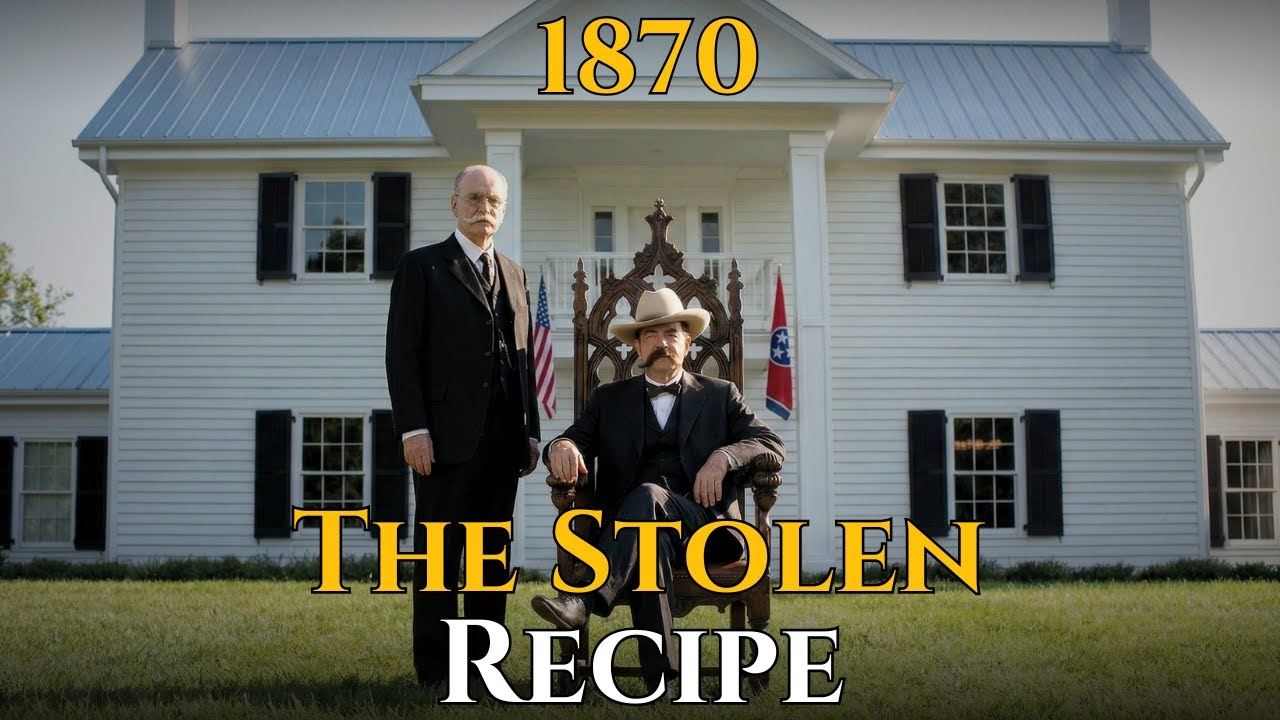
Jasper Newton Daniel—Jack to the world—arrived at his office in the distillery grounds that day as he always did: a small man of five-foot-two who made up for his stature with a flamboyant wardrobe and an outsized personality. He wore a knee-length frock coat, a wide-brimmed planter’s hat, and a silk vest, a dandy in the wilderness who understood that selling whiskey meant selling himself. He was the undisputed king of the hollow, absolute master of every detail of his operation. That morning, however, the king was about to be defeated by a piece of furniture.
Jack needed the company ledger, locked inside the heavy iron safe that sat in the corner of his office. He crouched, spun the dial, and pulled the handle. The door held fast. He tried again.
Still locked. The Tennessee humidity was notorious for swelling metal and thickening oil, jamming the gears of even the finest mechanisms, though it may have been simple impatience. For a man who controlled every aspect of his world—from the charcoal filtration of his whiskey to the cut of his coat—this resistance was an intolerable insult. His frustration boiled into blind rage, and Jack Daniel drew back his left foot and kicked the iron safe with all his strength.
Iron does not yield to flesh and bone. The safe stayed perfectly still, unscratched. But Jack’s big toe shattered on impact. In 1906, a broken bone was far from a minor injury.
Antibiotics were decades away. The barrier between life and death was as thin as the skin on a foot. Jack refused to slow down, limping through the distillery for days, soaking and wrapping the wound, likely pouring his own whiskey on it to dull the pain. But the distillery environment—wet, warm, and swarming with bacteria—was the worst possible place for an open injury.
Infection set in deep within the marrow. Gangrene followed, spreading slowly: first discoloration, then a sickly black rot that mixed the smell of dead flesh with the sweet smell of mash. When the pain became unbearable, Jack finally called for doctors. They amputated the toe, but it was too late.
The poison had already reached his foot, and months later they amputated that too. For six years, Jack Daniel fought a losing war against his own body. The man who had loved music, dancing, and conversation was reduced to an invalid confined to his bed, trapped in the grip of blood poisoning while his empire continued to grow outside his window. In 1911, he died—not from a rival’s bullet or from the alcohol he had spent his life creating, but because he lost his temper.
The safe that killed him remains in that preserved office to this day, perfectly intact, a dark monument to unchecked anger. Jack’s death was also a dynastic crisis. He had built a legacy but never a family—no wife, no children, no direct heir. The empire should have crumbled.
But Jack had a secret weapon: his nephew, Lem Motlow. Where Jack had been charismatic and flamboyant, Lem was cold, calculating, and ruthlessly efficient. Jack left the entire company to him, bypassing other relatives, knowing that Lem was the only one with the steel to survive the coming storm. The storm was the temperance movement.
Across the South, preachers condemned alcohol from their pulpits, and politicians drafted laws to ban it. Most Tennessee distillers folded, selling their copper stills for scrap and fading into obscurity. Lem Motlow did not retreat. He dug in.
His first move was to build the Motlow House, a pristine white Georgian mansion on the ridge overlooking the hollow, designed to look down upon the workers and the whiskey like a feudal castle. It was a physical statement that the era of the eccentric small-town distiller was over; the era of the industrial tycoon had begun. Lem understood that survival meant controlling the political machine. He ran for the Tennessee State Legislature and became a senator, not out of civic duty but out of a desperate need to protect his barrels.
He argued that whiskey manufacturing was a legitimate business, using his wealth and influence to carve out loopholes that kept his stills running while his competitors were shut down. He also understood something deeper: Americans don’t buy a product, they buy a story. As the country hurtled toward modernization, people were nostalgic for a simpler time, and Lem realized his greatest asset was the ghost of his uncle. He began to mythologize Jack Daniel, crafting a narrative of a lone frontiersman taming the wilderness with a copper still and a dream.
The Motlow House, with its grand aristocratic air, became the backdrop for this carefully curated mythology. But to make the story palatable to a segregated America, Lem performed a surgical excision of history. The distillery had become a factory, but marketing depicted a frozen, romanticized moment. There was no room for the uncomfortable truth that the soul of the whiskey—the Lincoln County process, the charcoal filtering that gives Jack Daniel’s its signature smooth taste—was not a white invention.
For over a century, the official story claimed that young Jack Daniel had been taken in by a Lutheran preacher named Dan Call, who taught him the secrets of the still. It was a wholesome piece of southern folklore, and it was a fabrication. The real teacher was an enslaved man named Nearest Green, owned by Dan Call. Green was the one who actually ran the still on the Call farm, the one who possessed the skill and knowledge to turn corn mash into high-quality spirit.
He was the master of the Lincoln County process, a technique rooted in West African purification traditions. When young Jack arrived at the farm, the preacher pointed him toward the still house and told him that Uncle Nearest was the best whiskey maker he knew. It was Nearest Green who took the boy in and taught him everything. When slavery ended after the Civil War and Jack started his own distillery, he did not cast Nearest aside.
He hired him, making him the first master distiller of the Jack Daniel Distillery and the first African-American master distiller on record in the United States. In the early days, the Green and Daniel families were intertwined. Jack was often photographed with Nearest’s sons. There was genuine respect there.
But after Jack’s death, when Lem Motlow took control and the Jim Crow era tightened its grip, the narrative shifted. Marketing a luxury product to white customers with a black man as the hero was seen as bad business. Quietly, systematically, Nearest Green was faded out of the picture. Official biographies focused exclusively on Dan Call and Jack.
The Green family, who continued working at the distillery for generations, knew the truth. The locals in Lynchburg knew the truth. But the world was sold the lie. It was not until 2016, over a century after Jack kicked the safe, that the company finally admitted the truth.
As the brand prepared for its 150th anniversary, it updated its history and acknowledged that it was Nearest Green, not Dan Call, who had been the true teacher. The revelation rewrote the history of American spirits, but for Green’s descendants, the admission was bittersweet—a validation after a century of silence. There remains one final irony, one that affects every visitor to the estate today. Moore County, Tennessee, the home of the biggest whiskey brand on Earth, is a dry county.
It has been dry since 1910, ten years before national prohibition. While the rest of the country legalized alcohol again in 1933, Moore County voted to keep the ban. For over a century, in the town that makes the whiskey, it has been illegal to drink it. Lem Motlow, the whiskey baron who built a mansion and conquered the global market, spent his political life fighting this battle.
He won the right to make whiskey, but never the right to sell it by the glass. The family that ruled the hollow were kings of a kingdom they were forbidden to taste. Today, the distillery relies on a legal loophole, selling bottles as commemorative souvenir decanters that happen to be filled with whiskey. The empire pumps out 150 million bottles a year, yet a visitor cannot order a glass of Jack Daniel’s in the town where it is made.
In the end, the Jack Daniel’s estate is a monument to a founder killed by his own temper and a dynasty built on a stolen recipe, ruled from a mansion where buying a drink is still a crime. The label might be black and white, but the truth has always been gray.
