The butler found her in the upper rooms of the London house and delivered the message in the quiet voice such men used for catastrophes. Your grace, he said, there are three strange men in the basement. The Duchess of Malborough made no reply. By the time anyone understood what the strangers were, the mischief was already done.
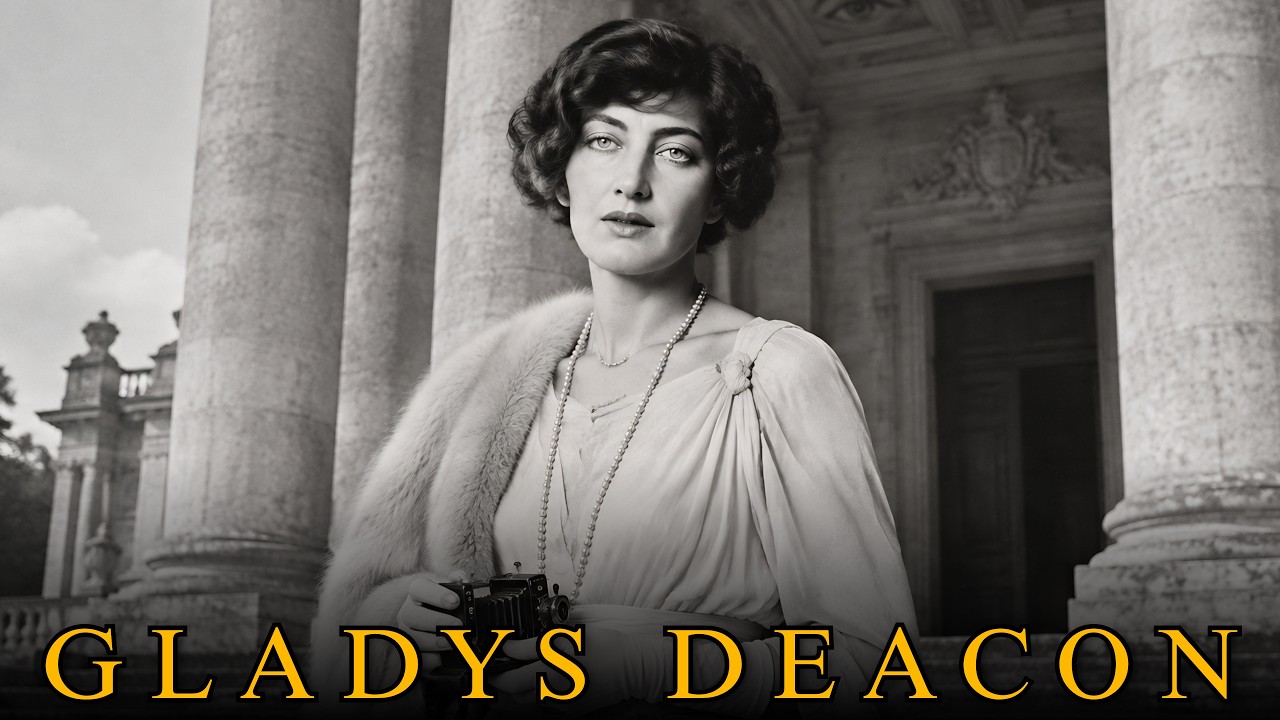
They had cut off the electricity, the gas, and the telephone, and locked themselves in among the larders and the pantries. They said they were private detectives. They implied that her husband had sent them. That spring, he had forced her out of Blenheim Palace, the house she had waited twenty-six years to enter, the house where her own eyes were painted across the ceiling of the portico.
Now, by Time magazine’s account, the Duchess cooked on an oil stove upstairs, fed by friends who had learned by accident that her telephone was dead. How does a woman who spent half her life winning a palace end up camping in her own house, watched from the basement by three men who would not let her leave with her furniture? The answer runs a long way back, through a scandal in a Paris hotel, a marriage bought with railroad stock, and a face that was altered and then slowly undone. In October of 1895, a girl of fourteen read that the Duke of Marlborough intended to marry Consuelo Vanderbilt.
She wrote to her mother about it. Her biographer, Hugo Vickers, preserves the line, and it has followed her ever since. Oh dear, if only I was a little older, I might catch him yet. Most girls of fourteen say such things about a face in a newspaper and forget them by spring.
This one kept hers. It would take her twenty-six years, but she would catch him. And twelve years after that, he would have the lights turned off on her. Her name was Gladys Marie Deacon, born in Paris on the seventh of February 1881 to American parents.
She was American by passport and parentage and almost wholly European by life. Her father, Edward Parker Deacon, came from an old Boston family and had been born in Paris himself in 1844. Her mother, Florence Baldwin, was the daughter of a rear admiral of the United States Navy. They had married in New York in April of 1879, when Florence was about sixteen and her husband was nearly twice her age.
It was not a happy house. In February of 1892, at the Hotel Splendide in Cannes, Edward Deacon broke down the door of an apartment and found his wife with her lover, a Frenchman named Émile Abbe. He fired three shots. Abbe died.
Gladys had turned eleven only days before. Nobody has ever shown that she saw any of it, and the honest version needs no such scene. The scandal was international, and the Deacon name became a byword for American disgrace abroad. Her father was convicted of manslaughter and pardoned by the French president, Sadi Carnot.
Her parents divorced the next year. Then came a war over the children, fought in the courts, and at one point her mother simply took her back by force. Gladys was placed at a convent school at Auteuil outside Paris, and later her father took the girls to the United States for about three years. She seems to have learned early that protection could vanish in a single night, and that a girl in her position would have to build her own.
The man she meant to build it on was Charles Richard John Spencer-Churchill, the ninth Duke of Marlborough. His family called him Sunny. He was a first cousin of Winston Churchill and, by most accounts, cared about one thing above all others: Blenheim Palace. He had been born far from it, at Simla in British India, on the thirteenth of November 1871.
The great English landowners of his generation were squeezed from every side. An agricultural depression had set in during the 1870s. In 1894 came a new estate duty, and it was raised again and again. A palace that had been a nation’s gift two centuries before had become a bill its owner could not pay.
So Sunny did what dukes in his position were doing all through those years. He married American money. Between about 1870 and the start of the First World War, well over a hundred American heiresses married into the British peerage. The girl brought the dollars.
The husband brought the rank. The house got its roof mended. The money belonged to William K. Vanderbilt, and the bride was his daughter, Consuelo, who did not want to marry the Duke at all.
She was secretly engaged to another man, Winthrop Rutherford. Her mother Alva forced the match, and the wedding went ahead at St. Thomas Church in New York on the sixth of November 1895. Thirty-one years later, Alva said it plainly under oath: I forced my daughter to marry the Duke.
The settlement is worth hearing in full, because everything in this story runs on money. The Duke received $2. 5 million in railroad stock, 50,000 shares of the Beech Creek line, guaranteed to pay four percent a year. That came to $100,000 every year, roughly £20,000, for the rest of his life.
Consuelo had another $100,000 a year of her own. By 1921, the gifts from her father to Consuelo and her family came to about $20 million. American railroad money had bought Blenheim its restoration. It refurbished the interiors, refilled the library, and in time paid for the formal gardens the Duke commissioned from a French designer.
Into that house, around the turn of the century, came a young woman who had none of that money and wanted the Duke anyway. She came as a friend of the duchess. Consuelo years later wrote about it in her memoir with what reads now as terrible innocence. I was soon subjugated by the charm of her companionship, she remembered, and we began a friendship which only ended years later.
She called Gladys beautiful and alluring. Both words were true. Neither was a warning she knew how to read. There is an irony in that friendship that the rest of this story keeps returning to.
Consuelo was the market’s perfect success, the heiress whose money saved the house. Gladys was its shadow, an American girl in exactly the same world with exactly the same ambition and none of the fortune. What Consuelo had been made to buy at an altar, Gladys would have to win by patience and nerve. Gladys was already the sort of young woman who caused incidents.
In 1901, the Crown Prince of Prussia, heir to the German Empire, came to Blenheim, became infatuated with her, and gave her a ring. His father, the Kaiser, demanded it back. A girl of twenty with no fortune and a notorious surname had drawn the attention of an empire. She kept the Duke in view.
What she brought to the contest in place of a railroad was a face and a mind and an almost alarming patience. The Marlboroughs separated in 1906. For the woman who wanted the Duke, that changed almost nothing. A duke in 1906 did not divorce lightly, and this one waited another fifteen years.
Whatever Gladys and Sunny were to each other in that time, and the accounts disagree about when the affair began and how steadily it ran, she was waiting on a legal outcome that was entirely in other hands. She filled those years with other things. She was, by most accounts, one of the cleverest women in Europe, reported to speak five languages. She was a regular in the circle of the art connoisseur Bernard Berenson at his villa I Tatti near Florence.
The aesthete Robert de Montesquiou is said to have called her the marvel. Marcel Proust put it more carefully. I never saw a girl with such beauty, he wrote, such magnificent intelligence, such goodness and charm. Rodin sculpted her around 1900.
Boldini had already sketched her when she was about eighteen. Chips Channon called her the world’s most beautiful woman. It was the eyes, enormous and blue-green, that everyone recorded. She moved between Paris, Florence, and Rome, among painters, writers, scholars, and princes.
Years afterward, as a very old woman, she gave Vickers her own summary of those days, and it was not modest. I was a miracle, she told him. Differential calculus was too low for me. Winston Churchill watched her too.
He met her at the Unionist rally at Blenheim on the tenth of August 1911 and in Venice in September of 1907 described her and the women with her as strange glittering beings. And somewhere at the start of those years, at about the age of twenty-two, she did the thing the world now remembers her for. She wanted the perfect line of a Greek statue, one straight line from the hairline down the forehead and along the nose, and she had paraffin wax injected into her face to make it. The wax did not stay where it was put.
Over the years, and then the decades, it slowly moved downward and settled. It is tempting to make that the end of the story. It was barely the beginning. Thirteen years after the wax, in 1916, Giovanni Boldini painted her full length in Paris, all motion and silk.
Nearly twenty years after it, she became a duchess. The wax was a slow fuse burning quietly behind everything else in her life. Her mother died in 1918. Gladys was in her late thirties, still not married, and still, in one account’s unsparing phrase, an eccentric American of little money.
She had the friendships of a great heiress and none of the security of one. Whatever the affair with the Duke was in those years, the accounts cannot agree on its shape. One places its beginning soon after she came into the palace’s orbit. Another has her established as his mistress by about 1912, when she was thirty-one.
What is clear is that through all of it she held no legal claim on him at all. He was still another woman’s husband. She could not marry him, and she could not know whether the divorce she needed would ever come. Each year she waited.
The wax in her face moved a little further, and the one asset the world had always paid her for slipped a little further from her hands. Then, in 1921, the divorce came through. It had taken fifteen years from the separation and twenty-six from the letter. Gladys was nearing forty.
The face that had made her famous was quietly changing. The Duke was approaching fifty. If the divorce had come any later, there might have been nothing left to marry for. What followed moved quickly after a quarter of a century of waiting.
On the twenty-fourth of June 1921, there was a civil ceremony at the British consulate in Paris. On the twenty-fifth, a religious service at the Reformed Church in the Rue Roquépine. The bride was forty. The groom was forty-nine.
One story has it that she left the word obey out of her vows, though nobody can now say for certain whether she did. Nine days later, on the fourth of July, Consuelo married a French aviator named Jacques Balsan. The first duchess had walked out of Blenheim and into a new life with a fortune of her own. The second had walked in with almost nothing but her name and her nerve.
That contrast is the whole of the story in miniature. Consuelo had married the house with $20 million behind her and left it with a fortune of her own. Gladys married the house with nothing behind her but twenty-six years of wanting it. Everything she would have at Blenheim, she would have through him.
The Duke seems to have been hopeful. That same year he wrote to his cousin Winston, and the line survives. I think that Gladys and I will be happy in our lives together. It is a mild sentence.
A man who had married once for a house and spent fifteen years at the edge of that marriage was hoping in his careful way that the second would be gentler. And the woman beside him had wanted this since she was fourteen. She had written it down. She had waited twenty-six years through a scandal, a convent, a friendship that ended, and a slow change in her own face, and she had finally caught him.
Now she had the man. With him came the house, and the house had its own rules, rules she had not yet read. Blenheim had been built for a victory. The Battle of Blenheim in 1704 had earned the first Duke a grateful nation’s gift, a palace designed by Vanbrugh, raised between 1705 and 1722.
It was a monument before it was a home. Even the rent showed it. Every year the Duke paid the crown for his palace with a flag, a banner with heraldic symbols, as Time magazine would describe it for its American readers. About 187 rooms, roughly 2,000 acres around them.
Gladys had been coming there since the turn of the century. Now, at forty, she was its duchess, and she would be its chatelaine for twelve years. By several accounts, the first of those years were genuinely happy. She brought a different kind of guest into the house.
The writer Lytton Strachey came. So did the sculptor Jacob Epstein, who made a sculpture of the Duke. A writer like Strachey was an unlikely guest at a ducal table, and that was exactly the point. Gladys seems to have been trying to bring her old life into her new house, to make the palace answer to her mind as well as to her title.
And Gladys took photographs. She was an accomplished photographer, and she turned her camera on the life of the palace. She photographed the parties. She photographed Winston Churchill on his visits.
There is one odd thing about it, noticed when the palace mounted an exhibition about her in 2011. By that account, the woman holding the camera rarely joined in the parties she recorded. She stood a little to one side, looking through the lens at a world she had spent half her life trying to enter. Keep that camera in mind.
It is the one thing in this story that she held in her own hands, and it would be in her hands again on the worst day of her marriage. What she did put into the house, she put there permanently. In 1928, she had the artist Colin Gill paint eyes on the ceiling of the north portico, the great porch at the entrance. They are gigantic, and the blue ones are hers, the blue-green eyes people remembered.
Beside them are brown eyes whose they are has never been settled. One theory says they belong to Consuelo. Another says they are the Duke’s. One count of the whole ceiling makes six eyes in all.
If the brown eyes really are Consuelo’s, the joke is a sharp one: the first duchess and the second side by side over the front door of the house, the one that had paid for it and the other who had waited for it. If they are the Duke’s, it is gentler, a husband and wife looking out together at their guests. Nobody wrote down which she intended, and perhaps that was the point. A riddle over the door suited her.
Anyone walking in through the front door of Blenheim walked under them. Anyone walking in today still does. Two years later, she went further. Sunny had brought in the French landscape architect Achille Duchêne to build formal water terraces on the west front of the palace, and by one account the Duke and his duchess made those terraces together.
Set into them are two long-necked sphinxes cast in lead in 1930 by the sculptor W. Ward Willis. They have the face of Gladys Deacon. The sphinx became her emblem long after she had gone.
When Vickers came to rewrite his biography of her in 2020, he called it The Sphinx, a creature with a woman’s face and a riddle behind it, set in lead in the gardens of a house that would not keep her. There was a reason to want that permanence. Even as the eyes went up and the sphinxes were cast, the marriage under them was going wrong. The good years had been real, but they had been short.
By the time those lead faces were settled into the terraces, the Duke was already finding reasons to be somewhere else. The dogs were named after the house, which was perhaps the first joke Blenheim ever played on its duke. Gladys bred Blenheim spaniels, the small toy spaniels named after the palace, with enthusiasm and, it seems, without much restraint. One account says they multiplied at such a rapid speed the dogs overtook the house, driving the Duke to distraction.
The Duke himself complained that there were about twenty of them living indoors. Years later, when the marriage was being argued over, one account says the Duke complained that the dogs had damaged the textiles and the floors of the house. An older account says simply that the dogs ruined irreplaceable carpets and furnishings. Whether the damage was as great as he claimed, nobody can now say.
What is clear is that the spaniels had become one more thing the two of them could not agree on, and one of the few things in the house that was truly hers. They did not stay in a kennel. The exhibition at Blenheim many years later recorded that the dogs had their own parties in the great hall, with their own Christmas tree. To a duke whose whole life was that house, it was a kind of vandalism.
To his wife, it may have been company. She needed company, because the marriage had a deeper wound in it than any dog. There was no heir. The marriage had been made when she was forty, and any child of it would have had to come quickly.
The exhibition write-up records that Gladys suffered three miscarriages, though the fuller histories are quieter on the point, and it should be held as reported rather than proven. For a man so bound up in a line of dukes, a childless second marriage must have weighed heavily. He already had two sons born to Consuelo: John, the Marquis of Blandford, arrived in 1897, and his brother Ivor in 1898. They belonged to the first marriage, the Vanderbilt marriage.
The second would give the house nothing of its own to pass on. Then came religion. In August of 1926, at the Duke’s request and with Consuelo’s agreement, the Catholic Church annulled his first marriage. Twenty-six years of it, two sons, a restored palace, and Rome declared that it had never truly existed.
The next year, in 1927, Sunny became a Roman Catholic. He grew devout. There was a quiet cruelty in the timing that nobody seems to have remarked on aloud. Gladys had spent fifteen years waiting for that first marriage to end in law.
Now the church declared that it had never been a marriage in the first place, and a man who had become a devout Catholic may have found it no easier to put a second wife aside. Gladys, by the accounts that survive, did not convert. She was skeptical, and she was reported to mock his new faith. There was society, too.
Time magazine, looking back on the marriage in 1933, reported that the Duke was annoyed by his second duchess’s lack of interest in society, so unlike his first wife. Gladys had spent her life in salons and studios, not ballrooms full of county families. For a woman who had spent twenty years in the company of Proust and Berenson, county society was a narrow room. She seems to have stopped trying to fill it.
Her husband noticed, and so eventually did the American magazines. Vickers, who came to know her in her last years, described her at Blenheim as a lone intellectual caught among county figures. He told one small story that says it all. She owned a statue by Rodin, and it stood in one of the state anterooms, and nobody ever asked her about it.
Rodin had sculpted her when she was young. Proust had praised her mind. Berenson had welcomed her at I Tatti. Now she lived in a palace where the most interesting object in the room passed without a single question.
Her face was changing as well. The wax was still moving slowly, as it had been for two decades. In her forties and fifties, it was there for anyone to see. The woman whose beauty had been the talk of Paris was now looking out at the county from behind a face that was not quite the one the portraits remembered.
One line attributed to her sums up how she came to see the bargain. I married a house, not a man. It appears in a local history of her later years, and it may be a remembered phrase rather than a recorded one, so it is best taken as reported. But if she said it, she had earned it.
She had wanted Blenheim, and the Duke had come with it, and now the house was all that seemed to belong to her. So the fault lines ran through everything: no children, twenty dogs, a conversion she would not respect, a society she would not court, a mind with nobody to talk to, a face she could no longer trust. Any one of them a marriage might survive. All of them together, in a house of nearly two hundred rooms, gave two unhappy people plenty of space to avoid each other.
By the turn of the 1930s, they had stopped avoiding each other. Somebody at the dinner table asked the Duchess why there was a revolver lying next to her plate. It is a famous story, and like most famous stories, it survives in slightly different words. Vickers tells it this way.
One evening she placed a revolver on the dining room table, and when a guest asked what it was for, she answered, Oh, I don’t know. I might just shoot Marlborough. One source puts that dinner in 1931. A woman whose father had once fired three shots in a hotel in Cannes would know exactly what a gun on a table would say to a room.
There were other stories about the gun. One account says she kept a revolver in her bedroom to keep her husband from coming in. Another, preserved in the archive of the Henry Poole Company, says she declared that she slept with a pistol under her pillow to repel his advances. Whether there was one gun or several, and whether it lived in the bedroom or under the pillow, the message was the same.
The door between them was closed. She could be just as sharp without a weapon. At another dinner, by the account Vickers later gathered, a guest began to lecture the table about politics. She cut him off.
Shut up, she said. You know nothing about politics. I’ve slept with every prime minister in Europe and most kings. It was a boast, and nobody has ever tried to prove it.
It was also the voice of a woman who had stopped caring what the county thought of her. The Duke, meanwhile, was finding life elsewhere. Time later reported that at the receptions they gave, he frequently stood alone at the head of the stairs. The exhibition at Blenheim recorded that he preferred to stay in London or at the Bear Inn at Woodstock rather than in his own palace with her.
Then, in 1931, he left. He was fifty-nine. She was fifty. They had been married ten years and had known each other for thirty.
The records give that departure remarkably little drama. No famous quarrel, no letter, no scene in the hall. A husband who had once spent fifteen years living apart from his first wife simply began to live apart from his second. The Duke left Gladys alone at Blenheim in favor of life in London.
That is how Vickers puts it, and the plainness is the point. He simply went and left her in the house. In one of Vickers’s tellings, she was alone there for nearly two years. She found her own way to fight.
The historian Adrian Tinniswood puts it in one sentence: for several years, Gladys and her spaniels had the place to themselves, while she hired private detectives to follow her husband. From that great empty palace, she hired men to watch where the Duke went. There is a reason detectives keep appearing in this story. In England, before 1937, a divorce turned on proof of adultery, and that proof was usually gathered by private inquiry agents.
A wife who wanted to know what her husband was doing, or to protect herself if he tried to end the marriage, hired a detective. So did a husband. Both sides of this marriage would come to rely on such men. Only in 1937 did England widen the grounds for divorce to include cruelty and desertion.
Until then, a husband who simply found his wife impossible, or a wife who found her husband cold, had no clean way out. Whatever the Duke felt about the dogs, the revolver, and the dinner table, none of it was in itself a reason the courts would accept. That may help explain the shape the end of this marriage took. If he could not easily divorce her, he could still remove her.
The numbers of her situation by then are almost absurd. She had waited twenty-six years for this marriage. It had lasted ten when he walked out. She was left in a palace of about 187 rooms, with roughly twenty dogs for company, on an estate of about 2,000 acres, for close to two years.
While the man who owned all of it lived in London, she had the run of one of the great houses of England, and almost nothing in it was legally hers. The title was hers. The coronet was hers. The money was his.
One writer describes the Duke as notoriously impoverished by the time he married her, and she had come to him with little money of her own. Whatever paid for the servants, the electric light, and the household came through him. Every switch in that house was ultimately his. In the spring of 1933, the arrangement ended.
It began with money, the way such things usually do, and then it moved on to the lights. The early 1930s were hard years for every great estate in England. The depression that followed 1929 had arrived, the estate duty was still there, and Blenheim was still a monument its owner struggled to pay for. By several accounts, the Duke cut off her funds first.
It was the quietest blow. Then, the accounts say, he had the electricity disconnected. The exhibition at Blenheim recorded that the Duke had the electricity disconnected. Tinniswood writes that he had the gas and electricity to Blenheim cut off.
Gladys retreated to their London house, but he cut off the power there, too, and then had her evicted. One can only imagine the evenings that followed. A duchess and twenty spaniels in a palace without power. Then the servants went.
By the exhibition’s account, he temporarily dismissed her servants, so that the household which had kept the palace running for her simply stopped. The staff belonged to Blenheim, and through Blenheim to him. She had commanded them for twelve years, and in a single stroke she found that their loyalty had never been hers to command. She held on.
That is the remarkable part. With no money, no lights, and no servants, she stayed in the house that she had waited for since she was fourteen. She had spent twenty-six years trying to become the mistress of Blenheim. She was not about to hand the keys back simply because the lights had gone out.
In May of 1933, he forced her to leave. It is Vickers who dates it and Vickers who gives the scene. The removal vans came up to the palace to take her possessions away. Her possessions were carried out of the palace.
The Duchess stayed where she could see it happen. Courageous to the last, Vickers wrote. Gladys stood on the steps at Blenheim and photographed the vans taking her possessions away. She picked up her camera, the kind of camera that had followed Winston through the rooms and caught the parties she rarely joined.
For years she had stood to one side of Blenheim’s life, recording it. Now she stood to one side of her own departure and recorded that, too. Somewhere above her, on the ceiling of the portico, were the eyes she had commissioned five years before. Gigantic, blue-green, permanent.
They had been painted to belong to the mistress of the house. In May of 1933, the mistress of the house was standing outside it taking pictures of vans. By August of 1933, the house on Carlton House Terrace was the last roof she still had in his name. What happened there that August is told in the pages of Time magazine, dated the twenty-first of August 1933, under the headline Marlborough’s Divide.
It is an arch, gossipy little piece. It gets some things wrong. It calls Gladys a Bostonian, though she was born in Paris, and it dates Consuelo’s divorce a year too early. But it is the nearest thing to an eyewitness account that survives, and it reads like a scene from a play.
Your grace, said the butler to the Duchess of Marlborough. There are three strange men in the basement. The Duchess, the magazine reported, made no reply. The three strangers said they were private detectives.
They implied that their employer was the Duke. They cut off the electricity, the gas, and the telephone. Then they locked themselves into the basement rooms, which included the larders and the pantries. Upstairs, a duchess with no power, no telephone, and no way into her own larders.
Downstairs, three men behind a locked door sitting among her food. Her friends found out by accident. They tried to telephone, and the operator told them that her Grace’s telephone had been temporarily suspended. That struck them as odd enough to come and see.
They called at the house, and when they came back they brought provisions. Then they helped her cook meals on an oil stove. A later account adds one more detail of that house in the dark: conditions grew so gloomy that guests had to hold on to the wall as they found their way along the landing and up the stairs. That rests on a single source, but it is easy to believe, feeling for a wall in a great London house where the lights had been cut.
For four days, the Duchess camped on. On the fourth day, she sent for two vans. Workmen came and began to load the first one with her collection of paintings. Then they turned to the heavy furniture and started loading the second van.
That was the moment the three detectives chose to come up out of the basement. They stopped the loading. One detective went and found a policeman. Coolly, Time reported, Gladys of Marlborough appeared and told the movers to resume work.
The policeman, the magazine said, scratched his head. In front of him stood the Duchess of Marlborough in her own house, directing men to carry her own things out of her own house. Beside her stood three men who implied the Duke had sent them and who had spent four days in her basement. The detectives sent for a lawyer.
The Duchess sent for hers. Then there was a long conference, as Time described it, between the Duchess, the lawyers, the detectives, and the policemen. Nobody recorded what was said or who gave way or on what terms. When it was over, the vans drove off with her things in them, and then she left.
The last sentence of Time’s story is the cleanest image in her whole life. Gladys of Marlborough walked out of her house down the street to the Carlton Hotel. Everyone expected a divorce. What came instead was a death.
The Duke fell ill in the early summer of 1934, and within about a month he was dead of cancer. He died on the thirtieth of June 1934, at the age of sixty-two, after barely a month’s illness. What he had not done was divorce his second wife. Vickers says plainly that the Duke died before divorce papers were filed.
The Henry Poole archive says he died while in the process of divorcing his second wife. Time, writing that August, said only that society assumed a divorce was coming. The safest reading is the simplest: a divorce was expected and perhaps being prepared, and it never came. Winston wrote a tribute to his cousin and called him his oldest and dearest friend.
Whatever Winston thought of the woman he had once called a strange glittering being, his loyalty in the end went to Sunny. Because there was no divorce, Gladys remained exactly what she had always wanted to be: the Duchess of Marlborough. Soon she was the Dowager Duchess, but the title stayed with her for the rest of her life. What is certain is that the title came with no house.
She had been removed from Blenheim and from London, and nobody was going to bring her back. She went to the country with her dogs. She first lived in North Oxfordshire at Mixbury, by one account, and then, at about the age of fifty-three, she moved to Grange Farm at Chacombe, near Banbury, just over the border in Northamptonshire. It was a farmhouse, not a palace.
She built up a library there. She gardened with a woman named Mrs. Grills. She employed people from the village and had a reputation for being strict with them.
For a while it looked like the start of a quieter, eccentric country life. And then she made a decision that says more about her than any revolver. By one account, the woman with the camera was photographed for the last time in 1935. She was fifty-four.
By the accounts that survive, nobody took her picture again for the rest of her life. After a lifetime of being painted by Boldini, sculpted by Rodin, and looked at by everyone in Europe, she withdrew her face from the world entirely. More than thirty years had passed since the wax. Whatever the mirror showed her by then, she decided that nobody else would see it, and she kept to that decision for the rest of her life.
In the lanes around Chacombe, the local children had a name for the old woman at Grange Farm. They called her a witch. By the accounts that have come down from those years, she chased them off with a shotgun. She lived at night and slept by day.
She kept dogs and great numbers of cats. When she did go out, she wore hats and veils to hide her face. From about 1951, her only regular link to the world was a Polish helper named Andrzej Kukowski. He became her one dependable connection to everyone else.
In 1962, when she was eighty-one, her family had her removed from Grange Farm against her will and taken to St. Andrew’s Hospital in Northampton, a private psychiatric hospital. Her relatives described her circumstances as practically inhuman. She demanded to be taken home to Chacombe.
She tried to escape. She never left. There is a fact from those years that ought to be remembered whenever her story is told. By one account, the official solicitor confirmed that she still had capacity, and that finding stopped her relatives from taking her possessions.
A woman the law considered competent spent the last fifteen years of her life in a hospital asking to go home. Then, in 1975, a young man came looking for her. His name was Hugo Vickers. He was twenty-four.
He found her in St. Andrew’s, and over the next two years he visited her about sixty-five times. She was ninety-four when they met, and she was still, in every sense that mattered, herself. In conversation with Gladys, Vickers wrote, there was a jewel under every stone.
He published his first book about her in 1979, two years after her death, and rewrote it forty years later as The Sphinx, some forty-five years after their first meeting. Almost everything known about her today comes through him. She died in her sleep on the thirteenth of October 1977, at the age of ninety-six, and was buried in the village churchyard at Chacombe, a long way from Blenheim and from Bladon. The next year, her jewels and works of art went to Christie’s, and the world finally saw what the witch of Chacombe had been living among.
A sapphire of 12. 86 carats sold for £15,000. A tulip brooch made £58,000. Her Rodin, a standing female figure, made £17,000.
The jewelry alone fetched £452,755, and it sold in about an hour. In all, the sale made £784,000 for a woman who had once been dismissed as an American of little money. Count what the year 1933 took from her. It took the palace she had waited twenty-six years to enter, the London house, the servants, the light, and the warmth.
It took the role she had dreamed of since she was fourteen. What it left her was a title with no house attached and forty-three years of being a duchess with nowhere to be one. She did not lose her nerve. She did not lose her mind, and she did not lose her name.
She lost everything else. And yet the house could not quite get rid of her. The Boldini portrait now hangs at Blenheim again, shown to visitors on the tour of the private apartments. In 2011, the palace that had once put her out mounted an exhibition in her honor, running from February to March of that year under her own name and the years of her reign as Duchess, 1921 to 1934.
The house that had been darkened around her in 1933 now lit a room in her memory. Her face is still on the house. Two lead sphinxes lie on the water terraces, cast in 1930 with her features. And every visitor who climbs the steps where she once stood with her camera, photographing the vans, walks in under her eyes, still painted across the ceiling of the portico, still looking down at strangers in the house that put her out.
In those last years, sitting with the young man who had come so far to find her, she thanked him in a sentence that is warmer than anything else she left behind. Thank you very much, she said. You’ve given me a better laugh than I’ve had since I came here.
