On the morning of March 22, 1961, police in Odessa, Texas, received a call from Mary Williams. Her seventeen-year-old daughter, Betty, had not come down for breakfast. Betty sometimes sneaked out at night, so at first this seemed like another disappearance that would resolve itself by afternoon. It did not.
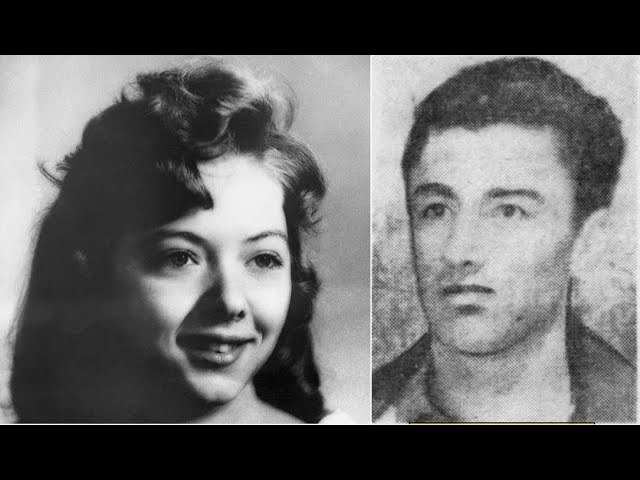
Officers visited Odessa High School that day and interviewed students one by one. A boy named Ike Nail told them he had driven Betty home from a school play rehearsal the previous evening. She had asked him to meet her in the alley behind her house half an hour later. He did.
At ten-thirty, Betty emerged in pink pajamas and a light robe and climbed into his car. Around midnight, another car approached with its headlights on. Betty said, “Oh my God, I didn’t think he’d come. ” It was her former boyfriend, Mac Herring.
She got out and told Ike, “I’ve got to call his bluff even if he kills me. ” She climbed into Mac’s Jeep, and they drove off. Officer Bobby McAlpine interviewed Mac Herring in the principal’s office. Mac said he had picked Betty up shortly before midnight, they had talked, and he had dropped her at her parents’ house around midnight.
He claimed he had left before she went inside. McAlpine found this strange. Betty had been in her bedclothes. Why would she knock on her own front door at midnight wearing pajamas?
McAlpine took Mac to the Odessa police station. After forty-five minutes of questioning, with contradictions mounting in his story, Mac confessed. He said Betty had been asking him to kill her, so he had taken a twelve-gauge shotgun and done it. He led officers to his father’s hunting lease twenty-six miles north of Odessa, down a dirt track to a stock pond.
There was blood spatter, gore, and footprints. Mac stripped to his underpants, waded into the pond, and dragged out the body of a young woman in pink pajamas, weighted with two heavy lead bars. Most of her head was missing. Sheriff Bill Eddins and the officers were stunned by Mac’s composure.
He described shooting Betty in the head as matter-of-factly as if he were talking about shooting a dog. He showed no emotion, no regret, no fear. When asked about a motive, he simply said, “There is no motive. ” Sheriff Eddins did not accept that.
“There is something missing here,” he said. “You don’t take people out and shoot them like rabbits. ”
Betty Williams was born Elizabeth Jean Williams in Odessa on August 11, 1943, the eldest of four children. Her father was a carpenter and building contractor; her mother worked at a department store.
They lived in the poorer part of town and were devout Baptists. But Betty was different from the other girls in West Odessa. She read Kerouac and Ginsberg. She opposed segregation at a time when such views were controversial among white Americans in that part of Texas.
She was creative, an avid writer, a gifted actress who had landed major parts in school plays and aimed for Broadway. She also had little regard for convention. She sometimes went without a bra. She liked to shock people.
In Odessa in 1961, such a girl was shunned. She was also widely regarded as loose, reputed to have had sex with several boys. “Nice” girls kept their distance. Boys were attracted to her but would not be seen with her publicly.
Betty, in turn, had contempt for the prim girls who considered themselves her betters. During the hot summer of 1960, she began a relationship with John Mac Herring. Mac was born in 1943 to a good family. His father, a World War II veteran, ran an electrical contracting business.
Mac was tall, clean-cut, an athlete who played football and earned above-average grades. His football coach described him as “very, very quiet. ” Mac and Betty kept their relationship secret. He was not the sort of boy who would bring her home to his parents, and he did not.
He treated her as something to be hidden. Betty tried to make him jealous. She “parked” with Bill Rose, a football player voted the most handsome in his class. Mac found out, as intended, and was angry.
Instead of intensifying his desire, it had the opposite effect. He rowed with Betty, called her names, and began dating a pretty redheaded girl named Sherry Martin. Betty was devastated. She wrote about being humiliated and torn to pieces.
That autumn, Elvis Presley reached number one with “Are You Lonesome Tonight? ” The song seemed to fit her mood. To make things worse, the new drama teacher did not select her for a major part in the school production of Winterset, a 1935 play by Maxwell Anderson. Instead, Mac was given the leading role of Trochus Stella, a ruthless killer without a conscience.
In the winter of 1960–1961, Betty’s world closed in. Her father found her diary and learned of her activities with boys. He was appalled. Betty began talking about suicide, telling people she did not have the nerve to kill herself and asking whether they would do it for her.
Most treated it as a joke. One boy said, “I don’t think so. ” Another joked, “I charge for my services. ” Mac laughed it off as well.
On March 20, 1961, in a car with Mac and another boy, Betty asked Mac whether he would pull the trigger if she held a gun to her head. Everyone laughed. Then she wrote a note exonerating Mac from any blame for her murder. It read, in part: “I want everyone to know that what I’m about to do in no way implicates anyone else.
I am waging a war within myself, a war to find the true me, and I fear that I am losing the battle. A friend of mine, seeing how great is my torment, has graciously consented to look after the details. His name is Mac Herring. ” It was signed: Betty Williams.
On the day before her death, Betty told a boy named Mike that she had finally talked Mac into killing her. Mike thought it was a joke. “I’ll send roses,” Mac reportedly said. Betty had two days left to live.
Mac told police he had made up his mind before he picked her up. He said he had hoped to talk her out of it, but he knew he could go through with it if he had to. They sat in the Jeep for fifteen or twenty minutes, then walked to the pond. Betty was shivering.
She returned to the Jeep for her duster. Mac waited at the water’s edge with the shotgun. Betty removed her shoes. Mac said, “Give me a kiss to remember you by.
” She did, and said, “Thank you, Mac. I will always remember you for that. ” She put her hand up to steady the barrel against her left temple. He pulled the trigger.
She was dead “just like that,” he told a reporter, snapping his fingers. News of the murder spread through Odessa that afternoon. Mac was popular, and people were shocked. He was charged with first-degree murder and possible execution, but the next day he was granted bail of ten thousand dollars.
While awaiting trial, he dated three or four different girls. The trial took place eleven months later, on February 20, 1962, in Kermit, Texas. The courtroom was packed with teenage girls who had come to see Mac. His attorney, Warren Burnett, argued temporary insanity.
A defense psychiatrist, Dr. Marvin Grice, testified that Mac had been “dethroned of his reasoning” by Betty’s requests. When he pulled the trigger, Dr. Grice said, Mac had been temporarily insane.
The doctor conceded Mac was now normal and posed no danger. The prosecution was denied the chance to have an independent psychiatrist examine Mac, because the defense argued he had since recovered his sanity, making a retrospective opinion impossible. The jury deliberated ten hours and forty minutes. Their first vote was nine to three in favor of insanity.
A second vote was ten to two. When they reported they were hopelessly deadlocked, the judge insisted they continue. The two holdouts relented. The verdict was unanimous: Mac Herring had been suffering from temporary insanity on the night of the murder.
He was mobbed by supporters. Betty’s parents left the courtroom subdued. The prosecution took the case to the Texas Supreme Court, which ruled that Mac had never faced an actual trial, so he could not benefit from double jeopardy. A new trial was ordered.
It was held in Beaumont, far from Odessa, to avoid local prejudice. The defense produced a parade of character witnesses who described Mac as exemplary, decent, God-fearing, and incapable of malice. The jury acquitted him. He was mobbed and applauded.
Mac Herring went to Texas Technical University, where he was something of a celebrity before the novelty wore off. He worked as a welder, a carpenter, and an electrician. He married twice and divorced twice. He lived quietly in Odessa until his death on January 5, 2019, at the age of seventy-five.
Betty’s family, meanwhile, lived with shame and stigma. Many in Odessa came to believe that Betty had provoked Mac into killing her, that she had gotten what she had asked for. The prosecutor who handled the original case called the pre-trial hearing a perversion of the law. He was right.
The narrow question of Mac’s sanity at the moment of the killing, stripped of the circumstances of the crime and reduced to the opinion of one psychiatrist hired by the defense, virtually guaranteed the outcome. And the final verdict, reached by a jury in Beaumont, remains difficult to reconcile with the facts established by Mac’s own confession. He had planned the killing. He had fetched the gun, the rope, the lead weights.
He had understood what he was doing before, during, and after. He had hidden the body. He had lied to police. He had shown no remorse, only concern for his own fate.
Whatever else may be said about the death of Betty Williams, the evidence points to one conclusion: Mac Herring was not insane when he murdered her. He was a psychopath, and he got away with it.
