On a September night in 1857, Dr. Samuel Morrison sat down in his Natchez office and committed something to paper that he had never dared to write before. The physician had been summoned to the Witmore plantation twelve times since late summer, each visit made under cover of darkness, each one to attend to a woman he was forbidden to name. Now, in a letter addressed to no one he could trust, he recorded his refusal to continue.
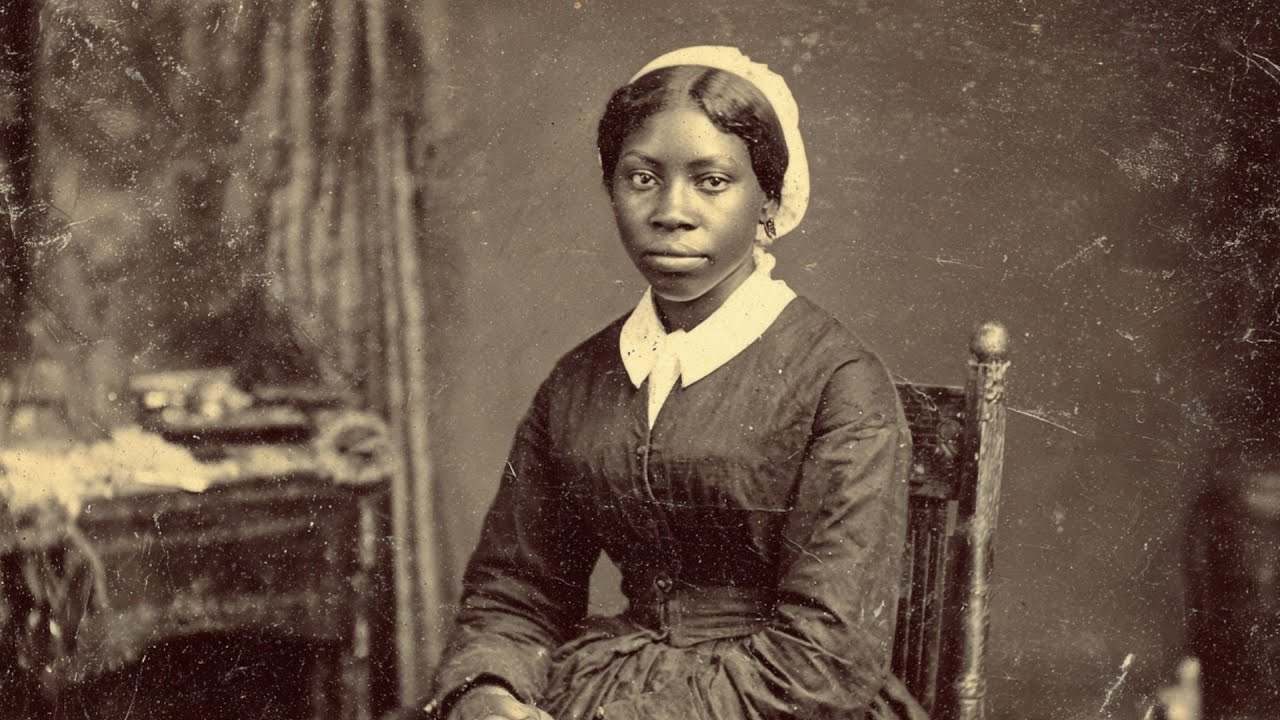
The woman confined in the special quarters, he wrote, was being subjected to an arrangement he could no longer excuse. He called it unconscionable. Then he sealed the letter and hid it among his papers, where it would sit untouched for 110 years. The Mississippi River that bordered Natchez in 1857 carried steamboats and cotton bales through its muddy waters, but it also carried secrets.
The story that began that autumn on a plantation seven miles southeast of the town would remain buried for more than a century, surfacing only through a series of accidental discoveries that began with the demolition of an old carriage house. The Witmore estate was one of the most prosperous cotton plantations in Adams County, spanning nearly two thousand acres of fertile bottomland along the river road that connected the grand mansions to the working docks below. Its owner, Harrison Witmore, had inherited substantial wealth built through cotton cultivation and the labor of nearly one hundred enslaved people. The plantation records, meticulously kept in leather-bound ledgers that survived the Civil War hidden in a root cellar, seemed ordinary enough at first glance.
But among the names listed in those records, one appeared and disappeared with troubling frequency. Esther Green was described in the 1856 inventory as approximately twenty-five years old, of mixed heritage, and noted for her literacy—an unusual and often dangerous skill for an enslaved person to possess in Mississippi at that time. She had been purchased from an estate sale in Vicksburg in 1855, along with several other individuals whose previous owner had died unexpectedly. Her last official mention appears in a notation dated September 15, 1857, written in Harrison Witmore’s spidery handwriting: *E Green transferred to quarters, special arrangement, C private ledger.
*
That private ledger was never found, despite extensive searches by archivists and historians. But in 1968, during the restoration of the old Natchez courthouse, workers discovered a cache of documents hidden behind a false wall in what had been the office of the county clerk. Among these papers was Dr. Morrison’s letter of October 3, 1857.
It was addressed to an unnamed recipient and contained troubling references to the situation at Witmore’s place. The physician noted his concern about the woman who has been confined to the special quarters and declared his refusal to continue participating in what has become an unconscionable arrangement. Margaret Sinclair, the wife of a neighboring planter, recorded her own observations in a diary entry dated September 22, 1857. She wrote that she had noticed strange sounds carried on the night wind from the direction of the Witmore place, and that the servants speak in whispers of things they claim to have seen but dare not describe.
The diary, discovered in 1965 among the effects of her great-granddaughter, remains one of the few contemporary civilian accounts of the mysterious events. The Witmore plantation operated according to the typical rhythms of cotton cultivation, the enslaved workforce rising before dawn to tend the fields during harvest season. But during the autumn of 1857, according to testimony collected by a Union Army provost marshal in 1864, the normal routines changed significantly. Several former Witmore slaves reported the construction of what they termed the special building, a structure located approximately half a mile from the main slave quarters, hidden among a grove of live oak trees that made it invisible from the main house.
Construction was supervised by Harrison Witmore himself, assisted only by his most trusted overseer, a man named Jonas Fletcher, and three enslaved craftsmen known for their carpentry skills. The former slaves described the building as windowless except for small ventilation openings near the roof, with walls constructed of double-thick timber and a heavy door secured with multiple locks. The work continued for several weeks during late August and early September of 1857. According to the same testimony, Esther Green had not simply disappeared, as many enslaved people did when they attempted escape.
She had been specifically relocated to the isolated building. Food was delivered to the structure daily, always by Jonas Fletcher personally, and strange sounds could sometimes be heard from the building during the night hours. The former slaves described these sounds as neither human nor animal, but something that defied easy categorization. The Mount Olive Baptist Church, which served the enslaved community in the area, kept a record book maintained by a literate enslaved minister named Reverend Thomas Clay.
Between September and November of 1857, it contained multiple entries requesting divine intervention for she who suffers in darkness and the sister who cannot speak her name. The entries abruptly cease after November 15, with no explanation provided. When investigators examined the foundation remains of the special building during the 1963 archaeological survey, they found that the structure had been deliberately destroyed, apparently by fire, and then buried under several feet of soil and debris. Carbon dating of the charred timbers placed the destruction sometime during the winter of 1857 to 1858.
Beneath the foundation, they discovered fragments of fabric that appeared to come from a woman’s dress, a broken writing slate, and a small leather pouch containing what appeared to be dried herbs. Harrison Witmore’s personal correspondence, preserved in the Mississippi Department of Archives and History, shows a marked change beginning in October of 1857. Prior to that date, his letters to business associates and family members focused on plantation management, cotton prices, and social events. Starting in October, his correspondence became increasingly erratic, with frequent references to difficulties that require discretion and arrangements that must be maintained at all costs.
He also began making unusual financial transactions, including several large payments to Dr. Morrison that were documented in his personal account books but lacked any explanatory notation. The fate of Jonas Fletcher remains equally mysterious. Plantation records show that he received his final payment on November 30, 1857, with the notation that he was departing for opportunities in the Western Territories.
No forwarding address was provided, and despite extensive genealogical research conducted in the 1960s, no trace of him has ever been found in Western migration records or territorial documents. Local newspapers provided additional clues to the atmosphere of secrecy. The Natchez Courier published several brief items about the increased presence of local constables in the river road area, citing reports of unusual disturbances and concerns raised by neighboring property owners. But the newspaper accounts avoided any specific mention of the Witmore plantation, suggesting an informal agreement to avoid drawing public attention to whatever was occurring there.
The most significant piece of evidence surfaced in 1967, when the estate of Dr. Samuel Morrison was finally settled by his great-grandchildren. Hidden in the false bottom of his medical bag was a detailed journal covering the period from August through December of 1857. The journal entries revealed that Dr.
Morrison had been summoned to the Witmore plantation on at least twelve occasions during that period, always at night, always to attend to the woman in the special quarters. His notes describe a systematic program of what he termed mental conditioning conducted under Harrison Witmore’s direction. Esther Green was being subjected to prolonged periods of isolation, sensory deprivation, and psychological manipulation designed to break her spirit and force her compliance with some unstated demand. Dr.
Morrison was initially willing to provide medical supervision for what Witmore described as necessary discipline, but he became increasingly uncomfortable with the methods being employed. The journal revealed what Witmore desperately wanted to obtain. Esther Green had learned about financial irregularities in the plantation’s operations, possibly involving the illegal sale of enslaved individuals to buyers in territories where slavery was prohibited. Witmore believed she had documented this information in writing, taking advantage of her literacy to create records that could potentially destroy his reputation and financial standing.
Dr. Morrison wrote that despite months of isolation and psychological torment, Esther refused to reveal the location of any documents she might have created or admit to any knowledge of Witmore’s illegal activities. Her mental condition deteriorated significantly during the ordeal, but she maintained what he described as an unnatural composure that seemed to unnerve even her captors. By November of 1857, Dr.
Morrison’s journal entries revealed growing alarm. He wrote extensively about his concern that the psychological methods being employed had crossed into territory he considered morally unacceptable, even within the context of the slave system. His final entry regarding Esther Green, dated November 20, records his refusal to continue providing medical supervision and his ultimatum to Witmore that the arrangement must be terminated immediately. The circumstances of Esther Green’s final disappearance remain unclear, but evidence suggests it occurred within days of Dr.
Morrison’s ultimatum. Former slaves interviewed after the war reported that the delivery of food to the special building ceased abruptly in late November. Jonas Fletcher was observed burning papers and documents in the yard behind the structure on multiple occasions during the final week of that month. Strange lights and smoke were visible from the direction of the building for three consecutive nights in late November, followed by complete silence.
Soil samples taken from the foundation site during the 1963 archaeological survey revealed traces of human remains, but the condition and age of the material made it impossible to determine specific details about how or when death had occurred. The presence of these remains, combined with evidence of deliberate destruction and burial of the structure, strongly suggested that Esther Green had died at the site and that her body had been disposed of in a manner designed to prevent discovery. The conspiracy of silence extended beyond the boundaries of the Witmore plantation. Court records from Adams County during 1858 reveal no missing person reports, no inquiries about Esther’s whereabouts, and no official investigation into her disappearance.
Local authorities were either unaware of the situation or had been persuaded to ignore it through influence or intimidation. Harrison Witmore’s behavior following the events of 1857 provides additional evidence of his involvement. His correspondence shows increasing paranoia and social withdrawal, with frequent references to unnamed threats and his need to maintain careful control over information. He made unusual modifications to the plantation’s security, including the construction of additional locks and barriers around the main house and the dismissal of several long-term enslaved workers who might have had knowledge of the special building.
The psychological impact on the enslaved community was documented in testimony collected by Union Army investigators during the Civil War. Former slaves reported an atmosphere of pervasive fear that persisted long after Esther’s disappearance, with many individuals refusing to discuss the events even when questioned by federal authorities. The understanding that speaking about what had happened would result in severe consequences had been reinforced through subtle but effective intimidation. The Mount Olive Baptist Church records show a significant increase in prayer requests for protection from evil and deliverance from fear during the winter months of 1857 to 1858.
Several community members reported disturbing dreams and visions related to the events at the Witmore plantation, suggesting that the psychological trauma extended beyond those who had direct knowledge of what occurred. The plantation’s financial records from 1858 onward show a significant decline in productivity despite favorable cotton prices and adequate growing conditions. This decline appears related to the departure of several skilled enslaved workers and the general atmosphere of fear and unrest that pervaded the plantation community. Dr.
Morrison’s medical practice also suffered. His patient records show a significant decrease in calls from prominent families in the Natchez area, and his correspondence indicates that he was increasingly isolated from the social circles that had previously provided the foundation of his professional success. His journal entries from 1858 reveal regret about his initial participation in what he came to view as a moral atrocity and his struggle to find a way to address the situation without destroying his own life and career. Archaeological excavations conducted in 1968 revealed additional evidence of the special building’s construction and destruction, including fragments of metal restraints and medical instruments consistent with Dr.
Morrison’s journal descriptions of the psychological conditioning program. A hidden cache of documents buried near the ruins of the special building, severely damaged by moisture and time, appeared to include detailed records of the methods employed, suggesting Esther Green may not have been the only individual subjected to such treatment. Analysis of these fragmentary documents by forensic historians revealed evidence of what appeared to be a broader program of psychological experimentation conducted under the guise of slave discipline. The documents suggest that Harrison Witmore may have been part of an informal network of planters who shared information about advanced methods of psychological control, viewing enslaved individuals as subjects for testing techniques that could be applied more broadly within the slave system.
Soil analysis detected traces of chemical compounds consistent with substances that might have been used to induce altered states of consciousness or psychological disorientation, suggesting the program may have involved drugs or other chemical agents to enhance the effectiveness of the isolation and sensory deprivation techniques. Architectural plans hidden in the Witmore family papers revealed a structure specifically designed to maximize psychological distress. Irregularly spaced ventilation openings would have created unpredictable patterns of light and darkness, and acoustic properties would have amplified certain sounds while dampening others. The sophistication of the design raises questions about whether Witmore had access to specialized knowledge about psychological manipulation techniques.
Oral traditions preserved in African-American families throughout the Natchez region include references to the woman who would not break and warnings about the consequences of possessing dangerous knowledge. These accounts, collected by folklorists in the 1960s, provide additional confirmation of the traumatic impact of her disappearance on the broader community. Financial records show unusual patterns of slave sales and purchases that appear inconsistent with normal plantation operations, suggesting involvement in illegal trafficking of enslaved individuals to territories where slavery was prohibited. The potential exposure of these activities through documentation created by Esther Green would have posed an existential threat to Witmore’s economic and social position.
Letters found in the effects of other prominent Natchez families contain veiled references to special arrangements and advanced methods of control, suggesting the techniques used against Esther may have been part of a broader network of experimentation and information sharing among planters in the region. Fragments of what appear to be observation logs and measurement charts indicate that Esther’s responses to various stimuli and deprivations were carefully tracked and recorded, her suffering viewed as data to be analyzed and used to refine the techniques. The fate of Jonas Fletcher remains one of the most mysterious aspects of the case. His complete disappearance following the events suggests either that he was eliminated by Witmore to ensure his silence, or that he possessed sufficient knowledge about the illegal activities to secure his own safe departure.
The absence of any trace of him in subsequent historical records indicates that his disappearance was as thoroughly orchestrated as Esther Green’s own fate. The individuals responsible for Esther’s torture and death were never held accountable. The failure to address past atrocities contributed to the persistence of racial violence and oppression in the post-war period, as the legal end of slavery did not end the pattern of impunity for crimes against African Americans. Today, more than a century and a half after Esther Green’s disappearance, the mystery of her fate continues to resonate.
The archaeological site where the special building once stood remains largely unchanged—a patch of slightly raised ground among the live oak trees that offers no hint of the suffering that occurred there. Local residents report that the area maintains an atmosphere of unease that persists despite the passage of time, as if the ground itself retains some memory of the horrors it witnessed. Perhaps that persistent whisper, the one that refuses to fade in the quiet moments between day and night, is the most fitting monument to Esther Green.
Not the silence that was meant to erase her story, but the reminder that some truths refuse to remain buried forever.
