In 1983, a teenager with a modem nearly started World War III—at least on movie screens. WarGames, the story of a high school student who accidentally breaks into a military supercomputer and triggers a simulated Soviet attack, became a cultural phenomenon. The Cold War thriller resonated so deeply that it reportedly played a role in reshaping real U. S.
government security policy within months of its release. But the path from Hollywood pitch to presidential screening was far stranger than the finished film suggests, a production marked by a fired director, a hidden personal computer inside a massive prop, and a storyline that began as something else entirely. The film did not start as a techno-thriller. Originally titled The Genius, the script centered on a brilliant teenager who forms an unlikely friendship with a dying scientist.
It was a quiet, character-driven drama with no computers, no military systems, and no threat of nuclear war. The writers gradually wove the emerging world of computer culture and military simulations into the story, transforming a personal drama into something far more ambitious. The technology grew organically from character, which is why the finished thriller feels grounded rather than cold and mechanical. The story took its decisive turn when the writers consulted futurist Peter Schwartz at the Stanford Research Institute.
During their research visits, they were introduced to early computer networking and military simulation systems, technologies most civilians had never encountered. One idea reshaped the entire film: what if a military computer simulation became so sophisticated it could no longer distinguish between a training exercise and an actual attack? That question gave the writers the thriller they had been searching for. For inspiration on the protagonist, they looked to a genuine figure from the early hacker subculture.
David Scott Lewis, a young computer enthusiast who navigated networks and phone systems in the late 1970s, became the blueprint for the fictional David Lightman. Lewis explored systems not for gain but because the access was there and the challenge was irresistible. That spirit of curious, innocent experimentation defined the character. Hollywood smoothed the edges, making Lightman warmer and more sympathetic, but the restless curiosity was authentic.
The writers also pushed for access to the real NORAD command center inside Cheyenne Mountain, Colorado. After persistent requests, they were granted entry. The visit proved eventful: NORAD Commander General James Hardinger reportedly confronted the writers directly, engaging them in a candid discussion about how the real command systems functioned. That insider knowledge carried into the film, giving the military sequences an institutional credibility that no declassified document could have provided.
Not every early idea survived the process. Early drafts included a fictional defense system called OLI, short for Omnipresent Laser Interceptor, a network of space-based weapons designed to shoot down enemy missiles. But the concept pulled the story toward pure science fiction. The writers replaced it with the automated WOPR supercomputer.
A machine that could reason, simulate, and potentially initiate war on its own was a far more disturbing and resonant threat. It was an enemy that could not be shot down, only reasoned with. The film’s casting history includes one of Hollywood’s most striking what-ifs. Producers floated the idea of approaching John Lennon for the role of Professor Steven Falken, the reclusive scientist at the story’s heart.
Lennon reportedly expressed genuine interest before his death in December 1980 closed the possibility permanently. The role went to British stage actor John Wood, whose quiet intensity and philosophical melancholy created a Falken that felt genuinely haunted by his own genius. Production began under director Martin Brest, but within a few weeks MGM concluded the footage was not working and let him go. John Badham was brought in to salvage a production already in motion.
When he reviewed the footage, his diagnosis was immediate: the young cast was playing the material too seriously. The hacking scenes felt airless. His solution was simple. He encouraged the actors, especially Matthew Broderick, to approach those sequences not as high-stakes drama but as genuine fun.
These were teenagers thrilled by the technology. That tonal shift made the character likable and made the later danger land with far greater force. The computer sequences were a carefully constructed illusion. Real computer interactions in the early 1980s were slow and deeply uncinematic.
The technical team prepared outputs in advance and fed text to screens at speeds that served the scene rather than reflecting technical reality. Those staged sequences became so influential they defined cinematic hacking for decades after. Along the way, they pulled in real footage of the SAGE Air Defense Network, a Cold War computer system that filled entire buildings and processed radar data for national air defense. Most viewers read it as convincing production design; for those who recognized it, it was a reminder that automated defense already existed.
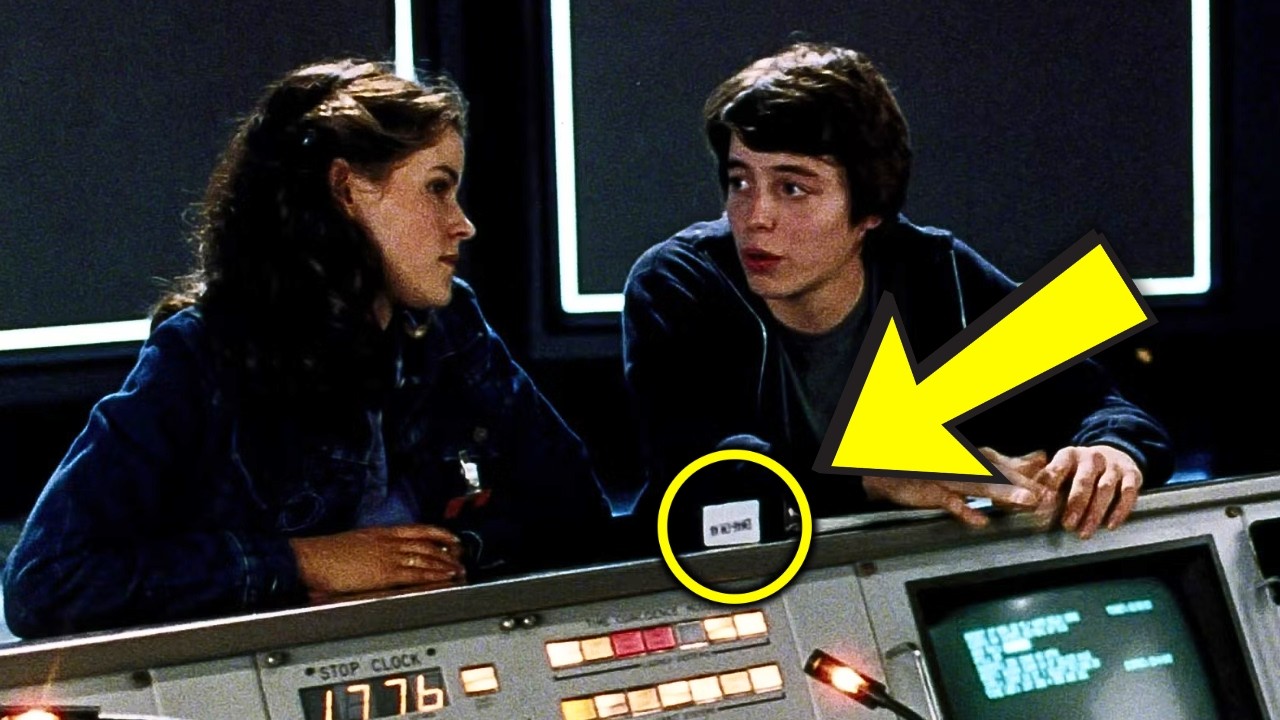
The most iconic prop, the towering WOPR, was destroyed after filming ended. It was dismantled and discarded, leaving only photographs and fan-built replicas. The modem on David’s desk, meanwhile, appeared to be an IMSAI 212A. It was actually a different device dressed with a fake label chosen purely for its look.
That small deception shaped the visual language of on-screen hacking for years. The film also invited the real world in. The scenario in which a training tape is accidentally fed into live defense computers had a real precedent: in 1979, a simulated attack tape was inadvertently loaded into live US systems, triggering genuine alarm before the error was identified. The writers knew of it.
The core anxiety they dramatized had already happened. Hidden inside the WOPR prop itself was a single Apple II personal computer, operated by a technician concealed within the set, generating the dramatic countdown displays that gave the machine its menace on screen. The cultural effects were measurable. In the months after release, technology publications reported a surge in consumer interest in modems.
Audiences had watched a teenager use one to reach into systems across the country, and suddenly the device felt like a portal to an invisible world. The technique David used, automatically dialing thousands of phone numbers to find connected systems, became known as war dialing, a term coined in direct reference to the movie and adopted permanently by the cybersecurity community. The film even made its way into hacker history: Kevin Mitnick later recounted how prosecutors used the film’s scenario to describe his alleged capabilities, framing curious hobbyists as potential apocalyptic threats. For all the behind-the-scenes turmoil, the film was taken seriously.
It screened at the Cannes Film Festival before its wide release and earned three Oscar nominations, for cinematography, sound, and film editing. In some corners of the defense establishment, it even set expectations. Personnel reported asking why their real operational environments lacked the visual sophistication of the fictional command center they had just watched. The most consequential reaction came from the top.
President Ronald Reagan watched the film at Camp David in the summer of 1983 and was sufficiently struck by its premise to raise it at a meeting with his Joint Chiefs of Staff. He asked directly whether the situation depicted on screen, a young civilian gaining unauthorized access to military systems, was actually possible. The response was not reassuring. He was told the vulnerability was real and that the nation’s computer networks were considerably less secure than previously understood.
That conversation set off a formal assessment of government network security, which contributed directly to the drafting of National Security Decision Directive 145, signed in 1984. It was one of the earliest formal policy frameworks addressing what would become known as cybersecurity, a field that barely had a name at the time. WarGames stands more than four decades later as one of the most quietly prophetic films ever produced. What began as a character drama about friendship was reshaped by real hackers, real military facilities, and genuine Cold War anxieties into something that felt urgent and proved more accurate about the future than anyone could have predicted.
A Hollywood thriller walked into the situation room and asked a question the most powerful military establishment in the world had to answer honestly. That is the most enduring legacy of a film that set out simply to tell a story about a boy, a computer, and a game that got dangerously out of hand.






