When Glacier National Park was established in 1910, it contained roughly 150 glaciers. Today fewer than 26 remain, and 11 of those have recently fractured apart. The federal government named an entire park after a geological feature that is actively vanishing. But the stranger story is that the park was never really about the ice.
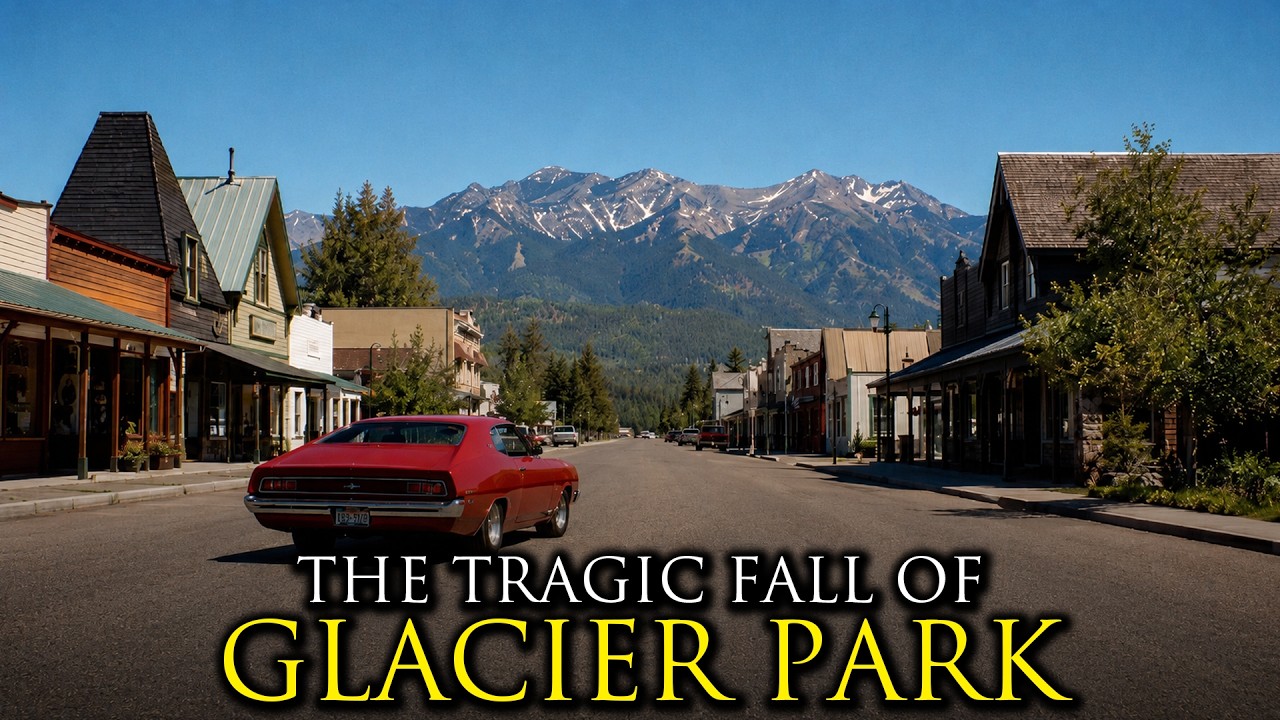
It was about a railroad. One man, one company, one scheme to sell train tickets by convincing wealthy Americans they did not need to cross the Atlantic to see the Alps. The glaciers were just the advertising. Louis Hill understood something in 1907 that almost nobody else in Montana understood: scenery, properly packaged, was a commodity.
His father, James J. Hill, had built the Great Northern Railway from St. Paul to Seattle, a transcontinental line that crossed the Continental Divide at Marias Pass along the southern border of what would become the park. James Hill had been a freight man, moving wheat, iron ore, and lumber, even sending agents to Europe to recruit immigrants who would settle the towns his railroad created.
But when Louis took over as president in 1907, the freight market was mature. The real competition was over passengers. The Northern Pacific Railroad ran right past Yellowstone. Wealthy Americans who wanted scenery booked passage to Switzerland.
Louis Hill needed a destination. He looked north from Marias Pass and found one sitting right next to his tracks. If he could get that wilderness designated as a national park, an official federal stamp of magnificence, the land itself would become an advertisement for the Great Northern Railway. Every article written about the park would mention how to get there, and the only way to get there was his train.
The mountains north of Marias Pass were spectacular by any measure: alpine valleys, turquoise lakes fed by snowmelt, jagged peaks above the timberline, and dozens of glaciers visible from the ridgelines. George Bird Grinnell, a Yale-trained naturalist and editor of Forest and Stream magazine, had been visiting since 1885 and had spent years writing about the place, calling it the crown of the continent. He named a glacier after himself and pushed for national park status. But Grinnell was a conservationist who wanted to protect the land.
Louis Hill wanted to sell it. They needed each other. Grinnell had the credibility; Hill had the money and political connections. On May 11, 1910, President William Howard Taft signed the bill creating Glacier National Park, the nation’s tenth.
But the land that made up the eastern half of the new park had not always belonged to the federal government. It had belonged to the Blackfeet, who, according to their own oral history, had lived in what is now Montana for 10,000 years. They called the mountains along the Continental Divide the backbone of the world. By the 1890s, the Blackfeet were in crisis.
Smallpox had decimated their population, and the strategic slaughter of the bison, the foundation of their economy, had left them dependent on government rations that often arrived late or not at all. They were hungry, and their children were dying. In 1895, federal commissioners arrived with a proposal to buy 800,000 acres of mountainous land on the western border of the Blackfeet reservation. The government’s stated purpose was mineral exploration, believing there might be copper or gold in those peaks.
Thirty-five hand-picked Blackfeet leaders negotiated the sale. They asked for $3 million. The government paid half that: $1. 5 million.
According to the recorded minutes of the negotiation, Chief White Calf told the commissioners that the mountains were his people’s last refuge, that they had been driven there and had finally settled. He agreed to the sale on one condition: the Blackfeet would keep the right to hunt, fish, cut timber, and gather plants on that land for as long as it remained public. The commissioners agreed. The agreement was signed on September 25, 1895.
Two things went wrong. First, the minerals the government was looking for did not exist. No significant copper, no gold, nothing worth mining. Eight hundred thousand acres of sacred mountains were sold at a discount for a resource that was never there.
Second, when Congress created Glacier National Park in 1910, the enabling legislation made no mention of the Blackfeet. It said nothing about their hunting rights, fishing rights, or gathering rights. As early as 1912, park rangers began arresting Blackfeet members for hunting inside the park. By 1932, a federal court ruled that the tribe’s reserved rights had been extinguished when the national park was created.
Many Blackfeet to this day maintain that the 1895 agreement was never a sale but a 99-year lease. The document, however, was written as a permanent cession, and the Blackfeet were not invited to the congressional hearing about the park built on their former land. Louis Hill did not wait for the ink to dry. Within months of the park’s creation, he launched one of the most ambitious tourism infrastructure projects any private company had ever attempted inside a national park.
He envisioned a complete resort system modeled on European alpine lodges: a network of grand hotels and backcountry chalets connected by trails, each one a day’s horseback ride from the next. The brand was America’s Alps. The slogan was See America First. Hill personally oversaw the design, choosing a Swiss chalet style and layering in massive native timber and rustic western elements.
In a move that revealed the peculiar cruelty of how the park was marketed, he hired Blackfeet families to erect teepees outside his hotels, paid them to dress in ceremonial regalia, and had them greet arriving trains in full costume. The Great Northern’s promotional materials called them Glacier’s Vanishing Indians. Never mentioned was the fact that most of the park had been Blackfeet land fifteen years earlier, purchased under duress. Glacier Park Lodge opened on June 15, 1913 at East Glacier, next to the train depot.
Sixty Douglas fir trees, each forty feet tall and three feet in diameter, were shipped by rail from the Pacific Northwest because Montana trees did not grow large enough. The flagship Many Glacier Hotel opened on July 4, 1915 on the shore of Swiftcurrent Lake, 215 rooms and five stories, positioned with a direct sightline to the glaciers that gave the park its name. A total of nine Swiss-style chalet groups were built within five years. By 1917, the Great Northern Railway had spent approximately $1.
5 million on hotels, chalets, trails, and roads inside the park. That was the same amount the Blackfeet received for 800,000 acres of their homeland. The railroad spent it on decor and plumbing and Swiss balconies. The tribe received it for mountains they had lived in for a hundred centuries.
That equivalence is not an editorial comment. It is an accounting fact. The resort system worked. Ridership climbed.
Wealthy Easterners who might have booked passage to Chamonix or Interlaken now booked passage to East Glacier. But Hill’s system had a vulnerability he could not have anticipated: Americans were buying cars. The shift from rail to automobile transformed the park, and the instrument of that transformation was one of the most remarkable roads ever built in America. In 1918, the first National Park Service engineer, George Goodwin, designed a route across the Continental Divide at Logan Pass.
The original plan called for fifteen switchbacks, functional but ugly and destructive. A landscape architect named Thomas Vint proposed a longer, more expensive alternative that would carve along the cliff face of a formation called the Garden Wall, offering extraordinary views while avoiding the switchbacks. The Park Service chose it. Construction began in 1921 with annual appropriations of $100,000 from Congress.
By 1924, the budget jumped to $1 million for a three-year push. The work was brutal. Men armed with shovels, hemp climbing ropes, and explosives blasted through mountainsides at a rate of roughly 100 feet per day. They built scaffolding that hung out over cliffs with no bottom in sight.
In one case, a blasting crew packed 12. 5 tons of black powder and 80 boxes of dynamite into drill holes. An eyewitness reported seeing what looked like half a mountain slowly rise, crumble, move outward, and drop over a cliff. Three men died during construction.
The engineer overseeing the most dangerous section, Frank Kittredge of the Bureau of Public Roads, insisted on preserving the surrounding landscape even when it made the work harder. Retaining walls and guardrails were built from native stone so the road would look like it belonged to the mountain rather than conquering it. Going to the Sun Road opened on July 15, 1933: 52 miles of alpine highway crossing the Continental Divide at over 6,600 feet. Final cost was roughly $2.
5 million and over a decade of construction. Over 4,000 people gathered on Logan Pass for the dedication ceremony. The road changed everything. Before it, Glacier belonged to the wealthy, people who could afford train fare and week-long horseback tours.
After it, anyone with a car and a weekend could drive through landscapes previously accessible only to the elite and the extremely fit. Visitation surged. The railroad’s passenger business began to decline. Louis Hill’s carefully designed train-based resort system, the product that had justified the park’s creation, was becoming obsolete.
By 1960, the Great Northern gave up the hospitality business entirely, selling its Glacier properties to a company called Glacier Park Inc. The railroad that had created the park, built the lodges, hired the Blackfeet to pose for postcards, and marketed the glaciers as America’s greatest tourist attraction was out of the tourism business. By mid-century, the park belonged to the automobile. Visitation climbed past 500,000, then past a million by 1969, then past 2 million by 1990.
And the road that had democratized Glacier was itself beginning to fall apart. Built to early 20th century standards, it was never designed for modern traffic volumes or vehicle weights. By the late 1990s, retaining walls were cracked, guardrails eroded, and entire sections needed to be rebuilt while keeping the road open during the brief summer season. By 2008, the rehabilitation cost estimate had ballooned to between $240 and $270 million.
Meanwhile, the glaciers were disappearing. When the park was established in 1910, there were an estimated 150 glaciers larger than 25 acres. By 1966, aerial surveys counted 83. By 2016, retired USGS scientist Dan Fagre and his team found only 26 named glaciers remaining that met the minimum size to be classified as active.
In 2023, a new study found that 11 of those had fractured into multiple pieces, a stage that typically precedes final disappearance. The average loss across Montana’s named glaciers was 39% of their area over that 50-year span. Some had lost 85%. Meltwater from the glaciers fed streams that sustained aquatic species, regulated water temperature, and controlled the timing of runoff.
As the ice shrank, cold water species faced water that was warmer, shallower, and less predictable. The glaciers were the park’s cooling system, and it was shutting down. The numbers were dramatic enough that the park installed signs at visitor centers stating the glaciers would be gone by the year 2020. The prediction came from a 2003 computer model based on warming trends at the time.
Then 2020 arrived, and the glaciers were still there. Heavier than average snowfall had slowed the retreat. The original model had not accounted for factors like avalanche-driven snow accumulation that could keep small glaciers alive longer than basic temperature projections suggested. The USGS revised its estimates, and the park quietly began changing the signs to read: When the glaciers completely disappear will depend on how and when we act.
The episode became a flashpoint, proof to some that climate science was unreliable, a normal revision in a complex field to others. The glaciers were still shrinking dramatically, just not on the original timetable. Then the fires came. On August 10, 2017, a lightning strike ignited a forest near Sprague Creek.
By August 31, the fire had grown to over 2,000 acres, and winds gusting to 30 mph pushed it directly into Sperry Chalet, one of Louis Hill’s original backcountry gems, built in 1913 from local stone and accessible only by trail. Firefighters had spent a week installing sprinklers and pumps, but the terrain that made the chalet beautiful made it nearly impossible to defend. No roads meant no fire engines. The steep cliffs made aerial retardant drops dangerous.
When the wind shifted, the main dormitory building caught fire and burned. The stone walls survived. The interior, the beds, the dining tables, and the guest books signed by a hundred years of hikers did not. A building that had stood since 1913 was gone in a single night.
The Park Service eventually rebuilt it using the surviving stone walls, but the original was irreplaceable. The crowds kept coming anyway. Glacier did not record a million recreation visits until 1969. In 2017, it broke 3 million for the first time.
Even in years with heavy smoke and fire closures, the numbers barely dipped. By the 2020s, traffic backed up onto US Highway 2, parking lots at Logan Pass filled before sunrise, and visitors who had driven hundreds of miles found they could not enter the park at all. In 2021, the park launched a vehicle reservation system requiring advance bookings to drive certain sections during peak season. Then in February 2026, the Department of the Interior announced the reservations would be eliminated.
The National Park Service had already lost 25% of its permanent staff to budget cuts since January 2025. The replacement was a patchwork: a new ticketed shuttle system, a three-hour parking limit at the summit, and the hope that real-time traffic management could prevent the worst. Through July 2026, the park had already recorded over 1. 8 million visits, running 8% ahead of the previous year.
And yet the Blackfeet are still there. In 1992, Ed Derozier, an enrolled member of the Blackfeet Nation, decided to offer tourists visiting Glacier a chance to hear the story of the people who had lived there for 10,000 years. Before he could succeed, he was arrested. He had to fight in court for the right to tell the stories of his own people on their own former land.
He won, and his tour company became one of the first indigenous-operated businesses licensed inside a national park. Visitors could finally hear the name the Blackfeet had for these mountains: the backbone of the world. In recent years, the Blackfeet Nation has begun developing plans for their own tribal park, a way to invite visitors to experience the landscape on Blackfeet terms, with revenue flowing to the Blackfeet community. Whether that project succeeds is an open question.
Grinnell Glacier, the one George Bird Grinnell had called his own in 1885, had retreated to the mostly shaded upper confines of its basin by the 2020s. Repeat photography comparing images from 1910 with images from 2021 and 2025 showed a transformation so stark it barely needed explanation. Where there had been an immense field of ice, there was now exposed rock, meltwater, and a remnant that looked less like a glacier and more like a dirty snowbank clinging to the shade. Scientists estimate it could persist through 2080 or beyond, depending on snowfall patterns and warming rates.
A more cautious prediction than the old signs offered, but not exactly reassuring. The park carries forward with a name that increasingly describes something it no longer has. Louis Hill built the park so people would ride his train. The automobile killed the train model.
The road built to replace the train is now too popular to function. The reservation system built to manage the road was scrapped. And the glaciers that gave the whole enterprise its name are melting because of the same industrial economy that made tourism possible in the first place. Every solution has become the next problem.
The train still runs. Amtrak’s Empire Builder follows the old Great Northern route along the park’s southern border. Many Glacier Hotel is still there, its rooms selling out months in advance. The Blackfeet Reservation sits right next door.
And up in the high basin above Grinnell Lake, there is still a glacier. It is smaller than it was last year, smaller than it was ten years ago, a fraction of what George Bird Grinnell saw in 1885 when he stood on the ridge above it and claimed it as his own. Grinnell died in 1938. Whether his glacier will outlast the century is another question.
The question, the one nobody put on a sign, is what you call a place after the thing it was named for is gone. The Blackfeet already have an answer. They have always had one.
The backbone of the world does not melt.






