On October 7, 1955, in the late afternoon, a man stepped down from a freight car at Friedland in Lower Saxony. A paper tag hung around his neck, and in his pocket he carried a photograph of a woman he had not seen in eleven years. He walked, because running was something his legs no longer remembered. At the edge of the platform, a clerk checked the tag, handed him a rail warrant, and pointed him toward a second train.
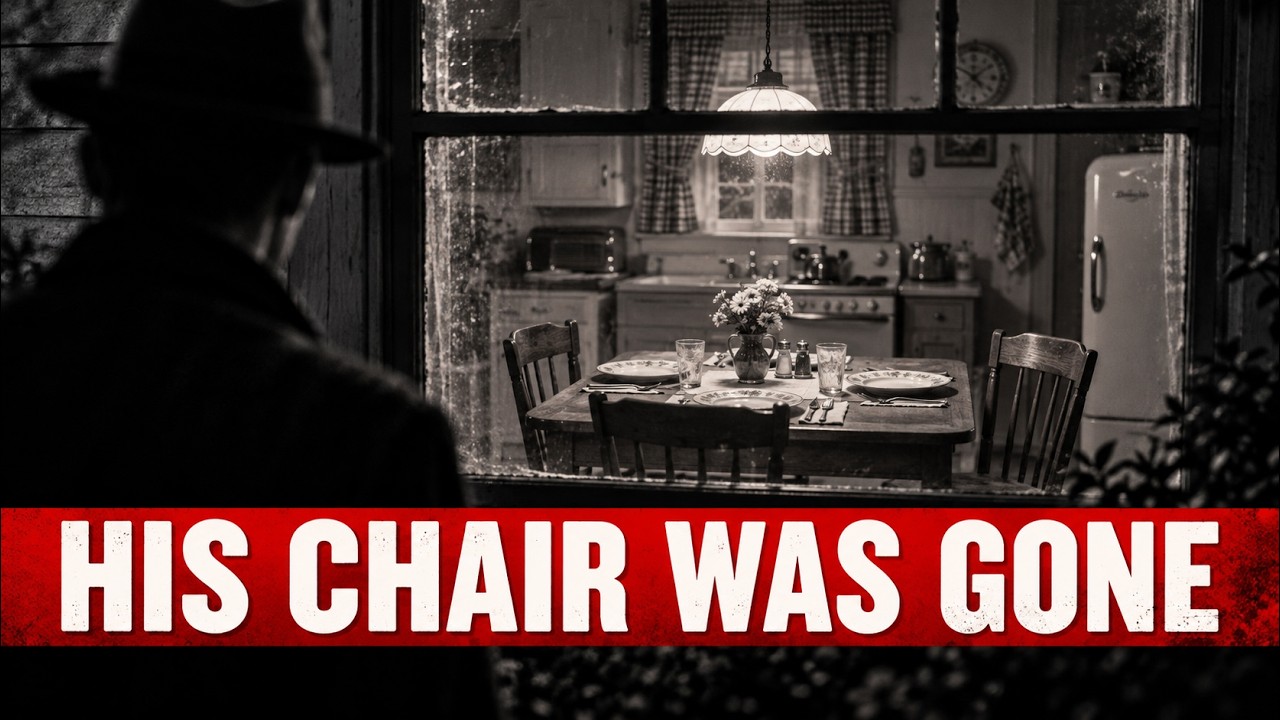
Home was a word he had been practicing since 1944. By nightfall he stood on a street he recognized, in front of a door he did not. Behind that door, the woman in the photograph was setting a table for three. None of the places was his.
Not because she had stopped loving him, but because in the eyes of the law, he had been dead for four years. The men on that train had a name Germany would learn within the week: Spätheimkehrer, the late returnees, the last German prisoners the Soviet Union was willing to give back. The war they had marched into ended in May 1945. Their children had grown up beside a frame on a shelf.
Their wives had waited, then one winter at a time, had stopped. When Germany surrendered, the Soviet Union was holding on the order of three million German prisoners of war. That figure comes from the West German count and the historian Rüdiger Overmans; the Soviet figure sat lower, past two and a half million, and the gap between the two counts has never closed. Most of them did come home.
Between 1945 and 1950, transport trains moved west in long, slow waves, carrying on the order of two million men. Each wave was smaller than the one before it. By 1948, the camps still held more than 890,000 Germans, the largest body of prisoners any wartime ally had kept. By October 1949, about 85,000 remained inside.
By the early 1950s, according to the historian Frank Biess, a hard core of around 26,000 men was still there. They watched other men board the westbound trains. Then they went back to the mines, the forest, the barracks, and counted off another year. For them, the war did not end.
It narrowed. These men were not innocent in the usual sense of the word. They had fought for a regime of conquest and mass murder, and some had done far worse than fight. The country holding them was a country Germany had invaded and burned.
Of the Soviet soldiers who fell into German hands, an estimated 3. 3 million died there, many deliberately starved. What follows is not a plea. It is an account of what happened anyway once the shooting stopped and the world moved on.
Three reasons kept the last prisoners in Soviet hands, none of them kind. Labor: the war had gutted the Soviet economy, and German prisoners became a workforce in coal, timber, and rail work across Siberia and Central Asia, and in the ruins of Stalingrad, rebuilding the city their army had helped destroy. Leverage: Germany had split, and Moscow did not intend to clear the table until the price was right. And paperwork: by the 1950s, many of the men still held had been convicted by Soviet courts as war criminals and sentenced to long terms.
Whether every conviction was just is its own question. The result is not. Ten years after the guns fell silent, German kitchens were still waiting on men the rest of the world had stopped counting. For the families, the cruelest fact was not death.
It was the absence of a fact. A missing soldier on the Eastern Front occupied a legal ghost state: no funeral, no grave, no ending. A Red Cross card might arrive in 1947, then nothing for four years. A wife could not bury him, and she could not keep a household alive on hope alone.
German law allowed a court to declare a missing person dead after enough silent years. The declaration freed an estate, a pension, a marriage. Thousands of women used it. They were not faithless.
They were feeding children in a country that had been bombed flat. Meanwhile, the man in the photograph was often alive, in the Arctic forest, the Kazakh steppe, a barracks where men memorized the ages their children would be turning and planned a first meal they would never quite taste as they had imagined it. He wrote letters that did not leave the camp. He rehearsed sentences he would say at the station.
In winter, the cold took the numbers; in summer, he started again. The men who stopped calculating were the ones who did not board the later trains. The camps killed early and killed in bulk. At Stalingrad, around 91,000 Germans went into Soviet captivity in the first months of 1943.
About 85,000 of them died in the months and years that followed of hunger, typhus, cold, and labor. About 6,000 ever saw home. The men who stepped onto the Friedland platform in the autumn of 1955 were the survivors of the survivors. In September 1955, Konrad Adenauer, at seventy-nine, went to Moscow.
He did not trust the Soviets. From the 9th to the 13th, he sat through four days of talks that swung from courtesy to accusation. Moscow wanted recognition, an ambassador, a normal line between capitals. Adenauer wanted the lists.
He tied one to the other. The risk was real: recognition while Soviet troops sat in East Germany was a bitter concession, and his critics would say he had signed the division of his own country. He made the calculation anyway. The prisoners were aging, and no later deal was guaranteed to be kinder.
On September 13, the governments agreed to establish relations. In return came not a treaty on the prisoners, but a verbal promise: the last German prisoners of war and interned civilians would be released. The number attached to that promise was on the order of 10,000 soldiers, roughly 15,000 once civilians were counted. Adenauer flew home not certain the word would be kept.
It was. The news reached the camps as a rumor. Men were afraid to believe it; hope in a labor camp is a schedule for heartbreak. Some did not trust it until the train passed the cities where they had worked and did not stop.
On October 7, 1955, the first transport of late returnees reached Friedland. The last would not arrive until January 1956, at Hörleshausen. West German radio covered the platforms live. Cameras stayed for the embraces.
They did not follow the second train. That is where the man with the folded photograph gets off. He finds the street. He finds the door.
He knocks. The woman who opens it is the woman in the picture, and she is also legally the wife of someone else. For a moment neither of them speaks. Behind her in the kitchen, a man’s coat hangs on a peg that used to be empty.
A child’s voice asks who is at the door. The war had trained both of them to survive a silence. It had not trained either of them for this one. Frank Biess, in Homecomings, documented the pattern West Germany preferred not to put on the radio.
A man declared dead had, in the eyes of the state, no marriage and no intact claim on the life that had been settled in his absence. His estate might already have been divided. His wife’s new marriage was the valid one. To exist again, he had to prove he was not dead, then unwind a decade of decisions made on the assumption he never would be.
Some men won the paper back. Few of them won the room. The woman had not betrayed a living husband. She had obeyed a court, a hunger, and a child who needed a father who came home at night.
Even where the marriage had held, the years had done their work. She had been head of the house for a decade, earned the money, raised the children, rebuilt a room out of 1945. He walked back in expecting the chair he had left. Some men came home unable to sleep, unable to talk about the east, prone to anger or to silences that lasted through a meal.
There was no public language yet for what would later be called trauma, and very little patience for it. West Germany was busy becoming rich. A man who woke shouting did not fit the Wirtschaftswunder. The last groups Moscow released included men convicted by Soviet courts as war criminals.
Some were investigated again in West Germany. Some of these men had been perpetrators as well as prisoners. Both things were true at once, but the public mood of 1955 was not built to hold both. The awkward cases were pushed to the edge of the frame.
The simple version went out on the newsreel: proof of Adenauer’s nerve in the west, a performance of gratitude in the east. A man who had survived a decade found before he had unpacked that his suffering already had an assigned meaning. Laws did follow: jobs, a sum of money, a start on paper. No statute returned the decade, taught a teenage son to love a stranger, or unwound a marriage that had legally replaced him.
The late returnees faded the way newsreels fade. Behind the roughly 10,000 who came home stood a far larger number who did not. Of the Germans taken into Soviet captivity, death estimates still range from the Soviet figure of around 380,000 to West German figures past a million. Many have no known grave.
For those families, there was no platform, only the not-knowing stretched across the rest of a life. The man at the door got the one thing he had prayed for: the journey back. Then he learned the harder sentence. You cannot return to a place that did not wait.
It moves, then it asks you to move, as if the ten years had happened to someone else. The war took his youth in a camp. Peace took the home he crossed a continent to reach.
