Clark Gable ruled Hollywood, but that throne carried a concealed cost. Long before the internet, before photographers shadowed celebrities into every eatery and hotel foyer, the man hailed as the most dependable box office attraction in American cinema led a secret life that the studio system labored nonstop to conceal. He drank to excess, drove recklessly, conducted torrid romances with some of the world’s most celebrated women, and fathered a child out of wedlock, yet his public image stayed virtually unblemished. When whispers emerged that he had struck and killed a female pedestrian while intoxicated, the affair concluded just as it had started, with no damage to his career.
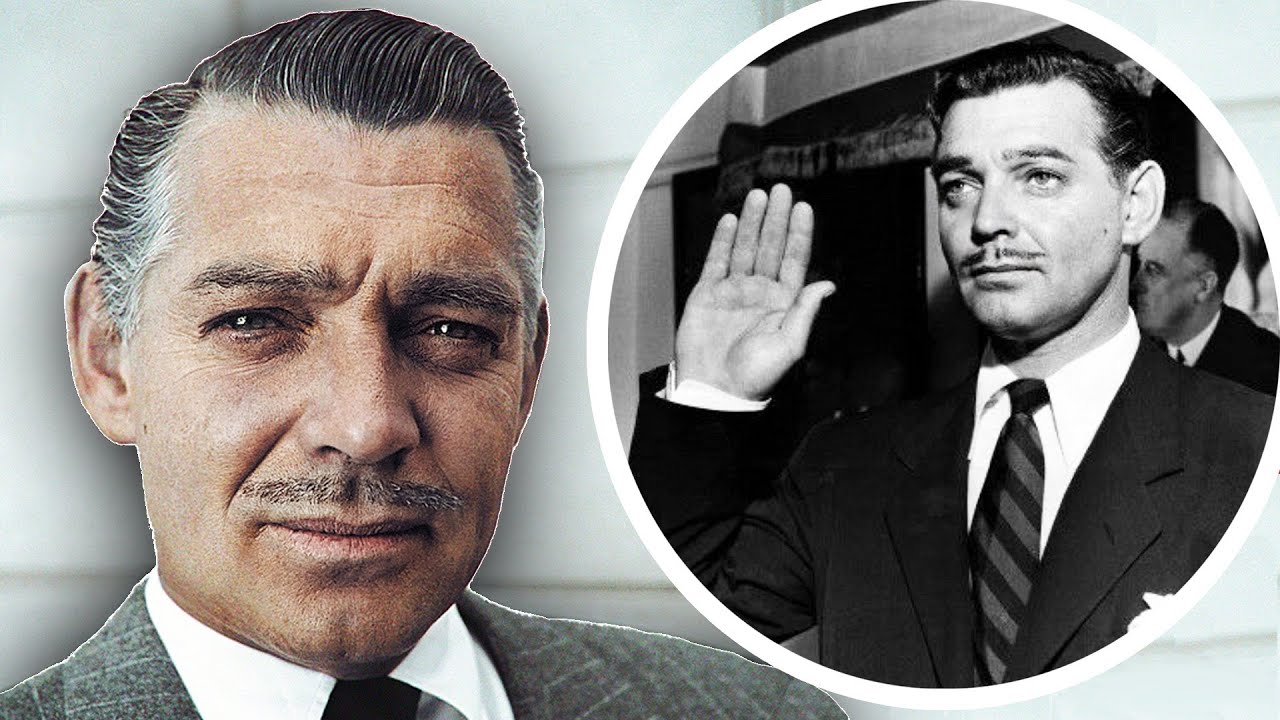
Such was the privilege afforded to stars like Gable, provided they kept generating profits. Born William Clark Gable in 1901, he would eventually appear in over sixty pictures across a career lasting almost four decades. His name showed up on Quigley’s yearly top ten money-making stars poll sixteen times, and the American Film Institute would later name him the seventh greatest male film star of classic American cinema. But the path to that stature wound through a succession of older women who helped him get on his feet.
Following a bustling childhood in Ohio, Gable headed to Hollywood, where he dabbled in stage work before forging a connection in Portland, Oregon. There he latched onto Josephine Dillon, a theater manager seventeen years his senior. She became his lover, his financial backer, and his acting coach, settling his debts, helping him secure work, and even footing the bill to fix his bad teeth, tidy his hair, and train him out of his supposedly effeminate voice. To Gable, it appeared not to matter what advantage he was reaping; every woman deserved to be betrayed, and that was precisely what he did to each of them.
They arrived in Hollywood together, where Gable started as an extra in silent films and toured with a stage troupe. There he formed another bond with the theater sensation Jane Cowell, and he bounced between his first wife and other wealthier, more alluring women. Before long he landed his MGM contract. Studio analysts felt MGM at first placed him in the wrong parts, intending him as a brazen villain and a menial laborer because they had not yet grasped his natural gift.
Nevertheless, Gable impressed his employers with a hint of what he could deliver, and the studio publicity department set to work refining his image, stressing his rural roots and his six-foot build to craft the legendary Clark Gable. The outcome was a blend of the rough and the refined, an appeal that in the 1930s seemed less European, more American, less urbane, more rugged. Gable became the studio’s luckiest man in one specific respect: he was paired with virtually every female star at MGM at the time. Norma Shearer.
Greta Garbo. Joan Crawford. He did what one observer termed theory on screen and then followed it with practice off screen. Joan Crawford was already a renowned star when she started working with Gable, radiating beauty and talent, and she was married to Douglas Fairbanks Jr.
Yet she could not withstand the pull. She later admitted that the first time she laid eyes on Gable it felt like an electric current surged through her body, and that had he not gripped her by the shoulders she would have collapsed to the floor. That was how intense the feeling was, even though she was legally wed. Their intermittent affair lasted across their careers, fueled by eight film collaborations that kept them in steady contact.
They were both entangled in different marriages and divorces, but the tie persisted until the studio finally insisted their romance end. The warning came when Gable’s furious second wife was prepared to turn it into a massive press scandal. Had they refused, MGM would have invoked the morality clauses in their contracts, and they would have lost their jobs. Even though MGM would never have released two of its finest talents, the threat was sufficient to bring them to heel.
In 1934, Gable starred in It Happened One Night, a zany comedy built on playful banter, charm, and meticulously timed humor. It emerged a hit, capturing five Academy Awards for Best Picture, Best Screenplay, Best Director, Best Actress, and Gable’s first Best Actor win. The film cemented him as a major star and a precious asset at MGM, which is precisely why the studio went to such lengths to shield his less savory misdeeds. While filming Call of the Wild with Loretta Young, critics said she was playing the virgin card against the will of a prowling Gable, who was still married at the time.
Loretta’s allure proved very difficult for him to withstand, and one thing led to another. Loretta abruptly found herself pregnant by Clark Gable. A desperate predicament unfolded with her career at stake and abortion as an option. But her Catholic faith would not permit her to abandon the child, so she executed one of the cleverest Hollywood ruses ever documented.
She concealed her pregnancy, fled to England as the due date neared, and framed it as a holiday. Her lengthy absence was attributed to a childhood illness she was secretly managing. She returned to her mother’s home, quietly gave birth, placed the child in an orphanage, and then resumed work. Nearly two years later she adopted her own baby and publicized it as a genuine adoption.
To everyone’s astonishment, the strong resemblance kept sparking questions. Her daughter never discovered who her real parents were, though the girl’s prominent ears, so much like Gable’s, cast doubt on the story when a schoolmate hinted that Gable was her father. Still, no one ever heard the complete story, because studio image handlers were working nonstop to ensure their talent never got mired in scandal, producing interwoven tales that were credible enough to keep Gable’s reputation spotless. Beyond the Crawford affair and the secret child, reports linked Gable to Gene Harlow, Ava Gardner, and Grace Kelly, whom he dropped because he was not ready for marriage.
By 1939, Gable had divorced his second wife, Maria Langham, and married Carol Lombard, the American sweetheart, in what some called the love of his life. With a fresh, famous, and equally glamorous wife, and though still something of a scoundrel, he benefited from the love of a good woman who made him a better man. That was how the former MGM playboy was packaged and sold to the audience as Lombard’s devoted husband, even while gossip tied him to affairs with Lana Turner and others, including Mamie Van Doren, Virginia Gray, Paulette Goddard, and his Gone with the Wind co-star Evelyn Keyes. Gable’s death came at the active age of fifty-nine, a loss not just to humanity but to the legions of fans who felt his best was still unfolding.
His last screen role came in The Misfits, as an aging cowboy, and the film arrived posthumously in 1961. Through it all, the studio’s meticulously built apparatus held firm. The drunken mishaps, the romances, the concealed child, the reckless driving—every bit of it stayed in the realm of murmurs rather than front-page news.
Gable departed the business with his reputation unblemished, not because he was blameless, but because he was enormously lucky to live in an age of cover-ups, long before a single click could expose it all.
