For Jean Baptiste Bauvais, the morning of August 29th, 1907, began like any other on the Quebec Bridge. He climbed onto the southern cantilever arm, 548. 6 meters of steel reaching out over the St. Lawrence River, and ran his hands along the rivet heads his crew had driven the day before.
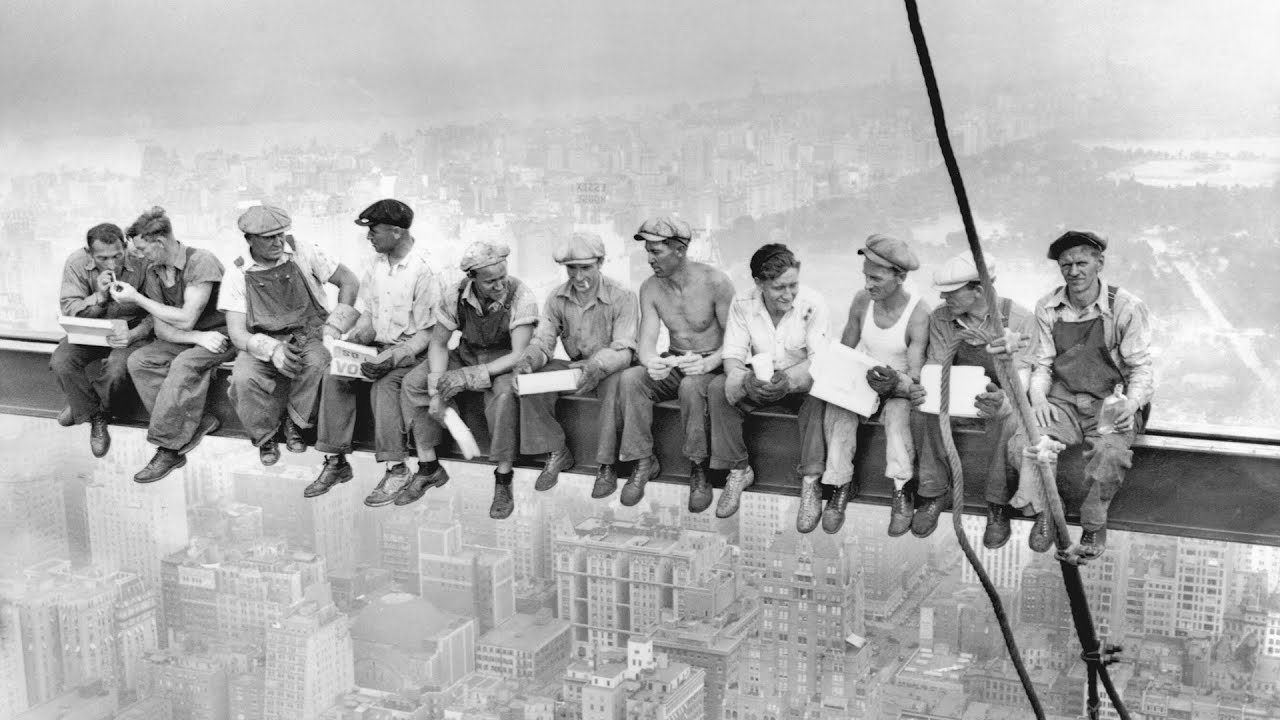
It was a habit the Mohawk iron workers had developed over two decades of high steel construction, a methodical quality check that went beyond the cursory inspections European crews performed. Bauvais felt for the subtle irregularities that indicated incomplete connections or stress concentrations. At approximately 10:30 that morning, he found something that stopped him cold. A rivet he had personally driven 18 hours earlier, a connection he had tested and approved using the auditory and tactile methods perfected through years of systematic training, had snapped cleanly in two.
The failure was not from improper installation or inadequate heating. The rivet had been driven correctly, but had fractured under stresses that exceeded the design specifications. Bauvais called to the nearest foreman, pointing to the failed connection. Other crew members gathered around the evidence.
The broken rivet meant the entire structure was experiencing loads beyond its engineered capacity. Before the implications could be fully assessed, before emergency procedures could be implemented, a sound began echoing across the construction site. The screaming of twisted steel. The 24-inch compression cords, bearing loads approaching their theoretical maximums, buckled under stresses they were never designed to handle.
The collapse occurred with terrifying efficiency. The southern cantilever arm, carrying its full complement of workers and equipment, began falling toward the water as steel connections failed in rapid succession. Bauvais, standing near the center of the span when the failure began, had perhaps three seconds to react before the entire section plunged toward the river. His systematic training included crisis response protocols that European-educated workers had never developed, methods for surviving structural failures that Mohawk crews had refined through generations of dangerous work.
As the bridge section twisted during its 15-second fall, Bauvais positioned himself near a section of decking that would provide some protection when the wreckage hit the river. Of the 86 workers on the span when the collapse began, 75 died instantly or drowned in the aftermath. The casualties included 33 Mohawks from Kahnawake Reserve, skilled iron workers whose systematic training methods had made them the most reliable high steel crews in North America. They were the most competent structural workers available, killed by engineering failures that no amount of practical skill could have prevented.
Bauvais survived with a broken leg and severe bruising, pulled from the wreckage by rescue crews who found him floating near an overturned section of bridge decking. The disaster was the culmination of two decades of unacknowledged innovation in American construction. It began on the same river, in January 1886, when the St. Lawrence was locked under three feet of ice that would crush conventional pier construction for the next five months.
Fifty-eight feet down, the river bottom held the twisted remains of two previous attempts to span this 1,800-foot gap. The bridge was the critical link that would complete the Canadian Pacific Railway’s transcontinental route. Without it, freight trains carrying prairie wheat to Atlantic ports would remain trapped on the western shore. Theodore Cooper stood in the offices of Dominion Bridge Company in Montreal, studying engineering drawings that represented the most ambitious cantilever span ever attempted in North America.
At 52, Cooper commanded respect as America’s most prestigious structural engineer, a man whose theoretical calculations had solved bridge problems from the Mississippi to the Hudson. His wire-rimmed spectacles reflected the lamplight as he traced stress diagrams with his finger, calculating load distributions that would allow steel beams to carry their own weight across impossible distances. The mathematics were elegant. The engineering sound.
But one problem remained unsolved: finding enough skilled iron workers willing to drive red-hot rivets 300 feet above the ice. “Men who want to rivet are rare,” declared James Stewart, Dominion Bridge’s site supervisor, his breath visible in the unheated office. “And men who can do it at these heights are even rarer. ”
The work demanded four-man gangs capable of handling rivets heated to 2,000 degrees Fahrenheit, caught in metal buckets, and driven through steel beams 42 feet long at pressures exceeding 15,000 pounds per square inch.
Each connection required split-second coordination between the heater firing his portable coal forge, the sticker catching molten metal in flight, the bucker-up bracing the rivet head with his dolly bar, and the riveter wielding the pneumatic hammer. A single mistake meant death, either from falling or from superheated steel. Cooper adjusted his spectacles and pointed to the labor budget. European-trained iron workers commanded premium wages, often $3 per day compared to the $1.
50 that general construction workers earned. With the railroad company demanding cost controls and the brutal Canadian winter limiting the construction season to seven months, Dominion Bridge faced an impossible equation. Stewart shifted uncomfortably in his chair. “We’ve been thinking about using some of the local Indians just for hauling materials.
There’s a reserve called Kahnawake about 10 miles down river. They’re looking for work and they’d come cheap. ” Cooper nodded absently, his attention focused on the stress calculations. The idea of using local Mohawks as day laborers made financial sense.
It was a pragmatic solution to a budget problem, nothing more. Work began in March 1886 as soon as the ice cleared enough for supply barges to navigate upstream from Montreal. The first gang of Mohawk laborers arrived from Kahnawake Reserve on a Tuesday morning: 12 men ranging in age from 19 to 45, dressed in canvas work pants and heavy wool shirts. They were hired to unload structural steel from the barges and carry it to the base of the construction towers.
Simple manual labor that required no training and minimal risk. By the end of the first week, something unexpected was happening. Instead of remaining at ground level with the supply operation, several of the Mohawks had begun climbing the partially completed structure, walking out onto the steel beams that projected over the river like enormous diving boards. John Diabo, 27 years old with calloused hands that showed years of physical work, balanced easily on an 8-inch-wide beam while studying the riveting process taking place 50 feet away.
His focus was intense, methodical, as he watched the four-man European crew heat, catch, position, and drive each rivet. “Get down from there! ” shouted a site foreman. “You’re not supposed to be on the steelwork.
” Diabo ignored the order, instead moving closer to observe the pneumatic hammer operation. He seemed particularly interested in how the riveter judged the proper pressure and duration for each connection. When the gang moved to the next connection point, Diabo followed. Similar scenes played out across the construction site as more Mohawks abandoned their assigned material handling duties to study the iron work.
They asked technical questions about stress loads, thermal expansion, and connection methods, questions that surprised the European-trained foremen with their sophistication. Louis Deer, a stocky man in his thirties, wanted to know why certain beam connections used six rivets while others used eight. Joe Jacobs, barely 21, asked about the relationship between rivet temperature and the final strength of the joint. The European iron workers found the attention unsettling.
These were trade secrets learned through years of apprenticeship, not casual information to be shared with untrained laborers. But the Mohawks persisted. When Stewart complained to Cooper during their weekly progress meeting, the chief engineer dismissed the problem with a wave of his hand. “Let them watch if they want,” Cooper said, not looking up from his calculations.
“As long as they’re not interfering with the real work, I don’t see the harm. ”
What Cooper failed to recognize was that systematic observation was itself a form of training. By October 1886, the St. Lawrence Bridge project had produced an unexpected outcome that his engineering calculations had never predicted.
Twelve Mohawks from Kahnawake Reserve had been trained as skilled iron workers. Their systematic observation transformed into hands-on expertise that rivaled crews with years of European apprenticeship. The transformation hadn’t happened by accident. John Diabo, who had first climbed the steel beams to observe the riveting process, had been quietly recruited by site foreman James McKenzie after demonstrating an intuitive understanding of load distribution that impressed even the skeptical Europeans.
Within six weeks, Diabo could catch red-hot rivets thrown across 30-foot gaps with the precision of men who had trained for years in Glasgow shipyards. More significantly, he had begun teaching other Mohawks the systematic approach he had developed through his methodical observations. Louis Deer became Diabo’s first apprentice, learning not just the physical mechanics of riveting but the subtle indicators that separated competent work from dangerous failure. Deer discovered that properly heated rivets produced a specific sound when struck, a clear ringing tone that indicated the metal had reached the correct temperature and malleability.
Incorrectly heated rivets produced a duller sound and often failed under stress. This auditory quality control, never mentioned in engineering textbooks, became part of the knowledge base that Mohawks systematically transferred from experienced workers to apprentices. The process extended beyond individual skill acquisition when the Sault Ste. Marie bridge project began in 1887, spanning the St.
Mary’s River between Michigan and Ontario. The Dominion Bridge Company specifically requested Mohawk iron workers for the high altitude connections. The Mohawks came as organized crews that included experienced riveters and deliberate apprentices. Each four-man gang brought one trainee from Kahnawake Reserve, creating a systematic pipeline that ensured knowledge transfer continued across multiple construction sites.
Joe Jacobs emerged as a particularly skilled heater, capable of maintaining forge temperatures within the narrow range required for optimal rivet malleability. Working with portable coal forges that had to be constantly fed and adjusted, Jacobs developed techniques for reading flame color and adjusting airflow that produced consistently superior results. The communication patterns that emerged on Mohawk crews puzzled and sometimes frustrated European foremen. The men spoke to each other in their native language while working, using precise terminology that had no English equivalents for describing steel stress patterns and connection quality.
When a bucker-up needed to signal that a rivet was properly positioned, he used a specific Mohawk phrase that conveyed not just readiness but the exact angle and pressure required. Thomas Deer, Louis’s younger brother, joined the crew working on the Sault Ste. Marie bridge in 1888 as an apprentice sticker-in, the crew member responsible for catching red-hot rivets thrown from the forge. He learned by practicing with cold rivets first, developing the reflexes and positioning that would keep him alive when working with molten metal 300 feet above the river.
Each Mohawk worker represented not just his own reputation but the standing of Kahnawake Reserve in the broader construction industry. Failure or carelessness by one crew member reflected on the entire community’s reliability, creating social pressure for excellence that no European employment contract could match. By 1890, more than 30 skilled Mohawk iron workers operated across construction sites from the Great Lakes to the Atlantic provinces. Each crew maintained its apprentice system, ensuring that knowledge accumulated rather than remaining static.
Experienced riveter Peter Angus developed a technique for detecting stress fractures in steel beams by running his hand along the surface, feeling for microscopic irregularities that indicated potential failure points. The tactile knowledge was systematically taught to younger workers. The economic implications were becoming impossible to ignore. Mohawk crews consistently outperformed European-trained gangs in both productivity and quality metrics.
Where traditional crews struggled to place 200 rivets per day while maintaining acceptable standards, Mohawk teams routinely completed 300 to 400 connections with rejection rates below 2 percent. Their efficiency stemmed not from reckless speed but from systematic preparation and coordination. European engineering supervisors began requesting Mohawk workers specifically for challenging high altitude projects, but they continued to frame this preference in terms of natural ability rather than acquired skill. The myth of the fearless Indian, the “goat” who was simply unafraid of heights, persisted because it was psychologically easier than acknowledging that systematic training methods developed outside formal engineering education might be superior to European apprenticeship traditions.
Theodore Cooper, now planning his masterpiece Quebec Bridge with a main span of 1,800 feet, faced the reality that his project would require more than 70 skilled iron workers capable of driving rivets at heights that few European-trained men would attempt. The systematic training methods developed by Mohawk crews represented the only reliable source of workers with the specific skills his unprecedented engineering challenge would demand. Cooper had refined his calculations to achieve this record-breaking distance while using 40 percent less steel than conventional engineering standards recommended. The mathematical elegance satisfied his theoretical requirements, but the actual construction demanded precision iron work at heights and stresses that pushed both materials and workers beyond previously tested limits.
By August 1907, the bridge’s southern cantilever arm extended 548. 6 meters from its support tower, carrying 86 workers across steel beams that vibrated with each gust of wind off the river. The structure had reached the critical phase where its own weight began creating stresses that Cooper’s reduced steel design was barely adequate to handle. Compression cords 24 inches wide bore loads approaching their theoretical maximums.
In the aftermath of the collapse, the subsequent engineering investigation revealed that Cooper’s design had pushed structural limits beyond safe margins in pursuit of a record-breaking span length and cost reduction. The bridge failed not because of worker error or inadequate construction techniques, but because the theoretical calculations had underestimated the dynamic stresses created by wind loads and thermal expansion acting on such a massive cantilever structure. The Mohawk workers had performed their jobs with characteristic precision. The engineering specifications they were required to follow had been fundamentally inadequate.
The disaster’s aftermath provided unexpected validation of Mohawk training methods. Surviving foremen reported that during the collapse and rescue operations, Mohawk crews had maintained discipline and coordination while European-trained workers abandoned safety protocols in panic. The systematic crisis response training that was part of traditional Mohawk iron work education had prepared workers to function effectively even during catastrophic structural failures. The Quebec Bridge collapse killed more skilled Mohawk iron workers in a single day than had died in the previous 20 years of high steel construction.
Kahnawake Reserve had lost an entire generation of experienced workers whose expertise had taken decades to develop and could not be quickly replaced. Three days after the disaster, the clan mothers of Kahnawake Reserve convened an emergency session. These women, led by Sarah Diabo, whose son John had been among the first Mohawks trained as an iron worker, and Mary Jacobs, whose family had lost two skilled riveters in the collapse, possessed authority within Mohawk governance that European observers consistently underestimated. Their decisions regarding community welfare and economic strategy carried the force of law within the reserve.
The mathematics were stark. Thirty-three skilled Mohawk iron workers had died in a single afternoon, representing nearly half of Kahnawake’s most experienced high steel crews. Sarah Diabo articulated the strategic problem with characteristic directness. “We cannot allow so many skilled men to work on one project again,” she declared.
“When they all work together, they all die together. ” The observation wasn’t driven by grief but by cold analysis of how concentrated risk exposure threatened the survival of systematic knowledge. The clan mothers instituted what would become known as the “booming out” rule, a deliberate dispersal strategy that would prevent large concentrations of Mohawk iron workers on any single construction project. Skilled workers would be scattered across multiple sites throughout North America, reducing catastrophic risk while simultaneously spreading their training methods across a broader geographic area.
The implementation began immediately. Joseph Deer, whose brother Louis had died in the collapse, accepted a position with the American Bridge Company working on railroad spans in Pennsylvania. Peter Angus joined a crew building industrial structures in Chicago. Each man carried with him the systematic training methods refined through 20 years of high steel construction, along with new crisis response protocols developed from analysis of the Quebec Bridge failure.
By 1910, Mohawk iron workers had established a presence in construction markets from San Francisco to Boston. Each four-man crew continued to include one apprentice from Kahnawake Reserve. The timing of this dispersal coincided with the beginning of America’s most ambitious construction era. By 1920, New York City had entered what newspapers termed the race to the sky.
Three projects emerged as the primary competitors. Forty Wall Street, designed to reach 840 feet, represented traditional approaches using proven engineering methods. The Chrysler Building, originally planned for 808 feet but later expanded to 1,046 feet with its distinctive metallic spire, demanded innovative approaches to both structural design and high altitude assembly. Most audacious of all, the Empire State Building project announced plans for a structure reaching 1,250 feet, including its mooring mast.
Paul Starrett, whose construction company had secured the contract for the Empire State Building, recognized that completing 57,000 tons of structural steel in 410 days would require the most skilled iron workers available in North America. His project specifications called for 38 riveting gangs working simultaneously across multiple floors, coordinating with nine derricks lifting massive steel sections. The clan mothers’ dispersal strategy had positioned experienced Mohawk crews throughout American construction markets at precisely the moment when their expertise would be tested by the most demanding project in the history of high steel construction. The first structural steel reached the Empire State Building construction site on March 7th, 1930, delivered by trucks that navigated through Manhattan traffic to deposit 30-ton beams at the base of nine derricks positioned around the building’s perimeter.
Joseph Diabo arrived from Detroit on March 15th with a four-man crew that included his nephew Lewis, a 24-year-old apprentice whose training had begun six years earlier on bridge projects spanning the Great Lakes. Lewis had learned to read steel stress patterns through tactile inspection, to judge rivet temperatures by sound and color, and to coordinate with crew members using the precise communication methods refined through generations of dangerous high altitude work. By June 1930, steel construction had reached the 26th floor, with riveting gangs following closely behind the derrick operations. The pace of assembly reflected not reckless speed but systematic efficiency that eliminated the delays and corrections that plagued less organized crews.
Thomas Deer, working his 15th year as a skilled riveter, had developed techniques for detecting potential beam failures that went beyond the visual inspections European engineering standards required, running his hands along steel surfaces to identify microscopic stress concentrations and listening for subtle changes in the sound steel made under load. The construction workforce peaked at 3,500 workers in September 1930, including several hundred Mohawk iron workers whose presence throughout the project represented the successful implementation of the clan mothers’ dispersal strategy. On September 19th, 1930, the steel framework topped out at 1,048 feet above street level, just 23 weeks after the first column had been positioned. The rejection rate for faulty rivets was below 1 percent.
Kyle Karonhiaktatie Bauvais, great-nephew of Jean Baptiste Bauvais, who had survived the Quebec Bridge collapse, worked on the Empire State Building’s upper floors as part of a crew responsible for installing the complex steel framework that would support the building’s distinctive setbacks and the mooring mast that extended its height to 1,250 feet. The building’s structural integrity was tested on July 28th, 1945, when a B-25 bomber flying through dense fog struck the 78th and 79th floors at approximately 200 miles per hour. The impact killed 14 people and caused significant fire damage, but the steel framework installed by Mohawk crews 15 years earlier contained the destruction to the immediate impact area. The structural connections held under stresses that exceeded design specifications, preventing progressive collapse that could have destroyed the entire building.
Official construction records documented five worker deaths during the Empire State Building project, a remarkable safety record for a construction project of unprecedented scope and complexity. The achievement reflected not luck but systematic safety protocols refined through generations of dangerous high steel work. By 1931, when the Empire State Building opened for occupancy, the systematic training methods that had originated with Mohawk observation of European riveting techniques during the 1880s had become the foundation for American high steel construction capability. The Goat Theory that attributed Mohawk success to natural fearlessness had been replaced by recognition that systematic knowledge transfer produced consistently superior results compared to formal engineering education alone.
The secret had never been the absence of fear, but the development of systematic methods for managing risk while maintaining the precision that structural integrity demanded at impossible heights.






