On December 12, 1910, Dorothy Arnold left her family’s mansion at 108 East 79th Street in Manhattan dressed in a tailored blue suit and a black velvet hat with silk roses. In her handbag she carried twenty-five dollars and a letter she had read so many times the paper had worn thin at the creases. She bought chocolates at Park & Tilford, selected a book at Brentano’s, and then walked toward Central Park. She was never seen again.
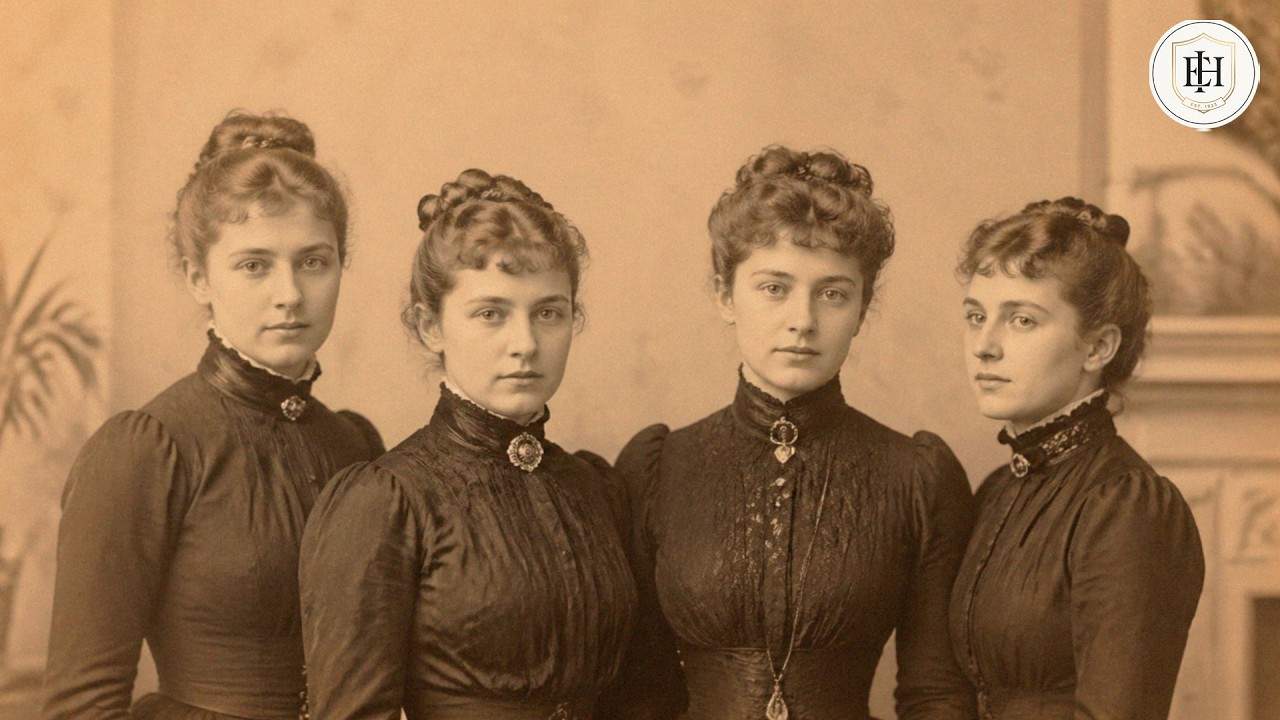
Dorothy was born on July 1, 1885, the second of four children of Francis R. Arnold, whose perfume importing business had made the family one of the most respected in New York society. Their lineage stretched back to the Mayflower, and their connections reached the Supreme Court. The Arnold mansion stood as a monument to old money and new ambition.
Dorothy had been educated at the Brearley School and Bryn Mawr, where she developed literary aspirations that her family treated with amusement. Her manuscripts came back rejected. She had secretly corresponded with George Griscom Jr. , a man from Boston her father disapproved of, and had spent time with him there.
She wanted to move to Greenwich Village; her father refused. For six weeks after her disappearance, the family said nothing publicly. Their lawyer, John S. Keith, made discreet inquiries that produced nothing.
Francis Arnold, a man accustomed to controlling every room he entered, faced a crisis that wealth could not solve. Only on January 25, 1911, did the family finally go to the police and the press. The announcement triggered a media storm. Francis offered a thousand dollars for information, then spent a hundred thousand chasing leads that dissolved into nothing.
Sightings came in from Philadelphia to San Antonio, all false. Pinkerton detectives followed countless trails. Ransom notes arrived, each raising hopes and then destroying them. A man named Joseph Pe.
Leonard confessed to witnessing Dorothy’s end and was found to have invented the entire story. In Dorothy’s room, untouched, lay her evening gowns, her jewelry, and a half-finished manuscript that would never have its ending written. Theories multiplied over the years. Some believed she had been kidnapped, but the fraudulent ransom demands undermined the idea.
Others whispered of suicide, pointing to her rejected manuscripts and her letters to Griscom, which showed deep disappointment. He himself spoke of her despondency, hinting she might have ended her own life, yet no body was ever found in Central Park or identified in any morgue. The idea of an elopement, a secret escape to Europe, also failed to survive the investigation. Francis Arnold died in 1922 believing his daughter had taken her own life.
His wife followed in 1928, spending her final years watching the front door for a return that never came. The disappearance of Dorothy Arnold remained one of the great unsolved mysteries of the Gilded Age. For Catherine Tylney-Long, the trouble came not from vanishing, but from being found. Born on October 2, 1789, she inherited a fortune so vast it made her the most sought-after heiress in England.
The family’s wealth, accumulated over generations through the East India Company and strategic marriages, included some 25,000 acres across six counties, with Wanstead House as its centerpiece, a palace known as the Versailles of England. Her annual income of 40,000 pounds was far beyond what even the wealthiest fictional characters of the era could command. When her younger brother James died in 1810, just before his eleventh birthday, Catherine became, at twenty-one, the richest woman in Britain. Her debut in London society set off a frenzy.
Suitors included the Duke of Clarence, the future King William IV, whose gambling debts and illegitimate children made him a less than ideal match. Catherine refused him, a historic rejection of a crown. When she chose instead William Wellesley-Pole, the nephew of the Duke of Wellington, society assumed a fairy tale. They married on March 14, 1812, with Catherine dressed in Brussels lace and diamonds.
William adopted her surnames, becoming William Pole-Tylney-Long-Wellesley, and forgot the wedding ring during the ceremony. Behind the doors of their mansions, William revealed his true nature. He hosted ruinous parties, redecorated without restraint, and systematically converted Catherine’s inheritance into debt. Within a decade, the richest heiress in England was fleeing across the English Channel to escape creditors.
Wanstead House, which had cost nearly 400,000 pounds to build, was dismantled and sold for barely 10,000. William secured a position as a Gentleman Usher to King George IV primarily to gain immunity from arrest for debt. He installed his mistress in the family residence and forced Catherine to live alongside her. Private correspondence suggests he also transmitted a venereal disease that would contribute to her death.
Against enormous legal and social obstacles, Catherine finally separated from him and secured judicial protection for her children. By September 1825, she was living modestly in Richmond with her three children, her fortune reduced to an income of 11,000 pounds a year, a fraction of what William spent on waistcoats and wine. On September 7, she collapsed with violent abdominal spasms. The Duke of Wellington sent the royal physician to her bedside.
She briefly appeared to recover, then suffered a relapse on September 11. On September 12, at eleven o’clock, Catherine died, surrounded by her sisters but not her husband. Contemporary witnesses believed the correspondence he sent that morning delivered the final blow. Her death transformed British law.
Lord Chancellor Eldon ruled that William should be the first father in England denied custody of his children based on moral character, a decision that established a foundational precedent for modern family law. Her sisters raised the children. William married his mistress in 1828, continued accumulating debts, and died in 1857 while eating a boiled egg. The London papers had already delivered their verdict: for Catherine, riches had been worse than poverty, and her heart had been broken by the very things meant to protect it.
For Mary Harriman Rumsey, inherited wealth became a tool for reform rather than a trap. Born on November 17, 1881, she was the daughter of E. H. Harriman, the railroad magnate who had transformed the Union Pacific into an empire.
The family estate, Arden House in the Ramapo Mountains of New York, spanned some 20,000 acres. Her mother, who inherited a fortune estimated between 70 and 100 million dollars after her husband’s death in 1909, modeled how wealth could serve social good. Mary moved beyond charity into organized action, helping transform the Junior League of New York from a debutante social club into a serious force for social reform. She married sculptor Charles Cary Rumsey in 1910, an unconventional choice that raised eyebrows among the New York elite.
They had three children. During World War I, Mary worked with the Council of National Defense. In 1933, Franklin Roosevelt appointed her chair of the Consumers’ Advisory Board of the National Recovery Administration, making her one of the few women in a leadership position in the early New Deal. Her ability to understand both the concerns of business and the needs of consumers made her an invaluable voice during the economic crisis.
Her career was cut short by a riding accident. In November 1934, during a fox hunt near her farm in Middleburg, Virginia, her horse stumbled and threw her to the ground. She was gravely injured. For a week there was hope, but pneumonia set in.
On December 18, 1934, at fifty-three, Mary Harriman Rumsey died. Her husband had died in a car accident in 1922. Her three children were now left without both parents. Her work with the Consumers’ Advisory Board had lasted barely eighteen months, but the Junior League she had reshaped stood as her enduring achievement, a national network dedicated to community service and reform.
Madeline Astor’s inheritance came with conditions that made it a prison. Born on June 19, 1893, in Brooklyn, she was the daughter of a shipping company owner, comfortable but not aristocratic. In the summer of 1910, at Bar Harbor, Maine, the seventeen-year-old met Colonel John Jacob Astor IV, worth between 87 and 150 million dollars, one of the wealthiest men in the world. He was forty-seven, recently divorced after eighteen years of marriage in a split that had cost him roughly 10 million dollars.
The engagement, announced in August 1911, provoked public outrage. Madeline reportedly collapsed under the media scrutiny. Ministers refused to perform the ceremony until a Congregationalist clergyman agreed, reportedly for a two-thousand-dollar fee, then resigned from his church. They married on September 9, 1911, at Astor’s Newport mansion.
His own mother stayed away. To escape the gossip, they went to Europe. In early 1912, with Madeline five months pregnant, they booked first-class passage home on the maiden voyage of the most luxurious ship ever built. They boarded the Titanic at Cherbourg on April 10 with their valet, maid, nurse, and Airedale terrier.
On the night of April 14, the ship struck an iceberg. Astor initially reassured his wife the damage was minor. When the truth became clear, Madeline lent her fur shawl to a third-class passenger to keep a young child warm. The couple sat on mechanical horses in the gymnasium, Astor opening a spare life jacket with his pocketknife to calm her fears.
When the time came, Madeline, her maid, and her nurse were helped into Lifeboat 4. Astor asked to join them, citing his wife’s condition, and was refused under the women and children first protocol. He promised to meet her later, gave her his final kiss, and died when the ship sank. His body was recovered on April 22, still carrying $2,440 in cash.
Madeline inherited $100,000 outright, the annual income from a $5 million trust fund, $500,000 a year, and the use of both Astor mansions. But the will contained a clause designed by family lawyers to deter fortune hunters: if she remarried, she would lose the trust fund income and the use of all Astor properties. For four years she lived as the richest teenager in the world. In 1916, she chose love over money, marrying a childhood friend, banker William Carl Dick.
The moment she said yes, she forfeited income equivalent to roughly 160 million dollars in today’s currency, plus properties worth tens of millions more. The marriage lasted seventeen years, ending in divorce in 1933. Within months, she married Enzo Fiermonte, an Italian boxer and actor twenty-six years old with a wife and child in Italy. The union was so scandalous she was removed from the Social Register.
Fiermonte proved violent and parasitic, breaking her wrist and ribs and spending what remained of her assets. She divorced him in 1938. He then sold a tell-all story to a magazine, profiting more from their marriage than she received in annual income. By then she had retreated to a small house in Palm Beach, hosting illegal backgammon games to pay the bills.
On March 27, 1940, a maid found her unconscious among half-empty sedative bottles. Newspapers reported a sudden heart attack. She died with less than $90,000 in liquid assets, at forty-six. Vincent Astor had the Fifth Avenue mansion demolished the same year.
Her son spent two decades suing for a larger share of the family fortune, settling for $250,000, barely one percent of the Astor wealth. The woman who survived the Titanic could not survive the conditions attached to the fortune she inherited from it.
