The scouts came back shortly before eleven on the night of June 24th, and what they reported swept through the Seventh Cavalry like flame across parched grass. Fresh pony tracks lay in every direction, all bending toward a single point past the horizon. A village. A large one.
General George Armstrong Custer assembled his officers in the dimming light, their voices hushed beyond the hearing of the enlisted men, though the strain in how they stood told its own story. The scouts rode out once more, and at eleven o’clock the command came. Break camp. We move tonight.
The column groped through utter darkness beside the right fork of the Rosebud, the air heavy with sagebrush and the sweat of men and horses. For days they had driven hard. On June 22nd they had broken camp near Rosebud Creek beneath a blistering midday sun, covering twelve miles before halting to rest under a wide, star-scattered sky. By the twenty-third they were on the move again at first light, following a trail scored with fresh signs of native passage, pressing on until darkness forced a stop along the broken ground.
Now, on the night of the twenty-fourth, there would be no pause. Haste had seized them. Dawn came on June 25th, and the scouts came racing back, breathless and wide-eyed. The village is there, thousands strong.
The command hurried into a ravine near the creek’s headwaters, only three miles from the divide where the village lay spread out, its presence now confirmed by the scouts’ unshaken insistence. Custer, decisive as always, mounted with his orderlies and rode off to inspect the ground himself, leaving his men waiting uneasily in the ravine’s shadows. An hour later he came back, frustration written across his face. “I saw nothing,” he muttered, waving aside the scouts’ accounts.
But Mitch Boyer, a half-Sioux guide, and the Crow scouts would not yield, their words pressing through his doubt. It’s there, General, and the Sioux have seen us. War parties are already on the move. Custer’s face hardened, his jaw tightening as he gave the order that sealed their fate.
Prepare for battle. The command moved warily along a narrow creek for six punishing miles. Every stir in the brush set nerves on edge. Then a chilling sight emerged.
A lone Indian lodge stood at the mouth of the Little Bighorn Valley, a dead warrior stretched across its threshold. An ominous warning of the bloodshed ahead. Five miles off, dust clouds climbed into the sky, hundreds, perhaps thousands, of horses pounding across the plains. Custer’s eyes flashed with reckless excitement.
“They’re running,” he announced, misreading what he saw. Certain the native forces were retreating, he dashed off a quick note to Major Marcus Reno. Send the scouts toward the dust. Attack now.
Reno, leading his battalion, pushed his men across the river at a shallow ford, cold water slapping their horses’ flanks as they surged onto the open prairie. After a mile he ordered them to dismount and form a skirmish line, sending the horses into a nearby thicket for safety. But the horizon soon exploded with motion. Mounted warriors, their war cries rolling like thunder down the valley, their numbers swelling by the moment.
Reno’s skirmishers fired, the sharp crack of rifles splitting the air. But the enemy was fast and shrewd, sweeping wide to sever Reno’s route back to the river. “Fall back to the trees!” Reno shouted, his voice fraying with panic as the situation came apart.
The Sioux and Cheyenne came on with merciless fury, their bullets and arrows ripping through the ranks, dropping men and horses in a confused blur. Wounded soldiers staggered toward cover, their cries swallowed by the roar of battle, while the far-off wails of mourning from the native village lent a haunting undertone to the slaughter. One of the scouts who had been out front with the Crow when everything collapsed later remembered the desperation. “We warned Custer the Sioux had seen us.
War parties were circling like wolves, but he wouldn’t listen. Just kept driving us forward like a man chasing a ghost.” When Reno’s fight erupted, he saw thirteen soldiers, some bleeding, others shaking, stumbling toward the trees. He seized them.
“Stay here and shoot or you’re finished.” They crouched in the underbrush for hours, the distant thunder of gunfire trembling the ground, though they did not know it was Custer’s men being destroyed. The air was thick with smoke and screams. It felt as though the earth itself was coming apart.
Later he led a few of them across the river to Reno’s bluffs, dodging bullets the entire way, but the terror stuck to him like damp rot. For those who reached the bluffs, the ordeal had only begun. The heat was pitiless. Thirty-six hours without water, the sun searing them until their skin split.
One survivor’s tongue swelled until it filled his mouth, choking off speech, leaving him gasping like a fish on dry ground. They chewed grass to fool their stomachs, but it clung to their cracked lips, bitter and useless. Men crawled to the ravine, bellies scraping the dirt, to fetch water under a hail of Sioux bullets. One man had his leg torn apart, bone jutting out like a broken branch.
He screamed until his voice failed, and they hauled him back, sawing off what was left. Later that day the wounded were dying quickly, their lips bleeding, pleading for relief no one could give. Another soldier reached Reno’s bluffs late, but the scene he found was burned into fire and blood. At dawn on the twenty-sixth, the Indians attacked again, throwing stones when their ammunition ran low.
He rallied his men and charged their line. It caught them off guard and saved a dozen lives that day. But thirst was a silent killer, breaking even the strongest among them. Some lads volunteered to fetch water from the river seven hundred yards away, with Sioux sharpshooters waiting in the trees.
One kid got down, filled his kettle, and took a bullet through the chest on the way back. He died clutching that water as if it were treasure. They got a trickle up the hill, but it was a drop in a desert of need. While Reno’s men fought to survive, Custer swung north with his battalion, dividing his forces in a bold attempt to flank the village.
He counted on surprise, but the Lakota, Cheyenne, and Arapaho, perhaps three thousand warriors strong, led by men like Sitting Bull and Crazy Horse, were waiting. Their resolve was as unyielding as the plains themselves. Custer’s two hundred-plus men scrambled up a rise now called Custer Hill, digging in with rifles firing, their shots ringing out until barrels glowed and cartridges ran dry. The warriors closed in, arrows whistling, bullets finding flesh until the hill became a graveyard.
All of Custer’s men were killed, and their corpses were abandoned to the merciless sun. Native testimony adds another layer to the account. Red Horse, a Lakota fighter, later recalled a scene of confusion and slaughter: troopers dropping like wheat before a scythe, their courage useless against the force that swept over them. Almost at once, legends started gathering around the battle.
A Cheyenne story tells of a white horse, possibly Custer’s own, running loose after the killing, its side smeared with blood. Murmurs speak of a phantom horseman, a solitary soldier who got away only to disappear into the wilderness. Sioux accounts carry a darker theme: a curse that dooms anyone who disturbs Custer’s bones to an early grave, their spirits bound to the field. True or invented, such stories keep the enigma alive.
With Reno’s command, the suffering dragged on into a second day. When daylight came on June 26th, the Sioux attacked again, their waves breaking against the bluffs where the soldiers crouched behind walls of saddles, packs, and the swollen carcasses of dead horses. By mid-morning, thirst was torturing the men, their tongues thick and useless, their cries for water cutting through the gunfire. Hardtack and raw bacon lay untouched for want of spit to swallow them.
It felt like trying to eat rocks. The wounded faded, their lips cracking, some drifting into fevered delirium as the end neared. A band of volunteers made a deadly dash for the river, seven hundred yards of open ground with Sioux marksmen waiting to pick them off. Roughly fifty men sprinted through that fire, bullets throwing up dirt at their heels, and gained the ravine, which gave a little cover.
At the water’s edge, concealed warriors opened fire from the timber, driving the soldiers to crawl within thirty feet beneath the brush before lunging out to fill kettles and canteens. One man went down with his chest torn apart. Another’s leg was smashed, the bone splintered past mending. He would lose the limb by nightfall.
Six or seven more came back wounded, and all their effort produced only enough water to stave off collapse, never enough to quench the shared thirst. By two in the afternoon, the native attacks were slackening, though scattered fighting went on until dark. When night came, the battlefield fell quiet. The warriors had gone, and the men at last watered the horses and mules, which were near death, letting them graze on the thin grass.
Reno shifted his men to higher ground, strengthening a better position and preparing for a dawn attack that never materialized. When the sun came up on June 27th, the plains were bare. The stillness was almost crushing, until word came that General Terry’s relief column was six miles off. As his troops came into view, hoarse cheers erupted.
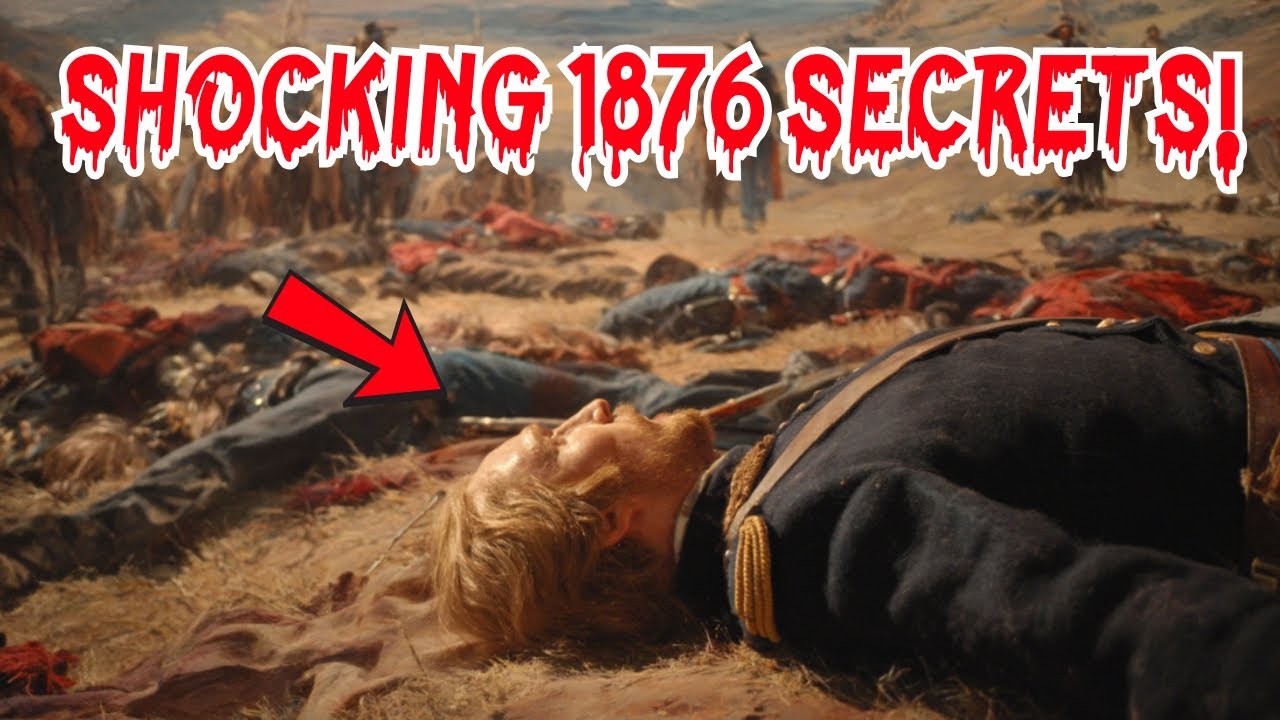
Help had come. Terry’s men discovered Reno’s survivors barely holding on at the bluffs. But the march to Custer Hill exposed a scene of terrible slaughter. Corpses lay scattered down the slope, cut and disfigured past recognition, scalped, opened up, skulls smashed with stone mallets in the hands of grieving Sioux and Cheyenne women.
Captain Benteen later set down his grief: “It tore at the heart. Many were so disfigured we couldn’t identify them.” Survivors repeated a Sioux account of old women crying out as they moved across the field, crushing heads in a rite of revenge and sorrow. Four soldiers’ heads were afterward discovered in the native camp, their bodies swallowed by the disorder.
Grim spoils of victory. Custer himself was among the dead, his body stripped and pierced, though reports differ on his injuries. Scout Mitch Boyer—or perhaps a different scout, depending on who tells it—put the village at six thousand people with three thousand warriors, under Sitting Bull and a council of chiefs, each carrying a colored flag, red, yellow, white, blue, and black, to signal their fighters. Crazy Horse probably rode with them, his band lending ferocity to the attack.
Some judged native losses equal to the soldiers’, a measure of the Seventh’s desperate resistance, though not one of Custer’s men broke out of the ring of at least twenty-five hundred warriors. Dark stories lingered of men such as Isaiah Dorman, a black scout tormented with small bullet wounds to his legs while still alive, or another flayed in a slow, agonizing death. The field turned into a stage of horror, the air heavy with blood and mourning. Not every man showed courage that day.
George Herendeen described fear running through the ranks, laying much of the blame on Reno’s faltering nerve, which sapped the men’s will to fight. Dan Neely, known as Cracker Box Dan, concealed himself behind a hardtack crate as bullets flew. Captain Thomas McDougall, or Apparel Mickey, pressed himself to the ground behind a pack saddle, while Billy Blake faked a wound for two days, shaking at every sound. They were not cowards by nature, but the fire of battle exposed their weaknesses.
Still, others rose to the occasion. Herendeen toiled beneath the blazing sun, hauling dead horses into breastworks, shooting at the enemy while his thoughts churned with questions about Custer’s fate. On June 25th, as smoke and dust climbed from the ridge, most warriors left Reno to join the attack on Custer. Volleys sounded out, probably signals of distress, but no help came.
Dr. Porter, the surgeon, labored without rest caring for the wounded and pressing men to risk the river run despite the peril. One soldier, shot while filling his pail, shattered his leg and was hauled back screaming, a sacrifice for the few drops he had obtained. Herendeen’s heart ached for Custer’s horse, Dandy, a veteran of countless rides.
Just before departing Fort Lincoln, Custer had talked of replacing the aging mount. But now Dandy lay shot through, his gentle eyes begging as Herendeen stroked his neck. A faint whinny left the horse’s lips, a last plea for water for his master, and the scout wept for the loyalty lost in the ruin around him. As June 26th wore away, a lone Sioux sharpshooter on a hill tormented Reno’s men, his buffalo gun taking lives with chilling accuracy.
Captain Ryan at last silenced him with a long-range shot, and Herendeen afterward found the sniper dead behind a barricade of boulders, rifle still in hand. By late afternoon, most native forces pulled back to mourn, leaving a small group to keep the soldiers pinned. Hunger gnawed at them. They had eaten nothing since dawn on the 25th, chewing hardtack and raw bacon that lodged in their dry throats.
Exhaustion dropped men where they stood, some too tired even to fear death. Herendeen took the night watch, pacing outside Reno’s tent, where he overheard the major soaking his bitterness in drink. “I wonder where the Mare of the American army is now,” Reno slurred, mocking Custer’s end. A jab that stung Herendeen’s weary soul.
The valley below went silent, broken only by the far-off beat of tom-toms and the wailing of native mourners. He strained his eyes toward the ridge, hoping Custer would return. But the night gave no answers, only a heavy silence that pressed on every heart. General Terry’s arrival on June 27th brought ragged cheers, a lifeline for Reno’s battered survivors.
Yet the relief curdled once they took in Custer Hill, the enormity of what had been lost settling over them. More than two hundred men were dead, a national scar that stoked demands for retribution. The army pressed harder, and within a few years the Lakota and Cheyenne had been driven onto reservations, their resistance shattered. Herendeen would often ask himself whether it had all been some fever dream, wishing he could wake as a young man again, grooming horses while Custer’s laughter rang through the air.
Still, the truth held him fast. The nightmare had been real, and its reverberations lived on in native legend. Curious strands surfaced in the years that came after. One held that Custer’s ghost walks the battlefield, his white hat shining beneath the moonlight.
There was talk of a hidden store of Seventh Cavalry gold, buried before the battle and still waiting to be found. Native accounts carry a warning of a Sioux curse: disturb Custer’s bones and your days are numbered, your spirit chained to the plains. Crazy Horse’s dream, foreseeing the fight, adds a prophetic shiver. True or not, such tales keep the legend burning.
Was Custer a heroic martyr or a reckless fool who split his command and brushed aside warnings? Did Reno and Benteen betray him out of cowardice, or were they simply unable to act? Native voices cast it as a just defense of home and family. The argument goes on.
And the question that lingers longest: did Custer take his own life, choosing death over capture, as rumor holds? Or did Sitting Bull engineer a fate too dark to set down, now lost to history? Maybe the whole account is still out there, carved into the bones, or borne on the wind. This is more than history.
It is a wound that will not heal.
