The rain had stopped by the time Hadden Clark stepped out of the interrogation room at the Montgomery County police station in May 1986. The detectives who had been questioning him about the disappearance of six-year-old Michelle Door were watching him closely. He had shown them something they had not expected. At some point he had become visibly emotional, then he had rushed to the bathroom to vomit.
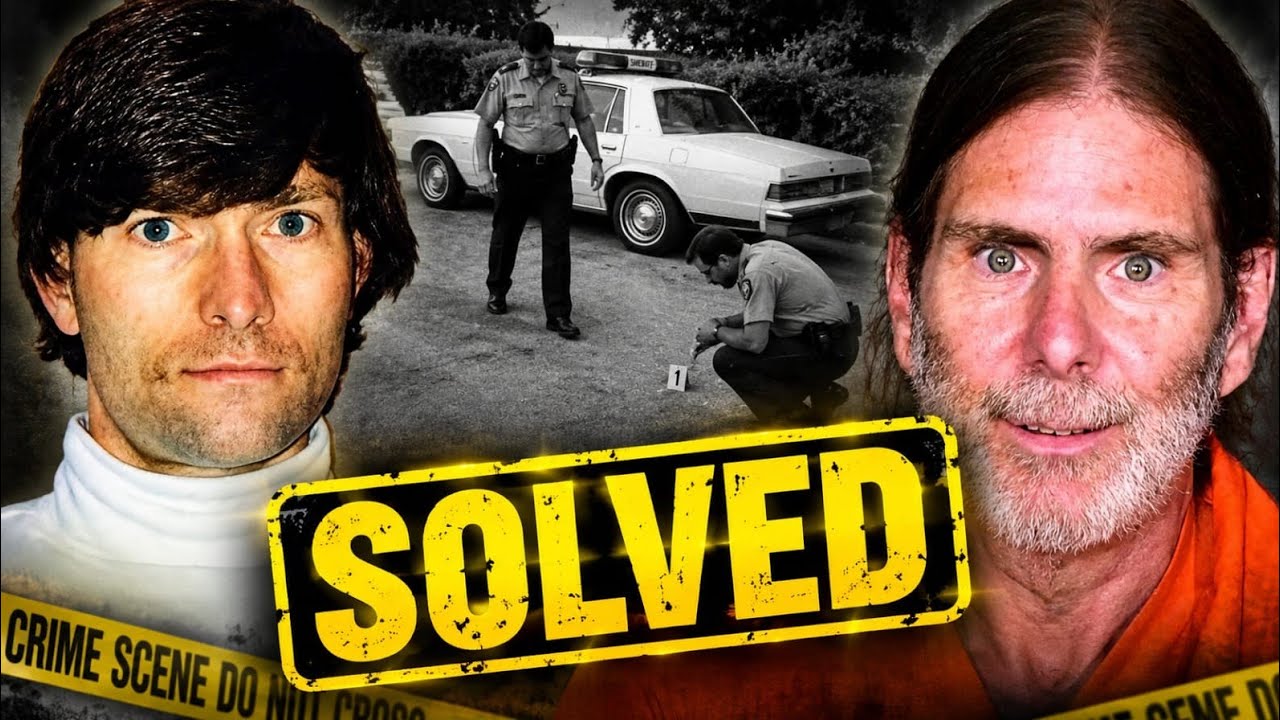
And then he had given them a statement so vague, so unnerving, that the investigators would replay it in their minds for years afterward: “I might have done something. ” A pause. “Sometimes I black out. ”
That was all the police had.
His time card placed him at his workplace by 2:46 that afternoon, and there was no physical evidence linking him to the child. The detectives had no body, no witnesses, no weapon, nothing. They let him go. In the years that followed, a family would wait more than a decade to learn what had happened to Michelle Door, and a man whose path toward violence had been visible since early childhood would slip through the justice system again and again.
Hadden Clark was born in April 1951 in Troy, New York, the second of four children. From the beginning, his environment was chaotic. Both parents were alcoholics, and the household was thick with tension, arguments, and unpredictability. There was little sense of safety or order.
His mother blamed his behavior on complications at birth, claiming a difficult delivery had caused brain damage. By the time he was four, concerns about his development were already serious enough that he was taken to the Child Study Center at Yale University, where doctors suggested he might have suffered minor brain damage or cerebral palsy. Instead of receiving support, he was met with cruelty. His father, according to later accounts, belittled him and called him insulting names.
His mother behaved in ways that deepened the confusion: when she was drunk, she sometimes dressed him in girls’ clothing and called him Christine. Violence surfaced early. As a child, Clark struck his younger brother with a bicycle, causing a serious head injury. Soon after, his behavior toward animals turned deeply disturbing.
He began hunting animals, killing them, and dissecting them, even beheading pets that belonged to children who had teased him. He withdrew socially and became increasingly isolated, showing clear signs of emotional instability. The warning signs escalated when he reached his teenage years. He was caught wearing women’s clothing, and his father punished him harshly, reportedly beating him.
Around the same time, Clark was involved in a peeping incident that brought him into contact with police. Years later, he claimed he had committed his first murder at fourteen, though that was never confirmed. Despite everything, Clark graduated from high school in 1972 at the age of twenty-one, making him the oldest student in his class. Two years later, he completed training at the Culinary Institute of America, which suggested he was capable of functioning in structured environments.
The stability did not last, he drifted through at least fourteen different jobs in a short period. His personal life collapsed around him. His grandfather died, his grandmother was placed in a care home, and his parents separated. Shortly after, his father died of cancer.
Clark continued to flounder, working in places such as Cape Cod, where he later claimed, without evidence, that he had committed additional crimes. Searching for direction, Clark joined the United States Navy and worked as a cook. But his behavior again set him apart. He was disciplined for wearing women’s clothing under his uniform, and on one occasion, he was locked in a meat cooler for several hours as punishment.
During his service, he suffered a head injury aboard an aircraft carrier. In 1985, he was discharged and diagnosed with paranoid schizophrenia. Life after the Navy grew worse. He was arrested for stealing women’s clothing from stores, thrown out of his brother’s house for inappropriate behavior, and repeatedly encountered police over minor offenses.
The consequences were minimal. Probation, suspended sentences, warnings. Then, in May 1986, came the crime that would haunt one family for years. Michelle Door, six years old, was visiting her father, Carl Door, at his home in Silver Spring, Maryland.
On May 31, she was last seen wearing a pink-and-white polka-dot bathing suit, heading outside to play near the backyard pool. At some point that evening, she vanished. Her father quickly became the focus of the investigation. He told authorities they had spent a normal weekend together, eating at McDonald’s, watching a movie, stopping at a 7-Eleven earlier in the day.
But he could not clearly recall the exact moment he had last seen his daughter. The custody relationship between Michelle’s parents was strained, and suspicion settled heavily on him. There was another theory, however. Investigators believed Michelle might have wandered toward a nearby house, a house linked to Hadden Clark.
According to prosecutors, Clark met the child, ended her life inside the home, and carried her body away in a small purple canvas bag she had brought with her. Clark was questioned, but the evidence was not enough. He was released without charges. For years, Michelle’s fate remained unknown.
Meanwhile, Clark continued his destructive course. In 1988, he violently attacked his mother after she confronted him about theft, even attempting to run her over with his truck. He received probation. Months later, he was found with a loaded, unlicensed handgun.
Again, he escaped harsh punishment. His behavior grew increasingly disturbed, including acts of vandalism and cruelty toward animals. By 1989, he had been diagnosed with psychosis. In 1992, six years after Michelle’s case had gone cold, Clark found work as a gardener for the Howling family.
He developed an unusual attachment to the mother, Bennie Howling, viewing her in a motherly way. But when her twenty-three-year-old daughter, Laura Howling, returned home, everything changed. Clark became upset, jealous. On October 18, 1992, that resentment turned deadly.
Clark entered the Howling home in Bethesda, Maryland, using a spare key. Disguised in Bennie’s clothes and a wig, he confronted Laura. Armed with a rifle, he forced her to undress and shower. Then he bound her wrists and ankles with duct tape before covering her face entirely with tape, causing her to suffocate.
Days later, investigators found a bloodstained pillowcase. The blood matched Laura’s. It also contained Clark’s fingerprints and fibers from his hair. The evidence was overwhelming.
In 1993, Clark pleaded guilty and was sentenced to thirty years in prison. But even behind bars, the story did not end. Clark began to talk. In 1999, more than a decade after Michelle Door’s disappearance, he was brought to trial in her case.
This time, he was convicted and sentenced to another thirty years. The following year, in 2000, Clark led authorities to Michelle’s remains, finally giving her family a measure of closure after years of uncertainty. Further searches uncovered a horrifying detail. On his grandfather’s property, investigators found a bucket containing approximately two hundred pieces of women’s jewelry.
Some items were linked to Laura Howling, suggesting Clark may have kept trophies from his victims. He also claimed there were more victims buried in remote areas, though no evidence was ever found to confirm those claims. The life of Hadden Clark is often viewed as a tragic example of what can happen when early warning signs are ignored. Again and again, the justice system gave him only minor consequences.
By the time real action was taken, two lives were already lost. Michelle Door was only six years old, and Laura Howling was twenty-three. Both had become victims of a man whose path toward violence had been escalating for decades. In 1976, a man committed a terrible crime in order to gain something from it.
Decades of lies followed, and eventually, he would no longer be free. In 1976, Dr. Steven Scherr worked at the local hospital in Montrose, Pennsylvania, as an allergist. He was a close friend of Martin Dillon, a promising thirty-year-old lawyer.
Martin’s wife, Patricia Dillon, worked as a nurse at the same hospital where Dr. Scherr practiced. On June 2, 1976, a tragic accident occurred. Martin accompanied Scherr on a clay pigeon shooting trip at Gun Smoke, a wooded resort owned by the Dillon family near Montrose.
While the two men were shooting at clay targets, Martin spotted a porcupine, grabbed Scherr’s Winchester 16-gauge pump-action shotgun, and ran after it. Scherr told police he heard a gunshot, ran toward the sound, and found Martin about 250 feet away with a fatal wound to his chest. He had apparently tripped over his shoelace and fallen onto the shotgun. Scherr, who was covered in blood as he tried to revive his friend, said he had been so emotional that he smashed the shotgun against a tree, destroying it.
Police investigated the shooting. There were no witnesses, only one man’s account, and investigators believed him. Martin’s death was ruled an accident. But what happened next raised silent suspicions.
Shortly after Martin’s death, Dr. Scherr divorced his wife, Edna Ann Scherr, and moved to New Mexico, where he had lived before coming to Pennsylvania. Two years later, he married the widow of his late friend, Patricia Dillon, and began raising her two sons as his own. The family later moved to North Carolina.
To outsiders, it may have seemed like recovery, but to some, it looked deeply suspicious. No one challenged the official account. Rumors had long circulated that Patricia was in the midst of a passionate affair before her husband’s death, rumors the couple repeatedly denied. Martin’s father, Lawrence Dillon, a former mayor of Montrose, never believed his son’s death was an accident.
In 1989, thirteen years after the incident, he hired a private investigator to review the evidence. By 1995, he decided he wanted answers. He pushed for his son’s body to be exhumed. After a second autopsy, the medical examiner declared that the shape and angle of the shotgun wound indicated Martin could not have accidentally shot himself.
There was also no evidence of the burn marks typically seen in close-range shootings. The conclusion was that Martin had not been killed while running but while sitting, and that his life had been deliberately taken. Police named Dr. Scherr as the primary suspect and filed charges.
Scherr stuck to his story, insisting at a press conference that Martin had accidentally shot himself. His neighbors and patients were shocked he was a suspect. Many tied yellow ribbons around trees and said they were confident the respected doctor would be acquitted. But during the trial in 1997, everything changed.
Dr. Scherr took the witness stand and abandoned the account he had been telling his family and the police for two decades. He admitted the crime scene had been staged. He told the jury that Martin had confronted him about rumors of an affair with Patricia, then picked up the doctor’s shotgun.
Scherr said, “I just knew I had to take that gun from him. I had to get it. I didn’t know what he intended to do with it. ” He added, “I just knew, given his state of mind at the time and my state of mind, it wasn’t good for him to have a weapon, so I jumped him.
” He said the gun went off during the struggle. Scherr described how he had wiped his fingerprints from the barrel, placed the gun in Martin’s hands, and untied one of his shoelaces to make it look like he had tripped. For twenty years, he had been lying. When asked why he had lied for two decades, he said, “Because of the pain Patricia and the children would have suffered from what happened.
” He said, “I was thinking, how could I tell anyone this accident happened in that way and have anyone believe me in Montrose? With all the rumors flying, being a relatively new person to the area, Marty’s father being the mayor, and me being the only Jew in town, in the county. ”
There were other revelations at trial. Scherr admitted the rumor about the affair with Patricia was true.
He said he had lied to protect the family from scandal. Edna, Scherr’s ex-wife, who testified against him, said she was not surprised people liked him. She said he could show you whatever he wanted you to see. “He’s a sociopath.
He’s a compulsive liar. If the flowers on your desk were pink and he told you they were yellow, he could almost convince you it was true. ” Edna said Scherr had confessed his love for Patricia to her. He had also falsely told her that Martin was his divorce attorney, which discouraged her from telling Martin about the affair.
Other prosecution witnesses said Scherr had been trying to find a way for his mistress, a devout Catholic, to obtain an annulment so she could remarry within the church. Meanwhile, an FBI laboratory analysis showed that high-velocity blood spatter patterns on Scherr’s shoe, worn at the time of the shooting, could only have been left by tremendous force at close range. The prosecutor, Robert Campolongo, described the shooting as an ambush. The defense presented Cindy Klein, a former babysitter for the Dillons, who testified that Martin had told her he planned to take Dr.
Scherr to his hunting cabin and end his life. She said she had stayed silent at the time because her mother did not want her involved in the case. A defense pathologist added that the autopsy evidence was consistent with two men struggling over the gun. After hearing the full story, the jury deliberated for seven hours.
Their verdict was guilty. Justice finally seemed to have caught up with him. But the story did not end there. Two years later, the Pennsylvania Supreme Court overturned the conviction due to the passage of time, lost evidence, the deaths of witnesses, including the original medical examiner, and missing key records.
The court ruled Scherr could not receive a fair trial and released him. The case was appealed, and in 2004, a new trial was ordered. He was tried again before a jury in Susquehanna County in March 2008, where he was convicted and sentenced to life in prison. For years, Dr.
Steven Scherr lied about how his shooting companion, Martin Dillon, lost his life in the woods, playing the role of the grieving friend. He sobbed in front of strangers. He smashed the shotgun that had killed Martin, vowing it would never kill again. On August 9, 2015, Dr.
Steven Scherr died of natural causes at the age of seventy while serving his life sentence at Laurel Highlands State Correctional Institution. A new beginning turned to tragedy when a young woman was brutally attacked in her home. For years, her case remained unsolved until a single piece of evidence changed everything. Carla Lowe Brown was born in Lima, Ohio.
Her father had been in the military and had died in an accident at a young age. Carla was a cheerleader, one of the popular girls at Roxana High School. She was also very beautiful, described as stunning. By 1978, Carla was finishing her studies at Southern Illinois University in Edwardsville while working as a waitress at the International House of Pancakes.
On June 21, in the quiet town of Wood River, Illinois, the twenty-two-year-old had just begun a new chapter in her life. She and her fiancé had moved into their new home only a day earlier, celebrating with friends and making plans for the future. While Carla was at home, busy arranging everything after the move, she spoke to a few friends and her fiancé’s mother on the phone. As she was talking with her future mother-in-law, someone came to the door, so she ended the call.
At least one friend stopped by the house that day, but no one answered the door. Around 5:30 in the evening, her fiancé, Mark, brought his friend Thomas Vigenbaum to show him the new place. Searching for Carla upstairs, the two men found her lifeless body in the basement, her head in a bucket of water, her hands bound with electrical wire. Mark’s socks were wrapped around her neck so tightly that police had to cut them off.
She was wearing only a jacket. Carla had long bruises on her face and neck and a fractured jaw. Blood stained the nearby sofa cushions. There were indications of possible assault, though it could not be conclusively confirmed at the time.
The scene was horrific, but it was also puzzling. Investigators quickly realized something was wrong beyond the obvious violence. The bindings on Carla’s wrists were loose, far too loose to restrain someone during a struggle. The knots looked neat and deliberate.
Her clothing was arranged strangely, and the evidence suggested the crime had not occurred where her body was found. In another room, there were signs of a violent struggle, bloodstains, traces of water, and indications that someone had tried to clean up afterward. Whoever had ended her life had taken time to move her body, arrange the crime scene, and try to erase evidence. A reexamination later suggested something more horrifying.
She may still have been alive, breathing weakly, when her head was placed in the water, meaning she may have drowned after the assault. The cause of her death was strangulation or drowning. A blow to her neck came from a television table in the home. Police found no foreign fingerprints at the crime scene.
Forensic DNA testing did not yet exist, so investigators had no way to analyze bodily fluids at the scene. Suspicion first fell on those close to her, such as her fiancé, who had discovered the body, but he had a strong alibi. There was also her stepfather, described as suspicious and unpleasant, who allegedly harassed one of her friends, but nothing linked him to the crime. Then suspicion fell on an ex-boyfriend who was said to be upset about the breakup, as well as a known criminal in the area, but none of them could be conclusively linked to the crime.
Attention eventually turned to two men who lived in the neighboring house. They had watched Carla move into the home and made inappropriate comments about her. Still, there was no strong physical evidence. By 1980, the case had gone cold.
Years later, a reexamination of crime scene photographs led to a critical discovery. A bite mark on Carla’s body that no one had noticed. This discovery changed everything. Forensic dentists specializing in bite marks were brought in, and Carla’s body was exhumed for further examination.
At the same time, witnesses came forward with troubling information. One of the neighbors who had been a suspect, a man named John Brantley, allegedly described details of the crime. Details that had never been released to the public, including the bite mark itself. For investigators, this was crucial.
Only the killer should have known that. In 1982, Brantley was arrested and charged with ending Carla’s life, four years after the crime. Prosecutors argued that he had entered the home with the intent to assault Carla, then ended her life when she resisted. At the trial in 1983, the bite mark evidence became central to the case, one of the earliest uses of this forensic method in the United States.
In July, after four and a half hours of deliberation, the jury returned. Brantley was convicted and sentenced to seventy-five years in prison. For decades, the case seemed closed. But over time, the reliability of bite mark analysis came under widespread question, with multiple convictions in other cases later overturned.
Brantley maintained his innocence throughout his imprisonment. Attempts to examine DNA evidence from the crime scene failed because it had deteriorated. After serving thirty-six years, he was granted parole in 2019. He received time off his sentence for good behavior.
Brantley died in July 2023 at the age of seventy-three. A family that had waited thirty-seven years for justice finally saw it carried out. On the afternoon of September 17, 1984, eight-year-old Vicki Lynne Hoskinson left her home in Tucson, Arizona, on a simple errand. Around 3:30 in the afternoon, she got on her pink bicycle and rode off to mail a card in a nearby mailbox.
It was an ordinary task in a quiet neighborhood, one she would never return from. Shortly afterward, her bicycle was found abandoned on Posito Place, an unpaved road just a few blocks from her home. There were no immediate signs of what had happened, only the unsettling sight of a child’s bicycle left behind. Two boys from the neighborhood were the last known witnesses to see Vicki alive.
As they rode their bikes in the opposite direction, they passed her on Posito Place. One of them later recalled something else moments before seeing Vicki. He had noticed a dark Datsun Z with California license plates moving slowly near the intersection of Posito and Ruthrauff Road. He said the driver had long dark hair, a mustache, and an unshaven appearance.
That same day, another observation proved crucial. Sam Hall, a teacher at Vicki’s elementary school, saw a similar dark Z car parked in an alley next to the school. The driver immediately caught his attention. He seemed agitated, with long unkempt hair and a beard, behaving strangely as he struggled to shift the car’s transmission.
The encounter left Hall uneasy enough that he wrote down the car’s license plate number. When news of Vicki’s disappearance spread, he called police. The plate was traced to a man named Frank Jarvis Atwood. Three days later, on September 20, investigators learned that Atwood and a companion named James McDonald were at an auto repair shop in Texas.
The two men were arrested, and Atwood’s black Datsun 280Z was seized. What followed was a meticulous criminal investigation. At trial, an FBI examiner testified that pink paint on the car’s front bumper matched Vicki’s bicycle. Nickel particles found on the bicycle were traced back to Atwood’s car.
An accident reconstruction expert testified that damage underneath the car was consistent with the bicycle becoming wedged beneath it after being struck at low speed. Atwood’s own statements raised further suspicion. Initially, he told police he had been at Danza Park in Tucson around noon on the day Vicki disappeared, returning there between 4 and 5 p. m.
after briefly leaving. Later, he changed his timeline, claiming he had returned at 3:30 p. m. , the same time Vicki had left her home.
Witnesses, including James McDonald and a man named Thomas Parrishian, testified that they had seen Atwood that evening with blood on his hands and clothes and a knife in his possession. According to their testimony, Atwood claimed he had stabbed a man during a dispute involving illegal substances and had disposed of the body in the desert. Multiple sightings placed Atwood in and around Vicki’s neighborhood that day. Some witnesses reported seeing his car driving slowly through the area, while one claimed to have seen him leaving the neighborhood with a small child in his car.
Others later identified him near a remote desert location where Vicki’s remains were eventually found months later, in April 1985. As investigators delved deeper into Atwood’s background, they uncovered disturbing evidence. He had been in ongoing correspondence for years with a man named Ernest Bernian. Letters presented in court revealed Atwood’s admission that he was attracted to children between the ages of seven and twelve.
Bernian also testified that months before Vicki’s disappearance, Atwood had spoken about planning to abduct a child and ensuring the child could not report the crime. Atwood was initially charged with kidnapping, but after the discovery of the victim’s remains, the case escalated to a murder charge. The trial began in January 1987 and lasted nearly two months, with more than seventy-five witnesses taking the stand. On March 26, 1987, the jury convicted Atwood on both charges.
He was sentenced to death, with an additional twenty-five-year sentence for the kidnapping. For Vicki’s family, the conviction was only the beginning of a decade-long wait for final justice. Her mother, Debbie Carlson, described her daughter as a vibrant child with a contagious laugh, who loved playing with dolls, eating SpaghettiOs, and excelling at sports. She believed Vicki would have grown into a strong athlete, perhaps earning a scholarship to the University of Arizona.
But the years that followed were marked by repeated delays, legal appeals, and a state of uncertainty. The case hung over the family like an unshakeable shadow. Debbie often spoke of the difficulty of the word “closure,” saying it did not truly apply because her daughter would never come back. After thirty-seven years, that long legal process finally ended.
In June 2022, the state of Arizona executed Atwood by lethal injection at the state prison in Florence. He was sixty-six years old. Witnesses described the procedure as quiet, with no apparent complications. In his final moments, Atwood made a brief statement expressing gratitude to his supporters and his faith, but he did not mention Vicki or her family.
Debbie and other family members were present. After decades of waiting, she addressed the media with a simple but powerful message. This day marked the final justice for her daughter. She spoke directly to Vicki, expressing her hope that her child could now rest in peace.
Outside the prison, members of the community gathered, some protesting the death penalty, others honoring the memory of the young girl whose disappearance had shaken their sense of security. For many who grew up in Tucson at that time, Vicki’s case changed the concept of childhood itself, replacing innocence with fear. Although the legal chapter had closed, the emotional truth remained unchanged. Vicki Lynne Hoskinson would be remembered not for the tragedy of her ending, but for the life she never had the chance to live.
A bright, determined little girl whose death left a lasting mark on everyone who knew her story.
