The spring of 1962 came to Harlem like a heavy weight, pulling the damp fragrance of magnolia blossoms from the parks and blending it with diesel fumes, roasted peanuts, and scorching asphalt. The harsh winter had finally let go, and the city was letting out a long breath. Wool coats were shed, light suits emerged, and the young men on the corners of 125th Street walked with an extra glide, their fedoras cocked at angles that defied gravity. The neon signs along Seventh Avenue buzzed with a new energy, throwing long colored shadows across a neighborhood that kept its own time.
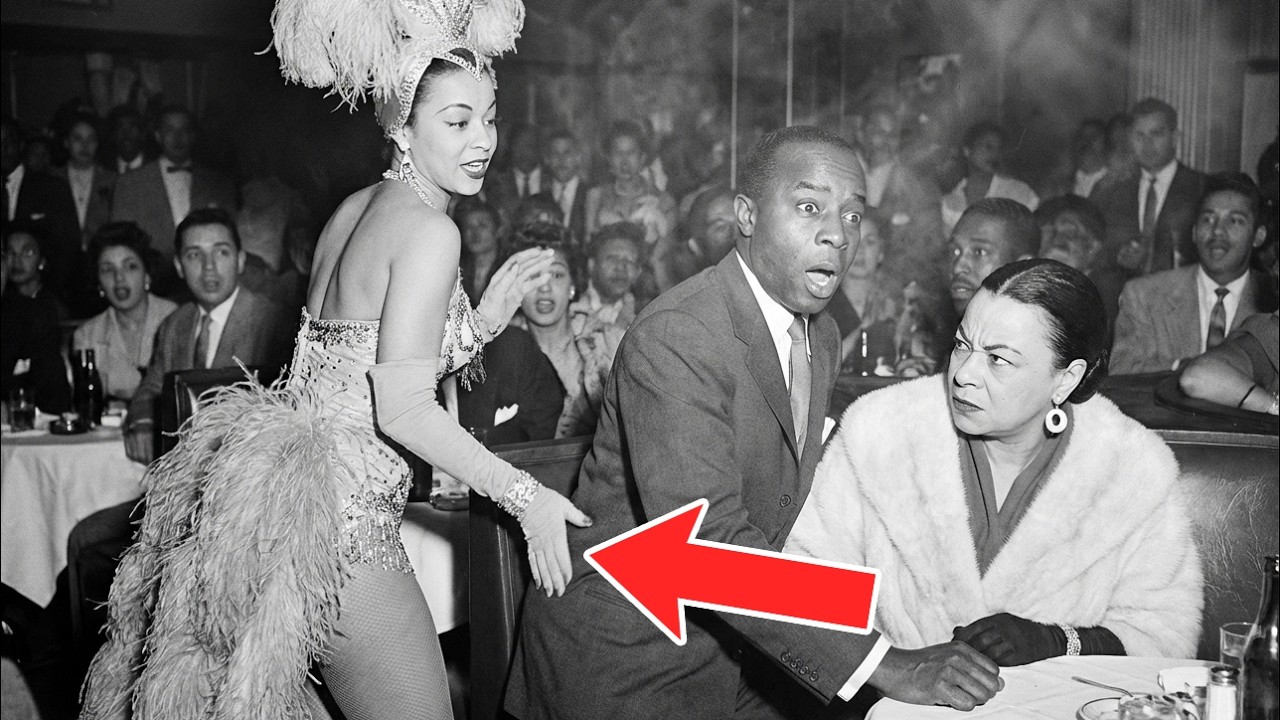
Harlem in the early sixties was a kingdom inside a republic, with its own statutes, its own commerce, its own royalty, and its own executioners. Downtown, the politicians and the Italian syndicates believed they controlled Manhattan. Uptown, above 110th Street, reality was ruled by a different kind of man. At the heart of that pulsing, perilous world sat Smalls Paradise.
It was more than a nightclub; it was a refuge, a tiered shrine to black excellence and underground authority. It was one of the few spots in the city where the jazz ran hot enough to melt the ice in your drink, where the air hung heavy with the scent of imported bay rum, French perfume, and hand-rolled Cuban cigars. The walls, paneled in dark mahogany and trimmed with velvet, soaked up the secrets of a thousand midnight bargains. It was neutral territory.
On any ordinary Tuesday, a crooked city alderman might sip a martini beside a legendary saxophonist while a numbers banker held court in the corner. But on this particular Tuesday evening, the club hummed with a quiet, respectful excitement. The usual loud laughter was turned down. The hustlers kept their voices low.
The wait staff moved with military precision, making sure every glass was spotless and every ashtray clean. The atmosphere carried the charge of a gathering thunderstorm. The king and his queen were holding court. Ellsworth Bumpy Johnson sat in the velvet-lined VIP booth at the back of the main room.
It was the best seat in the house, raised six inches above the floor, giving him a clear view of the stage, the curved mahogany bar, and every entrance and exit. He was a man who knew that survival meant seeing the knife before it was drawn. Tonight he wore a midnight blue suit tailored so sharply it seemed capable of cutting plate glass. Under the jacket was a crisp ivory shirt and a silver silk tie that caught the glint of the diamond on his pinky finger.
His trademark gray fedora rested on the table next to a crystal rocks glass of top-shelf Kentucky bourbon. His eyes had seen the depths of the human soul. They had stared at the damp concrete ceiling of solitary confinement in Alcatraz. They had watched the bloody street wars of the 1930s tear his neighborhood apart.
Those eyes missed nothing. He noted the nervous sweat on a numbers runner near the bar, the forced laughter of a downtown loan shark trying to blend in, the invisible net cast by his own men scattered through the room. But tonight Bumpy was trying to quiet the tactical machinery of his mind. Tonight was not about territory, shipments, political bribes, or the chess match against the Genovese family.
Tonight was sacred. He turned his gaze to the woman on his right. Mayme Johnson sat with the perfect posture of a woman who knew exactly who she was and what she was worth. Her emerald green silk dress caught the low club lights and shimmered like deep water.
Her face was both stunningly beautiful and deeply intelligent. Mayme was not a woman who hid behind her husband’s shadow. She was his anchor, the force that kept the godfather of Harlem from drifting into the cold abyss of his own ruthless power. It was their anniversary.
In a life measured by police raids, betrayals, and the constant threat of the Italian syndicates carving up his kingdom, another year of marriage was a defiant victory over a world that wanted him dead. “You look breathtaking tonight,” Bumpy said. His voice was a low gravelly rumble, like heavy tires rolling over crushed stone. To Mayme, it was the only sound in the room.
She smiled, a warm genuine smile that reached her eyes. She reached out, her manicured fingers resting gently on the dark wool of his forearm. “You look like a man who is actually trying his hardest to relax for once, Ellsworth. I know how hard it is for you to turn off that beautiful calculating brain of yours.
”
Bumpy chuckled softly, a rare sound. He lifted his glass, letting the amber liquid catch the light. “For you, my queen, I would freeze time itself if I could figure out the mathematical angle to make it happen. ”
“Just buy me another glass of champagne,” Mayme countered.
“It’s much easier to arrange and far less messy. ”
A few feet away, sitting alone at a smaller table that shielded the only direct approach to the VIP booth, sat Junie Byrd. He was Bumpy’s right hand, his shadow, his chief executioner, and his most trusted friend. If Bumpy was the mind of the Harlem underworld, Junie Byrd was its fist.
He wore a sharp charcoal gray suit that did nothing to hide the coiled violence beneath. He sat perfectly still, a statue carved from dark mahogany, nursing a single tall glass of ginger ale. Junie rarely drank when he was on the clock, and when he was with Bumpy, he was always on the clock. He rarely spoke; his reputation, written in blood and shattered bones across the five boroughs, did the talking for him.
Men had left the city entirely rather than face a quiet conversation with Junie Byrd in a dark alley. He watched the room with the intensity of a hunting hawk, scanning the crowd in a relentless grid, evaluating every sudden movement, every reaching hand, every coat that looked too heavy for the weather. Tonight was a celebration, but Junie knew the bitter truth of the streets. There were no days off.
The wolves were always circling. And on this particular spring night, a new and entirely foolish breed of wolf had wandered into the lion’s den. Across the room, near the edge of the bandstand, sat a man named Tommy Marcelo. He was a mid-level associate from the downtown Italian families, a man with a horrifying excess of ambition and a tragic deficit of common sense.
He was an opportunist who had cobbled together sufficient cash to purchase a foothold on the fringes of the actual mob. He sported a sharkskin suit that gleamed a touch too brightly, a pinky ring that was offensively oversized and almost certainly counterfeit, and a smug smirk that never left his face. For half a year, Tommy had been attempting to force his way into a piece of the Harlem numbers racket, probing the borders of Bumpy’s domain with stand-in runners and threats. Bumpy had batted those efforts aside with cold, efficient precision, severing his runners, confiscating his banks, and dispatching a discreet warning downtown: should Tommy Marcelo set foot past 110th Street again, he would be returned in a considerably smaller box.
But Tommy, blinded by pride and uneasy about his reputation with the Brooklyn bosses, had not arrived at Smalls Paradise to bargain or plead. He had arrived to stage a grand, theatrical spectacle, to demonstrate to the whole city that he felt no fear of the great Ellsworth Johnson. His chosen instrument sat next to him, wrapped in cheap rhinestones and costly self-deception. Her name was Velvet Lour.
She was a recently hired showgirl imported from a cut-rate cabaret in Atlantic City. She was dazzling, with legs that appeared to stretch for miles, a cascade of platinum blonde hair, and a face built to pry foolish rich men away from their fortunes. Underneath the thick stage makeup and glittering sequins lurked a blinding, poisonous vanity. In her own mind, the world was a motion picture and she was its leading lady; everyone around her was merely an extra awaiting her cue.
Tommy had devoted three weeks to poisoning her thoughts. He told her the old era was finished, that the Italian boys downtown held the true power in New York, that Bumpy Johnson was a dwindling leftover, a paper tiger clinging to his throne through nostalgia and sympathy. He showered her with furs, wined and dined her at expensive restaurants, and persuaded her that helping him humiliate the old king would earn her the crown as the new queen of the city’s nightlife. Velvet, desperate for fame and eager to confirm she was the headline act, believed every single word.
“You see him over there?” Tommy whispered, leaning in close, his breath thick with garlic and cheap scotch. “That old man in the blue suit figures he owns this whole damn island.”
Velvet took a leisurely pull of her martini, her eyes fixed on Bumpy’s silhouette.
“He doesn’t seem so tough to me, Tommy. He just seems old, sitting back there in the shadows like he’s avoiding the music.”
Tommy flashed a grin, a slick and unpleasant expression. “That’s it exactly, babe.”
“That’s it exactly, babe. He’s hiding. The entire city is afraid of a ghost. But tonight we prove to everybody that the ghost can bleed.”
The scheme was straightforward.
Velvet would perform a song, then carry the confrontation straight to the VIP booth. If Bumpy laid a hand on her, a white woman in a packed club, the police would descend on the place and the downtown bosses would have their pretext to seize his territory. If he did nothing, he would forfeit the respect of the street. Either way, Tommy came out ahead, and Velvet became a legend.
She smiled, a cold and hollow smile. She smoothed her silver dress, so snug it appeared painted on. “I’m going to give these squares a show they’ll never forget.”
Up on the bandstand, the master of ceremonies, a silky smooth talker in a checkered tuxedo jacket, walked to the chrome microphone and tapped it twice.
“Ladies and gentlemen, cats and kittens, high rollers and night owls,” he proclaimed, “Smalls Paradise is proud to bring you a brand new flavor for your evening. A siren fresh off the boardwalks, ready to set this stage ablaze. Put your hands together for the sensational, the incomparable Velvet Lour.”
The jazz band launched into a sultry, slow-grinding blues number.
The upright bass pulsed like a sluggish heartbeat. The drummer swept the snare with a hissing, seductive rhythm. The saxophone cried out a low, mournful melody. The curtains split apart, and Velvet stepped into the blinding white spotlight.
Her silver dress scattered fractured beams across the ceiling. Her white feather boa streamed behind her like a cloud. She curled her long fingers around the chrome microphone stand and started to sing. Her voice was husky, powerful, and surprisingly good.
She had talent. But from the first note, it was clear she was not singing for the crowd. The instant the spotlight struck her, her eyes skipped over the whole club and fixed on the VIP booth. She stared straight at Ellsworth Bumpy Johnson.
Junie Byrd caught the direction of her gaze at once. His right hand, lying flat on the tablecloth, slipped off the table and crept toward his lapel, pausing inches from the concealed shoulder holster. He threw a quick glance back at his boss. Bumpy had spotted it as well.
He took a slow, deliberate sip of his bourbon. The ice chimed against the crystal. His face stayed an unreadable mask. He gave Junie nothing, no nod, no shake of the head, only stillness.
Beside him, Mayme sensed the shift in the room’s atmosphere. “She certainly has a tremendous amount of confidence for a brand new girl,” she remarked quietly, her voice smooth, revealing only detached curiosity. “Confidence is a very fine thing to have,” Bumpy answered, his voice a low hum. “Right up until the exact moment it turns into spectacular stupidity.”
Then it simply becomes a liability.”
On stage, Velvet transformed her performance into an aggressive provocation. She shimmied and swayed, turning her back on the front row, aiming her routine solely at the back booth. Tommy Marcelo sat at his table, a smug, triumphant smile fixed across his face, watching his weapon go off.
The blues song arrived at its dramatic bridge. The saxophone player stepped forward and blew a high, desperate, screaming note that made the glasses on the bar rattle. The music was climbing toward a crescendo. And then Velvet Lour did the unthinkable.
Midway through the number, she seized her feather boa, flung it over her shoulder, and stepped down from the stage. The spotlight operator scrambled to keep the beam on her as she strutted down the center aisle. Murmurs spread through the crowd. The veteran patrons felt a cold chill crawl down their spines.
The unwritten laws of the Harlem underworld were strict and merciless. You did not approach the Godfather’s table without an invitation. You had to be summoned. And you never approached while he was enjoying a private anniversary dinner with his queen.
Velvet’s silver heels clicked against the polished wood floor. The crowd parted automatically, not from respect for her beauty, but from the realization that they stood within the blast radius of a suicide mission. The jazz band kept playing, but the music sounded thin and far away. At the front table, Junie Byrd’s chair scraped back half an inch.
To the four heavily armed enforcers posted around the club, that tiny scrape was an air raid siren. Hands slipped into pockets. Jackets fell open to expose dark steel revolvers. Eyes locked onto Velvet, forming a lethal crossfire.
They held for the faintest signal from Bumpy. Velvet arrived at the edge of the VIP section and halted before the table. She paid Junie Byrd no mind at all, never once glancing at the man whose lifeless gaze was fixed on the hollow of her throat. She bent over the mahogany surface, pushing into the private territory of New York’s most feared man, and gave him a sly, insolent grin.
“Well, well, well,” she cooed, lifting her voice so the tables nearby could catch every word. “They told me all about the legendary Bumpy Johnson. They said you were a handsome, sharp-dressed cat, but I have to admit, they never mentioned you looked this fine up close.”
The club fell utterly still.
The saxophonist gagged on his reed. The drummer dropped a beat. The pianist let one sour chord hang in the dead air. Not a soul dared to breathe.
On the far side of the room, Tommy Marcelo’s grin stretched so wide it seemed to hurt. Bumpy stayed motionless. He did not blink. Behind his eyes, the cold, calculating engine was racing through thousands of variables every second.
He caught Tommy in his peripheral vision. He understood the trap. Lose his temper and strike a woman, and he became a thug. Have Junie haul her out, and he wrecked Mayme’s anniversary dinner and handed the Italians exactly the story they craved: Bumpy Johnson, so shaken by a girl that he cowered behind his muscle.
He had to defuse the bomb without surrendering his aura. “You must be terribly lost, young lady,” Bumpy said. His voice sank to a quiet whisper that carried the crushing weight of a cocked pistol pressed to a temple. “The stage you belong on is back the way you came.
Turn around, find it, and finish your song.”
Velvet did not flinch. She did not recognize the mercy she had just been handed. She threw her head back and laughed, a loud, brash, insolent sound.
In her deluded mind, his calmness read as weakness. “Oh, I’m exactly where I want to be, sugar. I’m just trying to wake you up. You sure you want to spend your night hiding back here in the dark with the old folks when you could be having some real live fun out on the floor with me?
”
Then, with staggering suicidal arrogance, she circled the table, breaching the wall that divided the king from the rest of the world. She bent low, bringing her face inches from Bumpy’s ear, and with the flat of her palm she slapped him across the face. The sound cracked like a bullwhip, echoing through the silent club. Velvet straightened up, hands on her hips, and turned to look straight at Mayme Johnson.
She let out another mocking, triumphant laugh, blowing a breath of cheap perfume into Mayme’s face. She was proving she feared no one. The temperature plunged below freezing. Junie Byrd was out of his chair, his hand inside his coat, fingers wrapped around the checkered grips of his .
38. He started to draw. The four enforcers took a synchronized step forward. The clicks of hammers being drawn back sliced through the silence like ice picks.
Bumpy’s eyes lost their calm. They narrowed into pitch-dark slits. The rage he had kept buried rose from the depths of his soul. He shifted his weight, preparing to give Junie the fatal nod.
Before he could move a single muscle, Mayme set her champagne flute down on the table. It made a soft, delicate clink. Then the Queen of Harlem stood up. The rustle of emerald silk was the only sound bold enough to break the silence.
Mayme rose with aristocratic, icy composure, smoothing the front of her gown with her palms, a gesture that felt like a monarch preparing to sign a death warrant. In the shadows, Junie Byrd’s thumb stayed locked on the hammer of his revolver, but the instant the Queen took the floor, an unspoken law of the Uptown underworld triggered an immediate override. You did not cross Bumpy Johnson, but you absolutely did not interrupt Mayme Johnson when she decided it was her time to handle the room. Junie froze his draw.
He would wait. Velvet felt the bottom drop out of her stomach. The adrenaline that had driven her down the aisle evaporated, replaced by a cold, paralyzing terror. She had expected Bumpy to erupt, to have his goons throw her out.
She had a script, a theatrical screenplay where she was the defiant star. Mayme Johnson had not been factored into that script. Across the room, Tommy Marcelo’s smug smile melted off his face, leaving a slack-jawed mask of horror. He realized he had miscalculated the physics of this universe.
He had aimed his weapon at the king, forgetting that in this game, the queen controlled the board. He gripped the edge of his table, knuckles white, wanting to run but pinned to his chair by the invisible weight of murderous tension. If he twitched, the men in the shadows would put three bullets in his chest. Bumpy leaned back against the red velvet, his eyes locked entirely on his wife.
The cold rage in his chest was replaced by profound fascination. He was a spectator. He yielded the floor. Mayme turned her head and locked her eyes onto Velvet.
For what felt like an eternity, she said nothing. She simply looked, tracing the lines of Velvet’s face, noting the uneven eyeliner, the cheap synthetic boa, the terrified fluttering pulse in her neck. With each passing second of silence, Velvet shrank. Her breath came in short, panicked gasps that made her sequins vibrate.
Finally Mayme spoke. Her voice was not loud, contained no anger. It was a soft, cultured purr that carried the warmth of a velvet rope slipping around a throat. “You have an extraordinary amount of energy, my dear,” Mayme said.
“It is a rare thing to see someone work so incredibly hard to destroy their own future in a single evening.”
Velvet opened her mouth to speak, but her throat was paralyzed. All she managed was a pathetic, choked squeak. Mayme did not wait for a response.
She reached across the divide and closed her hand gently around Velvet’s trembling wrist. Her grip was warm, dry, and strong, the grip of a woman who had pulled her husband out of the gutter, patched his bullet wounds, and stared down federal prosecutors without blinking. She lifted Velvet’s hand toward the light of the table lamp. “Look at this,” Mayme murmured, her tone conversational, almost affectionate.
She traced the back of Velvet’s trembling fingers. “This is truly lovely work. The shape, the filing. It takes hours.
Is it a true vermilion red? Or perhaps something with a little more ruby mixed into the lacquer?”
Velvet’s eyes darted wildly between Mayme’s calm face and her captured hand. The psychological whiplash of preparing for a brutal confrontation only to be drawn into a polite conversation about cosmetology was breaking her.
“I-I don’t… It’s just red from a bottle.”
“Just red,” Mayme said again, and her tone carried that soft, mournful letdown. “What a pitiful waste.
A girl in your shoes ought to know, at all times, precisely what she’s wearing. In this city, details carry tremendous weight. Ignore the little things, and the big things will surely rip you to shreds.”
While she talked, her gaze slipped off Velvet’s face for an instant and dipped low.
On the table, sitting on a tiny porcelain plate between Bumpy’s bourbon glass and his dinner setting, was a particular piece of cutlery: a heavy, wickedly sharp solid silver steak knife. The handle was elaborate, carved with a floral design meant for gripping thick cuts of prime beef. Its blade was five inches of gleaming serrated steel that trapped the amber light and cast a predatory shimmer over the linen. Mayme’s left hand, the one that wasn’t holding Velvet, moved with the abrupt swiftness of a striking viper.
She never glanced at the knife. Her fingers simply fell away from Velvet’s knuckles, seized the handle off the plate, and swept it up in a single fluid motion. Velvet caught the silver flash. Her brain worked out the geometry a split second too late.
She sucked in a broken breath to scream and tried to jerk her arm away. But Mayme was already in motion. With a terrifying burst of downward force, she drove Velvet’s hand flat onto the mahogany table, throwing the girl off balance. Then her left hand came crashing down like a falling anvil.
Thwack. The heavy silver knife drove down with flawless accuracy, missing the trembling flesh of Velvet’s fingers altogether. The serrated steel sank into the slim gap between her index and middle fingers, tore through the feather boa’s fabric, and buried itself two inches deep in the solid mahogany. Velvet’s scream choked off in her throat, turning into a soundless wheeze.
She stared down at the table. Her hand lay splayed flat on the wood. The silver hilt quivered rapidly between her knuckles. The cold steel pressed into her skin, yet not one drop of blood had been drawn.
She was completely unhurt, yet utterly pinned to the table like a butterfly in a display case. A twitch to the left and the blade would cut her index finger to the bone. A twitch to the right and it would shred her middle finger. She was trapped, overpowered, at the mercy of the woman looming above her.
The silence inside Smalls Paradise had turned total, crushing, almost physically painful. On stage, the drummer lifted his foot off the kick drum pedal, afraid an accidental thump might set off a slaughter. The bartender, a man named Silas who had worked for Bumpy for ten years, stood frozen with a rag halfway through wiping the bar. Every eye was fixed on the VIP booth.
Across the room, Tommy Marcelo felt his stomach turn against the scotch. The color fled his face. He stared at the silver handle shivering in the table and understood with absolute certainty that he was a dead man. Slowly he slid his hands beneath the table, praying Junie Byrd wouldn’t glance his way.
Mayme did not gloat. She did not smile. The physical violence had ended; the psychological ruin was only starting. She let go of Velvet’s wrist and stepped back half a pace.
Velvet kept her hand where it was. She stayed bent over the table, tears of ruined mascara carving jagged lines through her face powder. With unhurried grace, Mayme reached down and lifted her evening purse, a vintage black alligator clutch with a solid gold clasp. Click.
The clasp sprang open, sharp and metallic in the quiet room. Her fingers skipped past the lipstick, the compact mirror, the pearl-handled lighter. She drew out a thick, tightly bound stack of hundred-dollar bills, old money that carried the smell of counting rooms and raw power. There had to be at least ten thousand dollars, more than a girl like Velvet could hope to see in five years of high-kicking on a second-rate boardwalk.
Mayme held the stack aloft for a moment, letting the light fall on the stern face of Benjamin Franklin, then dropped it onto the table. It landed with a dull, heavy thud, inches from Velvet’s pinned, trembling hand. Mayme lifted her chin and swept the room, looking past the shadows of the enforcers, searching for the man who ran the club’s daily operations. “Smalls,” she called out.
Her voice was not loud, but it sliced through the room with a sharp, undeniable authority. It was the voice of an owner commanding a subordinate. A tall, impeccably dressed man stepped out from the shadows near the kitchen doors. He was the club manager, a serious, no-nonsense cat who grasped the intricate, dangerous politics of his clientele better than anyone in the city.
He came with swift, silent urgency, halting at the edge of the VIP booth, keeping his distance from the pinned showgirl, his hands clasped nervously. “Yes, Mrs. Johnson,” the manager said, his voice a low, respectful murmur. “How can I assist you this evening?
”
Mayme motioned toward the stack of bills, then waved dismissively at the sobbing, terrified woman bent over the table. “I am buying this young woman’s exclusive performance contract, effective immediately. Take that money, pay off whoever brought her up from whatever dreadful little boardwalk she crawled out of. Compensate the band for the interruption of their set, and keep the rest for the club’s general inconvenience.
”
The manager looked at the brick of cash, then at Velvet, then nodded deeply. In the Harlem underworld, cash was the ultimate law, and a decree from Mayme Johnson backed by ten thousand dollars was an absolute, unbreakable covenant. He swept the stack off the table, making it vanish into his coat pocket in one practiced motion. “Consider the contract purchased in full, Mrs.
Johnson.”
Mayme finally turned her gaze back to Velvet. The arrogant siren who had strutted down the aisle was gone, replaced by a weeping, humiliated child who had played a game far beyond her understanding and lost everything in under a minute. “You no longer work here,” Mayme whispered, the coldness in her voice freezing the air in the booth.
“In fact, you no longer work anywhere in my city. You are permanently blacklisted from every stage, every cabaret, every smoky little joint north of 14th Street. If I ever see your face in this neighborhood again, if I ever hear your voice echoing in one of my clubs, the next knife will not be aimed at the table. Do you thoroughly understand me?
”
Velvet could not speak. She squeezed her eyes shut and nodded frantically, a pathetic, jerky motion of absolute surrender. “Good,” Mayme said smoothly. She reached out, wrapped her fingers around the silver handle, and yanked it sharply upward.
The blade ripped loose from the mahogany with a grating shriek of metal on wood, tearing through the feather boa and setting Velvet’s hand free. The instant the pressure lifted, Velvet fell back, staggered away from the table, her high heels skidding across the polished floor. She pressed her shaking hand against her chest, never once glancing back at Tommy Marcelo, still frozen in his chair, then wheeled around and bolted up the center aisle, shoved through the brass-studded doors, and fled into the humid, merciless Harlem night, leaving behind her ruined boa and her shattered pride. The tension drained out of the room.
Junie Byrd released a slow, silent breath and let his hand fall from his lapel, settling it back on the table. The enforcers dissolved back into the walls. The master of ceremonies all but sprang for the microphone, clapping his hands. “All right, all right, cats and kittens.
Let’s keep this beautiful evening rolling along. Give it up for the band, and let’s get some fresh drinks out to the tables.”
The jazz band caught on at once. The drummer struck the snare, the bass laid down a thick walking groove, the saxophone wailed, flooding the room with warm, comforting music.
The patrons let out their breath and turned back to their drinks, murmuring to one another, fully aware they had just watched a piece of legendary underworld history. At the rear of the room, Mayme smoothed her emerald silk dress one last time, slipped back into the velvet booth, picked up her napkin, and dabbed the corner of her mouth. She raised her champagne flute and turned to her husband. Bumpy had not stirred a single muscle through the entire ordeal.
He reached for his hand-rolled Cuban cigar. But the godfather of Harlem, a man who had faced down the deadliest assassins in New York without a flinch, who had endured the starvation cells of Alcatraz and built an empire on blood and strategy, sat completely frozen. He stared at the deep, jagged gouge now permanently carved into the mahogany of his VIP table. He stared at the torn white feathers strewn across the floor.
Then he looked at his wife. The mask of the underworld king fell away. He leaned forward, a slow, deep, genuine smile spreading over his weathered face. He reached across the table, his massive scarred hand closing over her manicured fingers.
He looked at the woman who had just bloodlessly dismantled an enemy and spared his empire a public relations disaster without ever raising her voice. He shook his head, utterly struck by the chilling, elegant ruthlessness of the woman he loved. “Happy anniversary, Mayme,” he said quietly, his eyes shining with absolute devotion in the dim club light. “Remind me to never ever make you angry.
“
